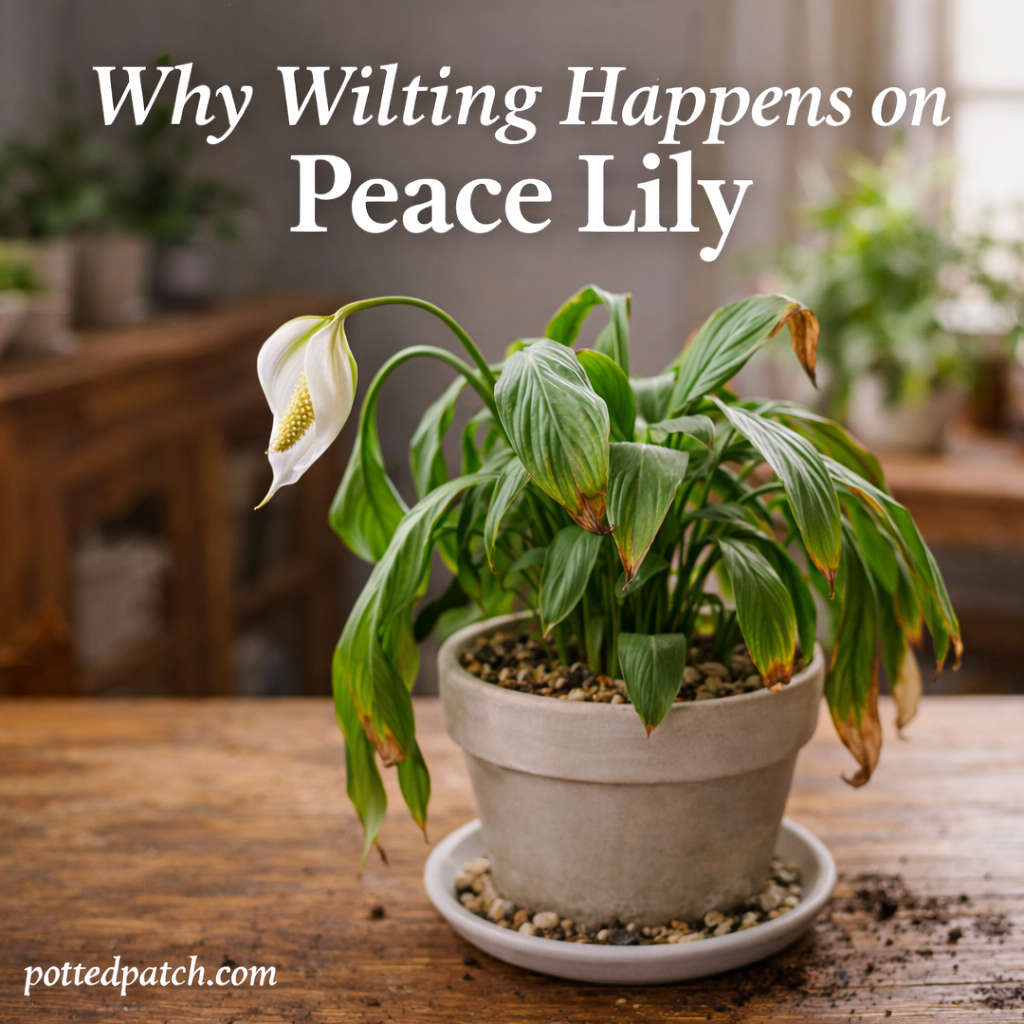
Few indoor plants are as expressive as the peace lily. One day it looks lush and upright. The next, it’s dramatically drooping like it’s beyond saving.
If your peace lily is wilting, don’t panic. In most cases, it’s fixable.
This guide explains exactly why wilting happens on peace lily and how to correct it quickly.
The Most Common Reason: Underwatering
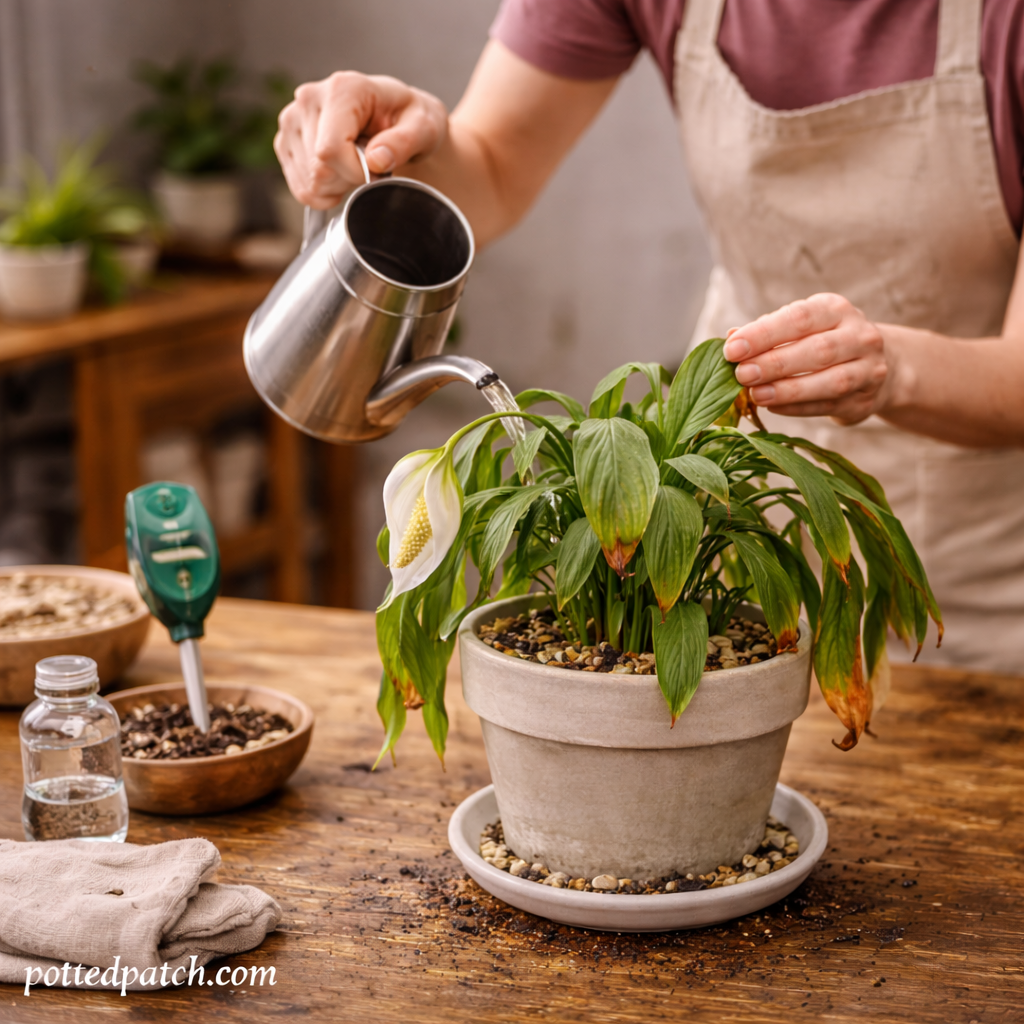
Peace lilies are known for their dramatic droop when thirsty.
Signs of Underwatering
- Leaves limp and hanging downward
- Soil completely dry
- Pot feels lightweight
- Plant perks up after watering
Peace lilies prefer consistently moist soil. When it dries out too much, the leaves lose turgor pressure and collapse.
How to Fix It
- Water thoroughly until excess drains from the bottom.
- Let the plant fully drain.
- Resume a consistent watering schedule.
In many cases, the plant will recover within hours.
Overwatering Can Also Cause Wilting
Surprisingly, too much water causes similar symptoms.
Signs of Overwatering
- Wilting despite wet soil
- Yellowing leaves
- Mushy stems
- Musty smell
When roots sit in soggy soil, they can’t absorb oxygen. Damaged roots can’t support the leaves, causing drooping.
How to Fix It
- Check drainage holes.
- Allow soil to partially dry before watering again.
- Repot in fresh, well-draining soil if root rot is suspected.
Healthy roots are firm and light-colored. Rotten roots are dark and soft.
Temperature Stress
Peace lilies are tropical plants and dislike sudden changes.
Wilting can happen if the plant is exposed to:
- Cold drafts
- Air conditioning vents
- Heater blasts
- Temperatures below 55°F
Solution
Move the plant to a stable location with moderate indoor temperatures.
Low Humidity
Dry indoor air, especially in winter, can cause drooping and leaf edge damage.
Improve Humidity By:
- Using a humidifier
- Grouping plants together
- Placing a pebble tray beneath the pot
- Keeping away from heating vents
Peace lilies prefer moderate to high humidity.
Root Bound Plants
If your peace lily hasn’t been repotted in years, roots may be tightly packed.
Signs include:
- Water runs straight through
- Roots circling the pot
- Rapid drying after watering
A root-bound plant struggles to absorb moisture evenly.
Fix
Repot into a slightly larger container with fresh, well-draining potting mix.
Transplant Shock
If you recently repotted or moved your peace lily, wilting may simply be stress.
Common causes:
- Changing light conditions
- Disturbing roots
- Moving rooms
Most plants recover within a week if care remains consistent.
How to Quickly Diagnose Wilting
Use this simple check:
- Touch the soil.
- If dry → Water thoroughly.
- If wet → Improve drainage and reduce watering.
The soil condition usually reveals the problem.
When Wilting Is Normal
Occasional drooping before watering is normal for peace lilies. Many owners use this as a signal that it’s time to water.
As long as the plant rebounds after watering, it’s healthy.
How Long Does Recovery Take?
- Underwatering recovery: Often within hours
- Overwatering recovery: Several days to weeks
- Root rot recovery: Requires repotting and patience
Consistency is key.
Preventing Future Wilting
To keep your peace lily upright and healthy:
- Water when the top inch of soil is dry
- Use a pot with drainage holes
- Avoid temperature extremes
- Maintain moderate humidity
- Repot every 1–2 years
Peace lilies thrive when their environment stays stable.
Final Thoughts
Wilting on a peace lily is usually caused by watering issues—either too little or too much. Check the soil first, adjust your routine, and give the plant time to respond.
Most peace lilies are resilient and bounce back quickly with proper care.
If yours is drooping today, there’s a good chance it will look refreshed tomorrow.