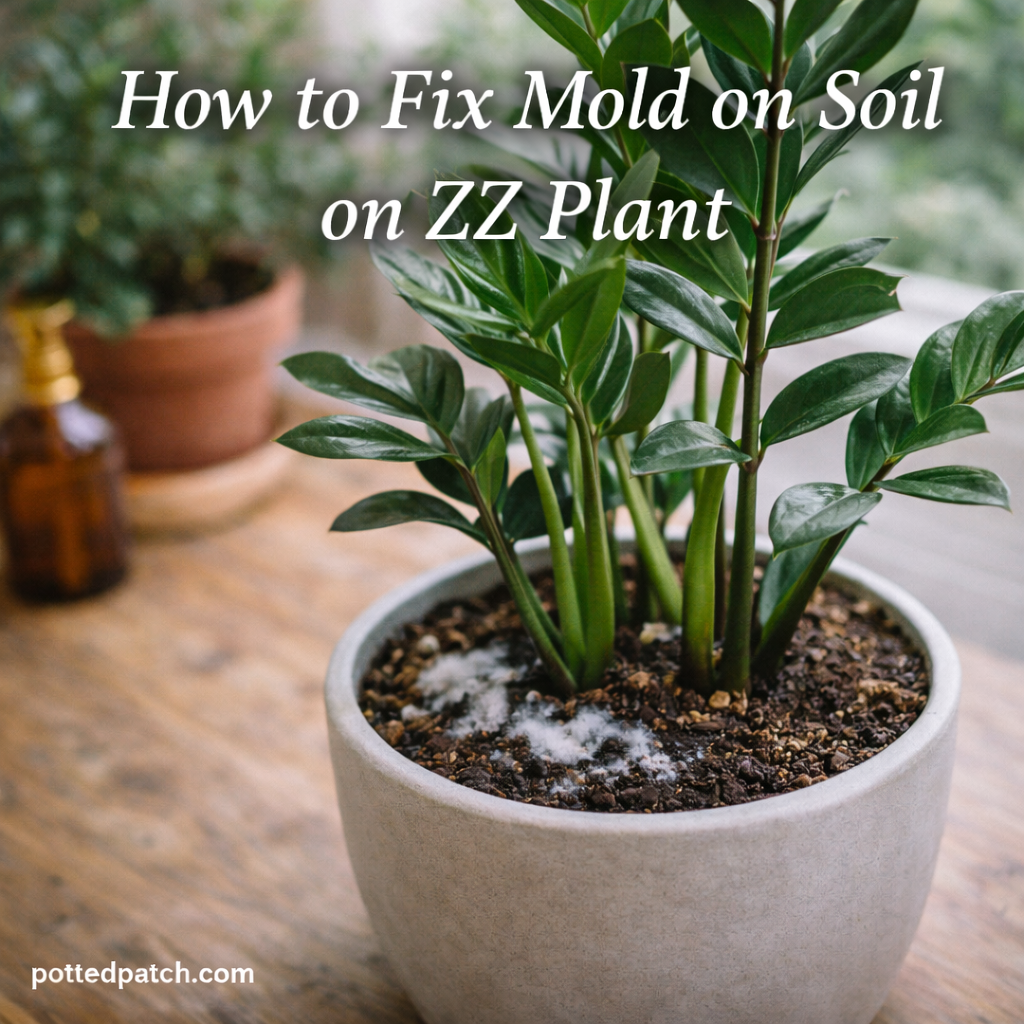
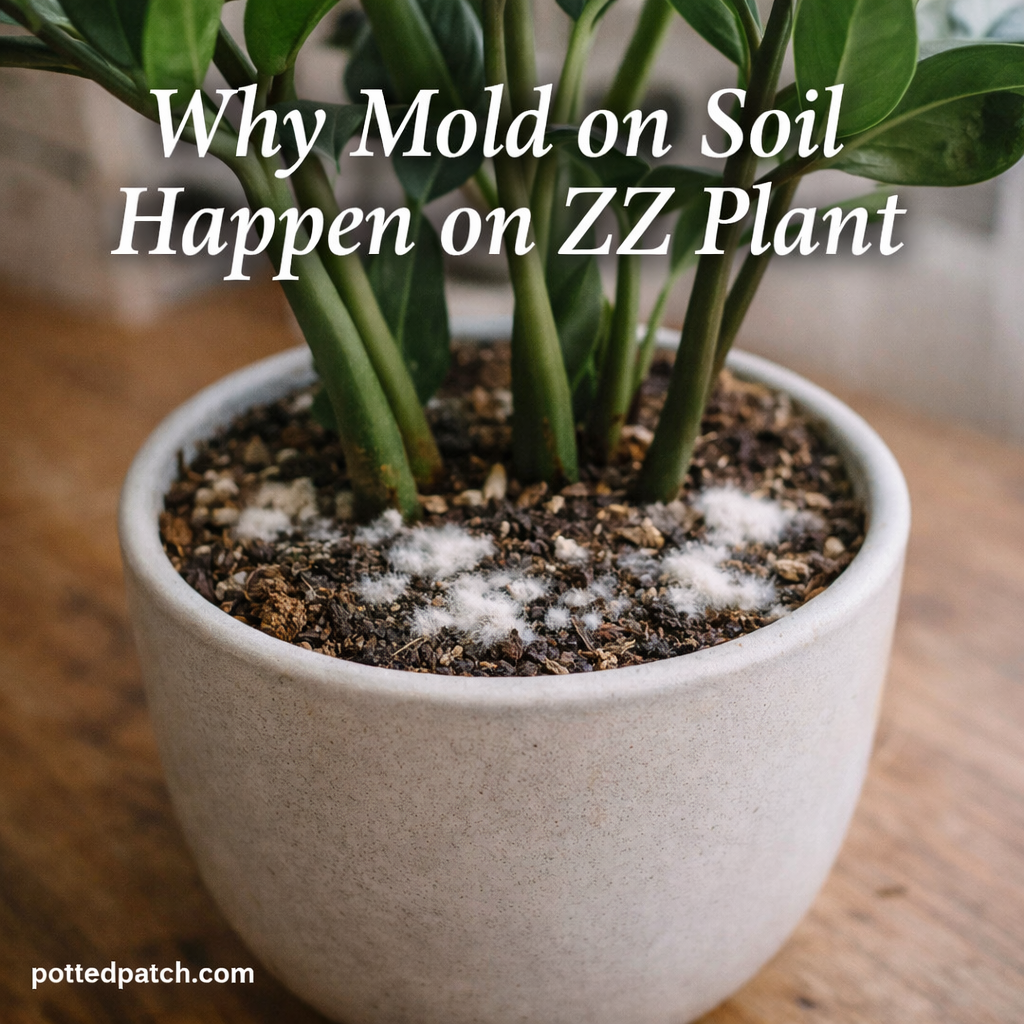
If you’ve noticed fuzzy white or gray mold forming on the soil of your ZZ plant, don’t panic. It’s a common issue — and in most cases, it’s easy to fix.
Mold on soil usually isn’t attacking your plant directly. Instead, it’s a sign that moisture levels, airflow, or soil conditions are slightly out of balance.
Let’s break down why it happens and how to solve it for good.
What Is That White Mold on ZZ Plant Soil?
The white or gray fuzzy layer you see is typically saprophytic fungus.
This type of fungus feeds on:
- Decaying organic matter
- Old roots
- Bark or peat in potting soil
It thrives in moist, low-airflow environments — which makes overwatered indoor plants a perfect target.
The good news? It’s usually harmless to the plant itself.
The bad news? It signals conditions that can lead to root rot if ignored.
Why Mold Develops on ZZ Plant Soil
ZZ plants (Zamioculcas zamiifolia) are drought-tolerant and store water in their thick rhizomes. They prefer dry soil between waterings.
When soil stays wet too long, mold becomes likely.
Here are the main causes:
1. Overwatering
This is the #1 reason.
ZZ plants need the soil to dry out almost completely before watering again.
If you water on a schedule instead of checking soil dryness, excess moisture builds up — creating the perfect mold environment.
2. Poor Drainage
Even if you don’t overwater, drainage issues can trap moisture.
Common problems:
- Pot without drainage holes
- Heavy, compact soil
- Decorative cachepots holding excess water
- Roots packed tightly in old soil
Moisture that can’t escape = mold growth.
3. Low Air Circulation
Still air slows evaporation.
If your ZZ plant sits in:
- A corner with no airflow
- A closed bathroom
- A crowded shelf
The top layer of soil may stay damp longer than expected.
4. Organic-Heavy Soil Mix
Some potting mixes contain high levels of peat, compost, or bark.
These materials break down over time, and fungus feeds on that decaying matter.
Older soil increases the risk of mold.
5. High Indoor Humidity
While ZZ plants tolerate average humidity well, consistently high humidity combined with moist soil increases fungal growth.
Humidity alone won’t cause mold — but paired with overwatering, it accelerates it.
Is Mold Harmful to a ZZ Plant?
In most cases, surface mold:
- Does not infect the leaves
- Does not directly attack roots
- Does not kill the plant
However, it indicates excess moisture — and prolonged wet soil can cause:
- Root rot
- Yellowing leaves
- Mushy rhizomes
So while the mold itself isn’t the enemy, the environment behind it can be.
How to Get Rid of Mold on ZZ Plant Soil
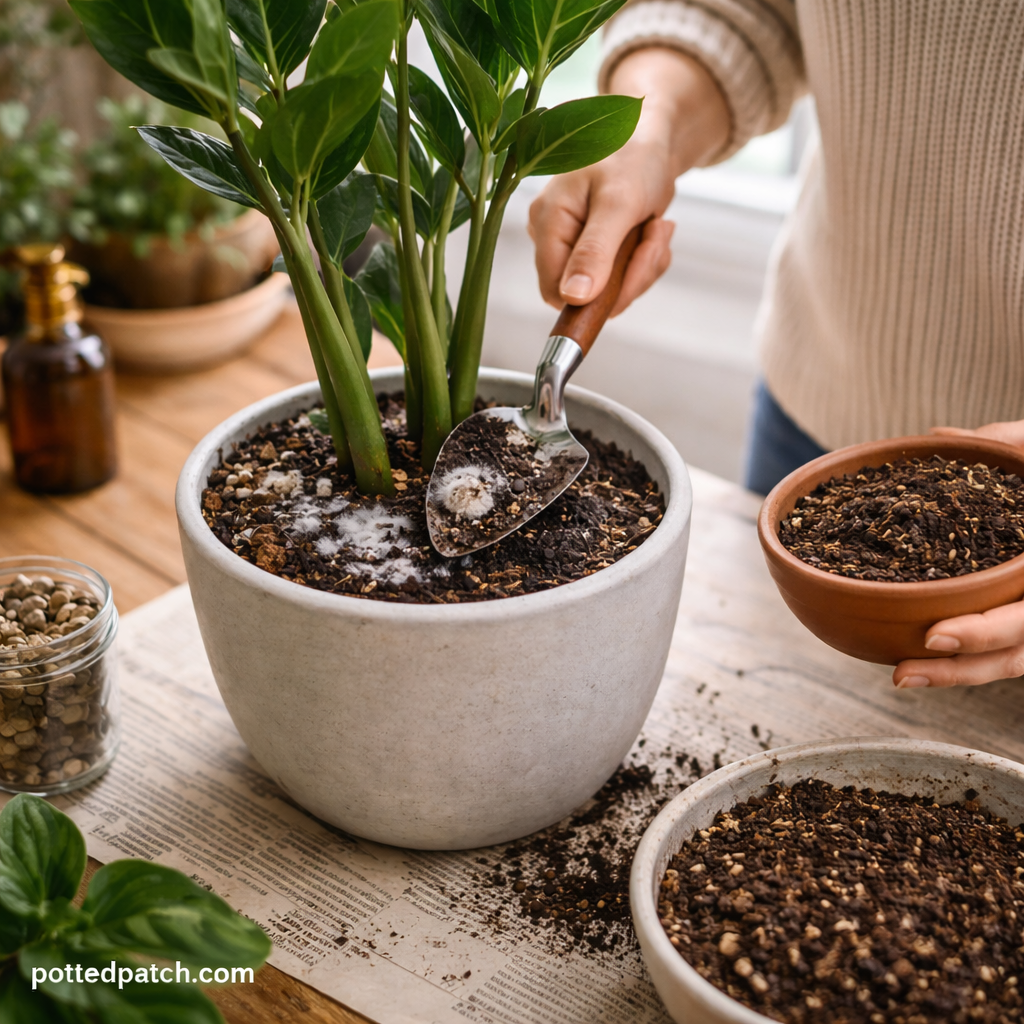
Here’s how to fix the issue properly.
Step 1: Let the Soil Dry Completely
Stop watering.
Wait until the soil is dry at least 2–3 inches deep before watering again.
Step 2: Remove the Top Layer
Use a spoon or small trowel to remove the top 1–2 inches of moldy soil.
Discard it.
Replace with fresh, dry potting mix.
Step 3: Improve Drainage
If drainage is poor, repot your ZZ plant.
Use a well-draining mix such as:
- 2 parts indoor potting soil
- 1 part perlite
- 1 part coarse sand or orchid bark
Always use a pot with drainage holes.
Step 4: Increase Airflow
Move the plant to a brighter, better-ventilated area.
Even gentle air movement from a fan can help prevent mold from returning.
Step 5: Adjust Your Watering Schedule
Instead of watering weekly, follow this rule:
Only water when the soil is completely dry.
For most homes, this means:
- Every 2–4 weeks
- Less often in winter
ZZ plants prefer underwatering to overwatering.
When to Repot Completely
If mold keeps returning or you notice:
- A musty smell
- Yellowing leaves
- Soft stems
It may be time for a full repot.
Remove the plant, inspect the roots, and trim any black or mushy sections before replanting in fresh soil.
Healthy roots should feel firm and white or light tan.
Preventing Mold in the Future
Once fixed, prevention is simple:
- Use a fast-draining soil mix
- Avoid overwatering
- Ensure good airflow
- Don’t let water sit in the saucer
- Repot every 1–2 years
ZZ plants are extremely resilient. With proper care, mold issues rarely return.
Final Thoughts
Mold on ZZ plant soil is usually a moisture management issue — not a disease problem.
Correct the watering habits, improve drainage, and increase airflow, and your plant will thrive again.
When in doubt, remember this:
ZZ plants forgive dryness.
They struggle with constant moisture.
Let the soil dry, and you’ll rarely see mold again.