

The ZZ plant is known for being tough and drought-tolerant. So when its normally firm, upright stems turn soft or mushy, it’s a clear warning sign.
Soft stems almost always point to overwatering and root rot, but the good news is that you can often save the plant if you act quickly.
Here’s exactly how to fix soft stems on a ZZ plant — step by step.
Why ZZ Plant Stems Turn Soft
Before fixing the issue, it helps to understand what’s happening.
ZZ plants store water in:
- Thick rhizomes (underground bulb-like structures)
- Fleshy stems
- Glossy leaves
When soil stays wet too long:
- Roots suffocate
- Fungal rot develops
- Rhizomes begin to decay
- Stems soften from the base upward
Once stems feel mushy, root damage has usually already started.
Step 1: Remove the Plant from the Pot
Gently slide the plant out of its container.
Shake off loose soil so you can clearly see:
- The roots
- The rhizomes
- The base of each stem
This inspection is critical to saving the plant.
Step 2: Identify Healthy vs. Rotten Tissue
Healthy Roots & Rhizomes
- Firm to the touch
- White, cream, or light tan
- Solid and plump
Rotten Roots & Rhizomes
- Brown or black
- Mushy or slimy
- Foul-smelling
- Collapsing when squeezed
Soft stems attached to rotting rhizomes will not recover and must be removed.
Step 3: Trim Away All Rot
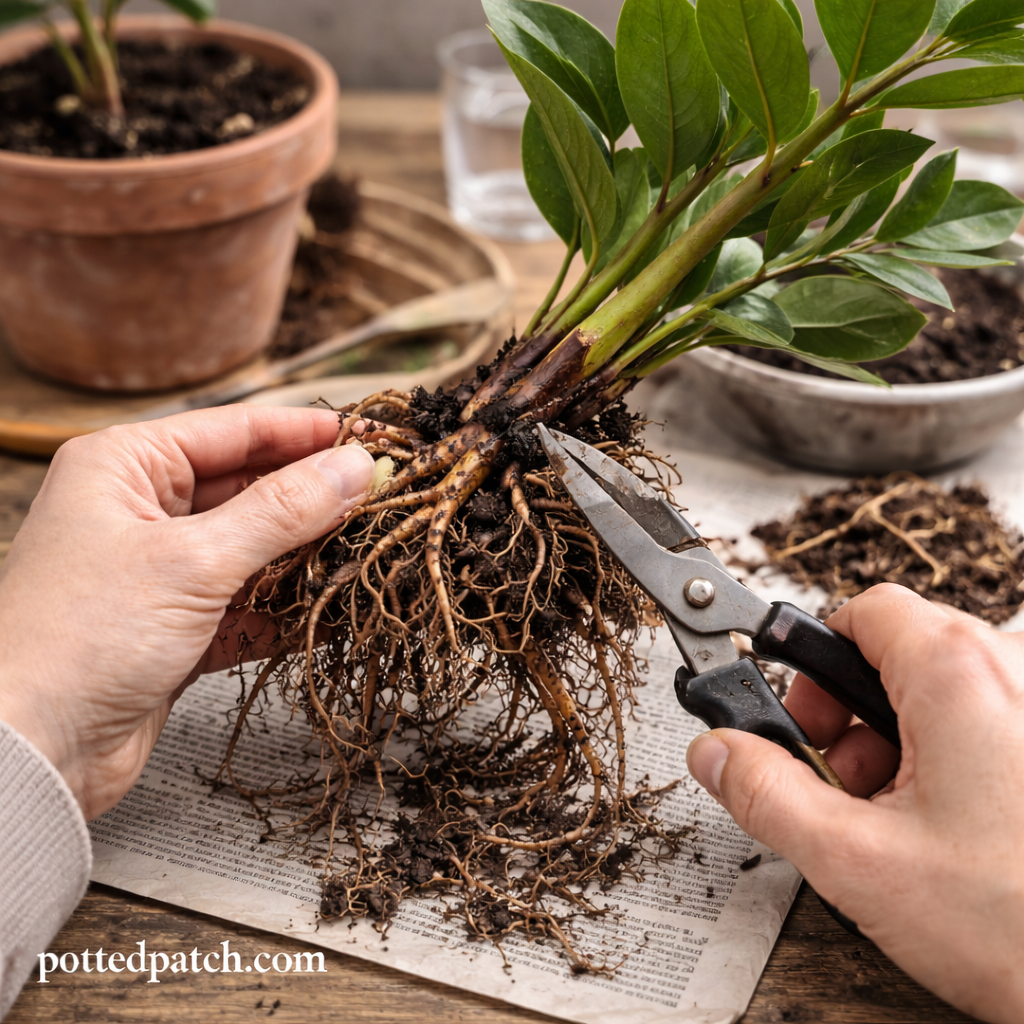
Using clean, sterilized scissors or pruning shears:
- Cut off all mushy roots
- Remove any soft stems
- Trim away decaying rhizomes
Be thorough. Even a small section of rot can spread.
Only firm, healthy tissue should remain.
Step 4: Let the Plant Dry Out
After trimming, let the plant sit out of soil for several hours (up to 24 hours if heavily trimmed).
This allows:
- Cut areas to callous slightly
- Excess moisture to evaporate
- Fungal spread to slow
Do not leave it in direct sun during this time.
Step 5: Repot in Fresh, Well-Draining Soil
Use a fast-draining mix such as:
- Cactus or succulent soil
- Potting mix amended with perlite or pumice
Choose a pot that:
- Has drainage holes
- Is only slightly larger than the remaining root system
Avoid oversized pots, which hold excess moisture.
Step 6: Delay Watering
After repotting:
- Wait 3–5 days before watering
- Then water lightly
Allow the soil to dry completely before watering again.
This is critical to preventing repeat rot.
What If Most of the Plant Is Mushy?
If nearly all rhizomes are soft, recovery may be difficult.
However, if even one firm rhizome remains:
- Separate it
- Repot it individually
- Provide bright, indirect light
- Water sparingly
ZZ plants are resilient and can regrow from a single healthy rhizome.
How Long Does Recovery Take?
Expect:
- No visible growth for several weeks
- Slight drooping at first
- New growth within 1–3 months if recovery is successful
Patience is key. Overcorrecting with more water will undo progress.
How to Prevent Soft Stems in the Future
Prevention is much easier than repair.
Water Infrequently
Most ZZ plants need watering only every:
- 2–4 weeks
- Even less in winter
Always allow soil to dry fully.
Use Proper Drainage
Never use pots without drainage holes.
Empty saucers after watering.
Avoid Heavy Soil
Dense soil holds moisture too long.
Amend standard potting mix with:
- Perlite
- Pumice
- Orchid bark
Provide Bright, Indirect Light
Good light helps soil dry more evenly and supports stronger growth.
Final Thoughts
Soft stems on a ZZ plant almost always trace back to excess moisture. Acting quickly — trimming rot, improving drainage, and adjusting watering habits — gives your plant the best chance at recovery.
Remember, ZZ plants thrive on neglect more than attention.
When in doubt, water less — not more.