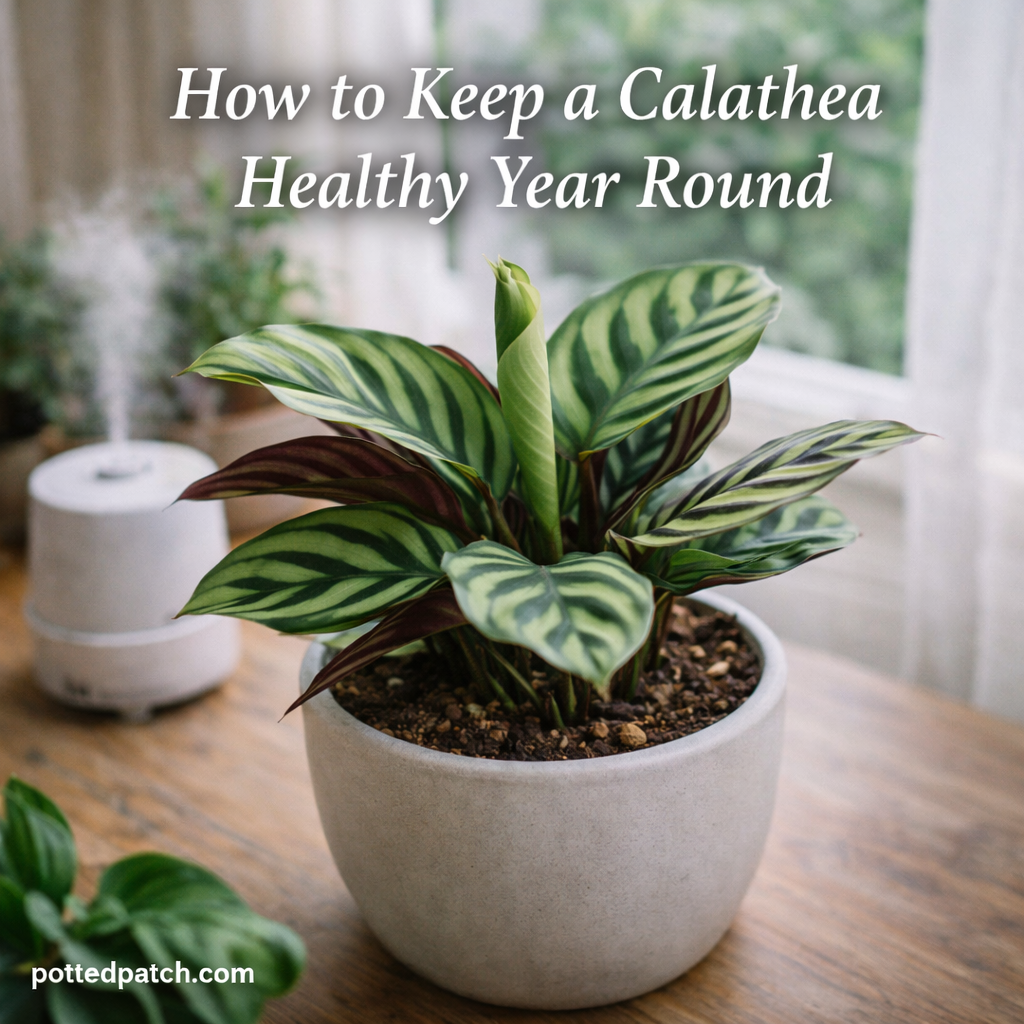

Calatheas are loved for their bold leaf patterns and dramatic nightly leaf movements. But they also have a reputation for being “fussy.”
In reality, most Calathea problems come down to a few common care mistakes. Once you understand what they need, they’re much easier to manage.
Here’s what typically goes wrong — and how to fix it.
Overwatering
This is the most common mistake with Calathea care.
While they like consistently moist soil, they do not tolerate soggy conditions.
What Happens
- Yellowing leaves
- Mushy stems
- Root rot
- Fungus gnats
Calatheas have fine roots that suffocate quickly in waterlogged soil.
How to Fix It
- Water only when the top 1–2 inches of soil feel dry
- Use a pot with drainage holes
- Never let the plant sit in standing water
Consistency is key — not constant moisture.
Letting the Soil Dry Out Completely
On the opposite end, letting a Calathea dry out too much causes stress.
What Happens
- Crispy leaf edges
- Drooping leaves
- Curling foliage
- Brown tips
Calatheas come from humid rainforest environments. They prefer steady moisture, not drought cycles.
How to Fix It
- Check soil weekly
- Water before the soil becomes bone dry
- Maintain even moisture
Aim for slightly damp, not soaking or dusty-dry.
Low Humidity
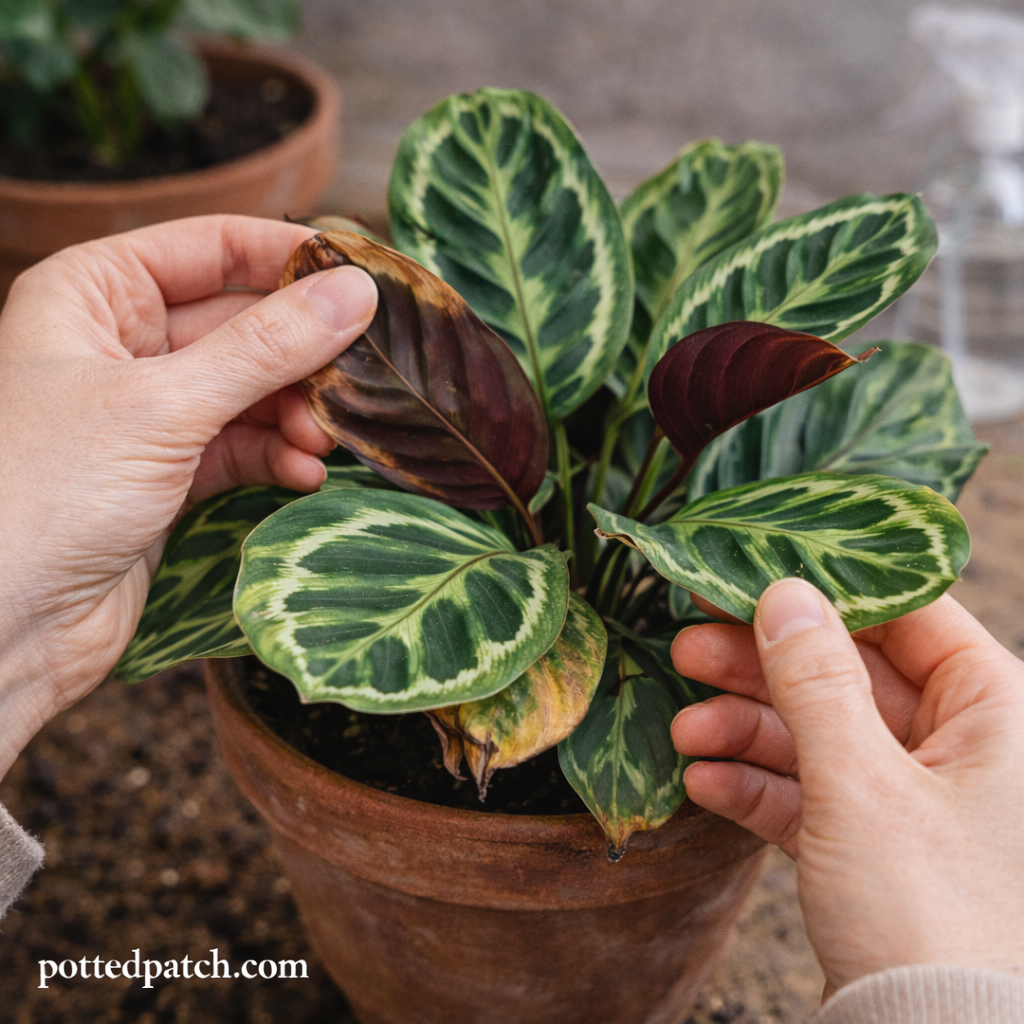
Dry indoor air is a major reason Calatheas struggle.
Signs of Low Humidity
- Brown leaf edges
- Curling leaves
- Faded patterns
- Increased pest problems
Many homes, especially in winter, drop below 40% humidity — too low for Calatheas.
How to Fix It
- Use a humidifier
- Group plants together
- Place the plant in a naturally humid room (like a bathroom with light)
Avoid misting as a primary solution; it provides only temporary relief.
Too Much Direct Sunlight
Calatheas prefer bright, indirect light.
Direct sunlight can:
- Fade leaf patterns
- Cause scorched spots
- Lead to curling leaves
Better Lighting Setup
- Near an east-facing window
- A few feet back from a south or west window
- Filtered light through sheer curtains
If the leaves look washed out, the light may be too strong.
Using the Wrong Water
Calatheas are sensitive to minerals and chemicals in tap water.
Hard water can cause:
- Brown tips
- Leaf edge burn
- Salt buildup in soil
Better Options
- Distilled water
- Rainwater
- Filtered water
If you must use tap water, let it sit out overnight before watering.
Fertilizing Too Frequently
Overfeeding stresses Calatheas.
Too much fertilizer can cause:
- Leaf tip burn
- Salt buildup
- Root damage
Best Practice
- Fertilize lightly during spring and summer
- Use half-strength balanced fertilizer
- Skip feeding during fall and winter
Less is more with this plant.
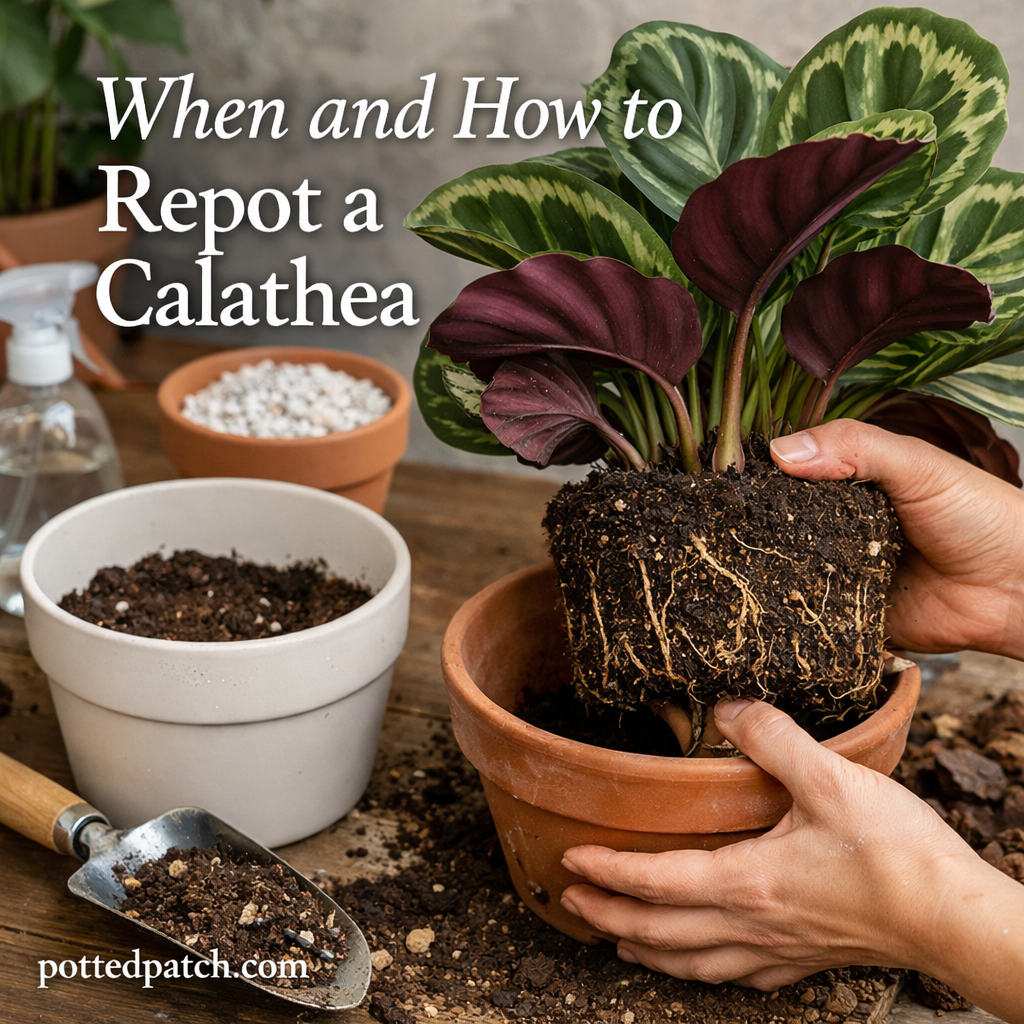
Repotting Too Often
Calatheas prefer being slightly snug in their pots.
Frequent repotting can:
- Disturb roots
- Cause shock
- Lead to drooping
Repot only every 1–2 years or when roots are clearly overcrowded.
Ignoring Early Warning Signs
Many problems start small.
If you notice:
- Slight curling
- Minor browning
- Drooping
Address the issue quickly before it worsens.
Calatheas communicate stress early — you just have to pay attention.
Final Thoughts
Most Calathea care issues come from trying too hard — too much water, too much sun, too much fertilizer.
Keep things simple:
- Bright, indirect light
- Even moisture
- High humidity
- Light feeding
When you avoid these common mistakes, Calatheas reward you with vibrant foliage and steady growth.
With a few adjustments, they become much less “fussy” and much more predictable.