
The ZZ plant is famous for being nearly indestructible. With glossy leaves and thick stems, it thrives on neglect better than most houseplants.
So when those firm stems suddenly turn soft or mushy, it’s a sign something isn’t right.
In this guide, you’ll learn why soft stems happen on a ZZ plant, how to fix the problem, and how to prevent it in the future.
What Soft Stems Mean on a ZZ Plant
Soft stems on a ZZ plant almost always indicate excess moisture and root rot.
Unlike many leafy houseplants, the ZZ plant stores water in:
- Thick rhizomes (underground bulb-like structures)
- Fleshy stems
- Waxy leaves
Because it holds moisture internally, it does not tolerate constantly wet soil.
When stems feel:
- Soft
- Squishy
- Mushy at the base
- Collapsing or leaning
The plant is usually suffering from overwatering.
The Most Common Cause: Overwatering
Overwatering is the number one reason ZZ plant stems turn soft.
Why It Happens
ZZ plants evolved in drought-prone environments. Their roots are not designed to sit in damp soil for long periods.
When soil stays wet:
- Roots suffocate from lack of oxygen
- Fungal bacteria begin to grow
- Roots rot
- Rot spreads upward into the stems
Once the stems soften, root damage is usually already present.
How to Tell If It’s Root Rot
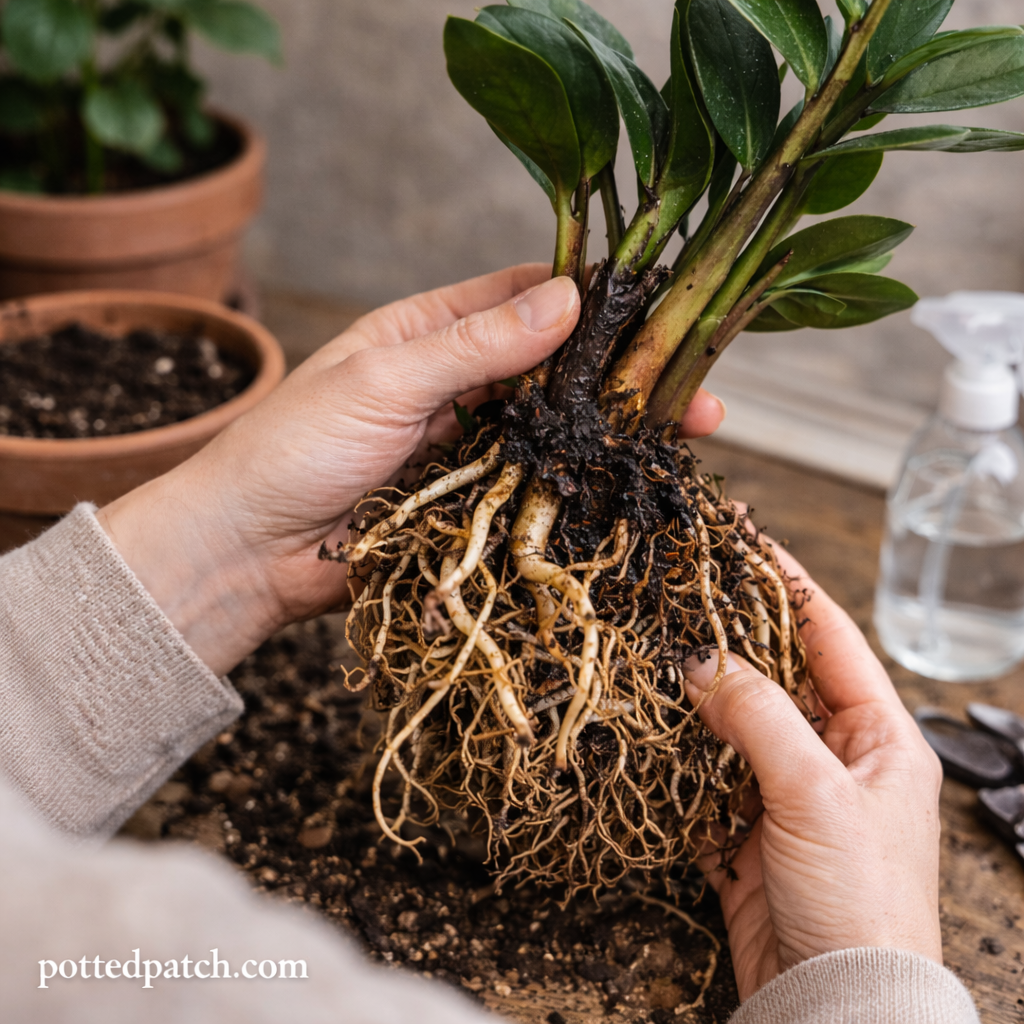
To confirm the issue, gently remove the plant from its pot and inspect the roots.
Healthy roots look:
- Firm
- White or light tan
Rotting roots look:
- Brown or black
- Slimy or mushy
- Foul-smelling
You may also notice:
- Yellowing leaves
- Leaves falling off easily
- Soil that smells sour
If stems are soft at the base, root rot is very likely the cause.
Can Soft Stems Be Saved?
Yes — but only if you act quickly.
Step 1: Remove the Plant from the Pot
Gently shake off excess soil.
Step 2: Trim Away Rot
Use clean scissors or pruning shears to remove:
- All mushy roots
- Any soft or collapsing stems
Only firm tissue should remain.
Step 3: Let the Roots Dry
Allow the plant to sit out of soil for a few hours so remaining roots can dry slightly.
Step 4: Repot in Fresh, Well-Draining Soil
Use a cactus or succulent mix.
Make sure the pot:
- Has drainage holes
- Is not oversized
Avoid watering immediately. Wait several days before the first light watering.
Other Possible Causes of Soft Stems
While overwatering is most common, there are a few other potential reasons.
Cold Damage
ZZ plants dislike temperatures below 50°F.
Cold stress can cause:
- Soft patches
- Discolored stems
- Tissue collapse
Move the plant to a warm, stable environment.
Poor Drainage
Even if you don’t water often, soil that lacks drainage can trap moisture.
Heavy, dense potting mix can suffocate roots just like overwatering.
Pest Damage (Rare)
Severe infestations of fungus gnats can worsen root rot conditions, but pests alone rarely cause soft stems.
How to Prevent Soft Stems in the Future
Prevention is simple once you understand the plant’s needs.
Water Less Than You Think
Allow soil to dry completely before watering again.
In many homes, this means watering:
- Every 2–4 weeks
- Even less in winter
Use the Right Soil
Choose a mix that drains quickly.
Adding:
- Perlite
- Pumice
- Orchid bark
Improves airflow around the roots.
Always Use a Pot with Drainage
No drainage holes = high risk of root rot.
Decorative cachepots are fine, but always empty excess water.
Avoid Frequent Repotting
ZZ plants prefer being slightly rootbound.
Repot only every 2–3 years unless there is a problem.
When Soft Stems Mean It’s Too Late
If:
- All stems are mushy
- Rhizomes are completely soft
- There are no firm roots remaining
The plant may not recover.
However, if even one healthy rhizome remains firm, you can often save it by trimming away the damaged sections and repotting.
Final Thoughts
Soft stems on a ZZ plant are almost always a watering issue. These hardy plants are built for drought, not constant moisture.
The good news? With quick action and better drainage habits, recovery is very possible.
Let the soil dry thoroughly between waterings, use a well-draining mix, and your ZZ plant will return to its upright, glossy, resilient self.