
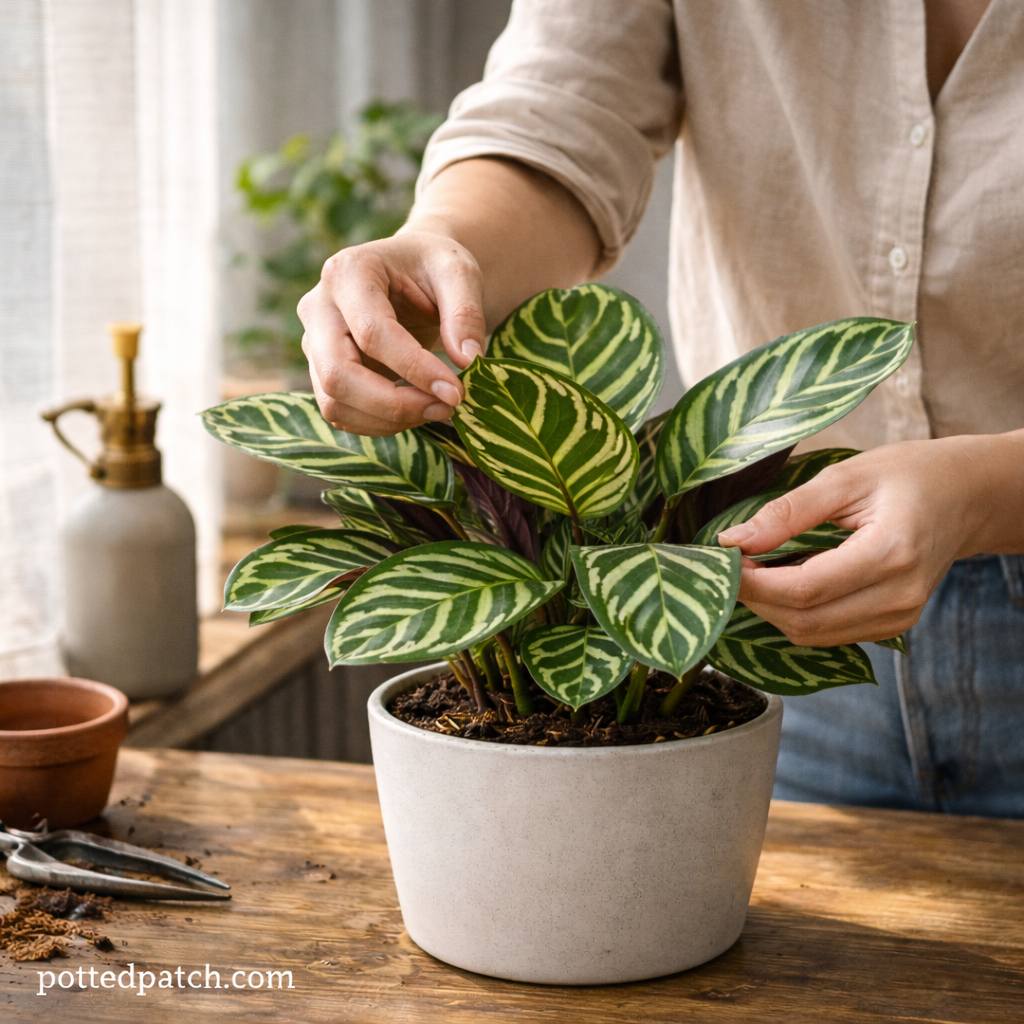
Calatheas are known for their bold leaf patterns, dramatic foliage movement, and reputation for being a little… particular.
If your Calathea has curling leaves, faded colors, or crispy edges, lighting is often the root cause. While these tropical plants don’t want direct sun, they also won’t thrive in dark corners.
In this guide, you’ll learn exactly what kind of light a Calathea needs, how to position it in your home, and how to fix common lighting mistakes.
What Kind of Light Does a Calathea Need?
Calatheas thrive in bright, indirect light.
Think of the dappled sunlight they would receive under the canopy of a tropical forest. They want filtered brightness — not harsh rays.
Ideal light conditions include:
- Bright room with sheer curtains
- A few feet away from a sunny window
- East-facing window with gentle morning light
- North-facing window with steady indirect light
Direct sunlight can scorch their delicate leaves, while very low light will cause slow growth and faded patterns.
Why Direct Sunlight Is a Problem
Calatheas have thin, sensitive leaves that burn easily.
Signs of Too Much Sun
- Brown, crispy edges
- Bleached or faded leaf patterns
- Curling leaves
- Dry patches or scorch marks
If your plant is sitting directly in a south- or west-facing window without protection, it’s likely getting too much intensity.
How to Fix It
- Move it 3–6 feet away from the window.
- Add a sheer curtain to filter the light.
- Shift it to an east-facing window for softer morning exposure.
Small adjustments make a big difference.
Can a Calathea Survive in Low Light?
Yes — but it won’t thrive.
In low light, you may notice:
- Slower growth
- Smaller new leaves
- Less vibrant coloration
- Drooping posture
Calatheas tolerate medium light, but deep shade or windowless rooms will eventually weaken them.
If your space is naturally dim, a grow light can help.
Best Window Placement for a Calathea
Here’s a simple breakdown by direction:
East-Facing Window
Ideal placement.
- Gentle morning sun
- Bright but not harsh
- Encourages steady growth
North-Facing Window
Very good option.
- Consistent indirect light
- Safe from burning
- May produce slower growth than east light
South-Facing Window
Use caution.
- Too intense if placed directly on the sill
- Move plant several feet back
- Always filter with curtains
West-Facing Window
Often too strong in the afternoon.
- Keep plant farther away
- Filter light if needed
How Far Should a Calathea Be From the Window?
A safe starting point:
- 3–6 feet from a bright window
- Directly beside (not in front of) sunny glass
- Anywhere bright enough to comfortably read without turning on lights
If shadows are sharp and intense, the light is probably too strong.
If the room feels dim or cave-like, it may be too low.
Do Calatheas Need Artificial Light?
In darker homes or apartments, yes.
Use:
- Full-spectrum LED grow lights
- 8–12 hours per day
- Positioned 12–18 inches above the plant
Grow lights are especially helpful in winter when daylight hours are shorter.
Avoid placing grow lights too close, as they can dry or stress the leaves.
Signs Your Calathea Has the Perfect Light
When lighting is right, you’ll see:
- Bold, high-contrast leaf patterns
- Upright stems
- Regular new growth during spring and summer
- Leaves that open during the day and fold at night
Calatheas are known as “prayer plants” because of this daily leaf movement. If that behavior is consistent, your lighting is likely balanced.
Common Lighting Mistakes
Avoid these common issues:
- Placing the plant directly in hot afternoon sun
- Keeping it in a dark corner far from any window
- Moving it frequently between light extremes
- Ignoring seasonal changes in sun intensity
Consistency matters just as much as brightness.
Seasonal Light Adjustments
Light changes throughout the year.
In winter:
- Move the plant slightly closer to the window
- Supplement with grow lights if needed
In summer:
- Pull it back if the sun becomes intense
- Add sheer curtains for protection
Calatheas appreciate gradual changes rather than sudden shifts.
Final Thoughts
The best light conditions for a Calathea are bright, indirect, and filtered — never harsh or direct.
If your plant has healthy patterns, steady growth, and leaves that move daily, you’ve found the sweet spot.
When in doubt, remember this rule:
Bright room, no direct sun.
Adjust gently, observe carefully, and your Calathea will reward you with vibrant, eye-catching foliage.