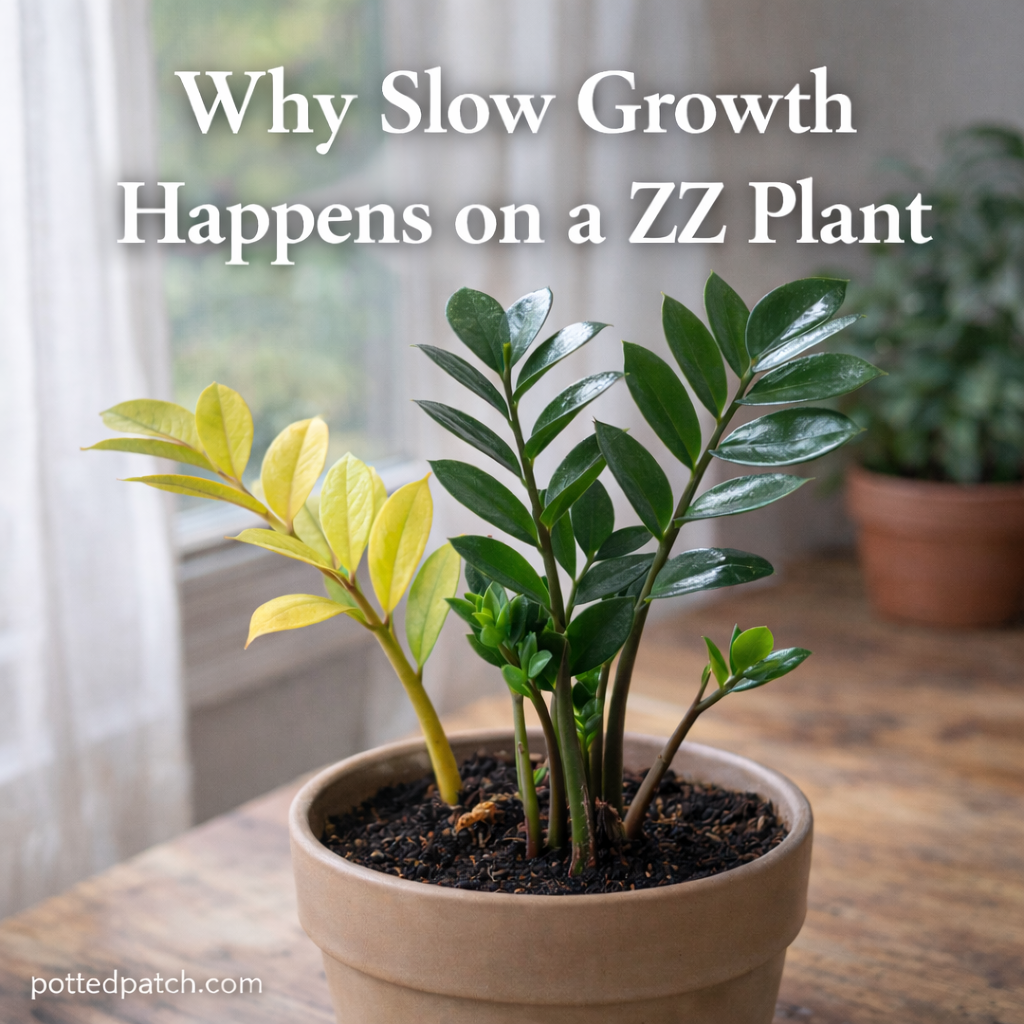
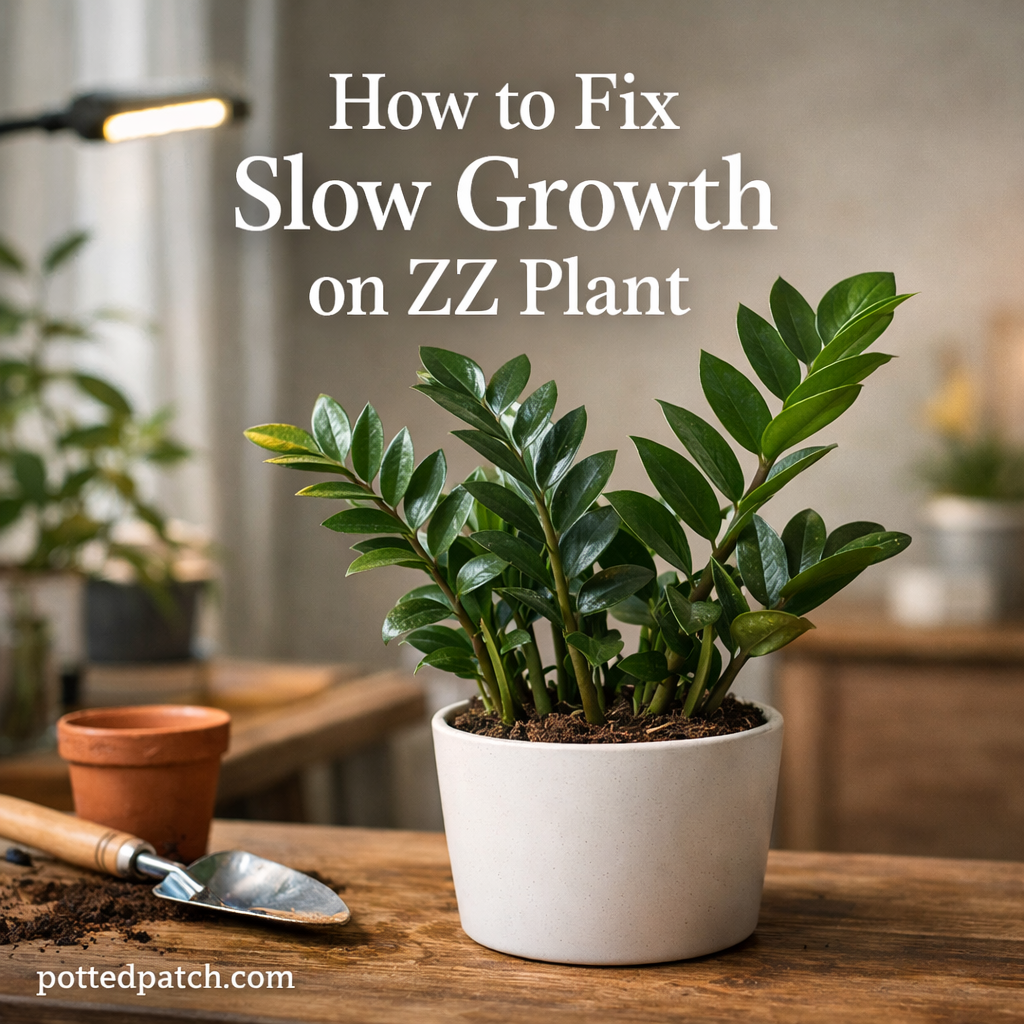
The ZZ plant (Zamioculcas zamiifolia) is famous for being nearly indestructible. It tolerates low light, missed waterings, and dry indoor air better than most houseplants.
But what if yours seems stuck?
If your ZZ plant hasn’t pushed out new stems in months, looks stalled, or appears smaller than expected, slow growth is usually fixable. The key is understanding what’s normal — and what’s not.
This guide walks you through why ZZ plants grow slowly and exactly how to encourage healthier, faster growth.
Is Slow Growth Normal for ZZ Plants?
Yes — to a point.
ZZ plants are naturally slow growers. In moderate indoor conditions, they may only produce:
- A few new stems per year
- One major growth flush in spring or summer
- Little to no growth in fall and winter
If your plant looks healthy (firm stems, glossy leaves, no yellowing), slow growth might simply be its normal pace.
However, if growth has completely stopped for many months during the growing season, something in the environment may need adjusting.
1. Increase Light (Without Burning the Plant)
The most common cause of stalled growth is insufficient light.
ZZ plants tolerate low light, but they grow best in:
- Bright, indirect light
- Rooms with filtered sunlight
- Areas near east- or north-facing windows
Signs Light Is Too Low
- No new stems for 6–12 months
- Stretched, leaning growth
- Smaller new leaves
How to Fix It
- Move the plant closer to a window (but avoid direct midday sun).
- Rotate the pot every few weeks for even growth.
- If natural light is limited, consider a grow light.
Even a modest increase in brightness can significantly improve growth.
2. Check Your Watering Routine
ZZ plants store water in thick underground rhizomes. Overwatering is far more dangerous than underwatering — but underwatering can slow growth too.
Proper Watering Rule
Let the soil dry completely before watering again.
In most homes, this means:
- Every 2–3 weeks in spring and summer
- Every 4–6 weeks in winter
Problems That Slow Growth
- Constantly soggy soil (roots suffocate)
- Bone-dry soil for months at a time
- Poor drainage
Fix
- Always use a pot with drainage holes.
- Water thoroughly until excess drains out.
- Empty the saucer after watering.
Balanced watering helps the plant shift energy from survival mode into growth mode.
3. Improve the Soil Mix
Heavy, dense soil suffocates ZZ roots and slows development.
ZZ plants prefer:
- Well-draining potting mix
- Slightly airy soil
- A blend that dries relatively quickly
Easy Soil Upgrade
Mix:
- 2 parts indoor potting soil
- 1 part perlite or pumice
- Optional: 1 part orchid bark
This allows oxygen to reach the roots, which directly impacts growth speed.
4. Fertilize During the Growing Season
Many ZZ plants never get fed — and while they survive, they won’t thrive.
When to Fertilize
- Spring through early fall
- Once every 4–6 weeks
Use a balanced liquid houseplant fertilizer diluted to half strength.
Avoid fertilizing in winter when the plant is dormant.
Overfertilizing can burn roots and slow growth, so more is not better.
5. Make Sure the Plant Isn’t Rootbound
If your ZZ plant has been in the same pot for years, roots may be overcrowded.
Signs It’s Time to Repot
- Roots growing out of drainage holes
- Soil drying extremely fast
- Pot cracking or bulging
Repot into a container only 1–2 inches larger in diameter. Too large of a pot can lead to excess moisture retention.
Spring is the best time to repot for maximum growth recovery.
6. Be Patient After Dormancy
ZZ plants often pause growth during:
- Winter months
- After repotting
- After relocation to a new environment
This adjustment period can last several weeks to a few months.
If the leaves are firm and healthy, patience may be all that’s required.
7. Maintain Ideal Temperature
ZZ plants prefer:
- 65–85°F (18–29°C)
- Stable indoor temperatures
- Protection from cold drafts
Cold stress can slow metabolism and halt new growth.
Avoid placing the plant near:
- Air conditioning vents
- Exterior doors in winter
- Drafty windows
Quick Growth-Boost Checklist
If your ZZ plant is stalled, run through this list:
- Is it receiving bright, indirect light?
- Is the soil fully drying between waterings?
- Does the pot have drainage?
- Is the soil airy and well-draining?
- Has it been fertilized during spring/summer?
- Is it rootbound?
- Is it warm enough?
Correcting even one of these can restart growth.
How Long Until You See Results?
After adjustments, expect:
- 3–6 weeks for subtle improvements
- 1–3 months for visible new shoots
- A noticeable growth flush in spring
Remember: ZZ plants grow in bursts, not steadily week to week.
When Slow Growth Is Not a Problem
Sometimes slow growth is simply maturity.
Older ZZ plants may focus on thickening rhizomes rather than producing many new stems. If the foliage looks glossy, upright, and healthy, your plant is likely doing just fine.
Final Thoughts
Slow growth on a ZZ plant is usually a lighting, watering, or soil issue — not a sign that the plant is dying.
With brighter indirect light, proper watering, improved drainage, and occasional feeding, your ZZ plant should reward you with strong new shoots during the growing season.
Sometimes the fix isn’t dramatic — just small environmental improvements and a little patience.