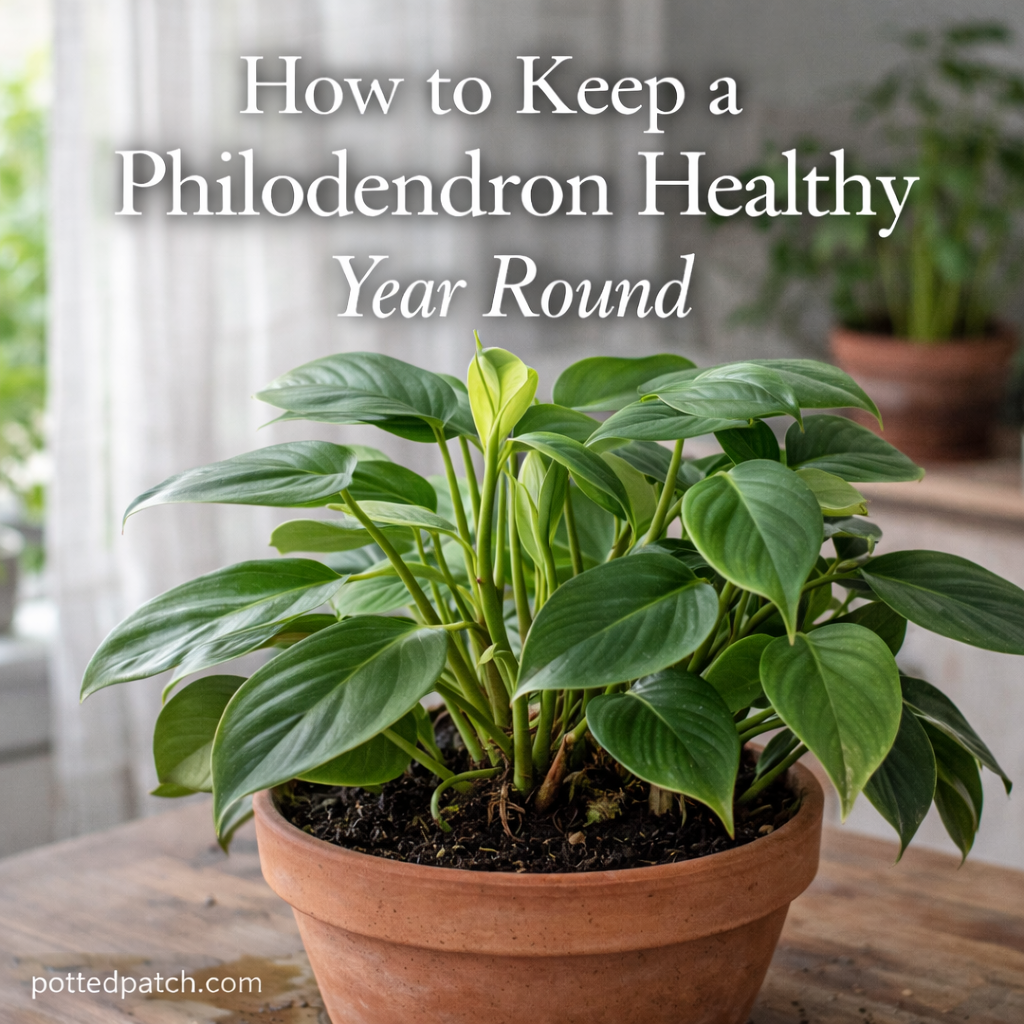
Philodendrons are among the most reliable and adaptable houseplants. With their lush foliage and forgiving nature, they can thrive for years — but only if their care adjusts with the seasons.
Keeping a philodendron healthy year round isn’t complicated. It simply requires understanding how light, watering, feeding, and environmental conditions shift throughout the year.
Here’s a practical, season-by-season guide to maintaining vibrant growth and preventing common problems.
Understand Your Philodendron Type
Before adjusting care, identify whether you have:
- A vining philodendron (like heartleaf varieties)
- A self-heading or upright type (like Congo or Birkin types)
Vining types may need pruning and support. Upright types focus more energy on leaf size and structure. Both require similar foundational care.
Light: Adjust With the Seasons
Philodendrons prefer bright, indirect light year round.
Spring & Summer
- Place near an east- or north-facing window.
- A few feet from a south- or west-facing window works well.
- Rotate every 1–2 weeks for even growth.
Fall & Winter
- Move closer to the brightest available window.
- Consider a grow light if days are short.
- Avoid cold drafts from windows.
Insufficient light leads to:
- Leggy growth
- Smaller leaves
- Slower development
Consistent brightness keeps foliage full and vibrant.
Watering: Let the Soil Guide You
Watering habits should change slightly with temperature and growth rate.
During Active Growth (Spring & Summer)
- Check the top 1–2 inches of soil.
- Water when dry.
- Drain excess water completely.
- Empty saucers.
During Slower Months (Fall & Winter)
- Allow soil to dry slightly more between waterings.
- Reduce frequency.
- Avoid watering on a strict schedule.
Philodendrons tolerate slight dryness better than constantly wet soil. Overwatering is the most common year-round issue.
Feeding: Support Growth at the Right Time
Philodendrons need nutrients during active growth.
Fertilizing Schedule
- Feed every 4–6 weeks in spring and summer.
- Use a balanced liquid houseplant fertilizer.
- Dilute to half strength.
- Stop fertilizing in late fall and winter.
Over-fertilizing in winter can cause weak, leggy growth.
Humidity & Temperature Stability
Philodendrons are tropical plants and prefer stable indoor conditions.
Ideal range:
- 65–85°F
- 50–70% humidity
To Maintain Healthy Conditions
- Keep away from heating vents and air conditioners.
- Group plants together to increase humidity.
- Use a humidifier during dry winter months.
- Avoid placing near exterior doors in winter.
Sudden temperature swings can stress the plant and slow growth.
Prune for Shape and Vigor
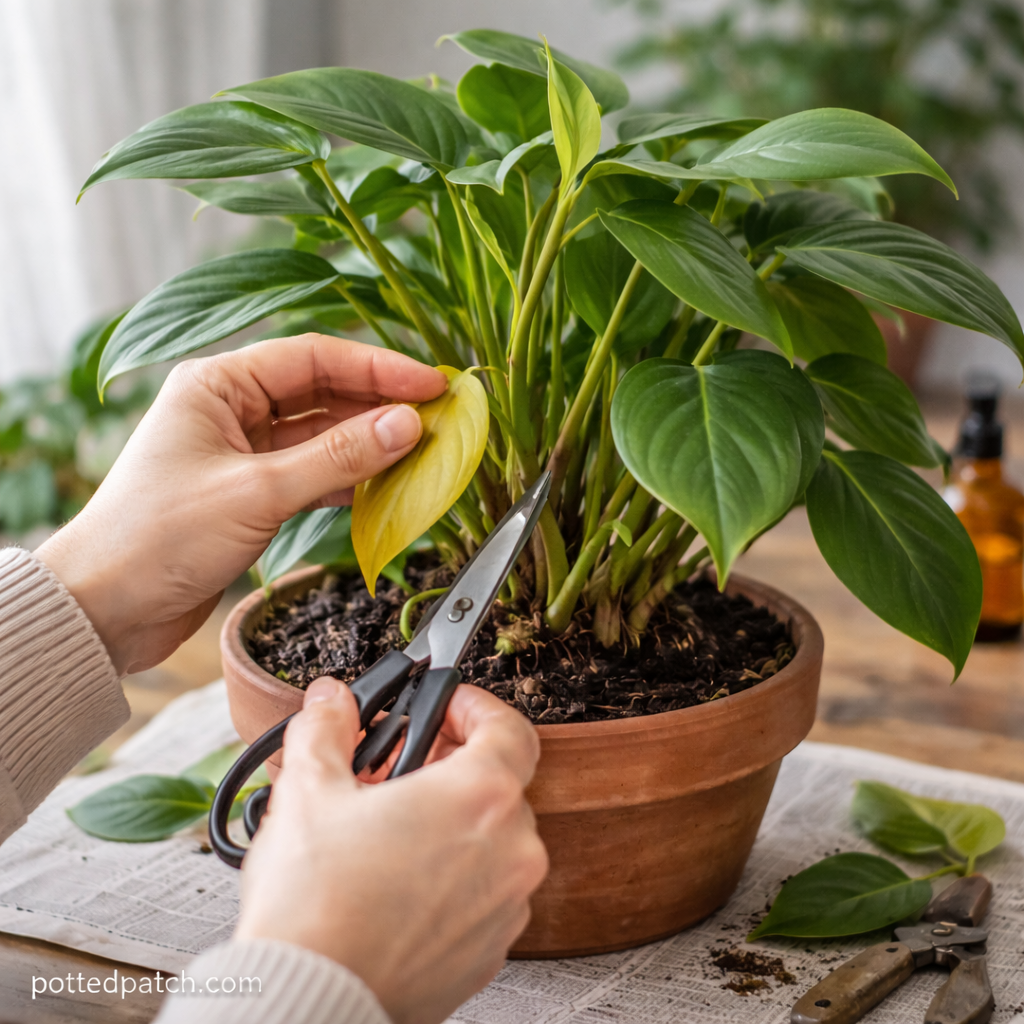
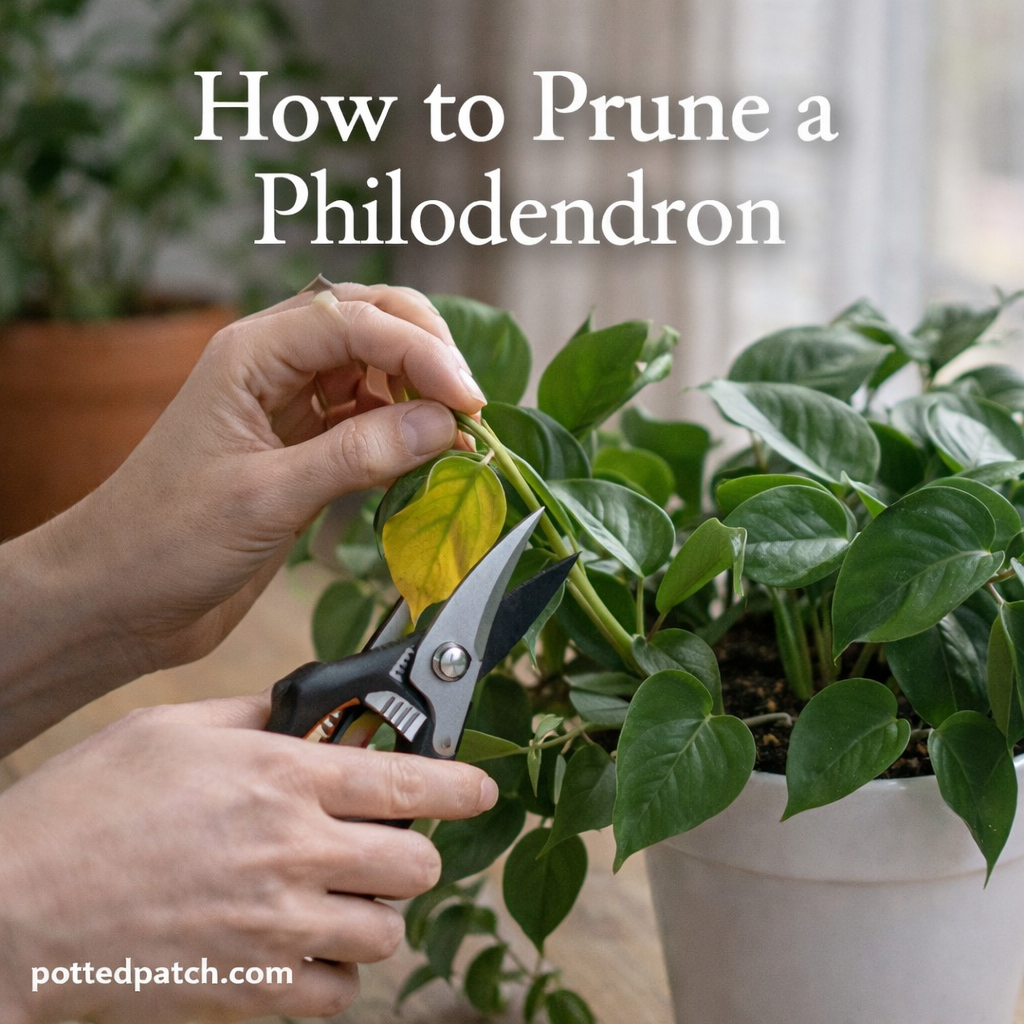
Regular pruning keeps your philodendron full and encourages branching.
When to Prune
- Early spring is ideal.
- Trim leggy stems anytime during active growth.
- Remove yellow or damaged leaves as needed.
Always cut just above a node. This encourages new shoots and fuller growth.
Repot Every 1–2 Years
Healthy roots are key to year-round vitality.
Signs it’s time to repot:
- Roots growing from drainage holes
- Soil drying extremely fast
- Stalled growth
- Compacted soil
Repotting Tips
- Move up only 1–2 inches in pot size.
- Use well-draining potting mix.
- Repot in spring for best results.
Fresh soil restores nutrients and improves drainage.
Keep Leaves Clean
Dust buildup can reduce light absorption.
Every few weeks:
- Wipe leaves gently with a damp cloth.
- Support leaves underneath while cleaning.
- Avoid leaf shine products.
Clean leaves photosynthesize more efficiently, supporting steady growth.
Watch for Pests Year Round
Philodendrons can occasionally attract:
- Spider mites
- Mealybugs
- Aphids
Inspect leaves (especially undersides) monthly. Early detection prevents larger infestations.
If pests appear:
- Isolate the plant.
- Wipe leaves with mild soapy water.
- Repeat weekly until resolved.
Seasonal Quick Reference Guide
Spring
- Increase watering.
- Resume fertilizing.
- Prune and repot if needed.
Summer
- Maintain bright indirect light.
- Monitor humidity.
- Feed regularly.
Fall
- Reduce fertilizing.
- Gradually reduce watering.
Winter
- Maximize available light.
- Water sparingly.
- Maintain stable warmth.
Signs Your Philodendron Is Healthy
A thriving philodendron will show:
- Firm, glossy leaves
- Steady new growth in active seasons
- Strong stems
- Even leaf spacing
- No mushy stems or foul-smelling soil
When the basics are consistent, philodendrons reward you with dependable growth.
Final Thoughts
Keeping a philodendron healthy year round comes down to balance:
- Bright, indirect light
- Moderate, consistent watering
- Seasonal feeding
- Proper drainage
- Stable temperature and humidity
With small seasonal adjustments, your philodendron can remain vibrant, full, and resilient all year long.
Consistency is more important than perfection.