
Philodendrons are popular for their lush, trailing vines and easygoing nature. But even low-maintenance plants need occasional pruning.
Learning how to prune a philodendron properly keeps it:
- Full and bushy
- Free from leggy growth
- Healthy and pest-resistant
- Shaped to fit your space
Whether you have a climbing or trailing variety, this guide will walk you through exactly how to prune your philodendron safely and effectively.
Why Pruning a Philodendron Is Important
Pruning isn’t just about looks — it directly improves plant health.
Benefits of Pruning
- Encourages fuller growth
- Removes yellow or damaged leaves
- Controls size and shape
- Prevents overcrowding
- Stimulates new stems
Regular pruning helps your philodendron redirect energy into strong, healthy growth.
When Is the Best Time to Prune?
The best time to prune a philodendron is during the active growing season:
- Early spring
- Late spring
- Early summer
You can prune lightly year-round, but avoid heavy pruning during fall and winter when growth slows.
Tools You’ll Need
Always use clean, sharp tools to prevent disease.
Recommended tools:
- Sharp pruning shears or scissors
- Rubbing alcohol (for sterilizing)
- Gloves (philodendrons contain mild irritants)
Before you begin, wipe blades with alcohol to disinfect them.
Step-by-Step: How to Prune a Philodendron
Step 1: Identify What Needs to Be Cut
Look for:
- Yellowing leaves
- Brown or crispy edges
- Long, leggy vines
- Weak or sparse stems
Decide whether you want to shape the plant, reduce size, or remove unhealthy growth.
Step 2: Locate the Node
A node is the small bump where leaves and roots grow from the stem.
Always cut:
- Just above a node
- At a slight angle
Cutting above a node encourages new growth to branch out from that point.
Step 3: Trim Leggy Growth
If your philodendron looks stretched or sparse:
- Trace the vine back toward the base.
- Cut just above a node.
- Remove up to one-third of the plant at a time.
Avoid removing more than 25–30% in one session to reduce stress.
Step 4: Remove Damaged or Diseased Leaves
If a leaf is:
- Completely yellow
- Brown and dry
- Mushy or rotting
Cut it off at the base of the stem.
Removing damaged leaves prevents energy waste and improves airflow.
Step 5: Clean Up and Monitor
After pruning:
- Remove fallen leaves from the soil.
- Check drainage.
- Resume normal watering schedule.
New growth should appear within a few weeks during active season.
How to Make Your Philodendron Fuller
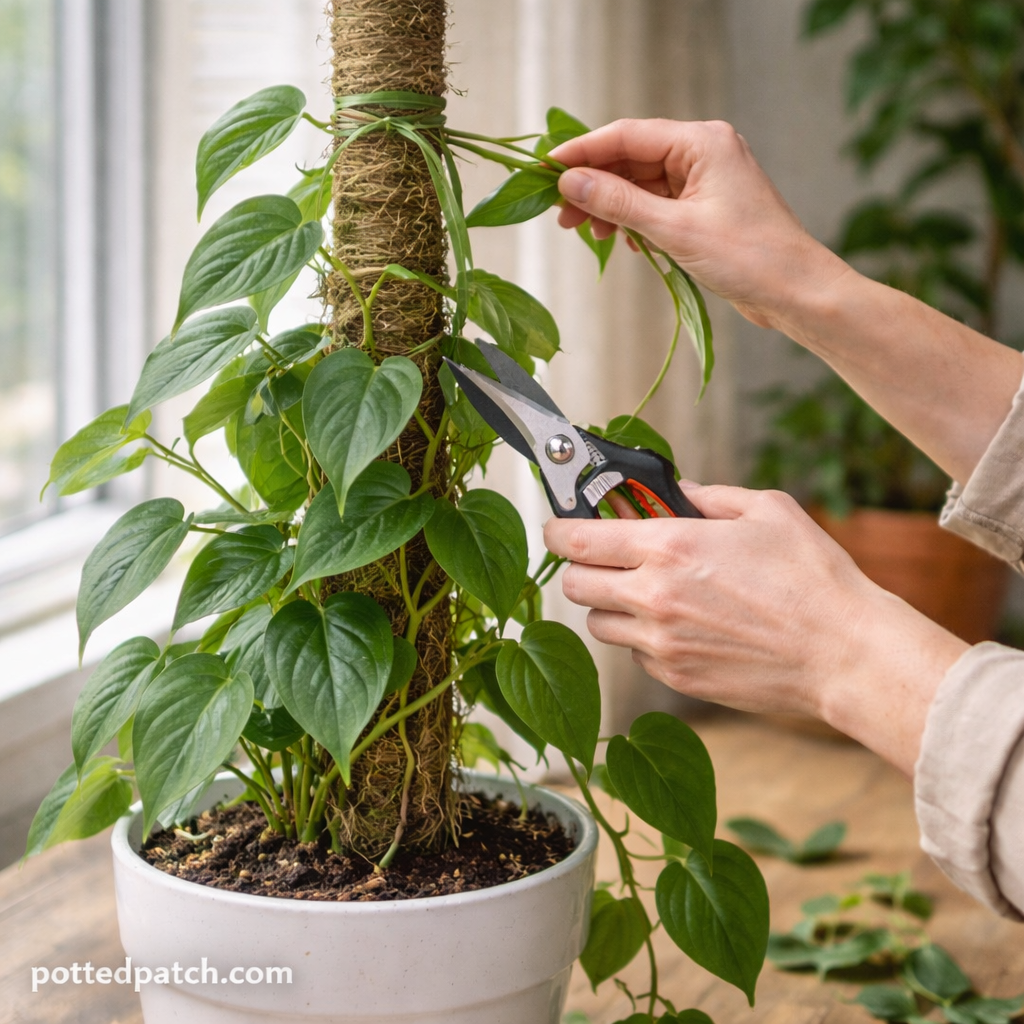
If your goal is bushier growth:
- Prune longer vines regularly.
- Pinch back tips every few weeks.
- Rotate the plant for even light exposure.
Consistent light and moderate pruning encourage compact growth instead of long, sparse vines.
Can You Propagate the Cuttings?
Yes — and it’s one of the easiest plants to propagate.
To Propagate:
- Take a cutting with at least one node.
- Place it in water or moist soil.
- Keep in bright, indirect light.
- Wait 2–4 weeks for roots.
Once roots are a few inches long, transfer to soil if started in water.
Common Pruning Mistakes to Avoid
Avoid these common errors:
- Cutting too far below a node
- Removing more than one-third at once
- Using dull or dirty tools
- Pruning heavily in winter
- Leaving cut debris in the pot
Gentle, strategic pruning is better than aggressive cutting.
How Often Should You Prune?
Most philodendrons benefit from:
- Light pruning every 2–3 months
- Removing yellow leaves as needed
- Shaping vines during growing season
Regular maintenance keeps growth controlled and attractive.
Signs You’ve Pruned Correctly
After proper pruning, you should notice:
- New side shoots forming
- Fuller, denser appearance
- Healthier leaf color
- Stronger stems
If growth slows dramatically, you may have pruned too heavily — just allow time for recovery.
Final Thoughts
Pruning a philodendron is simple once you understand where to cut and how much to remove.
By trimming above nodes, removing damaged leaves, and shaping vines thoughtfully, you’ll encourage stronger growth and a fuller plant.
With the right timing and clean tools, your philodendron will bounce back quickly — often looking better than ever within weeks.