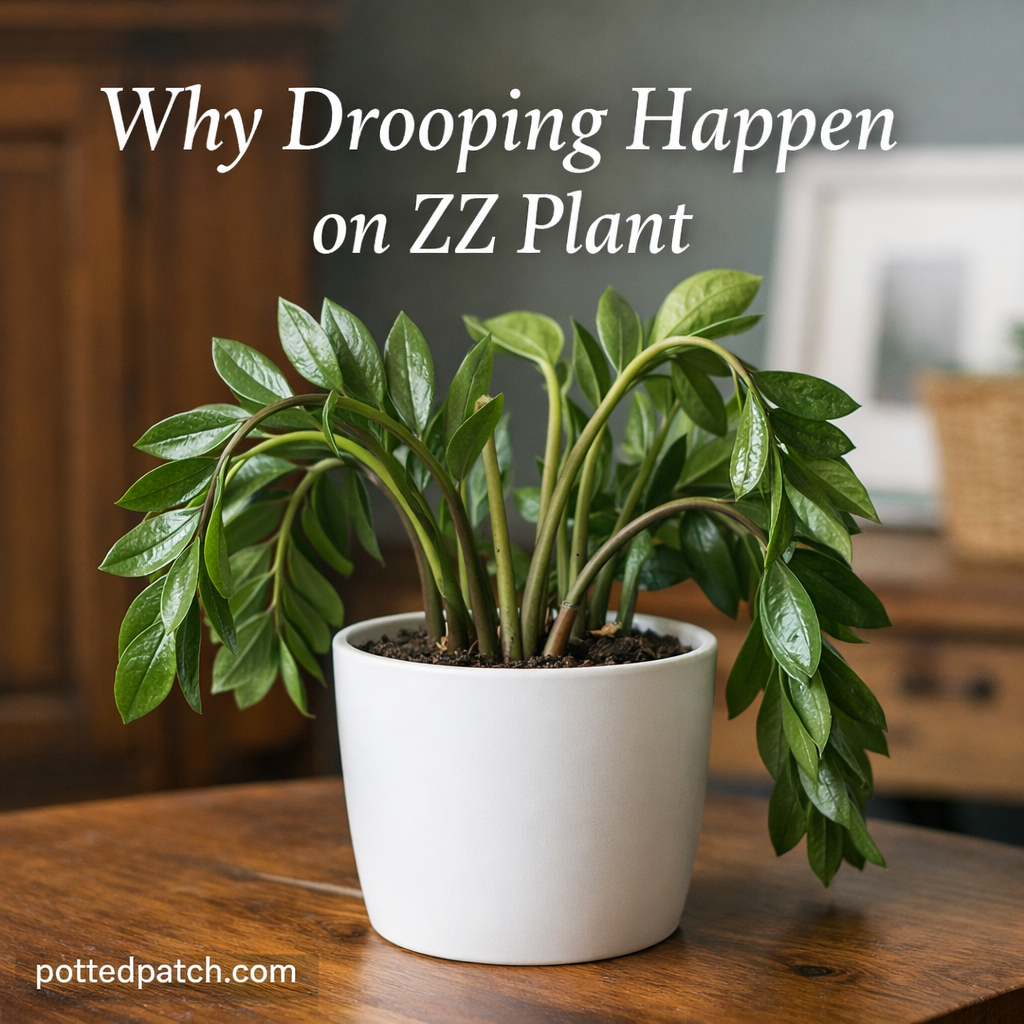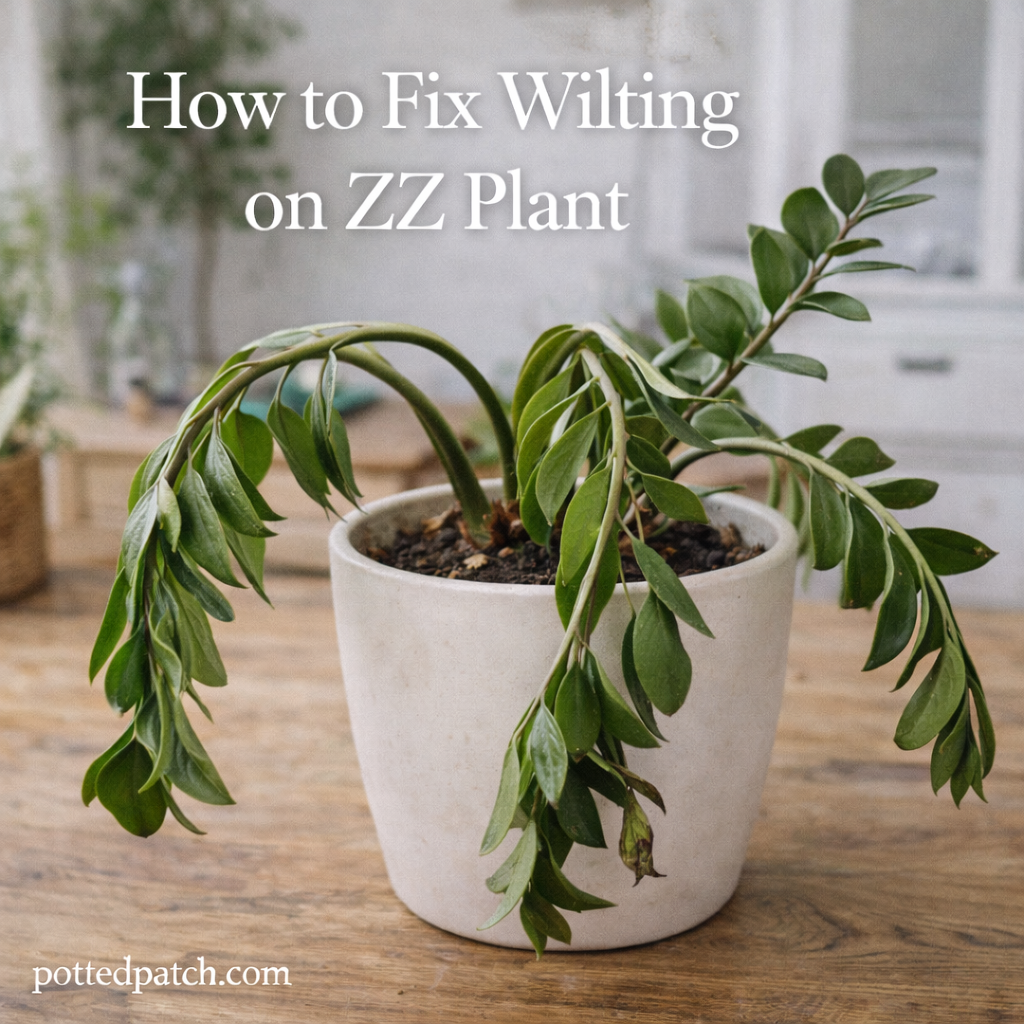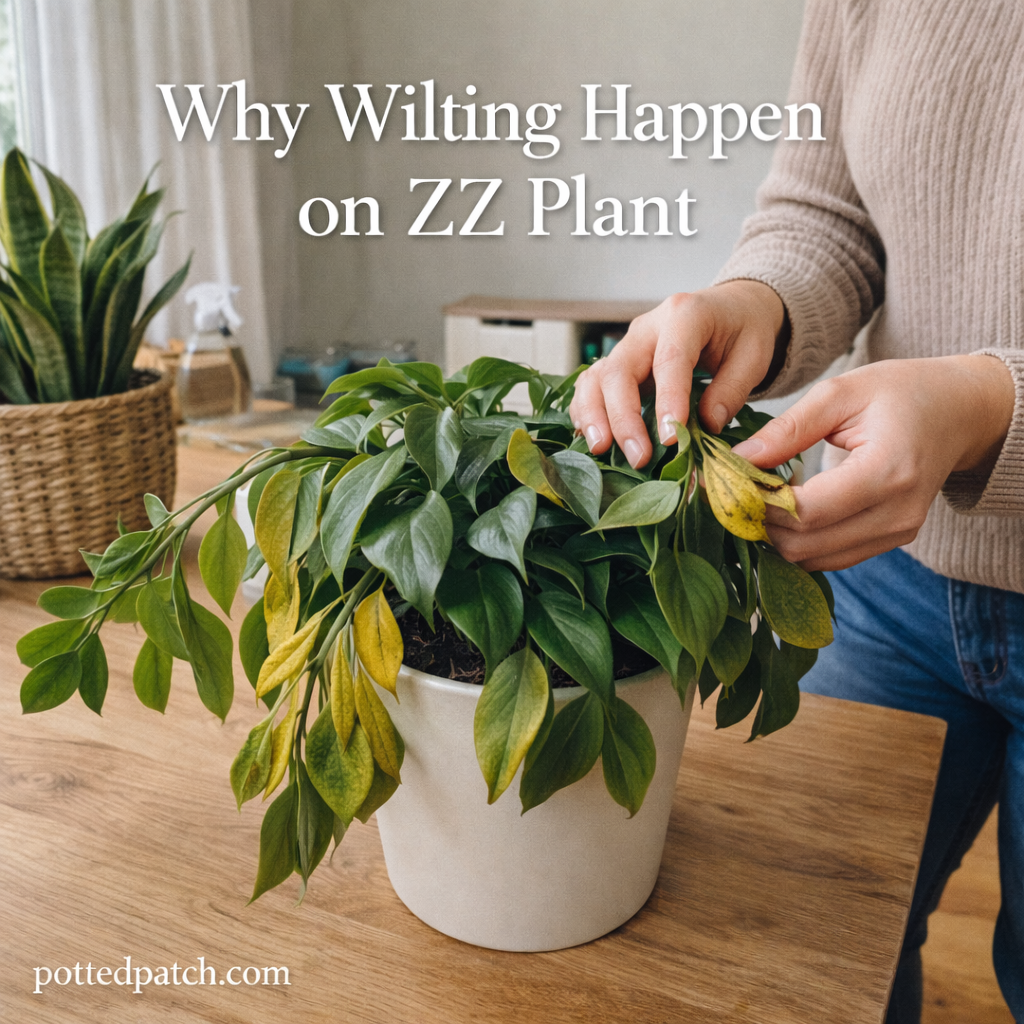
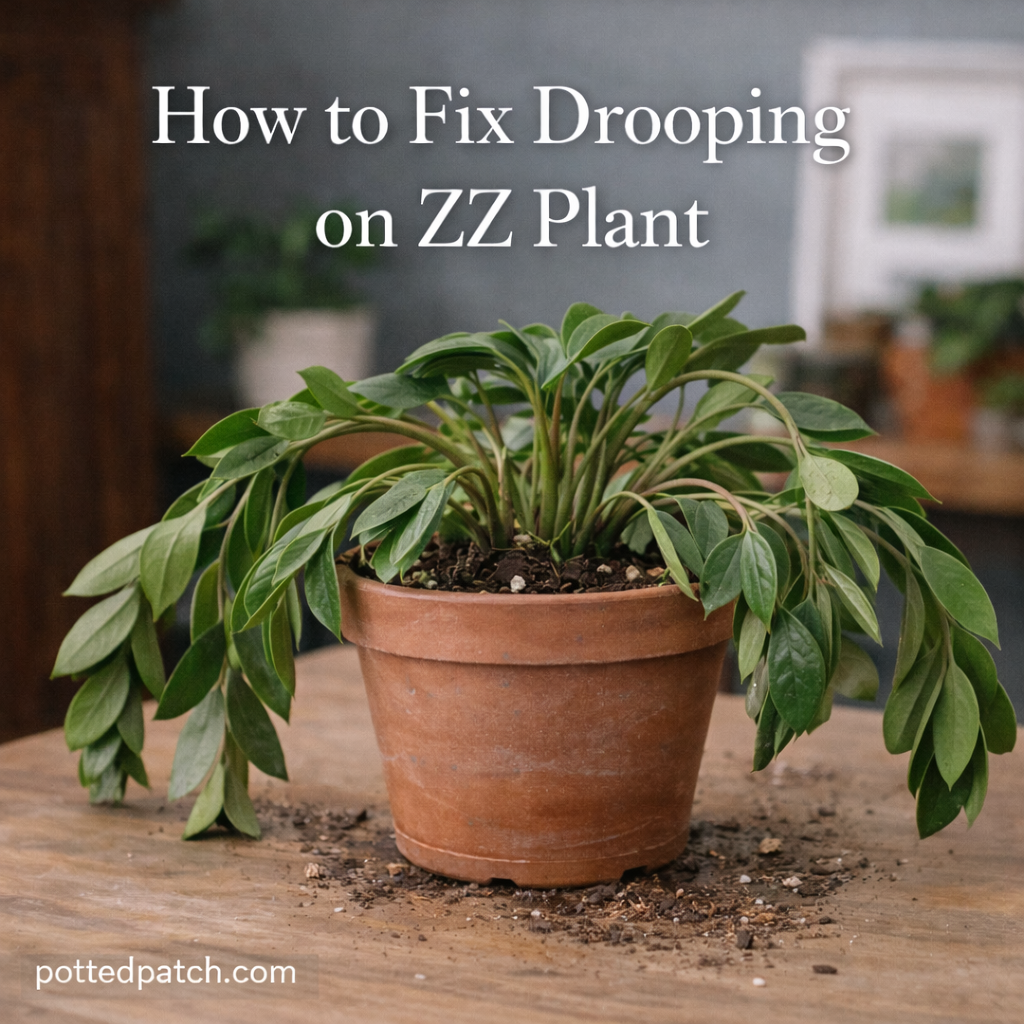
ZZ plants are known for being tough and low-maintenance. So when you notice stems flopping over or leaning more than usual, it can feel alarming.
The good news? Drooping on a ZZ plant is usually fixable once you identify the cause.
Let’s walk through exactly how to diagnose the issue and restore your plant’s upright growth.
Step 1: Check the Soil Moisture First
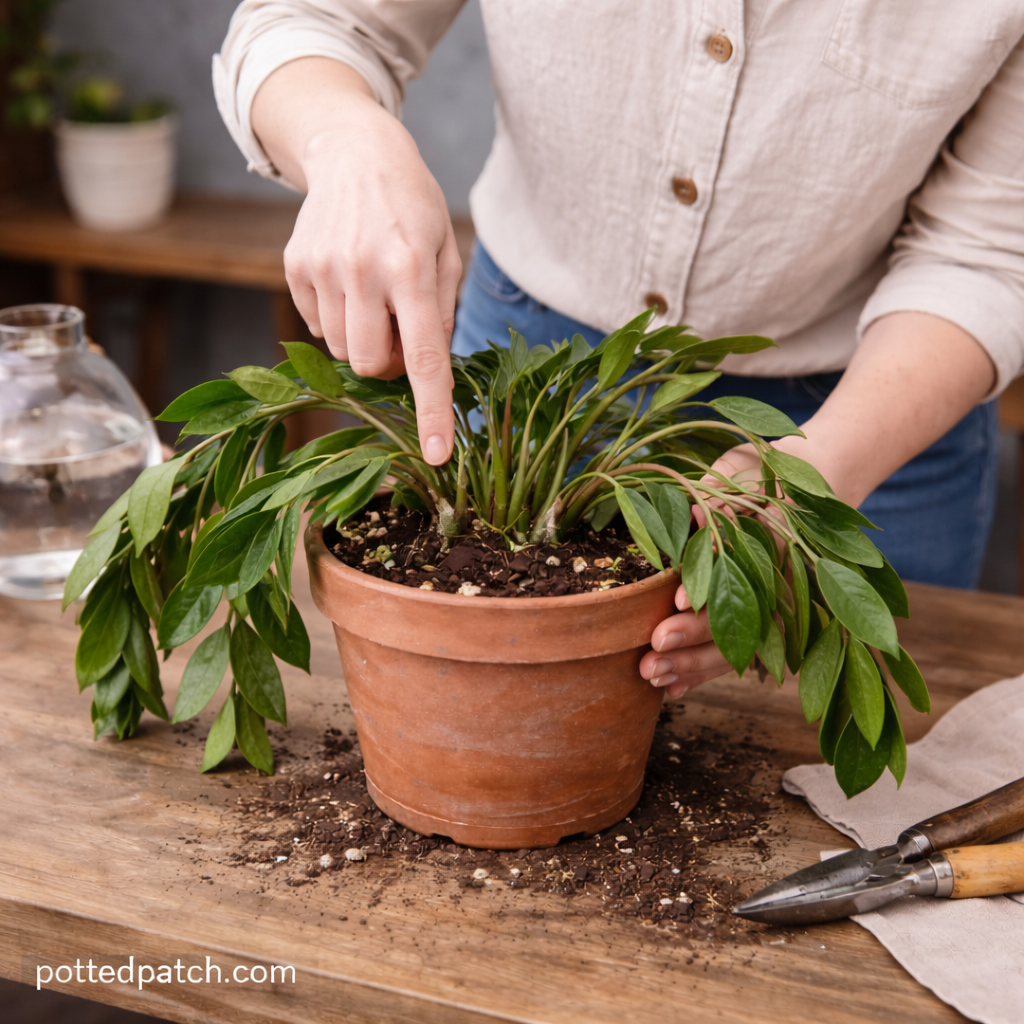
Watering problems are the most common reason ZZ plants droop.
If the Soil Is Wet
Overwatering can cause root rot. When roots begin to fail, stems lose support and droop.
Signs include:
- Yellowing leaves
- Mushy stems at the base
- Foul smell from soil
- Consistently damp potting mix
Fix for Overwatering
- Remove the plant from its pot.
- Inspect roots and rhizomes.
- Trim away any black or mushy sections.
- Repot in fresh, well-draining soil.
- Use a pot with drainage holes.
- Allow soil to dry fully before watering again.
ZZ plants prefer to dry out completely between waterings.
If the Soil Is Extremely Dry
While ZZ plants tolerate drought, prolonged dryness can cause temporary drooping.
Signs include:
- Wrinkled stems
- Lightweight pot
- Soil pulling away from pot edges
Fix for Underwatering
- Water deeply until excess drains out.
- Allow soil to dry again before the next watering.
Mild drooping from dryness often improves within a few days.
Step 2: Evaluate the Roots
If watering adjustments don’t fix the problem, check for root crowding.
A root bound ZZ plant may struggle to absorb water efficiently.
Signs of Root Binding
- Roots circling tightly inside the pot
- Water running straight through
- Soil drying out unusually fast
Fix for Root Bound Plants
- Repot into a container 1–2 inches larger.
- Gently loosen compacted roots.
- Use fresh, well-draining soil.
Step 3: Improve Lighting Conditions
ZZ plants tolerate low light, but extremely dim conditions can weaken stems.
Weak growth leads to:
- Long, stretched stems
- Leaning toward a light source
- Smaller leaves
Fix for Low Light
- Move the plant to bright, indirect light.
- Avoid harsh direct sun.
- Rotate the plant every few weeks for balanced growth.
Stronger light helps stems regain structure over time.
Step 4: Stabilize Temperature and Environment
Sudden temperature changes can stress your plant.
Keep your ZZ plant:
- Between 65–85°F
- Away from cold drafts
- Away from heater vents
- In stable indoor conditions
Stress-related drooping often resolves once the environment is consistent.
Step 5: Support Heavy or Mature Stems
Sometimes drooping is simply due to mature growth.
Older stems naturally arch outward.
If stems are:
- Firm
- Green
- Free of rot
Then your plant may just be spreading.
You can:
- Rotate the pot for balanced growth
- Use discreet plant stakes if needed
- Trim excessively heavy stems
How Long Does Recovery Take?
Recovery depends on the cause:
- Underwatering: 2–7 days
- Overwatering (after repotting): 2–4 weeks
- Lighting adjustments: several weeks
- Repotting shock: 1–3 weeks
ZZ plants recover slowly but steadily.
Prevent Future Drooping
To keep your ZZ plant upright:
- Water only when soil is completely dry
- Use well-draining soil
- Always choose pots with drainage holes
- Provide bright, indirect light
- Repot every 2–3 years
Consistency is the key to long-term plant health.
Final Thoughts
Fixing drooping on a ZZ plant starts with understanding why it’s happening.
Most cases are caused by watering issues, light imbalance, or root stress. Once you correct the underlying problem, your plant can bounce back.
Take it step by step, stay patient, and your ZZ plant will return to strong, upright growth.