Philodendrons are popular houseplants because they adapt well to indoor environments. But while they tolerate lower light better than many plants, they still have clear lighting preferences.
Providing the right light conditions helps your philodendron grow fuller, stronger, and healthier. Too little light leads to leggy growth. Too much direct sun can scorch the leaves.
Here’s exactly what your philodendron needs.
Ideal Light: Bright, Indirect Light
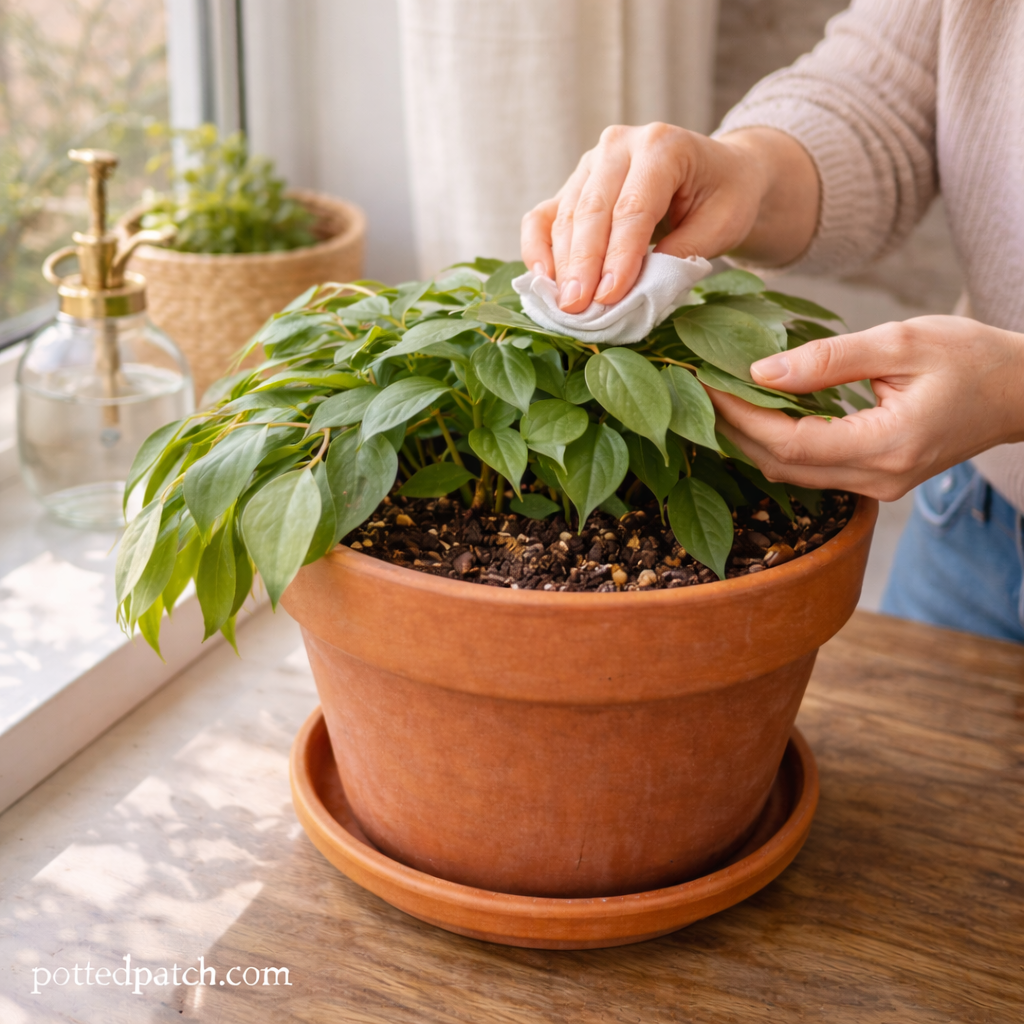
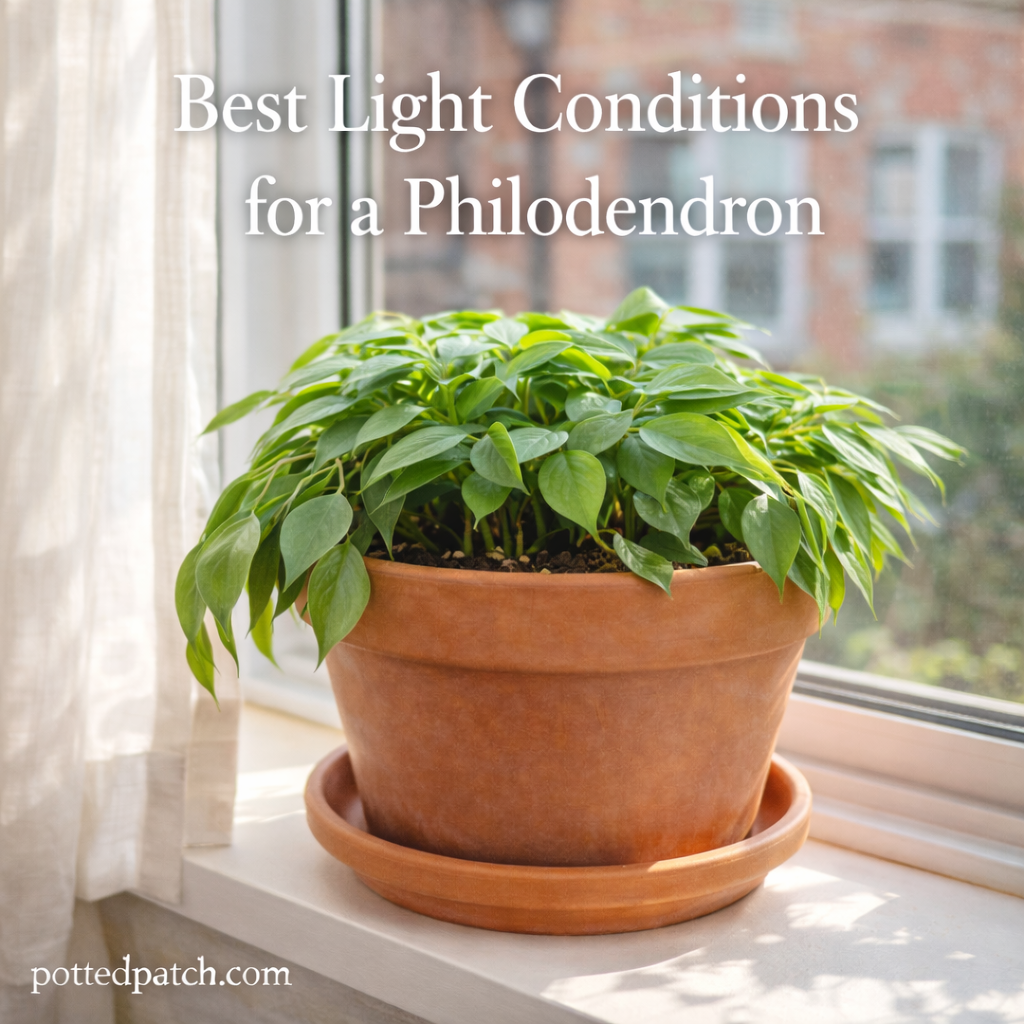
The best light conditions for a philodendron are bright, indirect light.
This means:
- Plenty of natural light
- No harsh, direct sun hitting the leaves
- Filtered or diffused sunlight
Think of the soft light near a window where sunlight fills the room but doesn’t beam directly onto the plant.
Bright, indirect light encourages:
- Larger leaves
- Stronger stems
- Faster, healthier growth
- Rich green coloration
What Does “Indirect Light” Actually Mean?
Indirect light is sunlight that has been filtered before reaching the plant.
Examples include:
- Light passing through sheer curtains
- Light reflected off walls
- A plant placed a few feet away from a sunny window
If the sun’s rays are visibly shining directly on the leaves, that is direct light.
Best Window Directions for Philodendrons
Different window exposures provide different light intensity.
East-Facing Windows
- Gentle morning sun
- Excellent for philodendrons
- Low risk of leaf burn
This is often the ideal placement.
South-Facing Windows
- Strong, bright light
- Works well if plant is 3–6 feet away
- Use sheer curtains if needed
West-Facing Windows
- Intense afternoon sun
- May need filtering
- Monitor for leaf scorch
North-Facing Windows
- Lower light conditions
- Suitable for tolerant varieties
- Growth may slow
If your philodendron is in a north-facing room, place it as close to the window as possible.
Signs Your Philodendron Needs More Light
Philodendrons are adaptable, but low light shows up in specific ways.
Watch for:
- Long, stretched stems (leggy growth)
- Smaller leaves
- Wider spacing between leaves
- Slower overall growth
If you notice these signs, gradually move the plant closer to a brighter location.
Avoid sudden light changes.
Signs of Too Much Light
Too much direct sun can cause damage.
Look for:
- Brown or crispy leaf edges
- Faded or bleached leaves
- Dry patches on leaf surfaces
If this happens, move the plant slightly farther from the window or add a sheer curtain.
Can Philodendrons Grow in Low Light?
Yes — but with limitations.
In low light:
- Growth slows
- Leaves may stay smaller
- Stems may stretch toward light
While philodendrons survive in lower light, they thrive in bright, indirect light.
If natural light is limited, consider using a grow light.
Using Grow Lights Indoors
Grow lights are excellent for homes with limited sunlight.
Tips for success:
- Place the light 12–24 inches above the plant
- Run it 10–12 hours per day
- Choose full-spectrum LED lights
Grow lights can dramatically improve growth in darker rooms.
Rotating for Even Growth
Philodendrons grow toward light sources.
To keep your plant balanced:
- Rotate it every 1–2 weeks
- Ensure all sides receive similar exposure
This prevents leaning and uneven growth.
Seasonal Light Changes
Light intensity shifts throughout the year.
In winter:
- Days are shorter
- Light is weaker
- Growth slows naturally
In summer:
- Light is stronger
- Soil dries faster
- Growth increases
Adjust placement slightly if seasonal sunlight becomes too intense.
Final Thoughts
The best light conditions for a philodendron are bright, indirect light near a window with filtered sun.
While these plants tolerate lower light, they grow fuller and healthier with moderate brightness. Avoid harsh direct sun, watch for signs of stress, and rotate regularly for even growth.
With proper lighting, your philodendron will reward you with lush, vibrant leaves year-round.