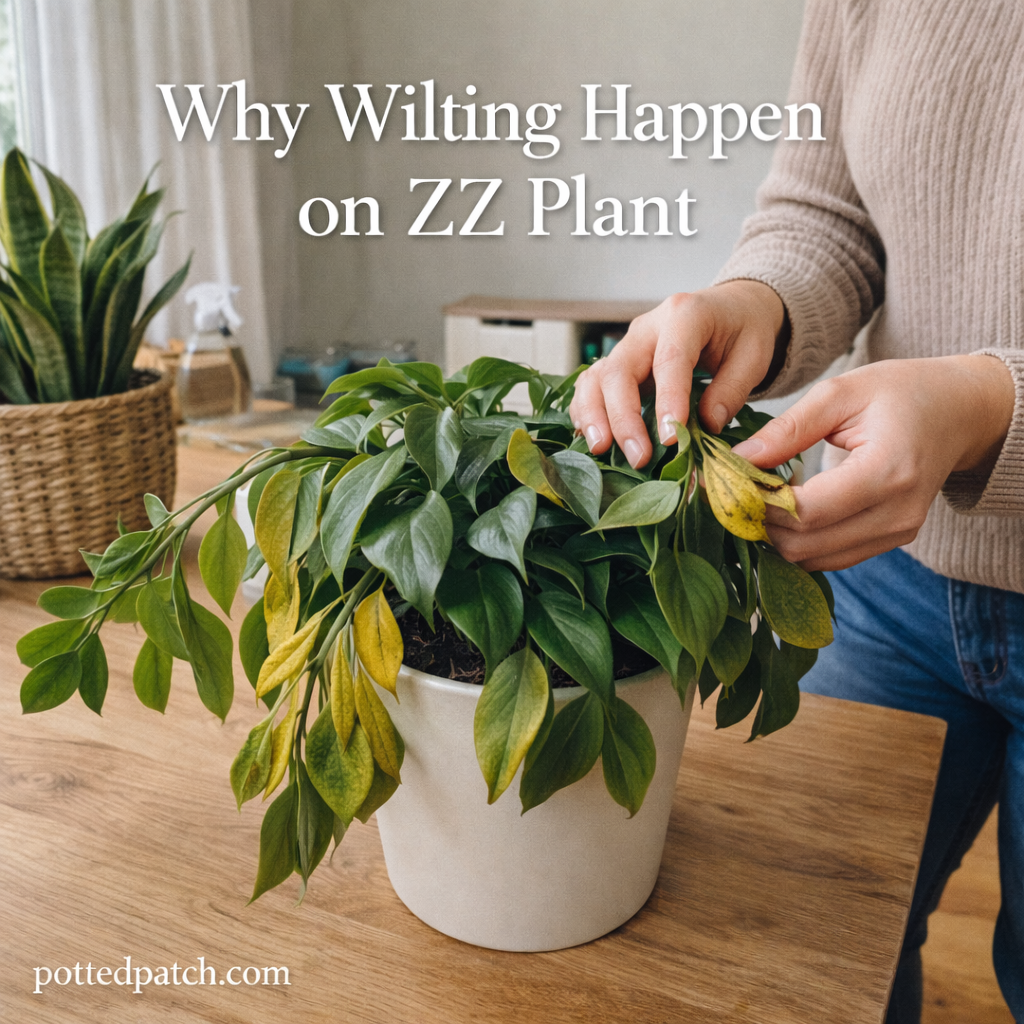
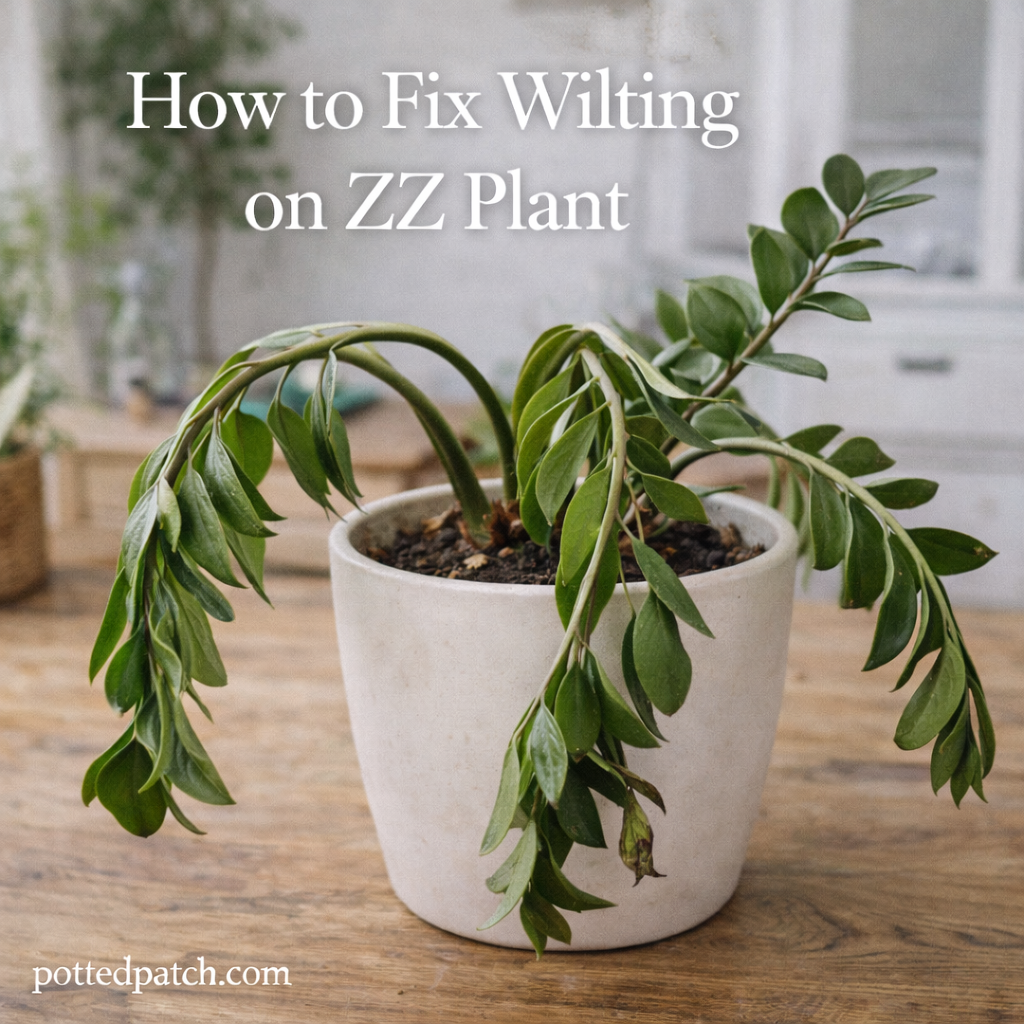
The ZZ plant (Zamioculcas zamiifolia) is known for being tough and drought-tolerant. So when it starts wilting, drooping, or leaning, it can feel alarming.
The good news? ZZ plants are extremely resilient. In most cases, wilting is fixable once you identify the root cause.
Here’s exactly how to fix wilting on a ZZ plant and help it recover quickly.
Step 1: Check the Soil Moisture First
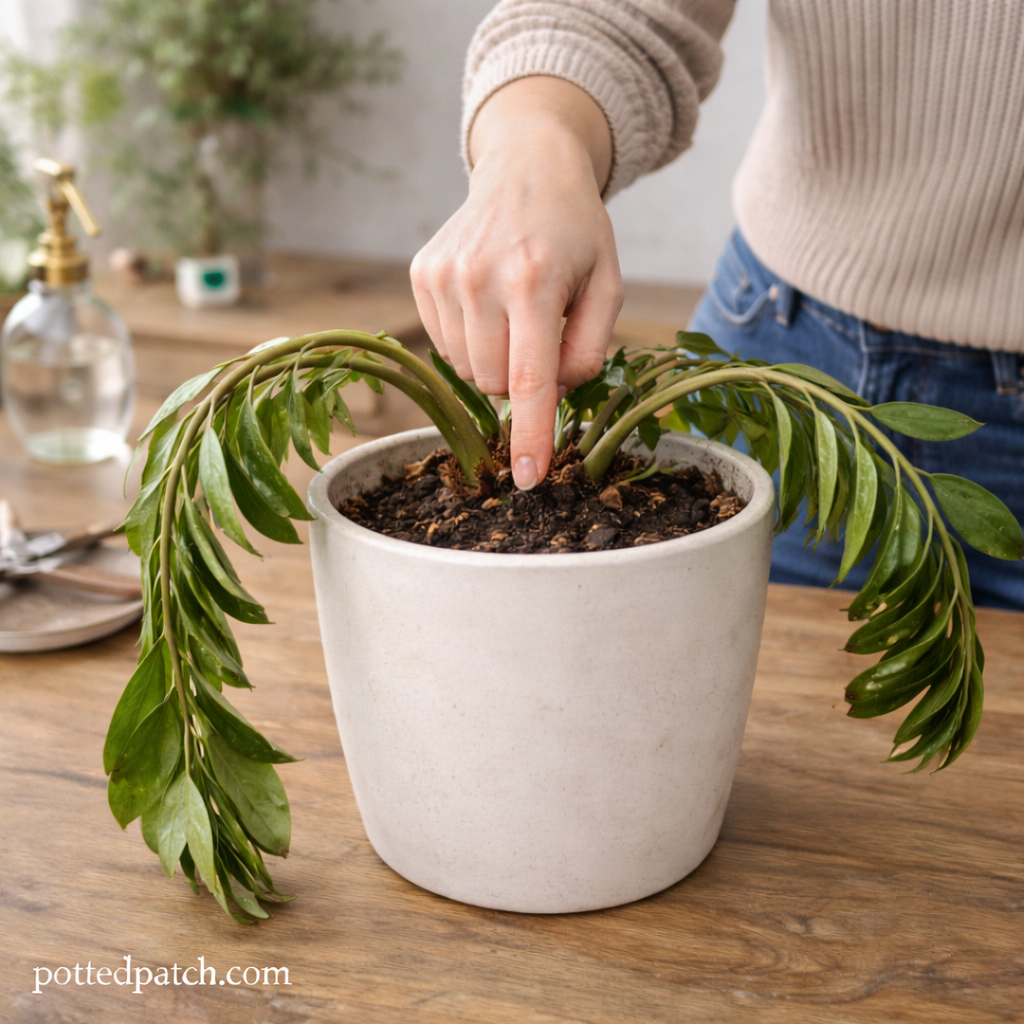
Before doing anything else, feel the soil.
Insert your finger 2–3 inches deep.
- If the soil is wet or soggy → likely overwatering
- If the soil is bone dry → likely underwatering
- If slightly dry → check other causes
This quick check determines your next move.
Fix #1: Overwatering (Most Common Problem)
Overwatering causes root rot, which prevents roots from absorbing moisture properly. Ironically, the plant wilts even though the soil is wet.
Signs of Overwatering
- Yellow leaves
- Mushy stems at the base
- Wet soil that stays damp for days
- Foul smell from the pot
How to Fix It
- Remove the plant from its pot.
- Inspect the roots and rhizomes.
- Trim off any black, mushy, or soft sections.
- Let healthy roots air dry for a few hours.
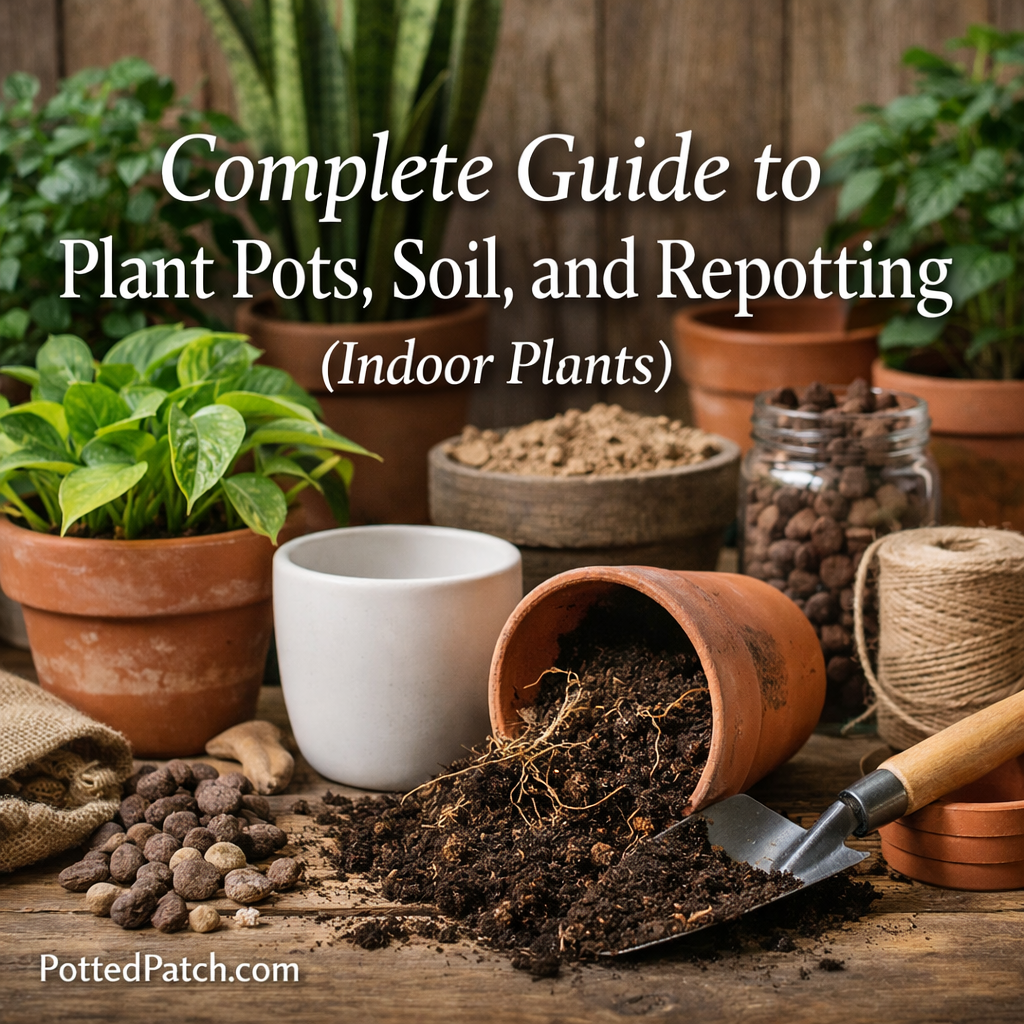
- Repot in fresh, well-draining soil.
Use a pot with drainage holes. Avoid watering again for 5–7 days.
Fix #2: Underwatering
While ZZ plants tolerate drought, extreme dryness can eventually cause drooping.
Signs of Underwatering
- Very dry soil pulling away from the pot
- Wrinkled rhizomes
- Stems drooping but not mushy
How to Fix It
- Water thoroughly until water drains out the bottom.
- Allow excess water to fully drain.
- Resume a consistent watering routine.
After a deep watering, the plant may perk up within 24–48 hours.
Fix #3: Improve Drainage
Even if watering habits seem correct, poor drainage can stress the roots.
Check for:
- Pots without drainage holes
- Decorative outer pots trapping water
- Dense, compact soil
How to Improve Drainage
- Repot using cactus or succulent mix
- Add perlite or pumice for airflow
- Always empty saucers after watering
ZZ plants prefer soil that dries completely between waterings.
Fix #4: Adjust Light Conditions
ZZ plants tolerate low light but won’t thrive in very dark spaces.
If stems are drooping and stretching:
- Move the plant to bright, indirect light
- Avoid direct sun, which can scorch leaves
A brighter location often strengthens stems over time.
Fix #5: Stabilize Temperature
Sudden cold drafts or heater blasts can stress the plant.
Ideal indoor temperature:
- 65–85°F
Move the plant away from:
- Air vents
- Exterior doors
- Windows with cold drafts
Consistent conditions help recovery.
Step 2: Support Recovery
After addressing the cause:
- Avoid fertilizing for at least 3–4 weeks
- Remove severely damaged leaves
- Give the plant time
ZZ plants grow slowly, so recovery may take several weeks.
If the rhizomes remain firm, new growth will eventually appear.
When Wilting Means It’s Too Late
If the rhizomes are:
- Completely mushy
- Smelly
- Collapsing
Recovery is unlikely.
However, if even part of a rhizome is firm, you may be able to propagate healthy sections.
How to Prevent Future Wilting
Follow these simple rules:
- Water only when soil is fully dry
- Use a well-draining soil mix
- Choose pots with drainage holes
- Provide bright, indirect light
- Avoid temperature extremes
Prevention is easier than recovery.
Final Thoughts
If your ZZ plant is wilting, don’t panic. Most cases are caused by overwatering, underwatering, or poor drainage.
Check the soil first, inspect the roots if needed, and adjust care accordingly. With patience and proper conditions, your ZZ plant can bounce back and continue thriving indoors.