
Philodendrons are one of the most popular houseplants for a reason — they’re beautiful, adaptable, and relatively low-maintenance. But when it comes to watering, many plant owners either overdo it or forget about it entirely.
So how often should you water a philodendron?
The short answer: Water when the top 1–2 inches of soil are dry.
The real answer depends on light, season, pot size, and your home environment.
Let’s break it down clearly.
The General Watering Rule
Most indoor philodendrons need watering:
- Every 7–10 days in spring and summer
- Every 10–14 days in fall and winter
However, you should never water on a strict schedule alone. Always check the soil first.
How to Check Properly
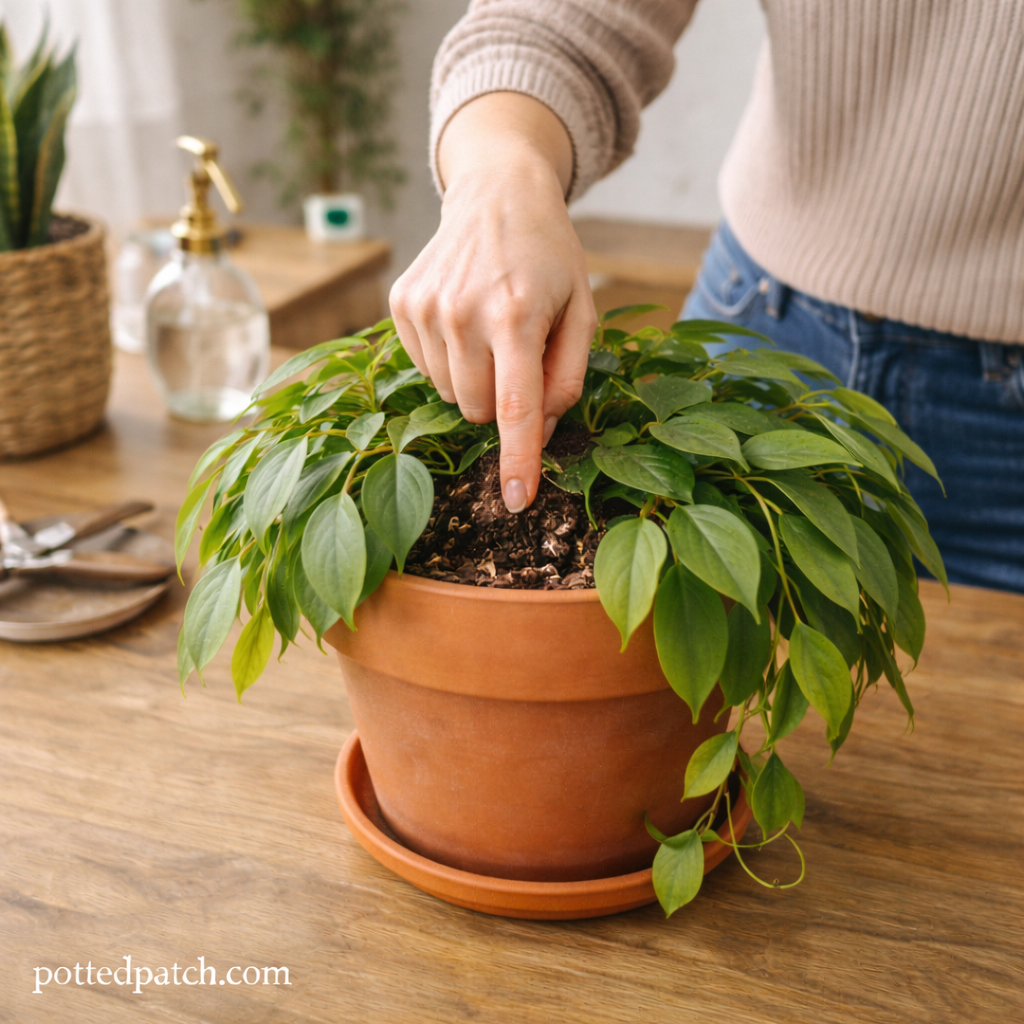
- Insert your finger 1–2 inches into the soil.
- If it feels dry, it’s time to water.
- If it still feels damp, wait a few more days.
Philodendrons prefer soil that dries slightly between waterings, but not bone dry for extended periods.
Why Overwatering Is the Biggest Problem
Philodendrons are more sensitive to overwatering than underwatering.
Too much moisture can lead to:
- Root rot
- Yellow leaves
- Mushy stems
- Fungus gnats
If the soil stays wet for too long, roots suffocate and begin to decay.
When in doubt, it’s safer to wait a day or two than to water too soon.
How to Water a Philodendron Properly
Proper watering technique matters just as much as frequency.
Step-by-Step Watering Method
- Take the plant to a sink or tub if possible.
- Water slowly and evenly across the soil surface.
- Continue until water drains from the bottom.
- Let excess water drain completely.
- Empty the saucer — never let the plant sit in standing water.
Deep watering encourages healthy root growth.
Avoid light “sips” of water that only moisten the top layer.
Seasonal Watering Differences
Philodendrons grow more actively in warmer months and slow down in winter.
Spring & Summer
- Faster growth
- Higher water needs
- Soil dries more quickly
Check soil every 5–7 days.
Fall & Winter
- Slower growth
- Lower light levels
- Soil dries more slowly
Check soil every 10–14 days.
Adjust based on how quickly the soil dries in your home.
Factors That Affect Watering Frequency
There is no one-size-fits-all watering schedule.
Several factors influence how often you should water:
1. Light Exposure
Brighter light = faster drying soil.
Low light = slower drying soil.
2. Pot Size
Smaller pots dry out faster.
Larger pots hold moisture longer.
3. Pot Material
Terracotta dries quickly.
Plastic retains moisture longer.
4. Soil Type
Well-draining, airy soil dries evenly.
Dense soil stays wet longer and increases rot risk.
Signs Your Philodendron Needs Water
Look for these indicators:
- Slight drooping
- Dry topsoil
- Leaves losing firmness
- Soil pulling slightly from pot edges
After watering, the plant should perk up within 24 hours.
Signs You’re Watering Too Often
Watch for:
- Yellow leaves
- Soft stems
- Persistent damp soil
- Musty smell
If you suspect overwatering, allow soil to dry thoroughly before watering again.
In severe cases, check roots for rot.
Should You Mist a Philodendron?
Misting does not replace watering.
Philodendrons appreciate moderate humidity, but misting:
- Provides only temporary moisture
- Does not hydrate roots
- May encourage fungal issues if overdone
If humidity is low, consider using a humidifier instead.
Final Thoughts
How often you water a philodendron depends on your environment, but the safest rule is simple:
Water when the top 1–2 inches of soil are dry.
Avoid rigid schedules, ensure proper drainage, and always let excess water drain away. With the right balance, your philodendron will reward you with lush, healthy growth year-round.