Rubber plants are known for their large, glossy leaves and upright growth. But if you’ve noticed your plant leaning toward a window or growing unevenly, it may be time to rotate it.
Learning how to rotate a rubber plant properly helps maintain balanced growth, stronger stems, and a fuller overall shape.
Here’s exactly how to do it — and how often.
Why Rotating a Rubber Plant Matters
Rubber plants (Ficus elastica) naturally grow toward light. This process, called phototropism, causes the plant to lean toward its primary light source.
If you never rotate it, you may notice:
- A tilted or leaning trunk
- Uneven leaf growth
- Sparse foliage on one side
- A top-heavy appearance
Regular rotation keeps growth symmetrical and prevents structural weakness.
How Often Should You Rotate a Rubber Plant?
For most indoor environments:
- Rotate every 1–2 weeks
- Or at least once a month
If your plant sits near a bright window, especially on one side, rotating every 1–2 weeks is ideal.
In lower light settings, monthly rotation may be sufficient.
Step-by-Step: How to Rotate a Rubber Plant
Step 1: Identify the Light Source
Look at your plant and determine where the strongest light is coming from:
- Window
- Sliding door
- Grow light
Most rubber plants lean toward their brightest light source.
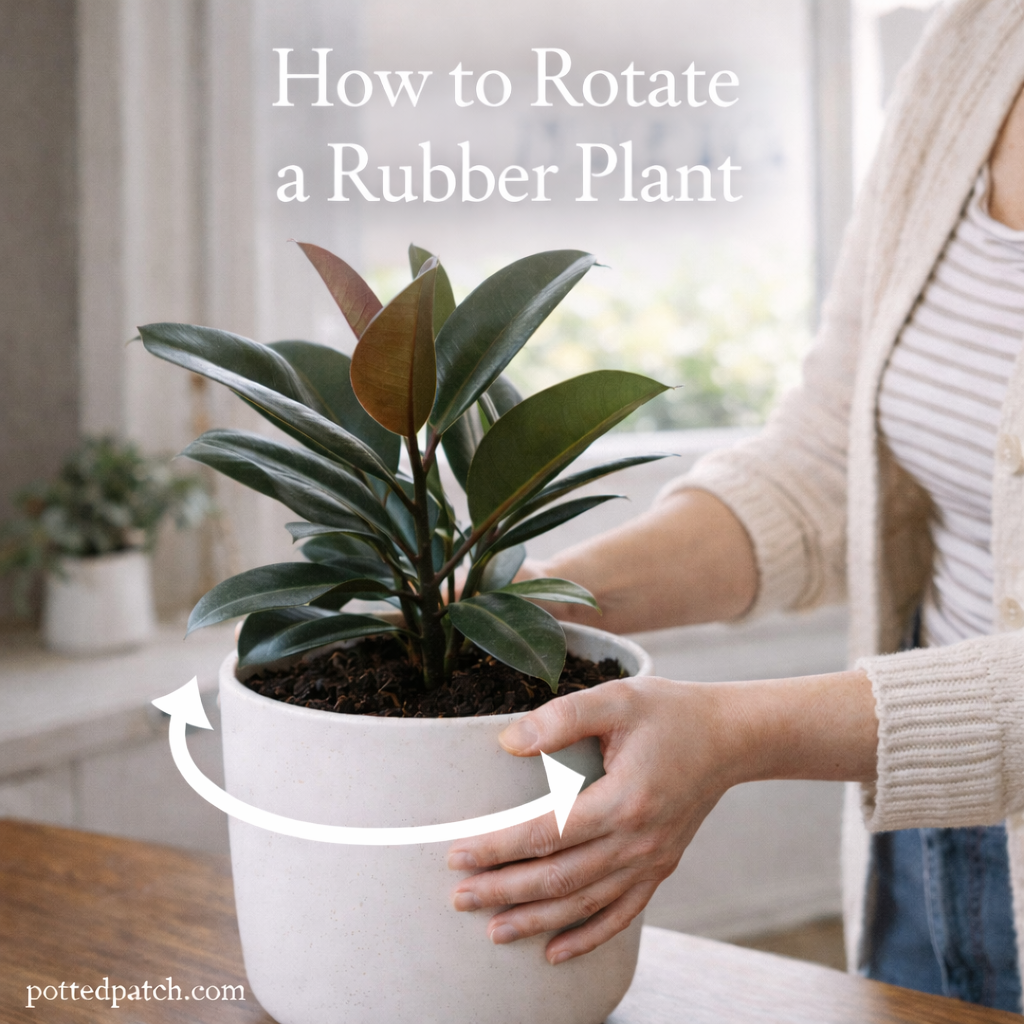
Step 2: Rotate Gradually
Turn the pot about ¼ turn (90 degrees).
Avoid spinning the plant 180 degrees all at once — this can shock growth and cause leaves to adjust too abruptly.
Small, consistent turns are better than dramatic changes.
Step 3: Monitor Over the Next Week
After rotating:
- Check if the plant begins straightening
- Watch for new leaf growth
- Ensure light remains bright but indirect
If your plant was heavily leaning, it may take several weeks to rebalance.
What If the Plant Is Already Leaning?
If your rubber plant has developed a strong tilt:
- Rotate it ¼ turn every 5–7 days
- Consider staking temporarily if needed
- Increase overall light brightness
Severely leaning plants may not straighten fully, but new growth will adjust over time.
Should You Rotate During Winter?
Yes — but less frequently.
During winter:
- Growth slows
- Light intensity decreases
Rotating once a month is usually enough.
Consistency still matters, even during slower seasons.
Signs You’re Not Rotating Enough
- Leaves larger on one side
- Stem curving toward window
- One side sparse or leggy
Rotation is one of the simplest ways to maintain a balanced indoor plant.
Can You Over-Rotate?
Yes.
Constantly moving the plant daily can stress it.
Rubber plants prefer stability. Rotate at consistent intervals and keep their location otherwise stable.
Bonus Tip: Combine Rotation With Cleaning
Every time you rotate your rubber plant:
- Wipe dust off the leaves
- Inspect for pests
- Check soil moisture
Making rotation part of your regular care routine keeps maintenance simple.
Final Thoughts
Rotating a rubber plant is a small habit that makes a big difference.
By turning your plant slightly every couple of weeks, you encourage even growth, stronger structure, and a more attractive shape.
A balanced plant is a healthier plant — and rotation is one of the easiest ways to achieve it.