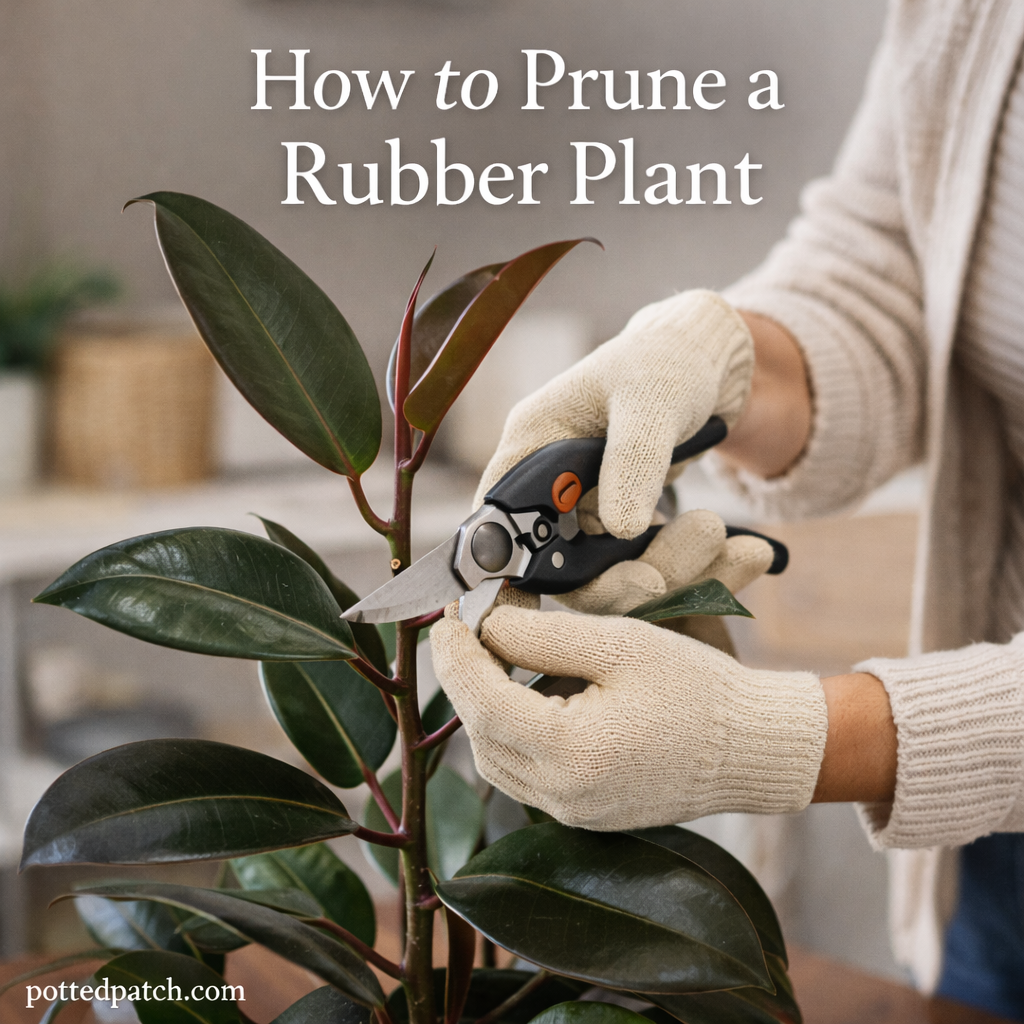
Rubber plants are bold, glossy, and dramatic. But without pruning, they can quickly grow tall, leggy, or uneven.
Learning how to prune a rubber plant the right way keeps it full, balanced, and healthy. The good news? It’s simple once you understand where and how to cut.
In this guide, you’ll learn when to prune, where to make cuts, and how to encourage bushier growth.
Why You Should Prune a Rubber Plant
Rubber plants (Ficus elastica) naturally grow upward in a single tall stem. In the wild, they become trees.
Indoors, pruning helps you:
- Control height
- Encourage branching
- Create a fuller, bushier shape
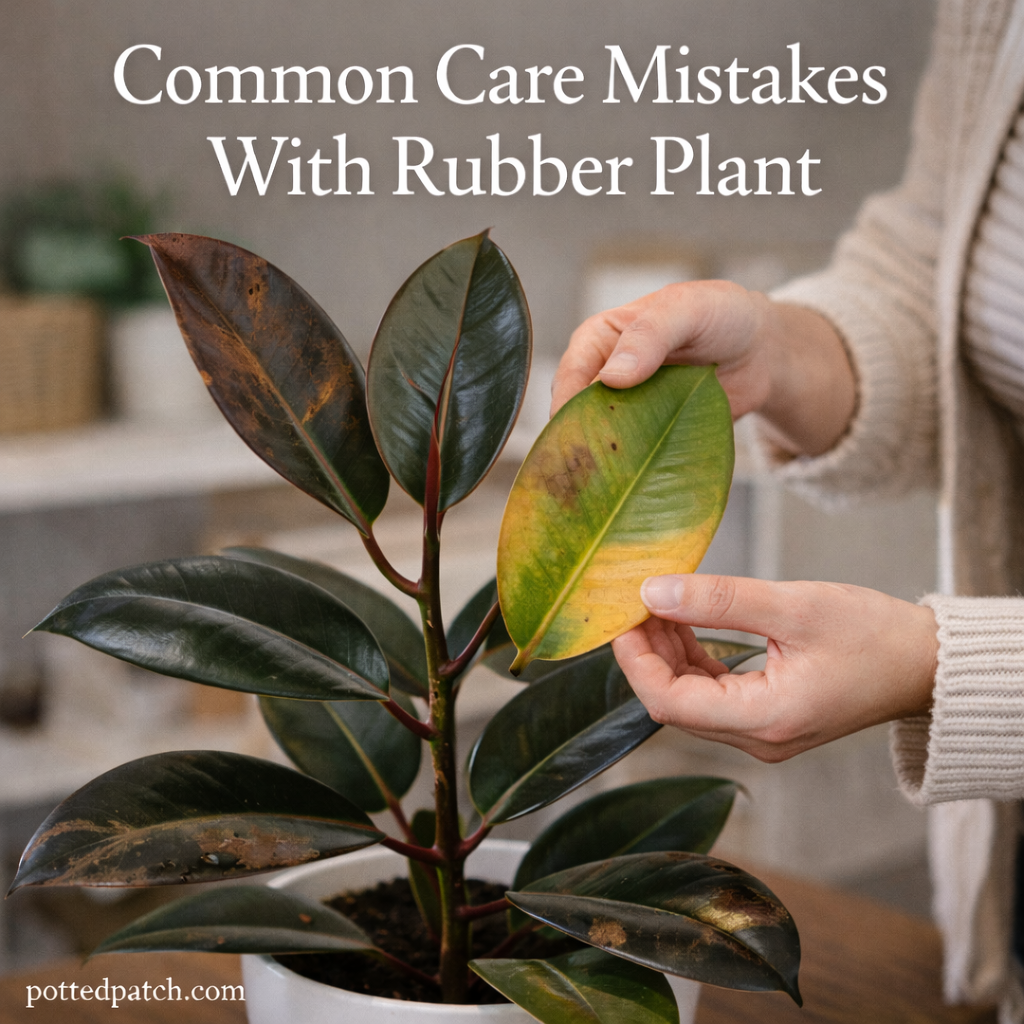
- Remove damaged or leggy growth
- Maintain a balanced appearance
Without pruning, your plant may become top-heavy or sparse near the bottom.
When Is the Best Time to Prune?
The best time to prune is during the growing season:
- Spring
- Early summer
During this time, the plant recovers quickly and produces new growth faster.
You can prune lightly at other times of year, but avoid heavy pruning in winter when growth slows.
What You’ll Need
Keep it simple:
- Sharp pruning shears or clean scissors
- Gloves (rubber plants release milky sap)
- A cloth or paper towel
Always sterilize your tools before cutting to prevent disease spread.
Step-by-Step: How to Prune a Rubber Plant
Step 1: Decide Your Goal
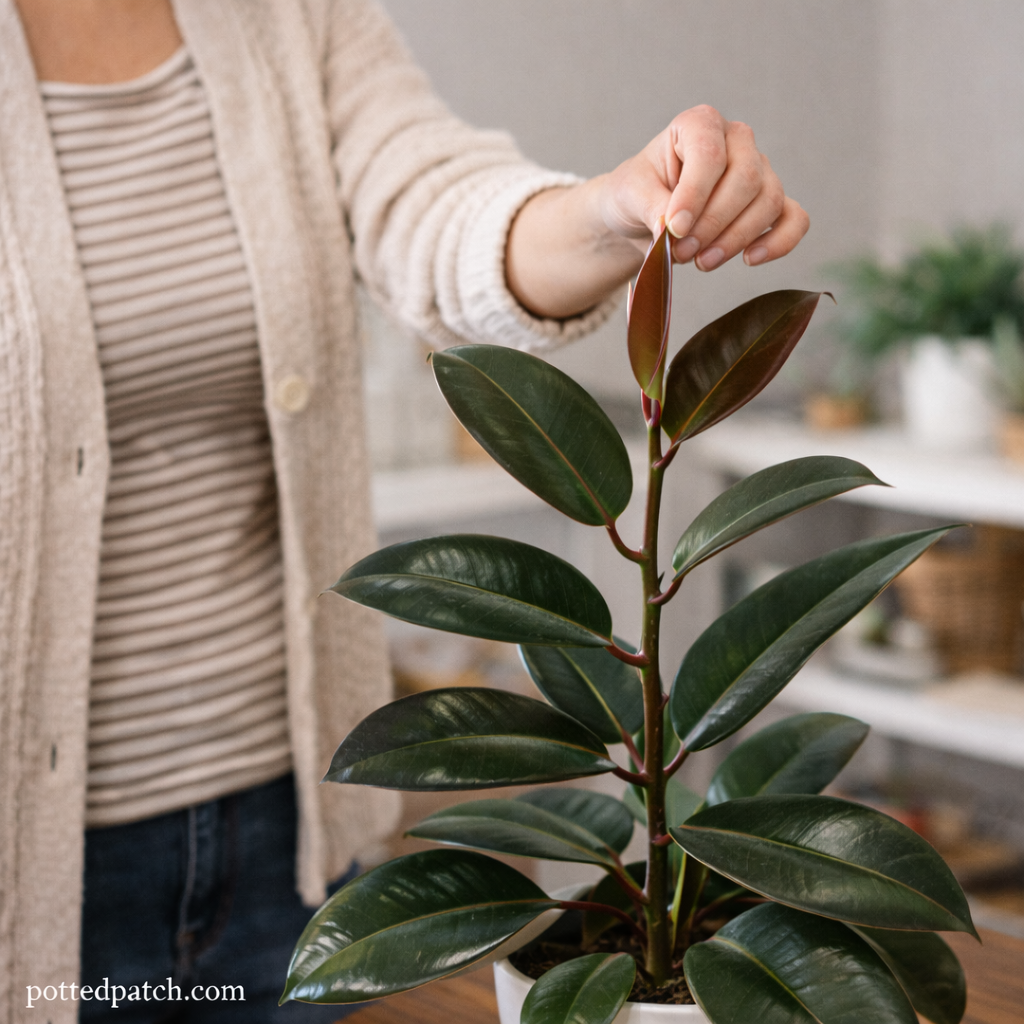
Ask yourself:
- Do you want the plant shorter?
- Do you want it bushier?
- Are you removing damaged leaves?
Your goal determines where you cut.
Step 2: Locate a Node
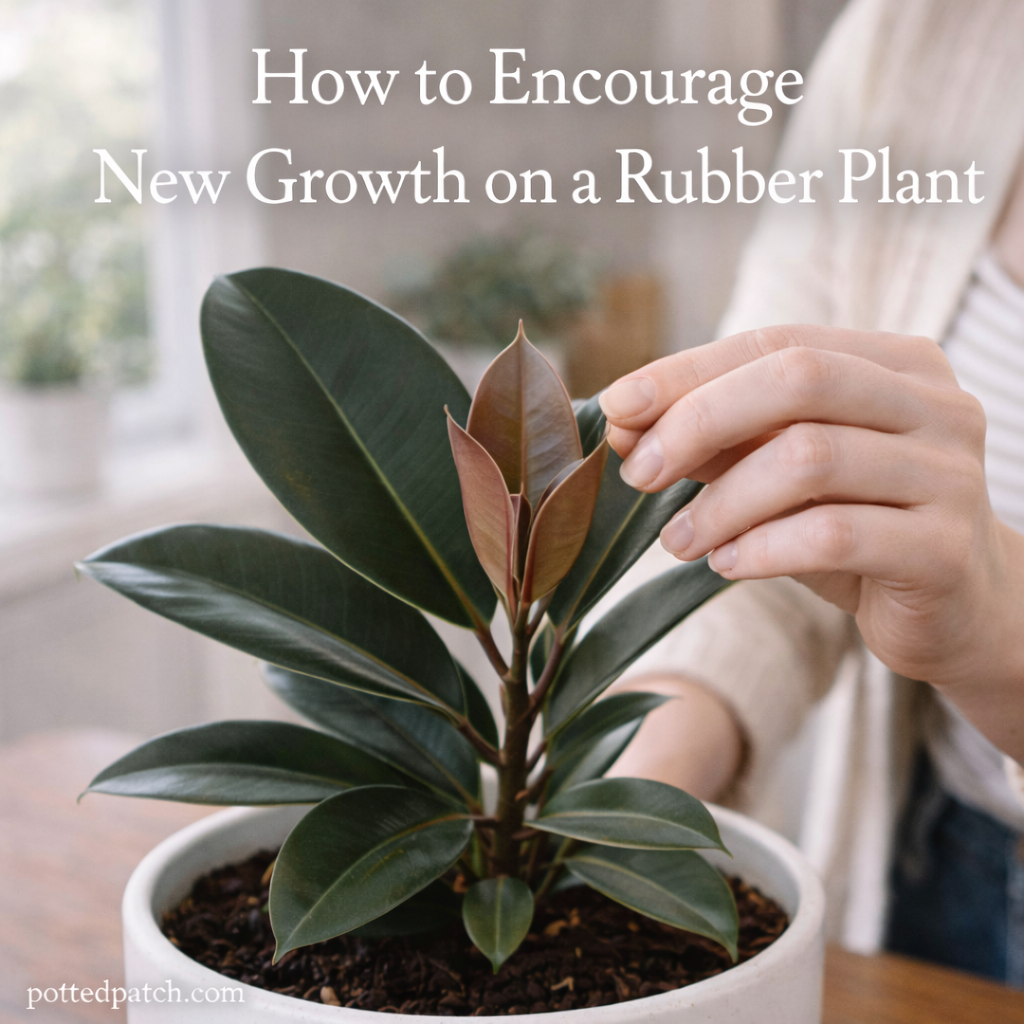
A node is the point where a leaf attaches to the stem.
New growth emerges from nodes.
Always cut slightly above a node — about ¼ inch above it.
This encourages the plant to branch from that spot.
Step 3: Make a Clean Cut
Use sharp, clean shears.
Cut straight across the stem just above the node.
White sap will appear — this is normal. Wipe it away gently with a cloth.
Avoid tearing or crushing the stem.
Step 4: Shape for Fullness
If your plant is tall and bare at the bottom:
- Cut the main stem back to your desired height
- Prune just above a healthy node
This signals the plant to grow two new stems from below the cut.
For bushier plants:
- Trim multiple stems slightly
- Avoid removing more than 25–30% of the plant at once
How Much Can You Safely Prune?
Rubber plants are resilient.
You can remove up to one-third of the plant during active growth without major stress.
If doing major reshaping:
- Prune gradually over several weeks
- Allow recovery between cuts
Over-pruning at once can slow growth temporarily.
What to Do After Pruning
After pruning:
- Keep the plant in bright, indirect light
- Avoid fertilizing immediately
- Water normally, but don’t overwater
New growth typically appears within 3–6 weeks during the growing season.
Can You Propagate the Cuttings?
Yes — and it’s easy.
To propagate:
- Take a cutting with at least one node.
- Let the cut end dry for 30–60 minutes.
- Place in water or moist, well-draining soil.
Roots usually develop in a few weeks.
Propagation is a great way to create a fuller pot or grow a new plant.
Common Pruning Mistakes to Avoid
- Cutting below a node
- Using dull or dirty tools
- Removing too much at once
- Pruning heavily during winter
- Ignoring light conditions after pruning
Proper pruning paired with good lighting leads to compact, balanced growth.
Will Pruning Make My Rubber Plant Bushier?
Yes — if done correctly.
When you cut the top stem above a node, the plant redirects energy to side growth. This encourages branching and fullness.
If your rubber plant refuses to branch:
- Increase light slightly
- Rotate the plant weekly
- Ensure it’s not root-bound
Pruning works best when the plant is actively growing and well cared for.
Final Thoughts
Pruning a rubber plant isn’t about cutting randomly — it’s about strategic shaping.
By cutting above nodes and pruning during active growth, you can transform a tall, leggy plant into a full, sculpted centerpiece.
With just a few clean cuts, your rubber plant will reward you with fresh, vibrant growth.