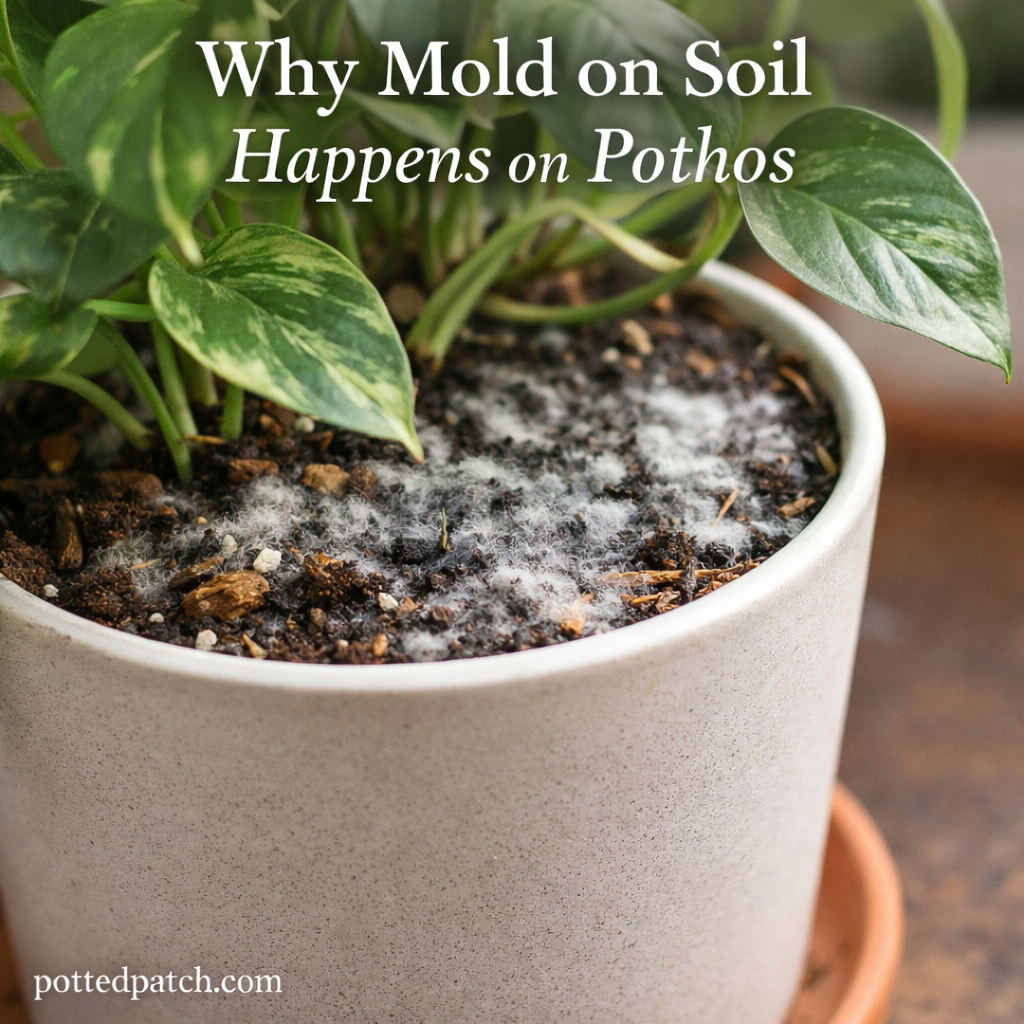
Noticing white or fuzzy growth on the surface of your pothos soil can be alarming. The good news? In most cases, mold on soil is more of a care issue than a plant disease.
Understanding why mold forms on pothos soil helps you fix the root cause and prevent it from coming back.
Let’s break it down.
What Does Mold on Pothos Soil Look Like?
Mold on houseplant soil often appears as:
- White fuzzy patches
- Gray web-like growth
- Light green powdery spots
- A thin film across the surface
This is usually a type of saprophytic fungus. It feeds on organic matter in damp soil — not on your plant directly.
While it doesn’t typically harm the plant immediately, it signals that your environment is too moist.
The Main Causes of Mold on Pothos Soil
1. Overwatering
This is the most common reason.
Pothos plants prefer their soil to dry slightly between waterings. When soil stays constantly wet, it creates the perfect environment for fungal growth.
Signs you may be overwatering:
- Soil stays damp for more than 7–10 days
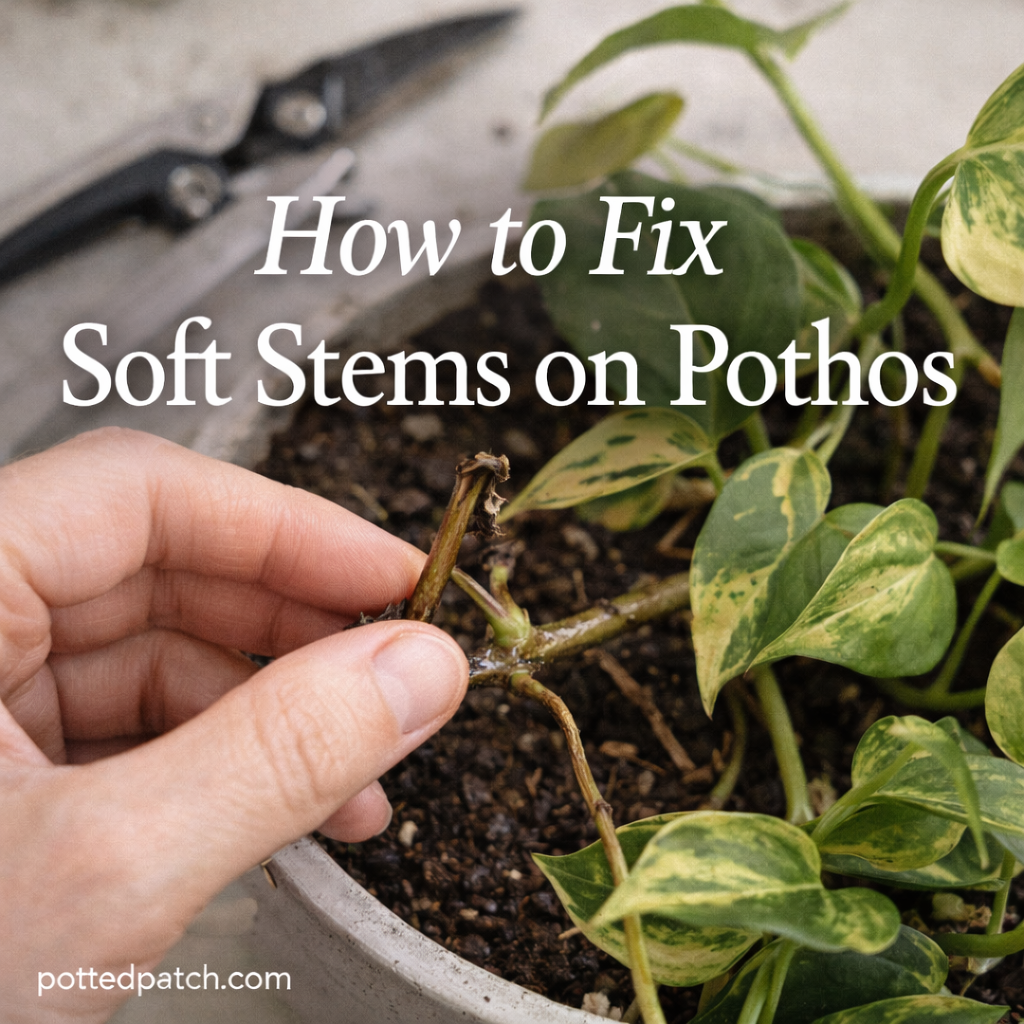
- Mushy stems
- Yellowing leaves
- A musty smell
2. Poor Drainage
Even if you water correctly, poor drainage traps moisture.
Common drainage issues:
- Pots without drainage holes
- Dense, compacted soil
- Decorative containers that trap runoff
- Clogged drainage holes
When water has nowhere to escape, mold thrives.
3. Low Air Circulation
Stagnant indoor air slows soil drying.
If your pothos sits in:
- A dark corner
- A closed bathroom
- A tightly packed shelf
The soil may stay moist longer than intended.
4. Low Light Conditions
Light influences how quickly soil dries.
In low light:
- Water evaporates slowly
- The plant uses less moisture
- Soil stays wet longer
Pothos tolerate low light, but consistently damp soil in dim areas increases mold risk.
5. Organic-Rich Potting Mix
High levels of compost or peat can encourage surface mold when constantly moist.
This doesn’t mean the soil is “bad” — just that moisture levels are too high for the environment.
Is Mold on Soil Dangerous to Pothos?
In most cases, no.
Surface mold:
- Rarely harms healthy pothos
- Does not attack leaves directly
- Is more of a moisture warning sign
However, chronic dampness can eventually lead to root rot, which is dangerous.
Think of mold as an early warning system.
How to Get Rid of Mold on Pothos Soil
Step 1: Remove the Moldy Layer
Scoop off the top 1–2 inches of affected soil and discard it.
Replace with fresh, dry potting mix.
Step 2: Let the Soil Dry Out
Allow the top half of the soil to dry before watering again.
For pothos, it’s safe to wait until the top 2–3 inches feel dry.
Step 3: Improve Drainage
Make sure:
- Your pot has drainage holes
- Water flows freely out the bottom
- The plant never sits in standing water
If necessary, repot into a lighter mix with added perlite.
Step 4: Increase Airflow and Light
Move the plant to a brighter spot with indirect light.
You can also:
- Use a small fan occasionally
- Space plants farther apart
- Open windows when possible
Step 5: Adjust Watering Routine
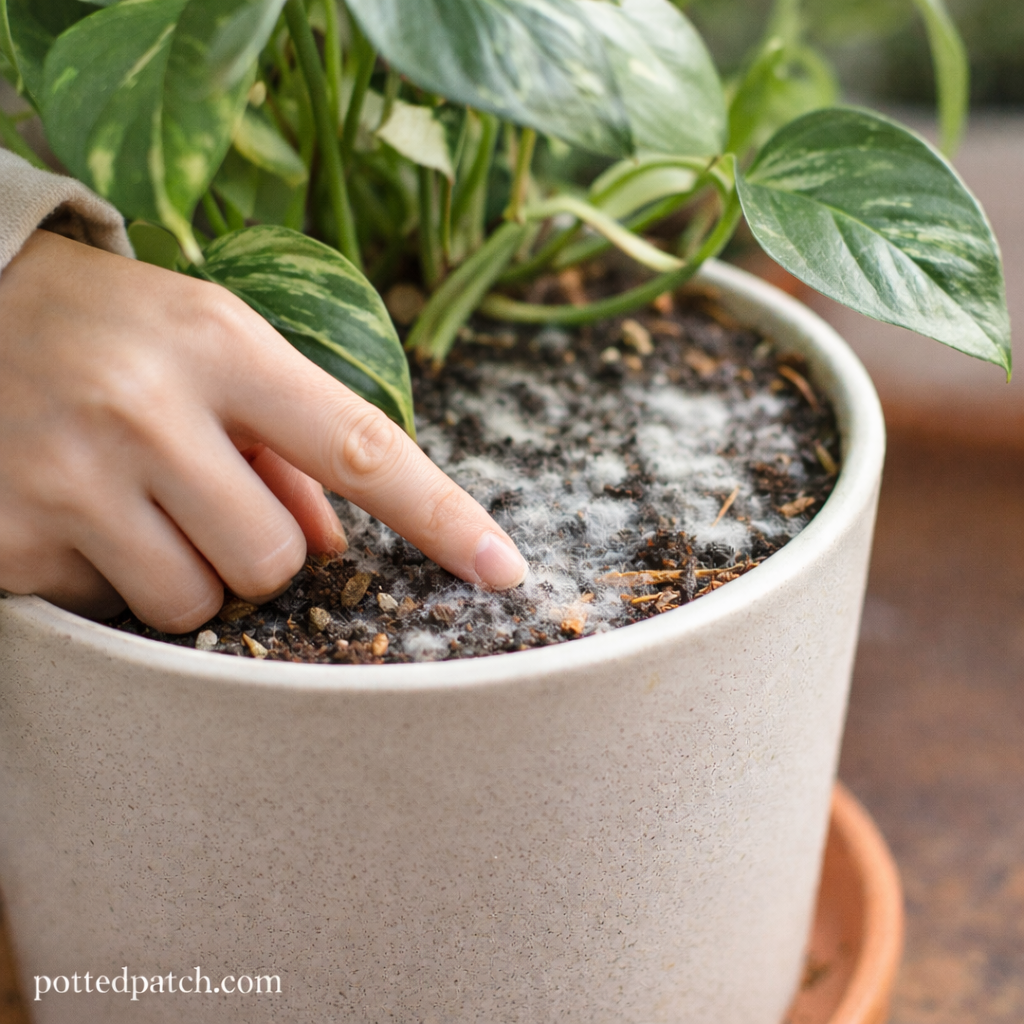
Instead of watering on a schedule, water based on soil dryness.
Stick your finger into the soil before watering. If it feels moist, wait.
How to Prevent Mold from Returning
Follow this simple prevention checklist:
- Water only when top soil is dry
- Use pots with drainage holes
- Avoid overfilling decorative cachepots
- Provide bright, indirect light
- Ensure moderate airflow
Once moisture balance improves, mold usually disappears permanently.
When Mold Might Be a Bigger Problem
If you notice:
- Black, slimy stems
- Persistent foul odor
- Wilting despite wet soil
You may be dealing with root rot rather than surface mold.
In that case, repot immediately and trim damaged roots.
Final Thoughts
Mold on pothos soil happens primarily because of excess moisture and limited airflow.
It’s not a death sentence — it’s a signal.
Correct the watering, improve drainage, increase light, and your pothos will bounce back quickly.
Healthy soil leads to healthy vines.