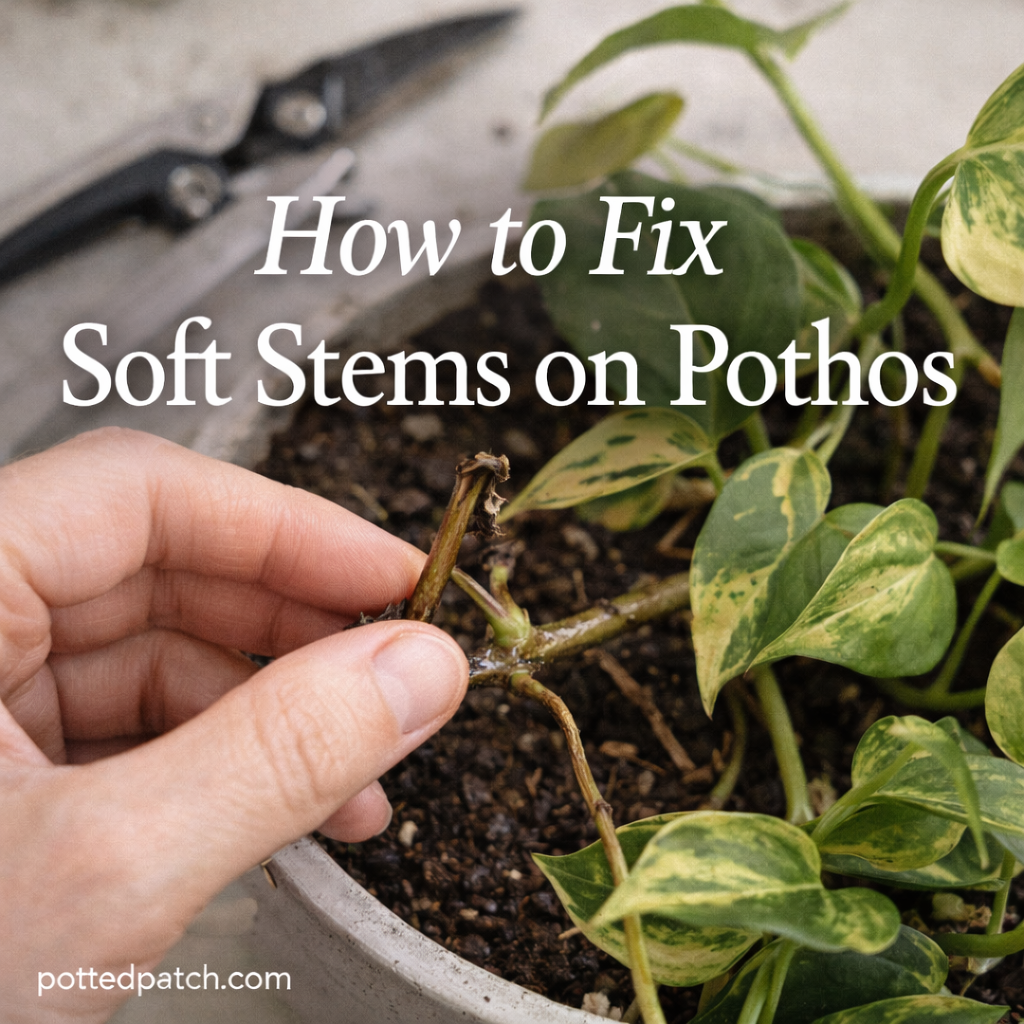
Soft stems on pothos can be alarming. What should feel firm and slightly flexible suddenly becomes mushy, weak, or discolored.
The good news? Pothos are resilient plants. If you act quickly, you can often save them.
Here’s exactly how to fix soft stems on pothos — and prevent the problem from coming back.
Why Pothos Stems Turn Soft
Before fixing the issue, it’s important to understand the cause.
Soft stems are usually triggered by:
- Overwatering
- Root rot
- Poor drainage
- Cold damage
- Fungal or bacterial infection
In most cases, excess moisture is the root of the problem.
Step 1: Inspect the Roots Immediately
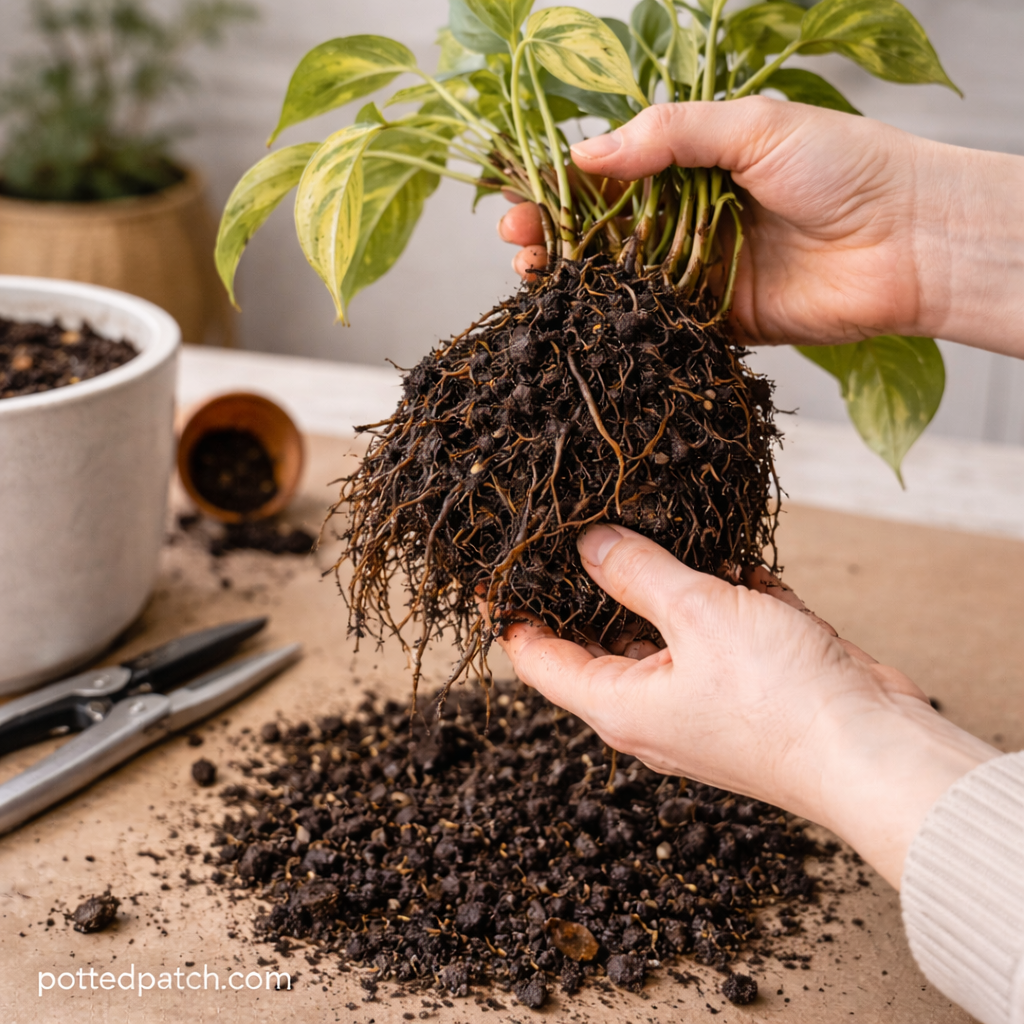
Carefully remove the plant from its pot.
Healthy roots:
- White or light tan
- Firm and structured
Rotten roots:
- Brown or black
- Mushy or slimy
- Foul smell
If roots are rotting, the infection can travel up the stems quickly.
Step 2: Trim All Damaged Areas
Use clean, sharp scissors or pruning shears.
- Cut off all mushy roots
- Remove soft or darkened stems
- Trim until you reach healthy, firm tissue
Do not leave any rotted portions behind — they will continue spreading.
Disinfect tools after cutting.
Step 3: Let the Roots Dry Slightly
If rot was present:
- Gently rinse off old soil
- Allow roots to air dry for 30–60 minutes
- Avoid letting them sit wet
This helps reduce lingering moisture before repotting.
Step 4: Repot in Fresh, Well-Draining Soil
Use:
- A new pot with drainage holes
- Fresh indoor potting mix
- Optional perlite for better aeration
Do not reuse contaminated soil.
Choose a pot only slightly larger than the root system.
Step 5: Adjust Your Watering Routine
After repotting:
- Water lightly once
- Wait until the top 1–2 inches of soil are dry before watering again
Most indoor pothos need water every 7–14 days, depending on light and humidity.
Avoid strict schedules — always check soil first.
When to Propagate Instead
If the base of the plant is severely rotted, propagation may be the safest option.
Here’s how:
- Cut healthy vines just below a node.
- Place cuttings in water.
- Change water every few days.
- Wait for roots to grow 1–2 inches.
- Replant in fresh soil.
Pothos propagate easily and recover quickly.
Signs Your Plant Is Recovering
After treatment, watch for:
- Firm stems
- New leaf growth
- No spreading discoloration
- Soil drying at a normal rate
Recovery can take a few weeks.
Be patient.
How to Prevent Soft Stems in the Future
Prevention is much easier than repair.
Follow these tips:
- Use pots with drainage holes
- Choose airy, well-draining soil
- Water only when soil is partially dry
- Avoid cold drafts
- Empty saucers after watering
- Never let the plant sit in standing water
Healthy roots = healthy stems.
Common Mistakes to Avoid
- Repotting into a pot that’s too large
- Watering immediately after trimming roots
- Ignoring early signs of stem softness
- Using heavy garden soil indoors
Small adjustments make a big difference.
Final Thoughts
Soft stems on pothos are usually caused by excess moisture and root rot. Acting quickly — trimming damaged areas, refreshing the soil, and correcting watering habits — can save the plant.
Pothos are forgiving. With proper care, they often bounce back stronger than before.
Monitor moisture, improve drainage, and your plant should return to firm, healthy growth.