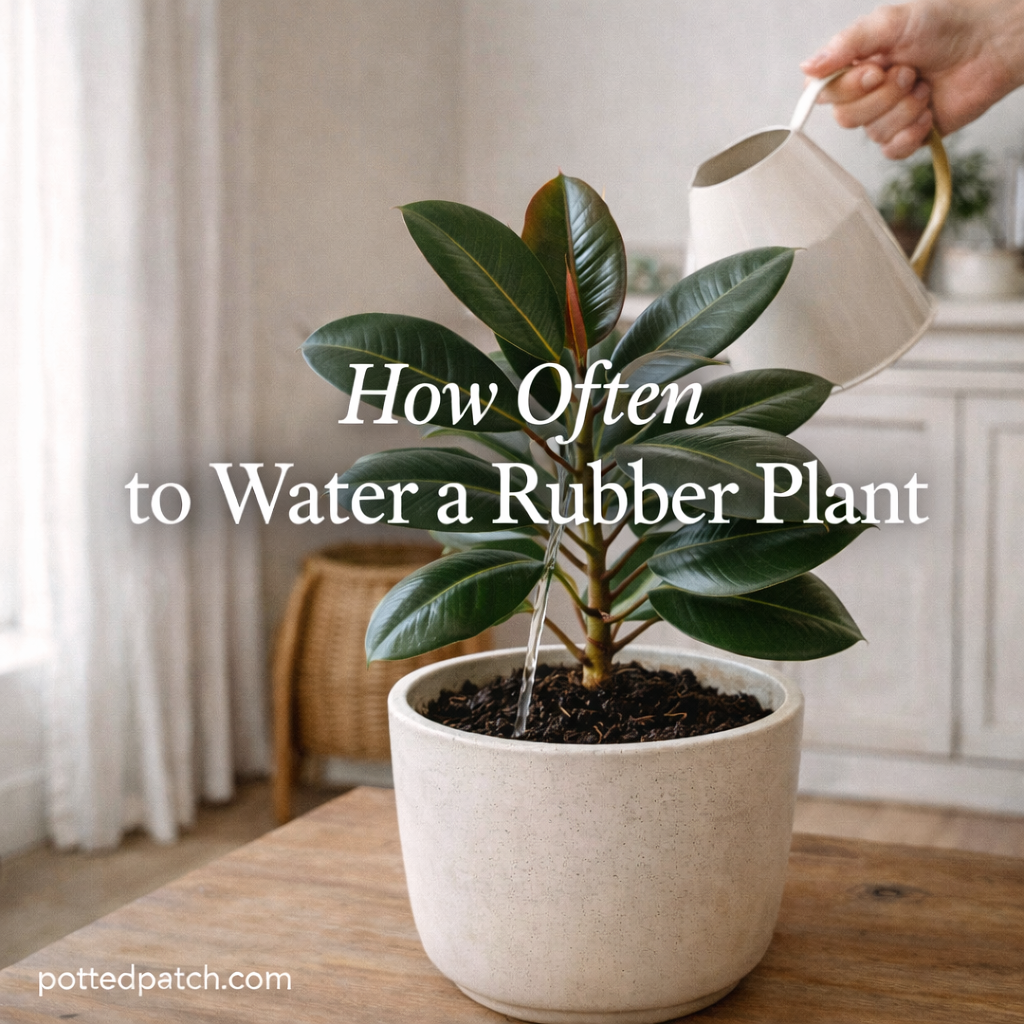
Watering is the most important part of rubber plant care — and the most common place people go wrong.
Too much water can lead to root rot and soft stems. Too little can cause drooping and leaf drop. The key is learning how to water based on soil dryness, not a strict schedule.
Here’s exactly how often to water a rubber plant indoors and how to avoid common mistakes.
The Short Answer
Most indoor rubber plants need watering:
- Every 7–10 days in spring and summer
- Every 2–3 weeks in fall and winter
But timing varies depending on light, temperature, humidity, and pot size.
Instead of watering on a calendar, check the soil first.
The Right Way to Check Soil Moisture
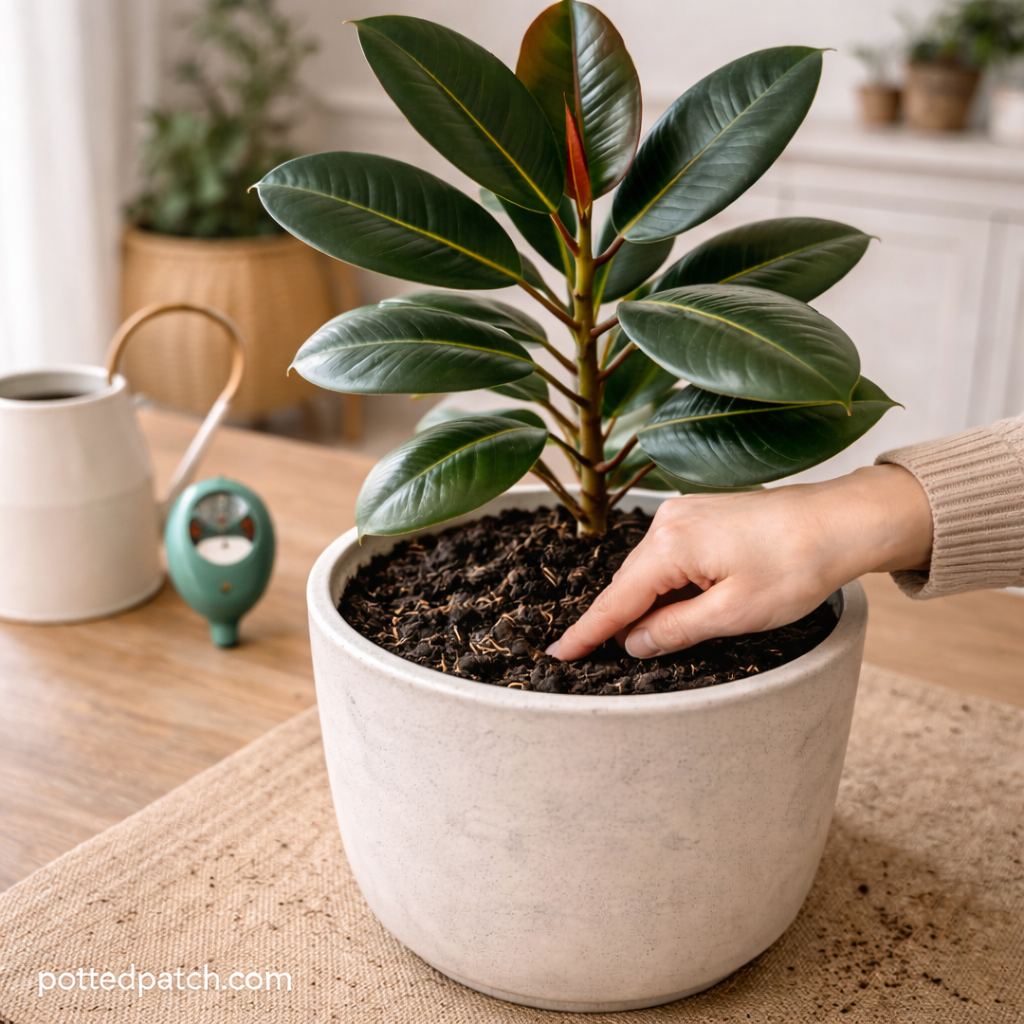
Before watering, test the soil.
Use one of these methods:
- Insert your finger 1–2 inches into the soil
- Use a wooden chopstick to check for dampness
- Lift the pot to feel its weight
Water only when the top 1–2 inches feel dry.
If the soil still feels moist, wait a few more days.
Seasonal Watering Differences
Spring and Summer (Active Growth)
During the growing season:
- The plant uses more water
- Soil dries faster
- Roots are actively expanding
Water approximately every 7–10 days, depending on conditions.
Fall and Winter (Dormant Period)
Growth slows significantly.
- Soil dries more slowly
- The plant needs less moisture
- Overwatering risk increases
Water every 2–3 weeks or when soil is dry.
Never water just because it’s “been a while.”
How to Water a Rubber Plant Properly
When it’s time to water:
- Pour water slowly and evenly over the soil surface.
- Continue until water drains from the bottom.
- Let excess water fully drain.
- Empty the saucer after 10–15 minutes.
Do not let the plant sit in standing water.
Deep watering encourages strong root development.
Signs You’re Overwatering
Overwatering is the most common cause of rubber plant problems.
Watch for:
- Yellowing leaves
- Soft or mushy stems
- Leaf drop
- A sour smell from soil
- Brown spots on leaves
If you notice these, reduce watering frequency immediately.
Signs You’re Underwatering
Underwatering is less common but still possible.
Symptoms include:
- Drooping leaves
- Crispy leaf edges
- Soil pulling away from pot edges
- Slowed growth
Leaves usually perk back up within hours after proper watering.
Factors That Affect Watering Frequency
Every home is different. These factors change how often you’ll need to water:
Light
More light = faster soil drying.
Low light = slower drying.
Pot Size
Larger pots hold moisture longer.
Small pots dry out faster.
Soil Type
Well-draining soil dries evenly.
Heavy soil stays wet too long.
Humidity
Dry indoor air increases water needs.
Humid environments reduce frequency.
Best Watering Tips for Healthy Growth
To keep your rubber plant thriving:
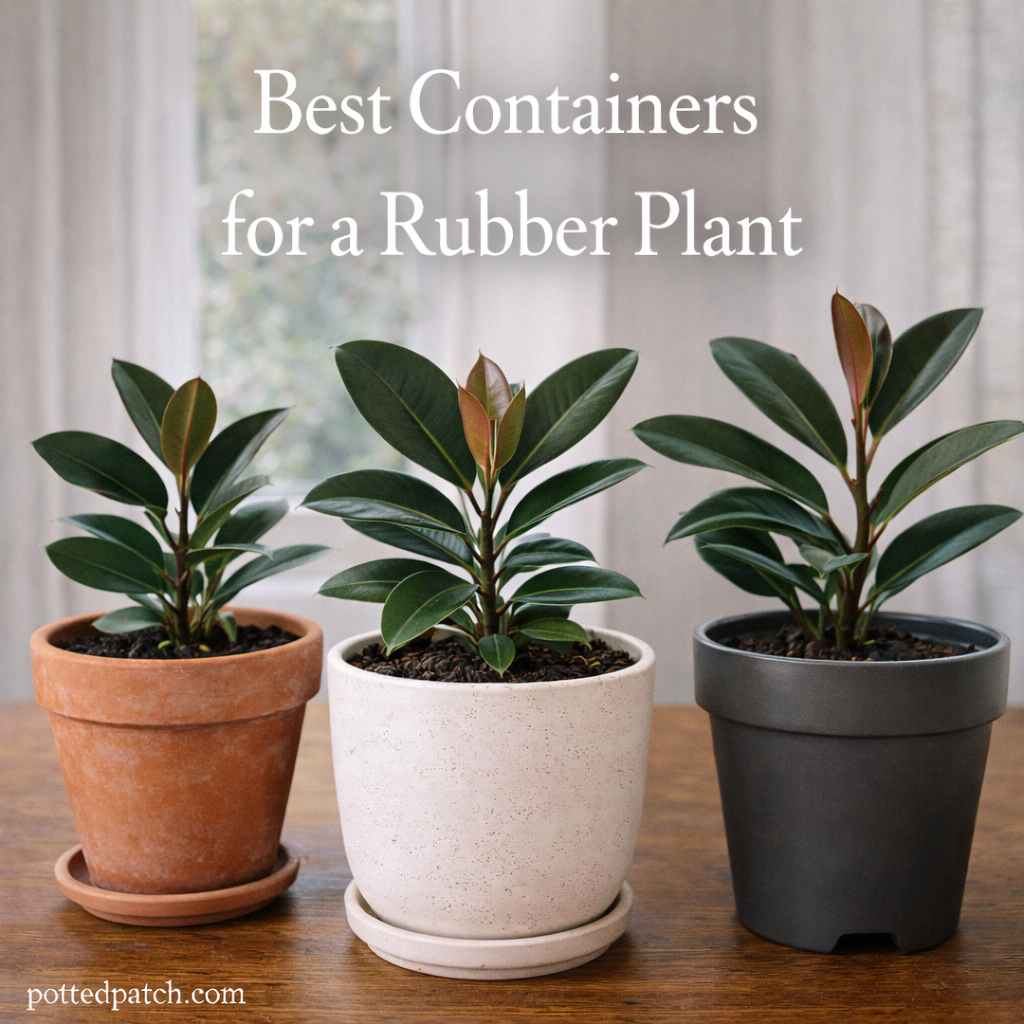
- Always use a pot with drainage holes
- Avoid watering on a strict weekly schedule
- Use room-temperature water
- Reduce watering in winter
- Ensure soil drains freely
Consistency matters more than frequency.
What If You’re Not Sure?
If you’re unsure whether to water:
Wait.
Rubber plants tolerate slight dryness much better than excess moisture.
When in doubt, let the soil dry a bit more.
Final Thoughts
How often to water a rubber plant depends on environment and season — but most plants thrive when watered only after the top layer of soil dries out.
Focus on checking soil moisture rather than sticking to a rigid schedule. With the right balance, your rubber plant will reward you with glossy leaves and steady growth.