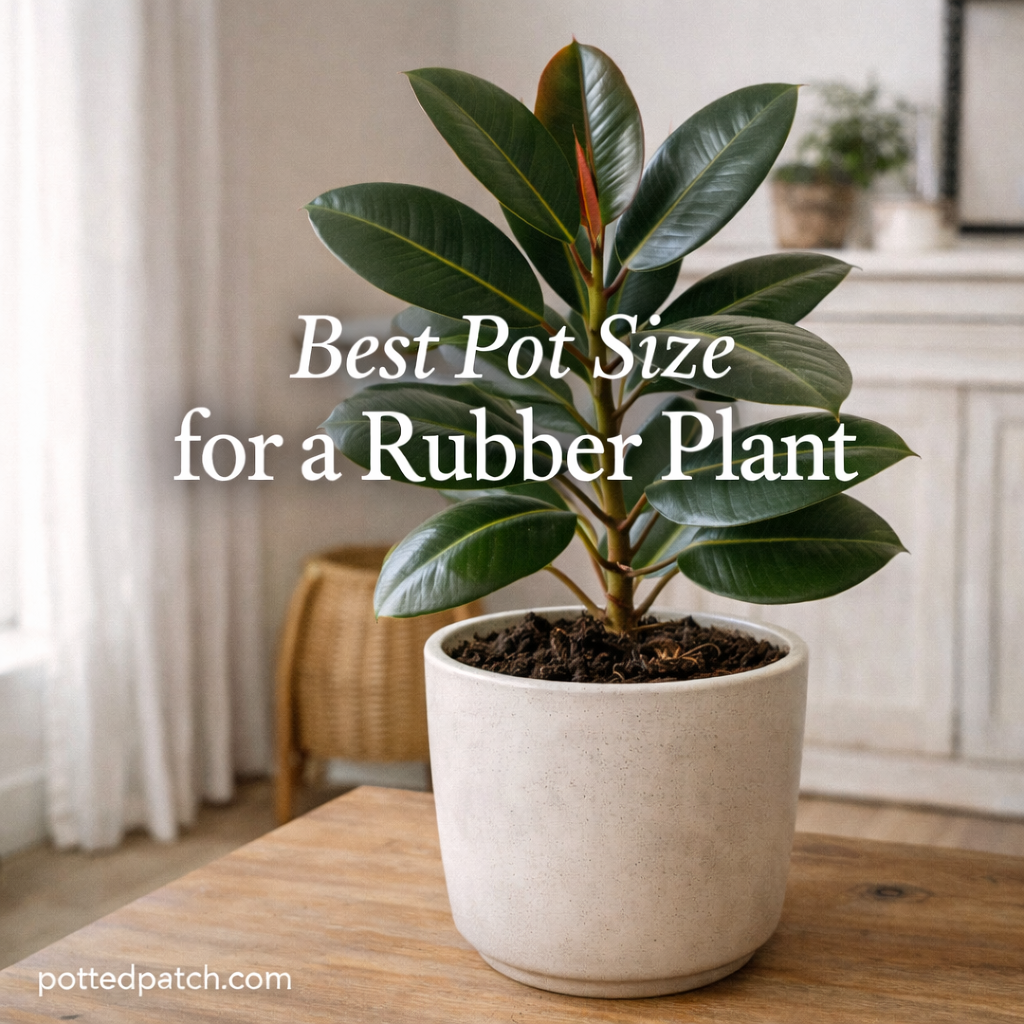
Choosing the right pot size for a rubber plant can make the difference between steady growth and ongoing watering problems.
Too small, and your plant becomes root-bound.
Too large, and you risk overwatering and root rot.
If you want your rubber plant to thrive indoors, here’s exactly how to choose the best pot size — and when to upgrade.
Why Pot Size Matters for Rubber Plants
Rubber plants (Ficus elastica) grow upright and develop strong root systems. The pot controls:
- How much moisture the soil retains
- How quickly roots expand
- Overall plant stability
- Risk of root rot
The goal is balance: enough room to grow, but not so much soil that it stays wet for too long.
Ideal Pot Size for a Young Rubber Plant
If your rubber plant is:
- 1–2 feet tall
- Recently propagated
- Purchased in a nursery container
A 6–8 inch pot is usually ideal.
This size:
- Supports early root development
- Drains properly
- Prevents overwatering
Avoid jumping to a large decorative pot too soon.
Best Pot Size for a Medium Rubber Plant
For rubber plants that are:
- 2–4 feet tall
- Actively growing
- Filling out with multiple leaves
A 10–12 inch pot works best.
This gives the roots enough room without overwhelming them with excess soil.
Large Indoor Rubber Plants
If your plant is:
- 5+ feet tall
- Top-heavy
- Mature and established
A 14–16 inch pot is typically appropriate.
Larger plants need:
- Stability
- Heavier pots (ceramic or terracotta preferred)
- Strong drainage
Oversizing beyond 16 inches indoors is rarely necessary unless the plant is very mature.
How Much Bigger Should You Go When Repotting?
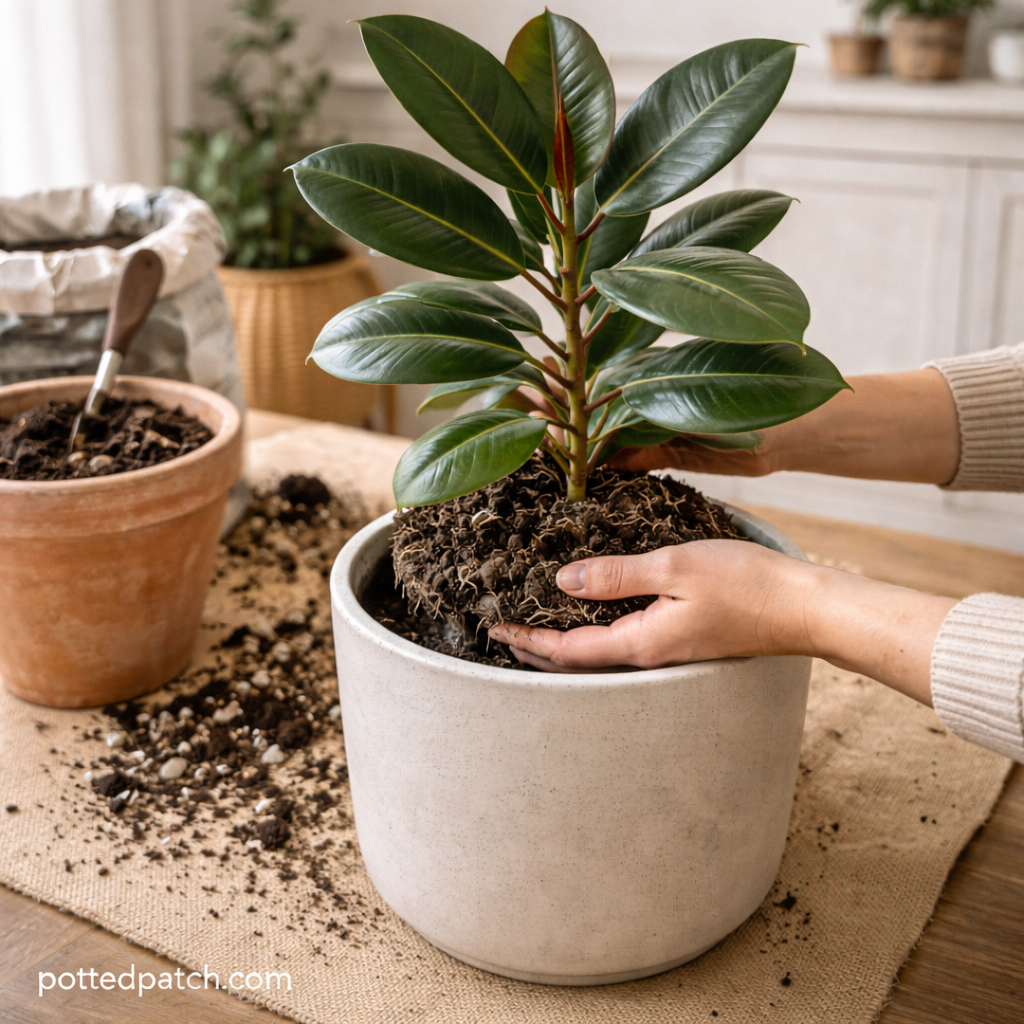
The rule of thumb:
Increase pot diameter by 1–2 inches at a time.
For example:
- From 8 inches → move to 10 inches
- From 10 inches → move to 12 inches
Avoid jumping up 4–6 inches in one step.
Too much extra soil retains moisture longer than roots can absorb it.
Signs Your Rubber Plant Needs a Bigger Pot
Look for these signs:
- Roots growing out of drainage holes
- Soil drying out extremely fast
- Slowed growth during growing season
- Plant becoming top-heavy
If roots are circling tightly around the root ball, it’s time to size up.
What Happens If the Pot Is Too Large?
A pot that’s too large can cause:
- Soggy soil
- Yellowing leaves
- Soft stems
- Root rot
Rubber plants prefer slightly snug conditions over overly spacious ones.
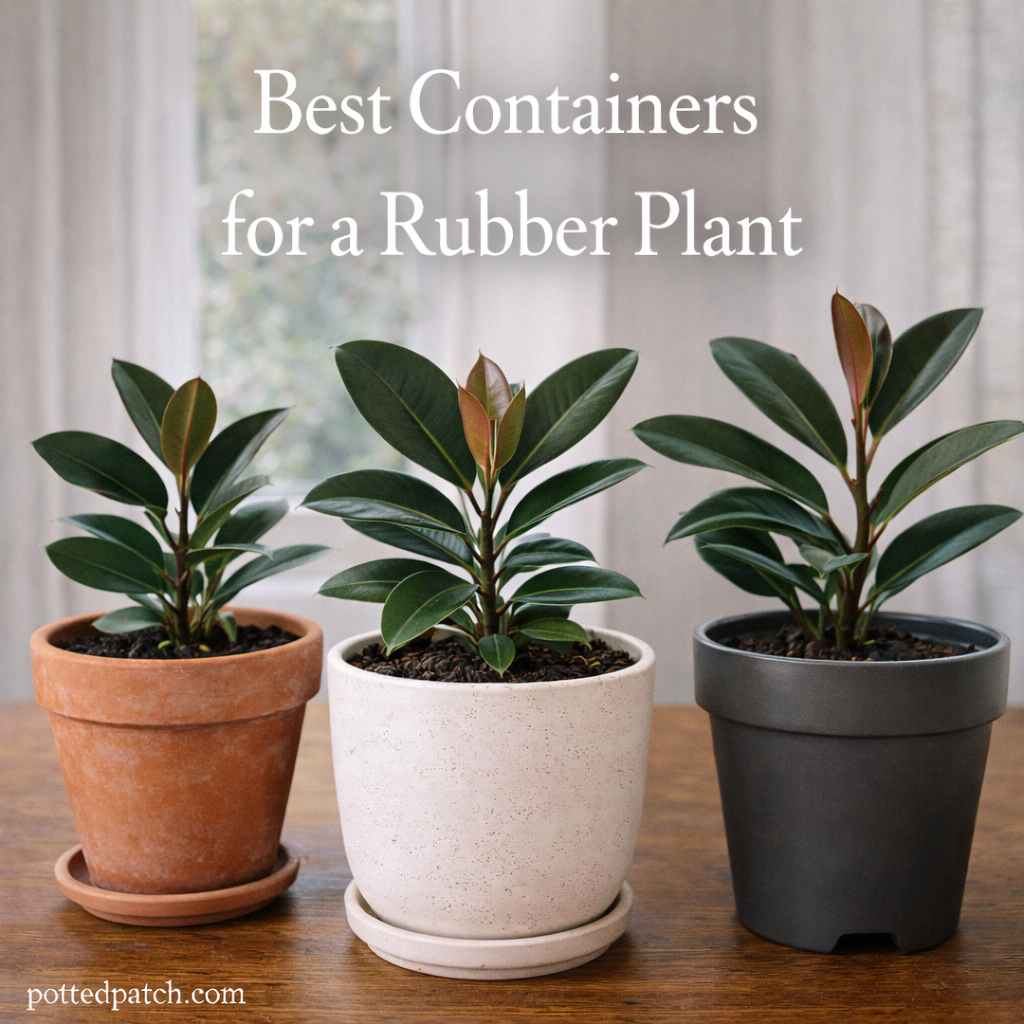
Choosing the Right Pot Material
Pot size matters — but so does material.
Terracotta
- Dries out faster
- Great for overwaterers
- Heavier and stabilizing
Plastic
- Retains moisture longer
- Lightweight
- Budget-friendly
Ceramic
- Attractive
- Moderately moisture-retentive
- Stable for larger plants
No matter the material, drainage holes are non-negotiable.
Depth vs. Width
Rubber plants grow deep roots, so depth is important.
Choose pots that are:
- As deep as they are wide
- Not shallow bowls
- Structurally stable
Tall, narrow pots can work — but make sure they don’t tip easily.
Repotting Tips for Success
When upgrading pot size:
- Water the plant lightly the day before repotting.
- Gently loosen the root ball.
- Trim circling roots if necessary.
- Use fresh, well-draining potting mix.
- Avoid burying the stem deeper than before.
After repotting, wait about a week before fertilizing.
Quick Pot Size Guide
Young plant (under 2 ft):
6–8 inch pot
Medium plant (2–4 ft):
10–12 inch pot
Large plant (5+ ft):
14–16 inch pot
Increase size gradually by 1–2 inches each time.
Final Thoughts
The best pot size for a rubber plant is one that supports steady growth without holding excess moisture.
When in doubt, choose slightly snug over overly spacious. Gradual upgrades and proper drainage will keep your rubber plant healthy, upright, and thriving indoors for years.