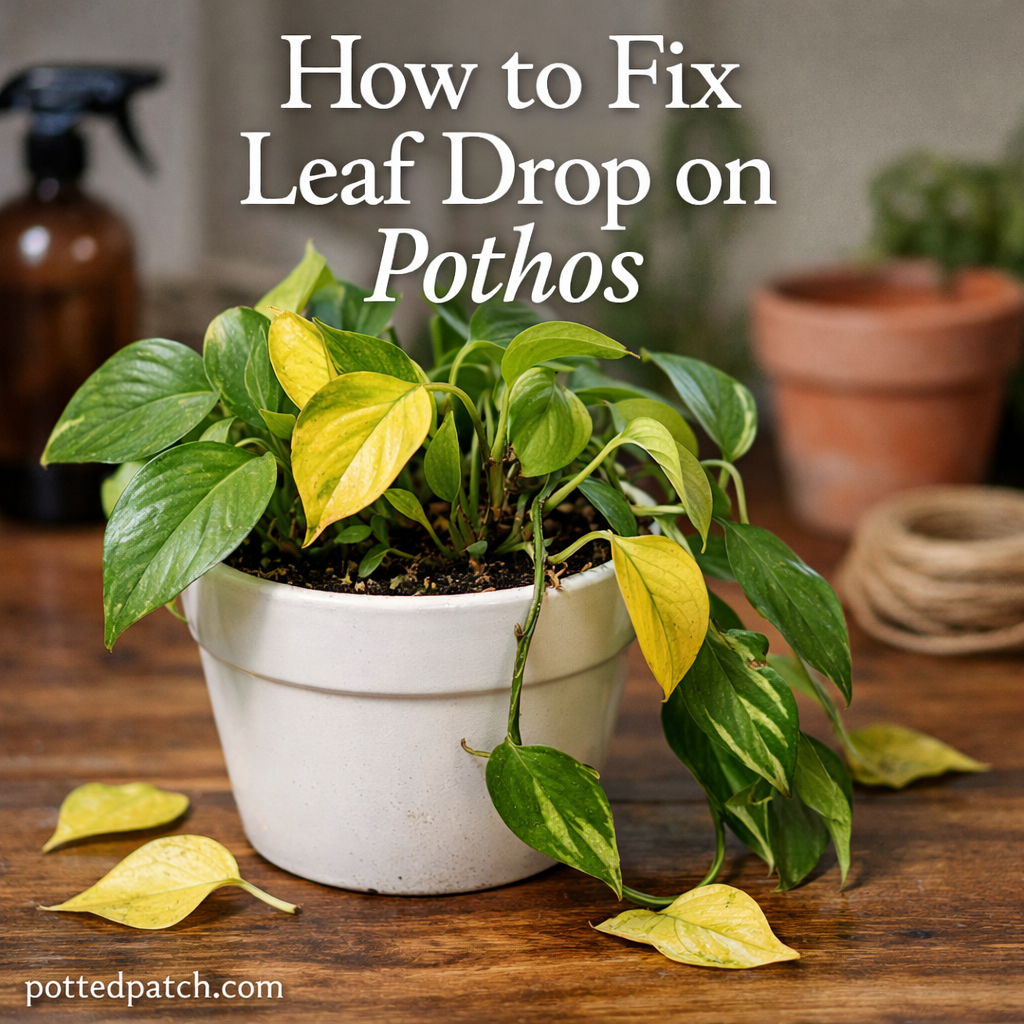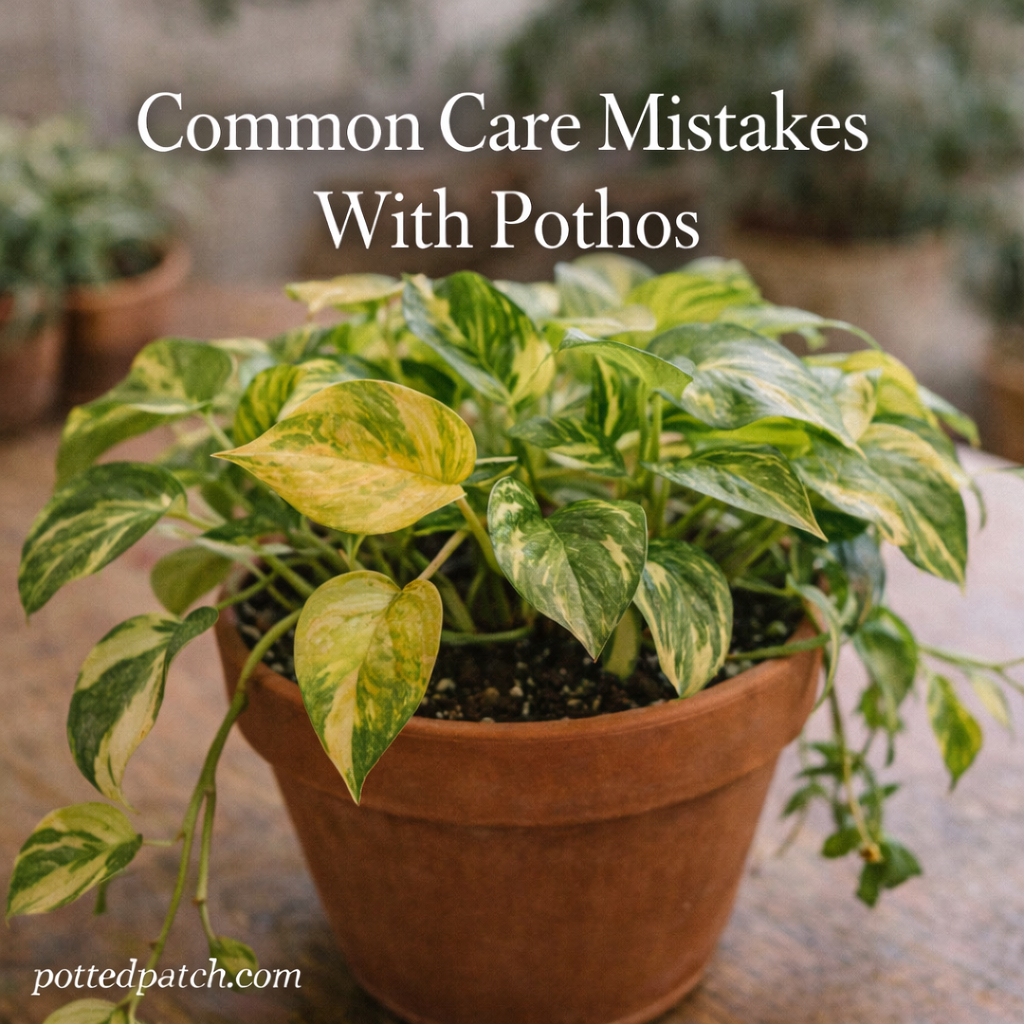
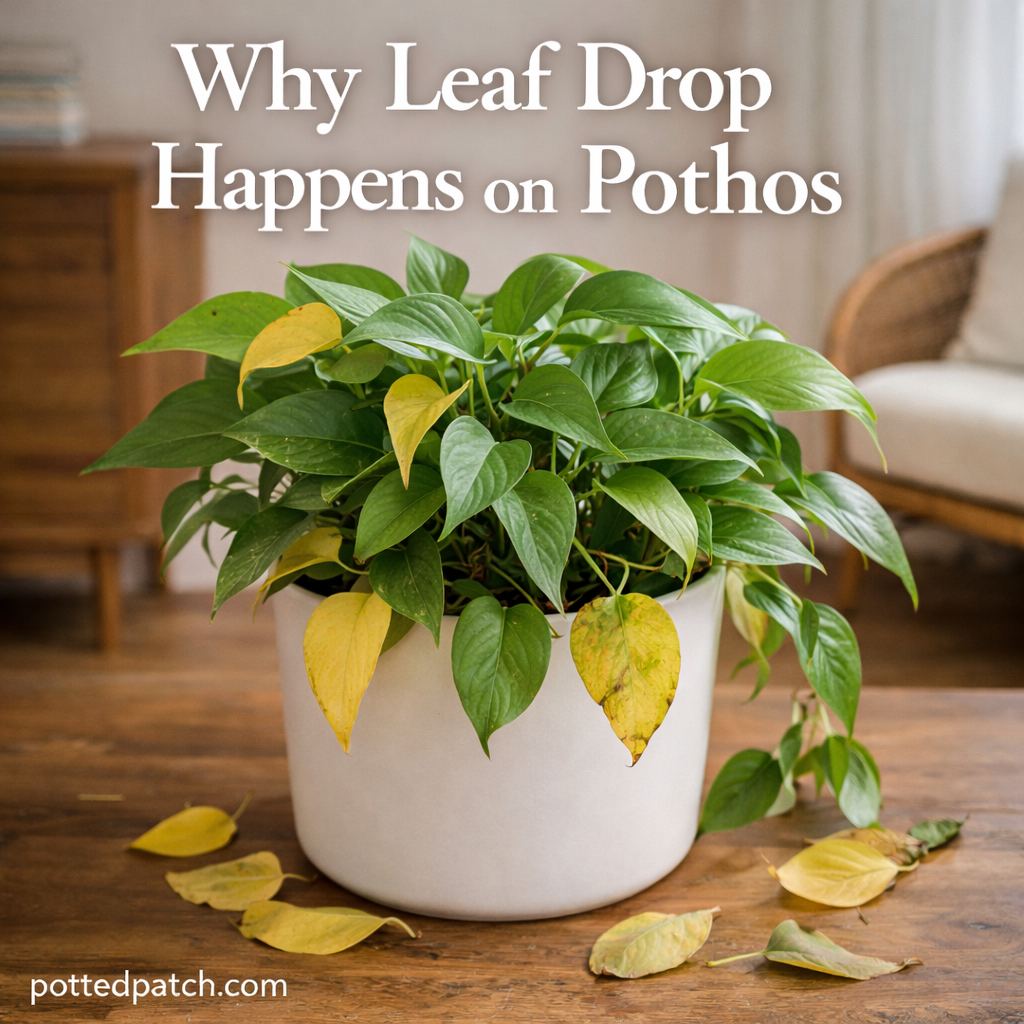
Pothos plants are known for being low-maintenance and resilient. So when leaves start falling off, it can be confusing — and sometimes alarming.
The good news? Leaf drop on pothos is usually caused by a fixable care issue. Once you identify the root cause, recovery is often straightforward.
In this guide, we’ll break down the most common reasons pothos leaves drop and exactly how to fix each one.
Overwatering (Most Common Cause)
Overwatering is the leading cause of leaf drop in pothos.
When roots sit in soggy soil, they can’t access oxygen. This leads to root stress or root rot, which causes:
- Yellowing leaves
- Soft stems
- Leaves dropping from the base
- Mushy soil smell
How to Fix It
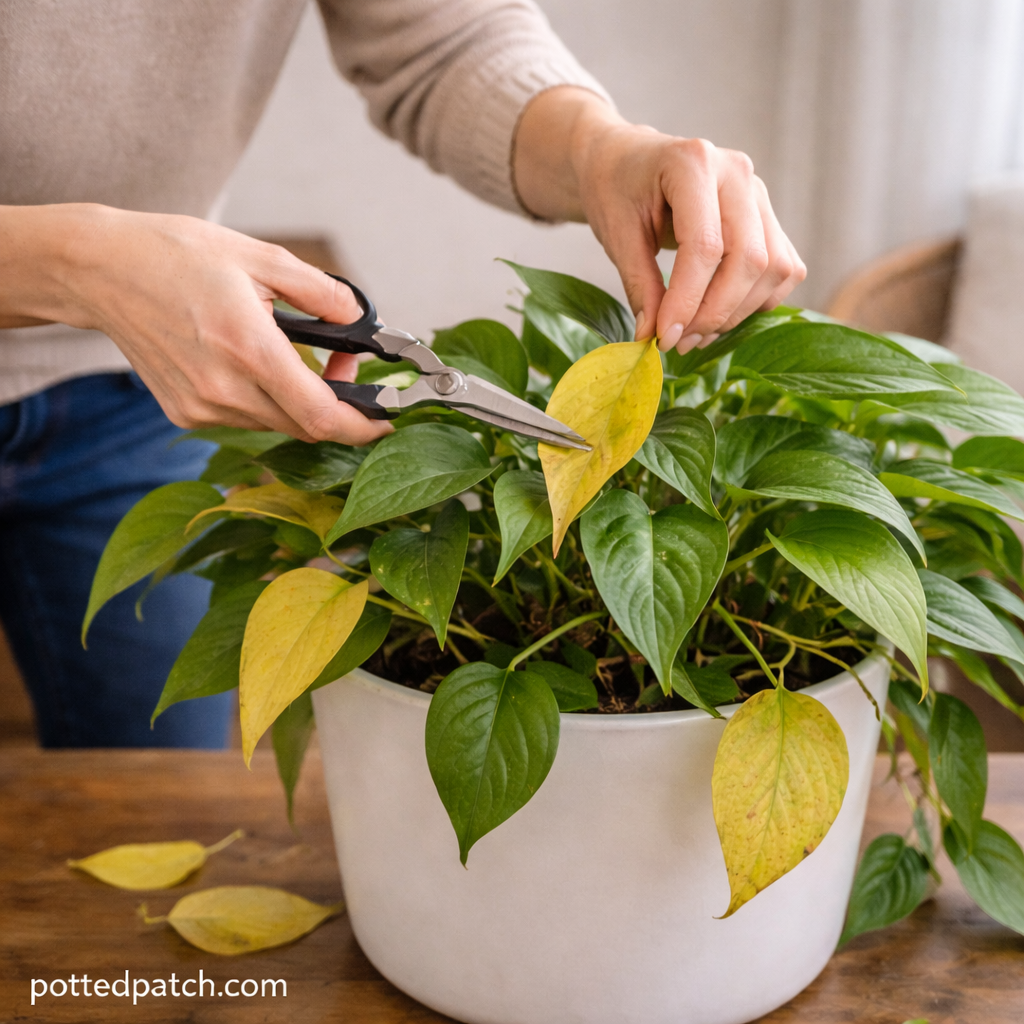
- Let the top 2 inches of soil dry before watering again
- Ensure the pot has drainage holes
- Empty saucers after watering
- Repot in fresh, well-draining soil if roots are rotting
Pothos prefer slightly dry conditions over constantly wet soil.
Underwatering
If the soil becomes bone dry for extended periods, pothos may shed leaves to conserve moisture.
Signs of underwatering include:
- Dry, crumbly soil
- Wilted vines
- Brown leaf edges
- Leaf drop after prolonged dryness
How to Fix It
- Water thoroughly until excess drains out
- Stick to a consistent watering schedule
- Avoid letting soil fully dry out repeatedly
Consistency is key.
Sudden Environmental Changes
Pothos dislike abrupt changes in environment.
Leaf drop can occur after:
- Moving to a new room
- Temperature swings
- Drafts from doors or vents
- Repotting
How to Fix It
- Keep temperatures between 65–85°F
- Avoid placing near heating or cooling vents
- Give the plant 2–3 weeks to adjust
Temporary leaf loss after a move is common and usually resolves on its own.
Low Light Stress
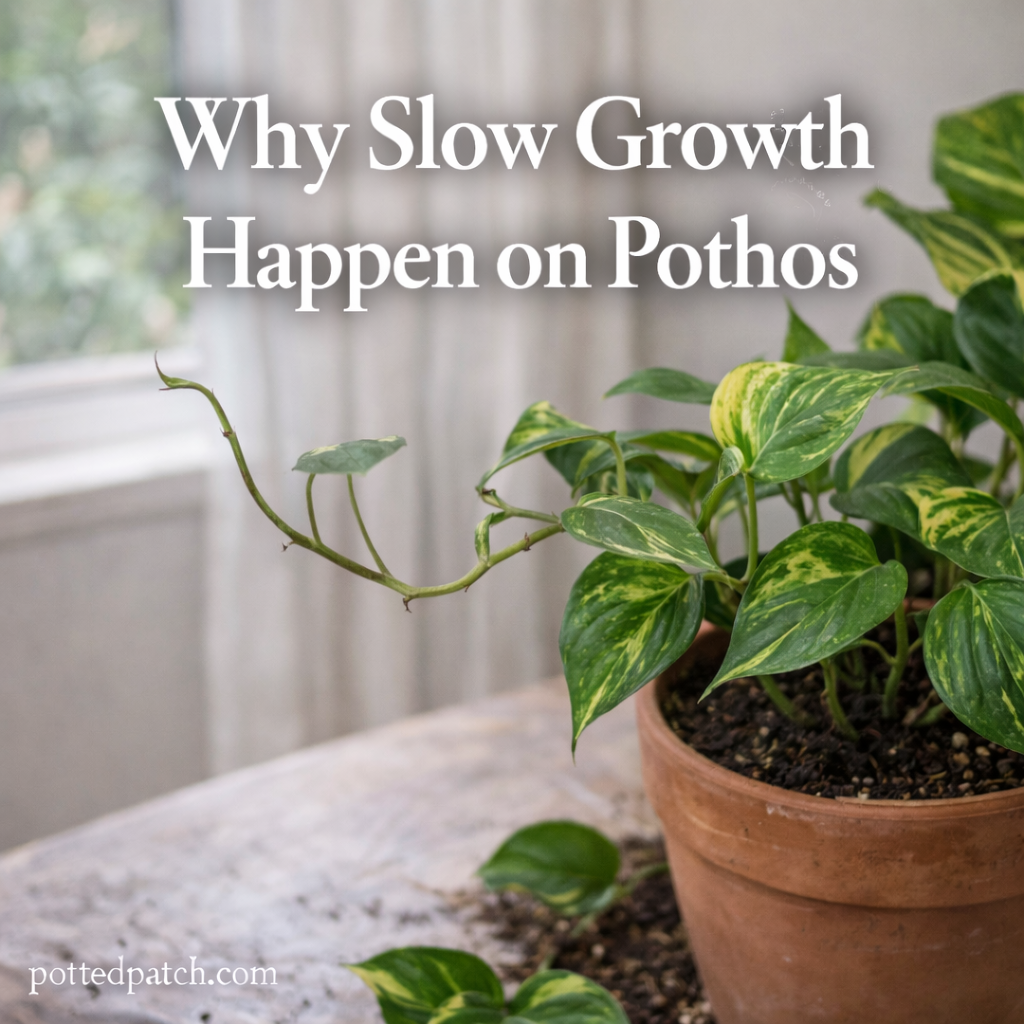
Pothos tolerate low light, but extremely dim conditions can weaken the plant over time.
In very low light, you may notice:
- Sparse vines
- Smaller leaves
- Slow growth
- Occasional leaf drop
How to Fix It
- Move to bright, indirect light
- Rotate periodically for even exposure
- Consider a grow light if needed
Better light often improves overall leaf retention.
Root Bound Conditions
When roots fill the entire pot, they compete for water and nutrients. This stress can trigger leaf drop.
Signs include:
- Roots growing from drainage holes
- Water running straight through the pot
- Slowed growth
How to Fix It
- Repot into a container 1–2 inches larger
- Use fresh, well-draining potting mix
- Water thoroughly after repotting
Repotting during spring or summer gives the best results.
Pest Problems
While pothos are relatively pest-resistant, infestations can cause leaf drop.
Watch for:
- Sticky residue
- Fine webbing
- Tiny insects under leaves
- Yellow speckled foliage
Common pests include spider mites, mealybugs, and scale.
How to Fix It
- Isolate the plant
- Wipe leaves with insecticidal soap
- Rinse foliage gently
- Repeat treatment weekly until clear
Early treatment prevents major leaf loss.
Natural Aging
Sometimes, leaf drop is simply part of the plant’s growth cycle.
Older leaves at the base of long vines may yellow and fall off naturally.
If only a few lower leaves drop while the rest of the plant looks healthy, there’s usually no cause for concern.
How to Prevent Leaf Drop in the Future
To keep your pothos full and healthy:
- Water when the top 1–2 inches are dry
- Provide bright, indirect light
- Avoid sudden temperature changes
- Repot when root bound
- Inspect regularly for pests
Small adjustments can prevent most leaf loss issues.
Final Thoughts
Leaf drop on pothos is typically a sign that something in the care routine needs adjustment — most often watering or lighting.
By checking soil moisture, light levels, and root health, you can quickly pinpoint the cause and restore your plant’s health.
With consistent care, pothos bounce back quickly and continue producing lush, trailing growth.