

Fiddle leaf figs are known for their bold leaves and upright growth — but they can quickly become lopsided if they grow toward one light source. If your plant is leaning, stretching, or looking uneven, learning how to rotate a fiddle leaf fig properly can restore balance and improve overall health.
In this guide, you’ll learn when to rotate, how often to do it, and the right way to turn your plant without stressing it.
Why Rotating a Fiddle Leaf Fig Matters
A fiddle leaf fig naturally grows toward light. This process is called phototropism. When light only hits one side of the plant, it causes:
- Leaning or tilting toward the window
- Uneven leaf growth
- Bare spots on the shaded side
- Weak or stretched stems
Regular rotation helps your plant grow evenly and maintain a symmetrical, upright shape.
How Often Should You Rotate a Fiddle Leaf Fig?
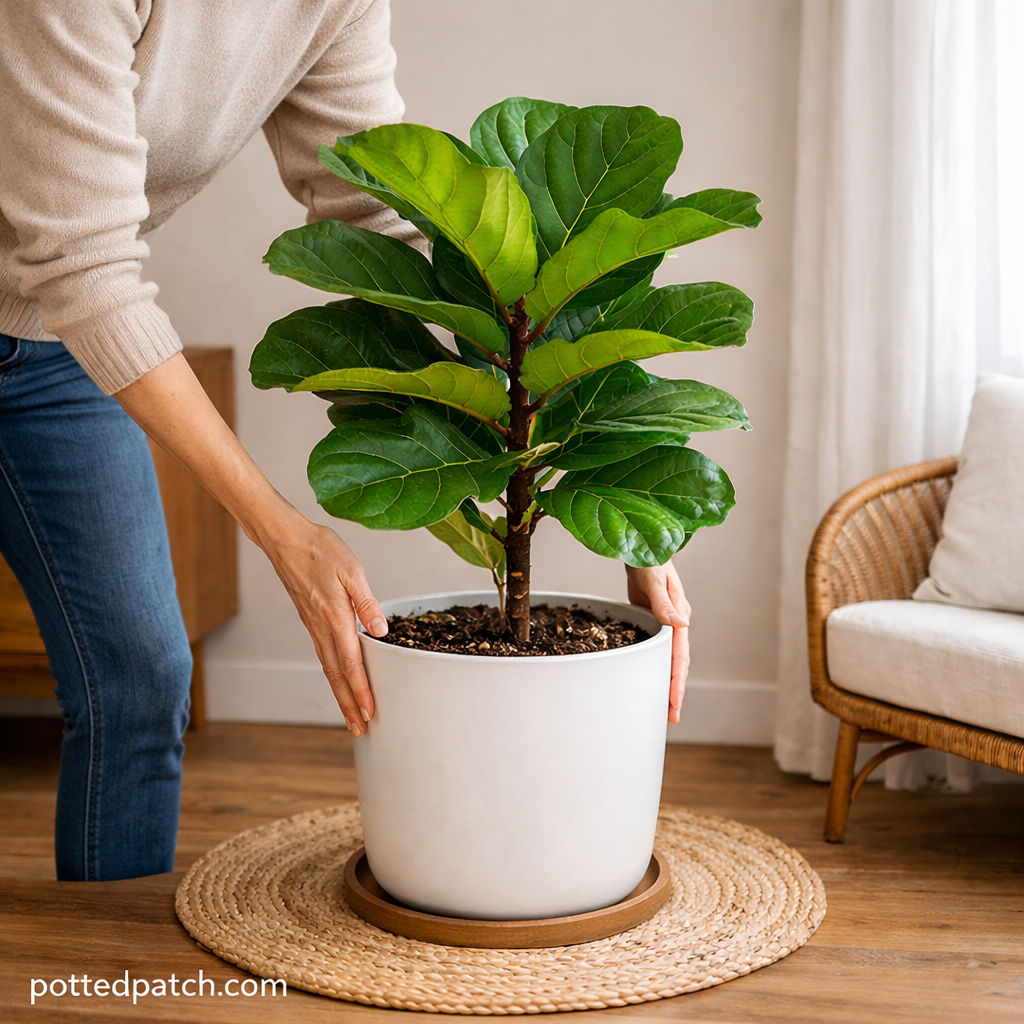
In most homes, rotating every 1–2 weeks works best.
However, the ideal frequency depends on your lighting:
- Bright, direct light from one window → Rotate weekly
- Moderate indirect light → Rotate every 2 weeks
- Multiple light sources → Rotate once a month
If you notice visible leaning, it’s a sign you should rotate more frequently.
Step-by-Step: How to Rotate a Fiddle Leaf Fig Properly
Rotating is simple, but doing it gradually prevents shock and instability.
Step 1: Choose a Consistent Direction
Pick clockwise or counterclockwise and stick with it. Consistency helps you track rotations.
Step 2: Turn the Plant 90 Degrees
Rotate the pot about one quarter turn at a time. Avoid spinning it 180 degrees in one go — that sudden shift can stress the plant.
Step 3: Check Stability
After rotating:
- Make sure the trunk is upright
- Adjust the pot if it shifted in the saucer
- Confirm the plant isn’t wobbling
If your plant is tall, support the trunk temporarily if needed.
Step 4: Observe Growth Over Time
Within a few weeks, you should notice:
- Straighter stem alignment
- Fuller growth on previously shaded areas
- Improved leaf spacing
Should You Rotate After Repotting?
After repotting, allow your fiddle leaf fig to adjust for 1–2 weeks before rotating again.
Repotting already causes mild stress. Giving your plant time to settle helps roots stabilize in the new soil.
What If Your Fiddle Leaf Fig Is Already Leaning?
If your plant has developed a noticeable lean, follow this correction method:
- Rotate 90 degrees toward the opposite direction of the lean
- Ensure it receives bright, consistent light
- Consider staking temporarily if the trunk is weak
- Continue rotating every 1–2 weeks
Over time, the stem will gradually correct itself as it strengthens.
Common Rotation Mistakes to Avoid
Even though rotating is simple, these mistakes can cause problems:
Rotating Too Frequently
Turning the plant every few days doesn’t give it enough time to respond to light.
Turning 180 Degrees at Once
A sudden flip can cause temporary leaf drooping or stress.
Ignoring Light Quality
If your plant isn’t getting enough light overall, rotation alone won’t fix leggy growth.
Forgetting to Rotate Altogether
This is the most common issue — and the easiest to fix.
Bonus Tip: Mark Your Calendar
Set a reminder on your phone every 1–2 weeks. Consistency is more important than perfection.
You can also place a small, discreet mark under the pot to track rotation progress.
Final Thoughts
Rotating your fiddle leaf fig is one of the simplest ways to improve its shape and strength. A small quarter turn every week or two helps promote balanced growth, prevents leaning, and keeps your plant looking full and upright.
With consistent care and proper lighting, your fiddle leaf fig will reward you with symmetrical growth and healthier leaves over time.