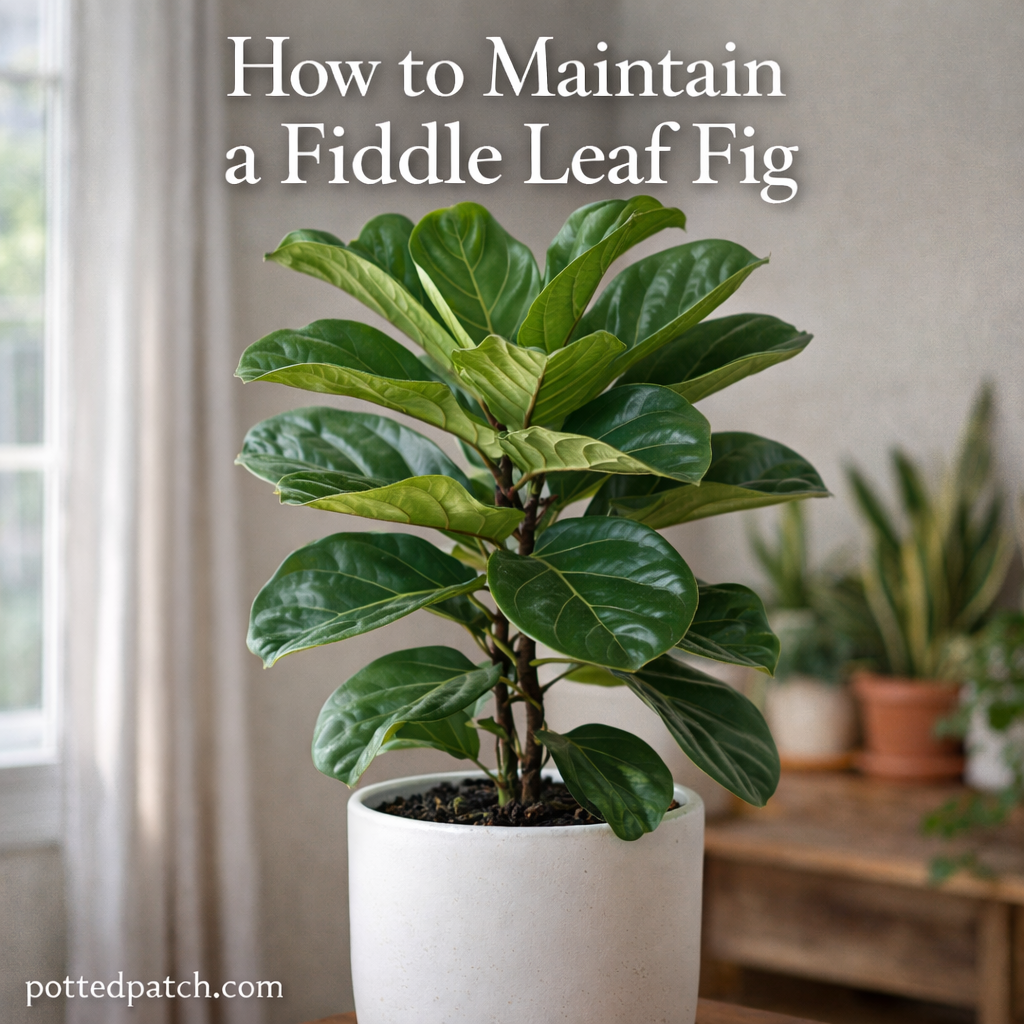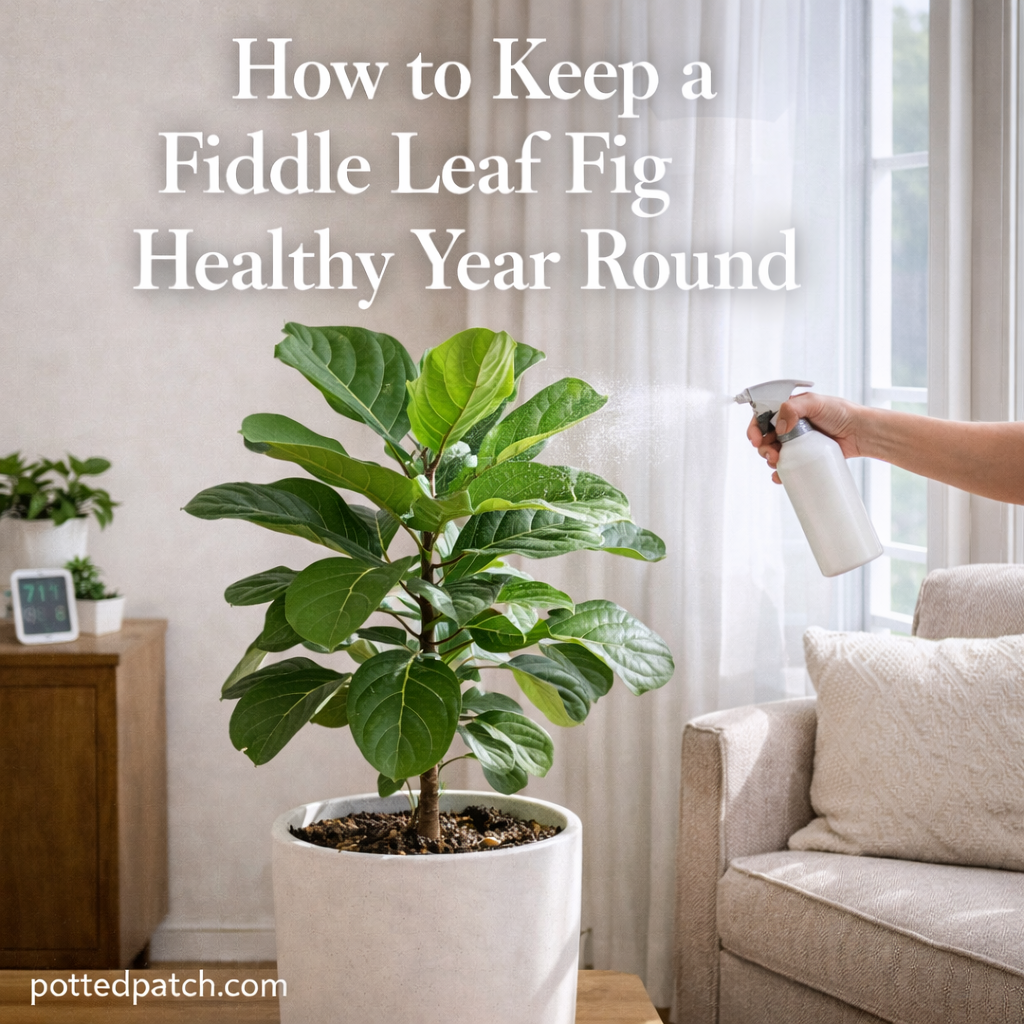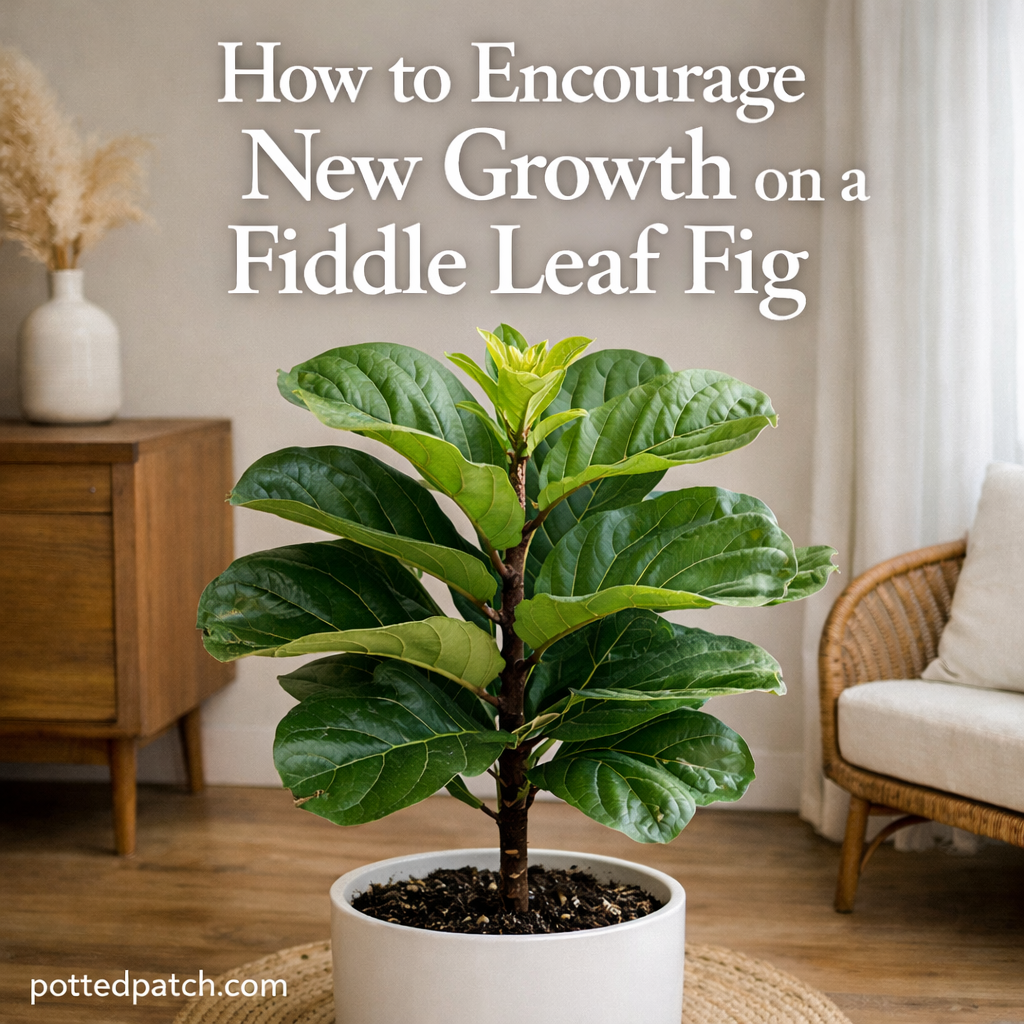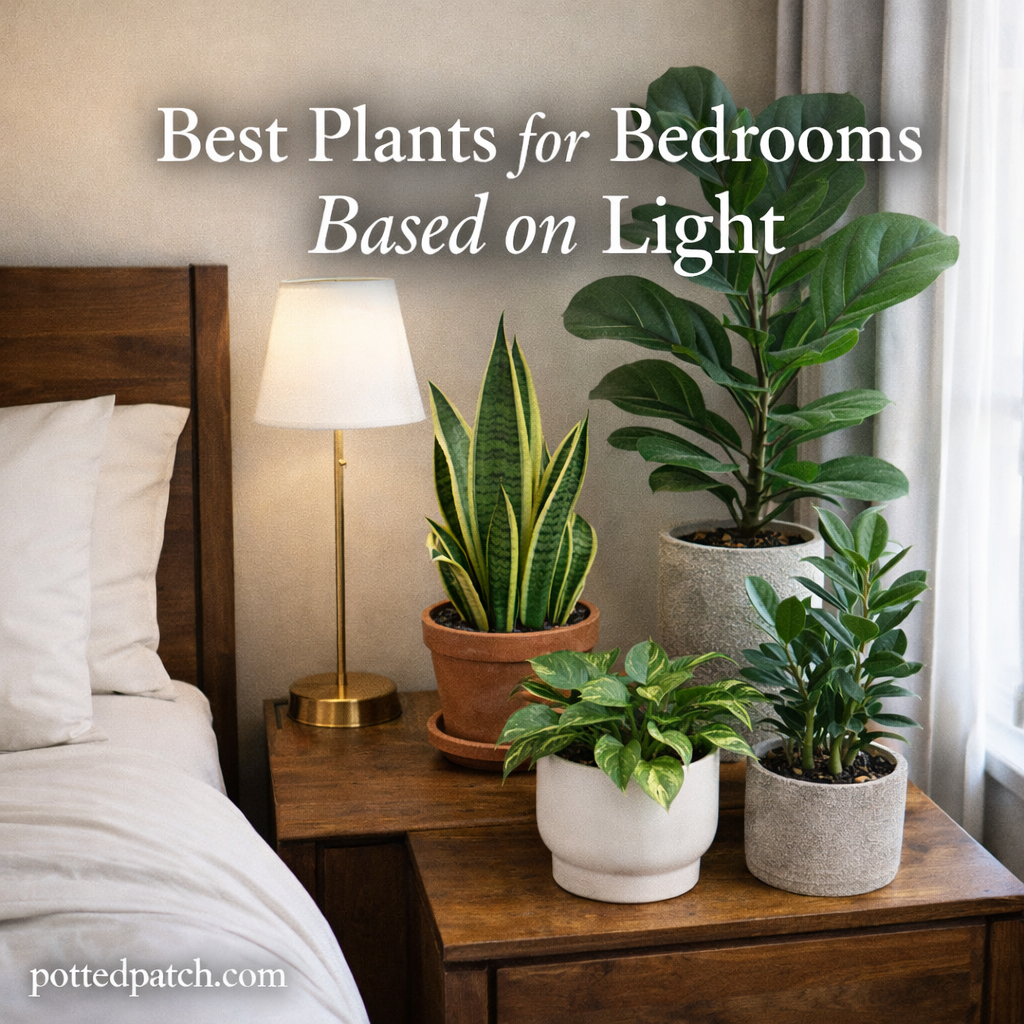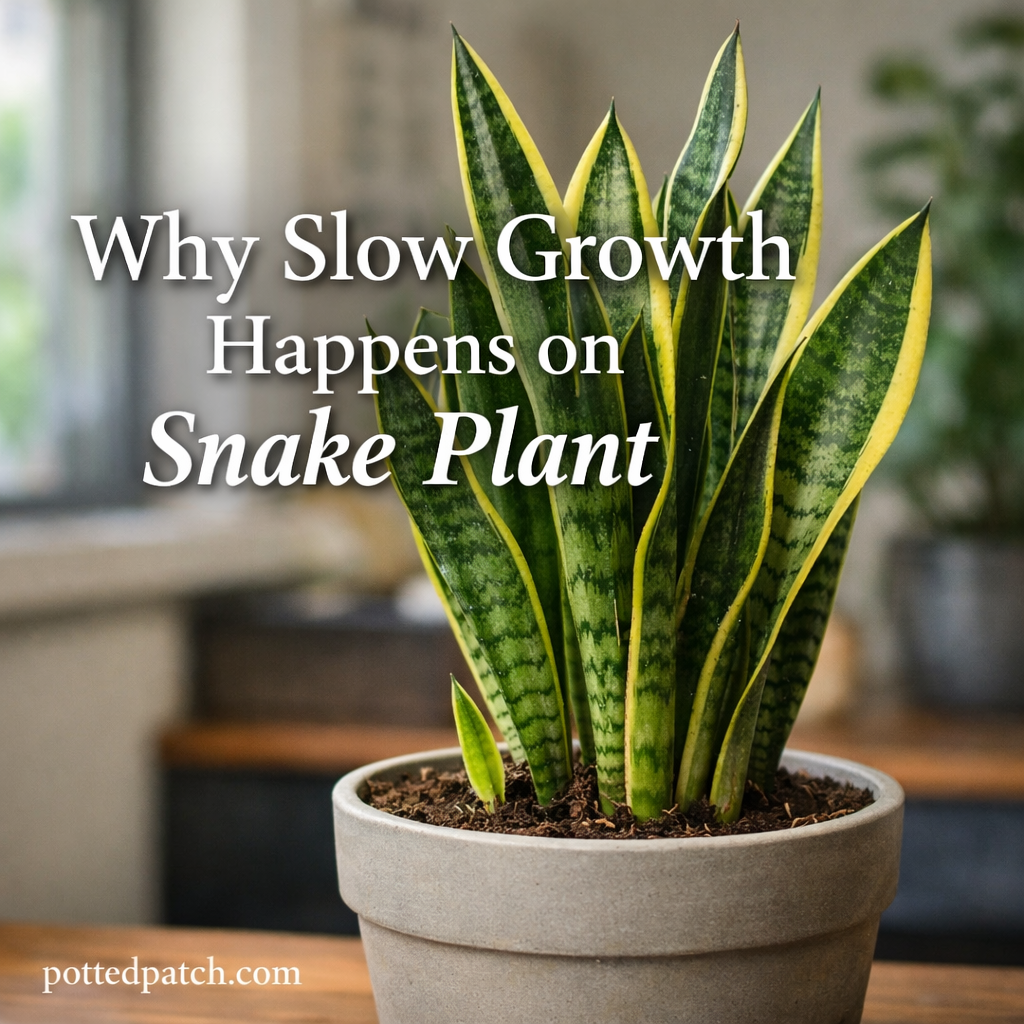

Fiddle leaf figs are famous for their large, glossy leaves—but they’re equally famous for being picky about light.
If your plant is dropping leaves, leaning toward a window, or growing slowly, lighting is usually the issue.
Getting the light right is the single most important factor in keeping a fiddle leaf fig healthy indoors.
Let’s break down exactly what these plants need.
How Much Light Does a Fiddle Leaf Fig Need?
Fiddle leaf figs thrive in:
- Bright, indirect light
- Several hours of consistent daylight
- Stable placement (they dislike frequent moving)
In nature, they grow under the canopy of taller trees. That means they receive bright filtered light—not harsh, direct sun all day.
Aim for 6–8 hours of bright, indirect light daily.
The Best Window Placement
South-Facing Windows (Best Option)
A south-facing window provides the strongest indoor light.
Place your fiddle leaf fig:
- 2–5 feet away from the window
- Or directly in front if the light is filtered
Sheer curtains help diffuse harsh midday sun.
East-Facing Windows (Very Good)
Morning sun is gentle and safe.
Your plant can sit:
- Directly in front of the window
- Or within a few feet
East-facing light encourages steady growth without burning leaves.
West-Facing Windows (Use Caution)
Afternoon sun can be intense.
If using a west-facing window:
- Position the plant a few feet back
- Or filter the light with curtains
Watch for leaf scorch—brown, crispy patches on sun-exposed leaves.
North-Facing Windows (Usually Too Dim)
North-facing light is typically too weak for optimal growth.
If this is your only option:
- Supplement with a grow light
- Expect slower growth
Low light often leads to leaf drop.
Signs Your Fiddle Leaf Fig Needs More Light
If lighting is insufficient, you may notice:
- Leaves dropping from the bottom
- Slow or stalled growth
- Smaller new leaves
- Leggy, stretched stems
- Leaning heavily toward a light source
The plant may survive—but it won’t thrive.
Signs of Too Much Direct Sun
While they love brightness, too much direct sun can damage leaves.
Watch for:
- Bleached or faded patches
- Crispy brown spots
- Sudden leaf discoloration
Move the plant slightly back or filter the light if you see these signs.
How to Rotate Your Plant
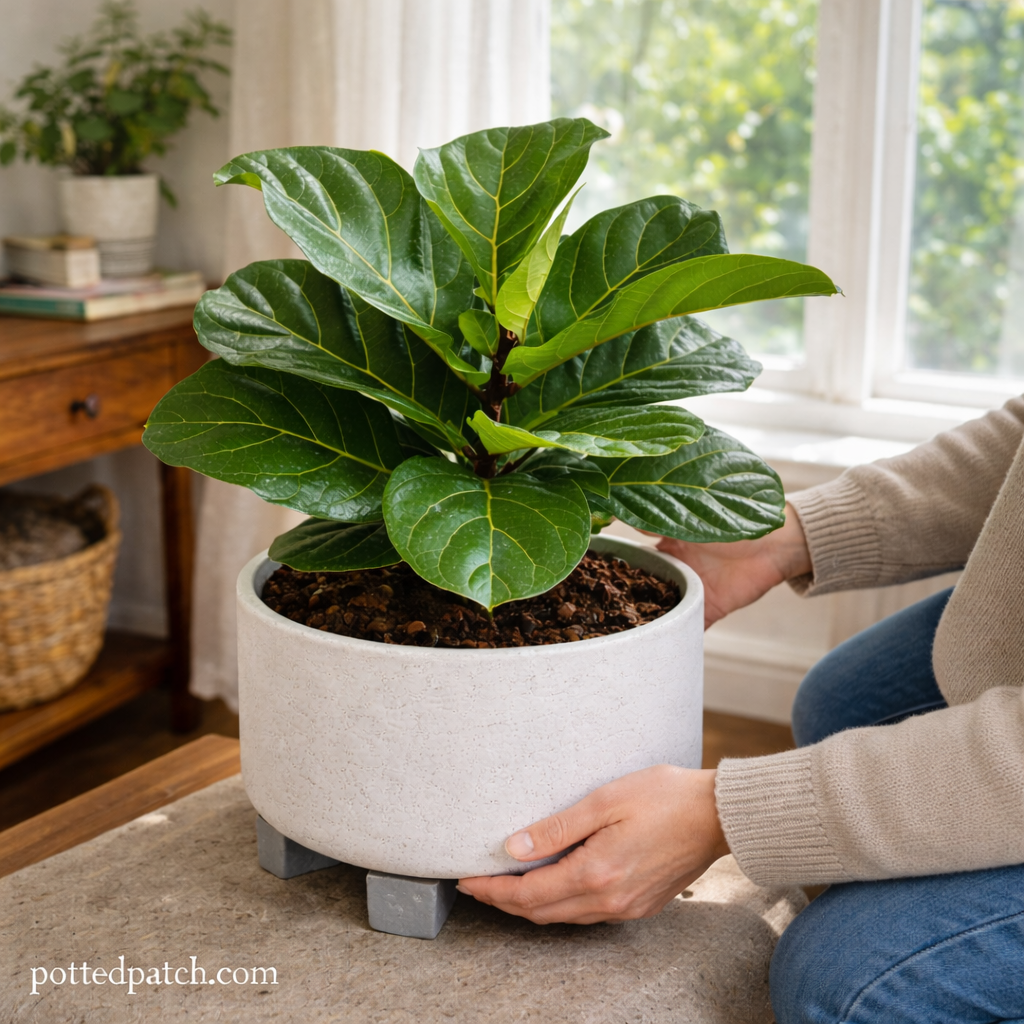
Fiddle leaf figs naturally grow toward light.
To keep your plant upright:
- Rotate the pot 90 degrees every 1–2 weeks
- Avoid frequent relocation to new rooms
Consistency helps reduce stress.
Can You Use a Grow Light?
Yes. Grow lights work well in low-light homes.
Choose:
- A full-spectrum LED grow light
- Positioned 12–24 inches above the plant
- Used for 8–12 hours daily
Grow lights are especially helpful in winter months when daylight is shorter.
Seasonal Light Changes
Light intensity changes throughout the year.
Spring & Summer
- Stronger light
- Faster growth
- Increased watering needs
Fall & Winter
- Lower light levels
- Slower growth
- Reduce watering slightly
You may need to move the plant slightly closer to a window during winter.
Ideal Light Setup Checklist
For best results:
- Bright room with large windows
- South or east exposure
- Sheer curtains if needed
- Stable placement
- Occasional rotation
The brighter the indirect light, the healthier the leaves.
Final Thoughts
When it comes to fiddle leaf fig care, light is everything.
If your plant is struggling, improving lighting often fixes:
- Leaf drop
- Slow growth
- Leaning stems
- Dull foliage
Provide bright, indirect light consistently, and your fiddle leaf fig will reward you with strong growth and glossy leaves.