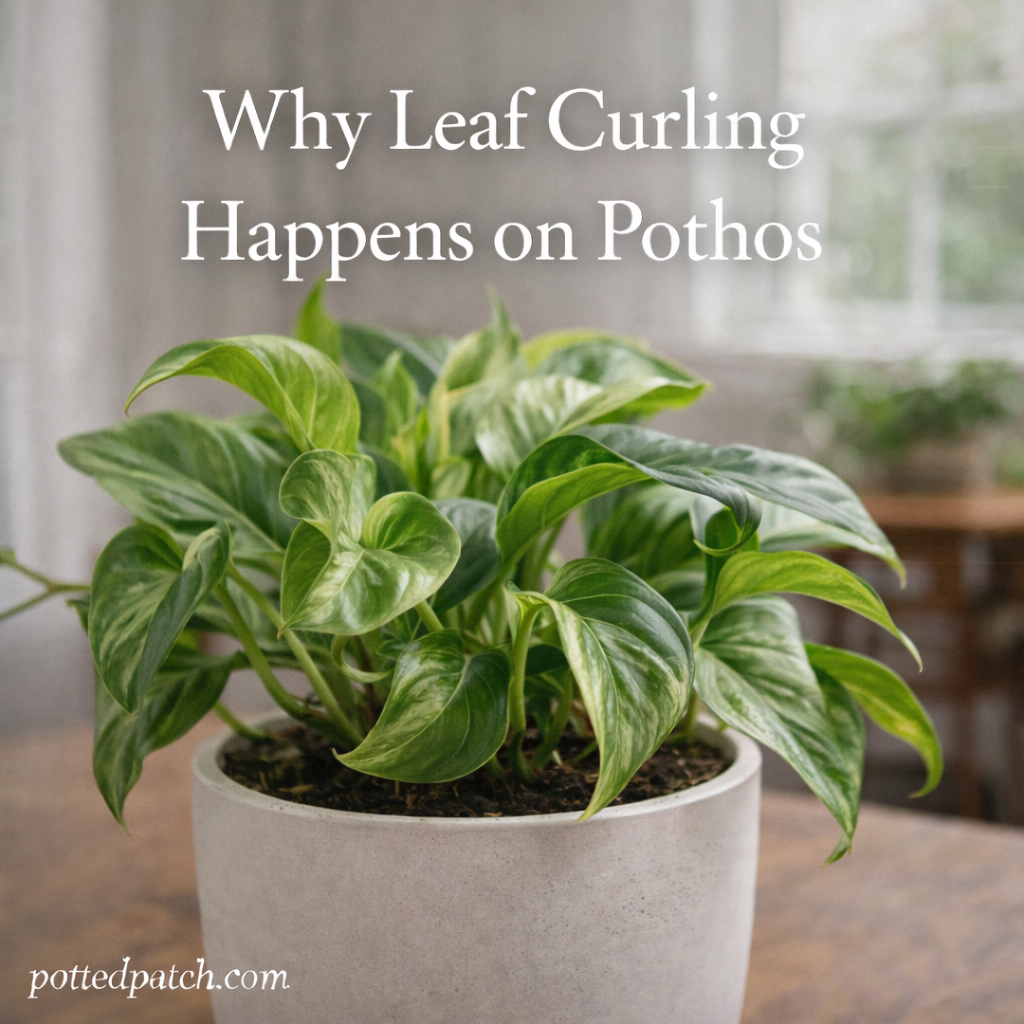
Pothos plants are known for their hardy nature and glossy, trailing leaves. When those leaves begin to curl inward or twist, it’s usually a sign that something in the environment needs adjustment.
Leaf curling is not random — it’s a stress response. The key to fixing it is identifying the underlying cause quickly.
Here’s why leaf curling happens on pothos and how to correct it.
The Most Common Causes of Leaf Curling
Pothos leaves curl when they are trying to conserve moisture or protect themselves from stress.
The most common causes include:
- Underwatering
- Overwatering
- Low humidity
- Excess heat
- Pest infestations
- Nutrient imbalance
Let’s break them down one by one.
1. Underwatering
Underwatering is the most frequent reason pothos leaves curl.
When soil becomes too dry, the plant loses internal water pressure. Leaves curl inward to reduce surface area and limit moisture loss.
Signs of underwatering
- Dry, crumbly soil
- Lightweight pot
- Drooping along with curling
- Leaves feel thin or papery
How to fix it
- Water thoroughly until excess drains from the bottom.
- Allow the soil to fully rehydrate.
- Resume consistent watering when the top 1–2 inches are dry.
Leaves often flatten out within hours after proper watering.
2. Overwatering and Root Stress
Too much water can also cause curling.
When roots sit in soggy soil, they struggle to absorb oxygen. This weakens the plant and causes leaf distortion.
Signs of overwatering
- Yellowing leaves
- Mushy stems
- Persistently wet soil
- Foul smell from the pot
How to fix it
- Let soil dry before watering again.
- Ensure the pot has drainage holes.
- Repot in fresh, well-draining soil if root rot is present.
Healthy roots are white and firm.
3. Low Humidity
Pothos tolerate average indoor humidity, but very dry air can cause curling.
This is especially common in winter when indoor heating reduces moisture in the air.
How to improve humidity
- Group plants together
- Use a pebble tray
- Run a humidifier nearby
Avoid heavy misting, which can cause spotting on leaves.
4. Excess Heat or Direct Sunlight
Too much heat or direct sunlight can cause leaves to curl and sometimes develop crispy edges.
Pothos prefer:
- Bright, indirect light
- Temperatures between 65–85°F
Move the plant away from harsh afternoon sun or heating vents.
5. Pest Infestations
Certain pests can cause leaf curling by damaging plant tissue.
Common pests include:
- Spider mites
- Mealybugs
- Aphids
Look for:
- Tiny webs
- Sticky residue
- White cotton-like clusters
- Small moving insects
Treat early with insecticidal soap or neem oil.
6. Fertilizer Buildup
Excess fertilizer salts can damage roots and affect leaf shape.
Signs include:
- Brown leaf tips
- White crust on soil surface
- Leaf curling with discoloration
Flush the soil with distilled water and reduce feeding frequency.
How to Diagnose the Real Cause
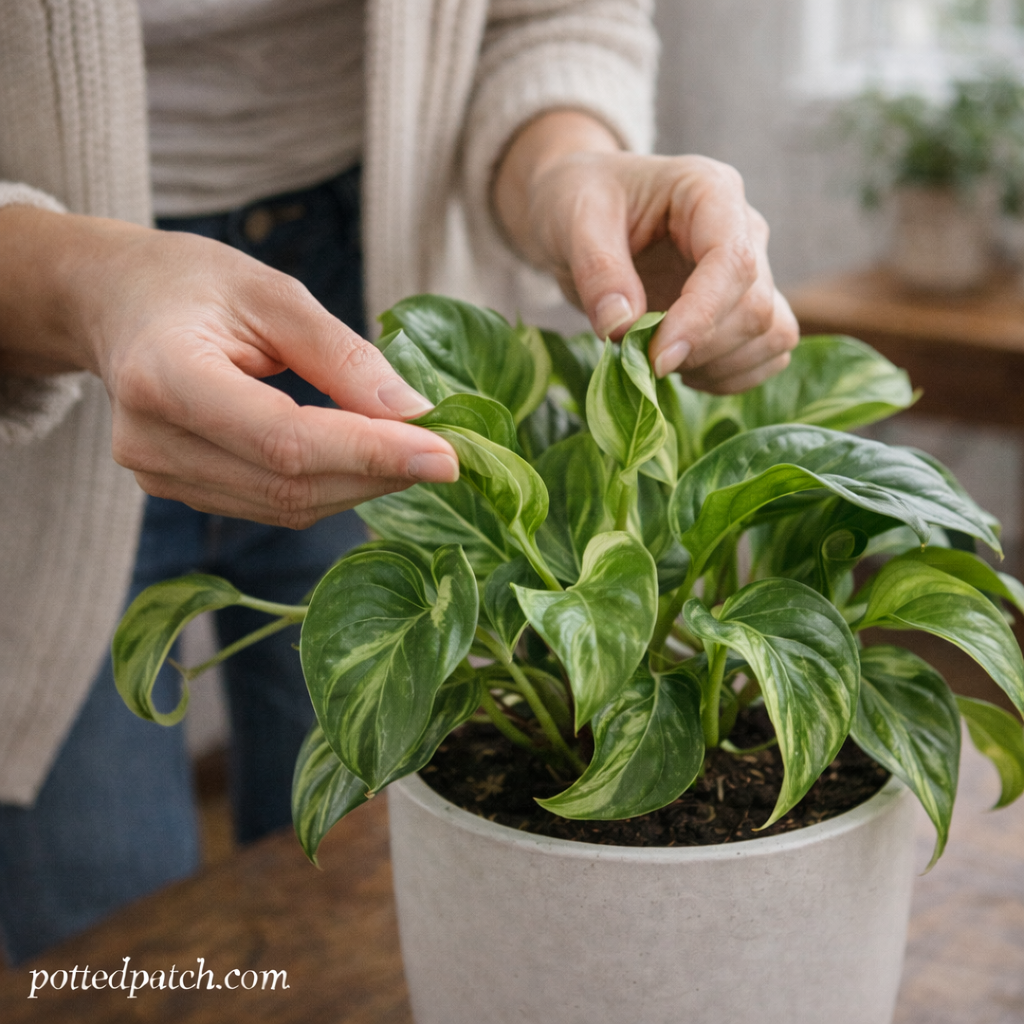
Start with the basics:
- Check soil moisture
- Inspect lighting conditions
- Evaluate room temperature
- Look closely for pests
In most cases, watering imbalance is the main issue.
How Long Does It Take to Recover?
Recovery time depends on the cause:
- Underwatering: Often within hours
- Overwatering: Several days to weeks
- Humidity issues: 1–2 weeks
- Pest treatment: 2–4 weeks
Once conditions improve, new growth should appear healthy and flat.
Existing curled leaves may not fully straighten if damage was severe.
Preventing Leaf Curling in the Future
Follow these simple care habits:
- Water only when soil begins to dry
- Use well-draining potting mix
- Provide bright, indirect light
- Keep temperatures stable
- Inspect regularly for pests
Consistency prevents stress responses like curling.
Final Thoughts
Leaf curling on pothos is a signal — not a disaster.
By checking soil moisture first and adjusting lighting, humidity, or watering habits, you can usually correct the issue quickly.
Pothos are resilient plants. With steady care and small adjustments, they return to producing smooth, healthy, trailing leaves.
Pay attention early, and your plant will reward you with vibrant growth.