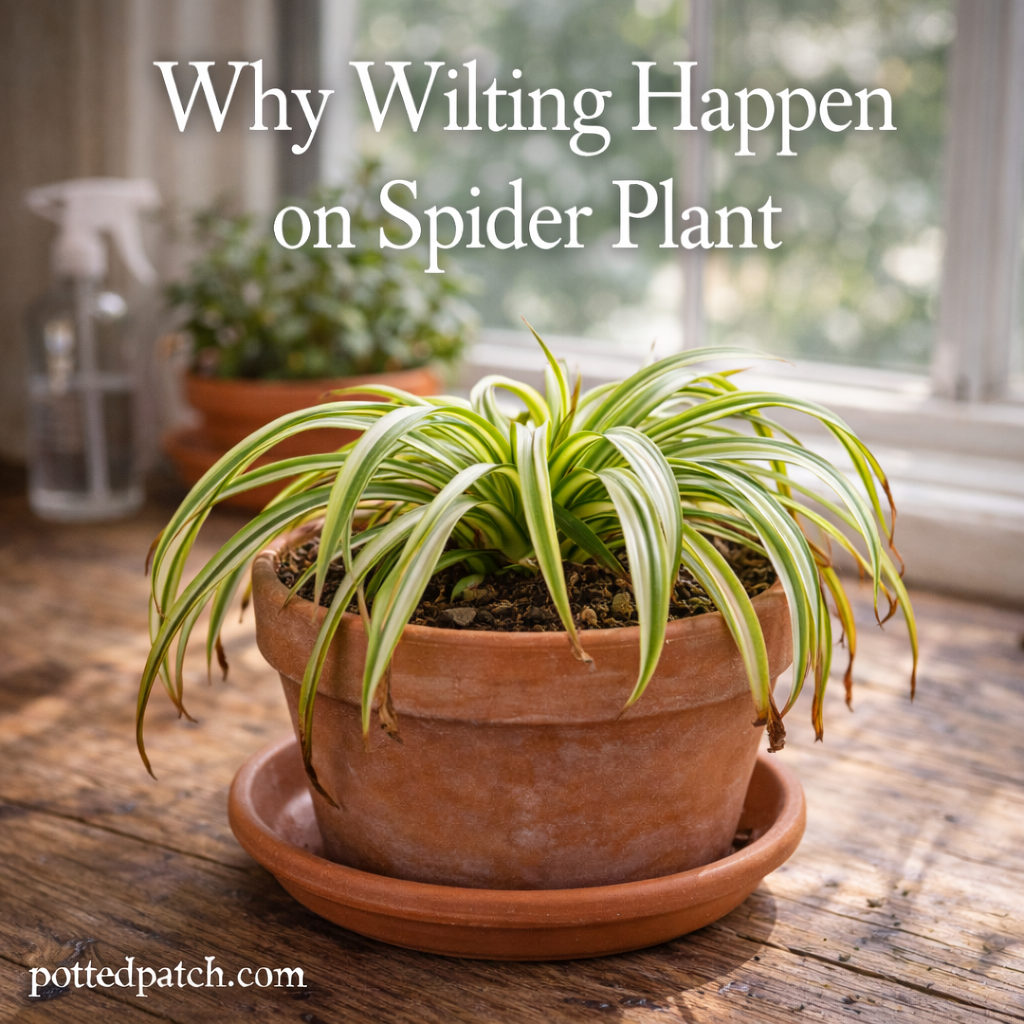

Spider plants (Chlorophytum comosum) are known for their arching, striped leaves and easygoing nature. But if your plant starts leaning heavily to one side or growing unevenly, the issue is often simple:
It needs to be rotated.
Rotating a spider plant is one of the easiest ways to maintain balanced, symmetrical growth — and it only takes seconds to do.
This guide explains why rotation matters, how often to do it, and the best way to rotate your spider plant for healthy, even growth.
Why Spider Plants Need Rotation
Spider plants naturally grow toward light. This process is called phototropism.
If light consistently comes from one direction — like a nearby window — the plant will:
- Lean toward the light source
- Stretch unevenly
- Develop lopsided foliage
- Produce longer leaves on one side
Over time, this can affect both the plant’s appearance and stability.
Rotating your plant ensures all sides receive equal light exposure.
How Often Should You Rotate a Spider Plant?
A simple rule:
Rotate your spider plant every 1–2 weeks.
You can also rotate it:
- Each time you water
- Whenever you notice leaning
- When seasons change and light angles shift
Consistency matters more than precision.
Step-by-Step: How to Rotate a Spider Plant
Step 1: Observe the Lean
Stand back and look at your plant from eye level.
Identify:
- The direction it’s leaning
- Which side looks fuller
- Where the light source is coming from
This helps you rotate intentionally rather than randomly.
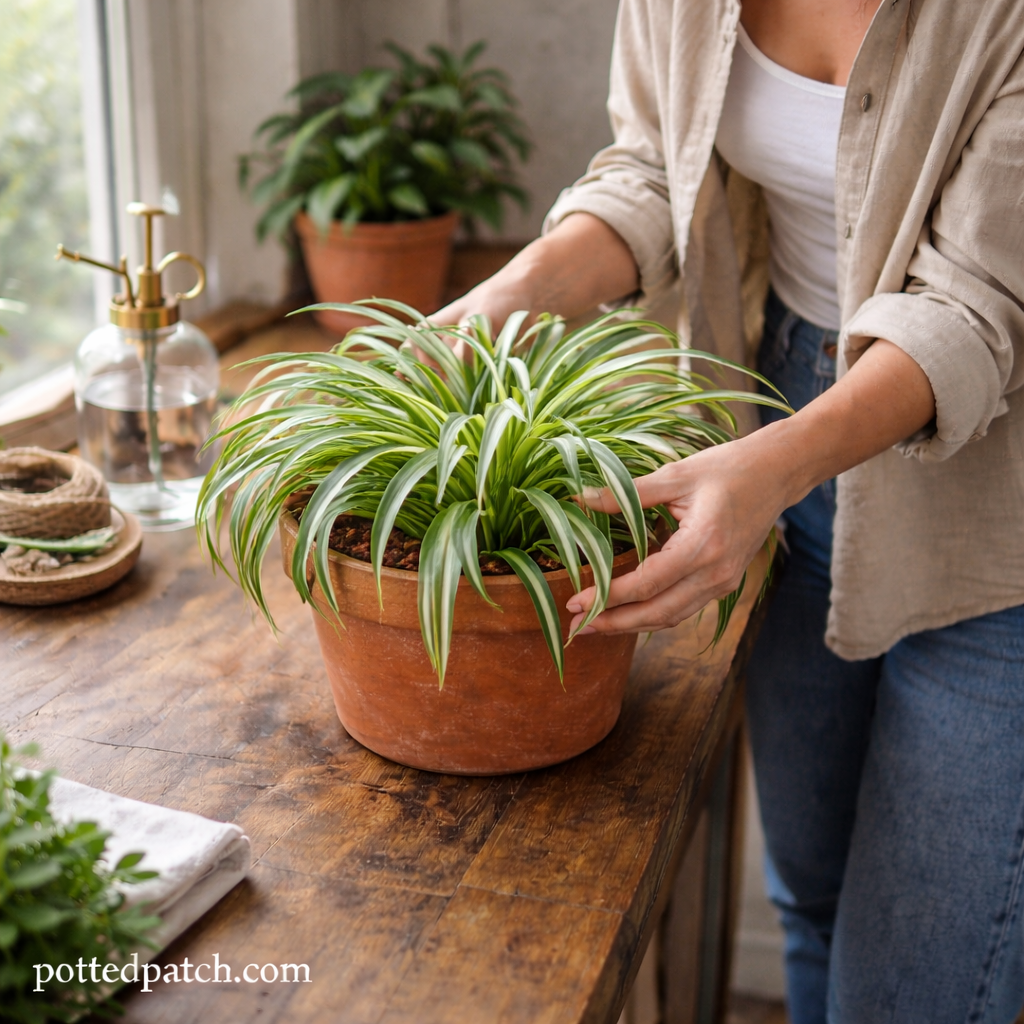
Step 2: Turn the Pot a Quarter Turn
Rotate the plant about 90 degrees (a quarter turn).
This allows the previously shaded side to receive direct light while preventing shock from sudden drastic repositioning.
Avoid spinning the plant 180 degrees all at once — gradual rotation is better.
Step 3: Keep Light Conditions Consistent
Rotation works best when the plant remains in the same general location.
Do not:
- Move it from low light to intense direct sun
- Place it in a darker corner after rotating
- Frequently relocate it around the room
The goal is balanced exposure, not environmental change.
Best Placement for Balanced Growth
Spider plants thrive in:
- Bright, indirect light
- Near east-facing windows
- A few feet from south or west-facing windows
If your plant is far from natural light, consider supplementing with a grow light and rotating under it.
What Happens If You Don’t Rotate?
Without rotation, spider plants may:
- Develop uneven leaf length
- Appear top-heavy on one side
- Become unstable in their pot
- Produce fewer pups on the shaded side
Rotation helps maintain symmetry and structural balance.
Should You Rotate Hanging Spider Plants?
Yes — especially hanging baskets near windows.
Turn hanging spider plants slightly every 1–2 weeks. This prevents all the vines from cascading toward one side.
If your plant is suspended near a bright window, rotation is even more important.
Seasonal Rotation Tips
Light angles shift throughout the year.
In winter:
- Light is weaker and lower in the sky
- Plants may lean more dramatically
In summer:
- Stronger light may increase directional growth
Adjust your rotation schedule slightly if you notice seasonal leaning.
Signs Rotation Is Working
After consistent rotation, you should see:
- More symmetrical leaf growth
- Upright posture
- Even coloration
- Balanced pup production
New leaves will start growing more evenly within a few weeks.
Final Thoughts
Rotating a spider plant is a small habit that makes a big visual difference.
It prevents leaning, promotes even growth, and keeps your plant looking full and balanced year-round.
If your spider plant looks lopsided, don’t repot it right away — try rotation first.
A simple quarter turn every couple of weeks may be all it needs.