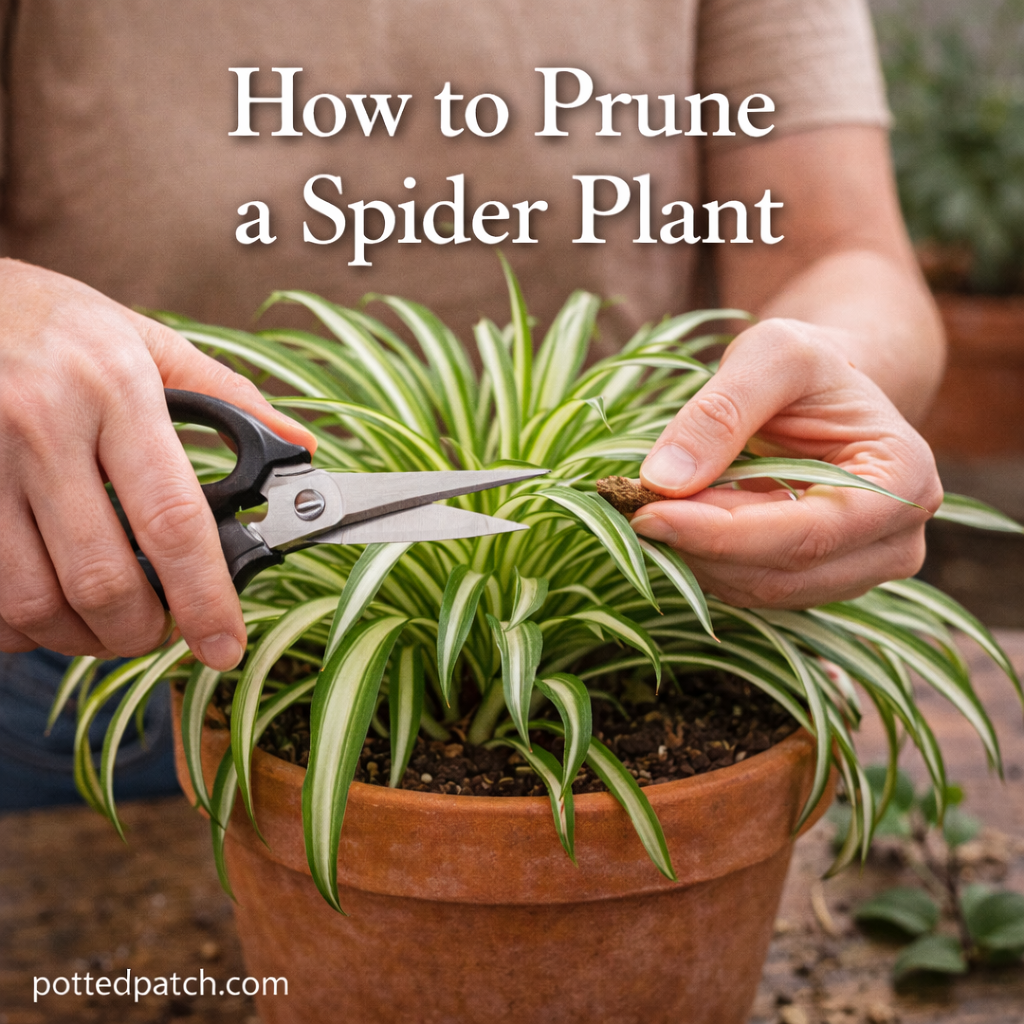
Spider plants are fast growers known for their arching leaves and cascading baby plantlets. Over time, they can become crowded, leggy, or develop brown tips. Pruning keeps your plant tidy, healthy, and productive.
In this guide, you’ll learn when and how to prune a spider plant properly — without stressing it.
Why Pruning Is Important
Pruning isn’t just about appearance. It helps your spider plant:
- Remove damaged or brown leaves
- Encourage fuller growth
- Control size
- Improve air circulation
- Redirect energy to healthy foliage
Spider plants respond well to trimming and recover quickly when pruned correctly.
When to Prune a Spider Plant
You can lightly prune anytime during the year, but the best time is:
- Early spring
- Late spring
- Early summer
This is when the plant is actively growing and can bounce back quickly.
Avoid heavy pruning during winter dormancy unless removing damaged leaves.
Tools You’ll Need
Use clean, sharp tools to prevent disease.
Recommended:
- Sharp scissors
- Pruning shears
- Rubbing alcohol (to sanitize blades)
Wipe blades before and after trimming.
How to Prune Brown Tips
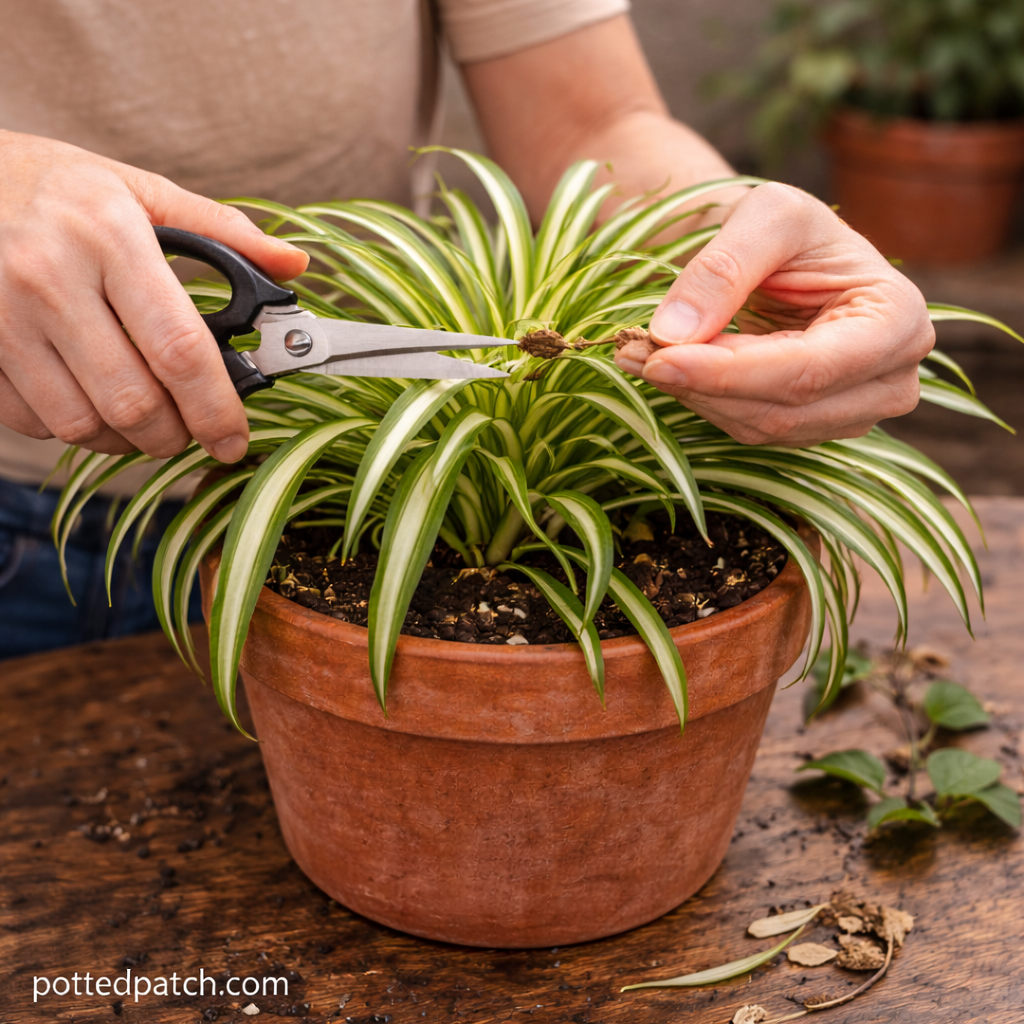
Brown tips are common and usually caused by:
- Fluoride or salt buildup
- Inconsistent watering
- Low humidity
Step-by-Step
- Trim only the brown portion of the leaf.
- Follow the natural pointed shape of the leaf.
- Avoid cutting into healthy green tissue if possible.
If a leaf is mostly brown, remove the entire leaf at the base.
How to Remove Damaged or Yellow Leaves
If leaves are yellow, wilted, or broken:
- Trace the leaf down to the base.
- Cut as close to the soil line as possible.
- Do not pull leaves off — always cut cleanly.
Removing weak leaves allows the plant to focus on new growth.
How to Trim Spider Plant Babies (Spiderettes)
Spider plants produce long stems with baby plantlets.
If your plant looks overcrowded:
- Trim the long runners near the base
- Remove excess spiderettes
- Root the babies in water or soil if you want new plants
Cutting back runners does not harm the parent plant.
Can You Cut Back an Overgrown Spider Plant?
Yes.
If your plant has become too large:
- Remove up to one-third of the foliage at a time
- Focus on thinning crowded areas
- Spread pruning over a few weeks if needed
Avoid removing more than one-third at once to prevent shock.
Aftercare Tips
After pruning:
- Water normally
- Keep in bright, indirect light
- Avoid fertilizing immediately if heavily trimmed
Spider plants usually show fresh growth within weeks during the growing season.
Common Pruning Mistakes
Avoid these issues:
- Using dull scissors that crush stems
- Tearing leaves instead of cutting
- Removing too much at once
- Ignoring sanitation of tools
Clean cuts heal faster and reduce stress.
How Often Should You Prune?
Light pruning can be done:
- Every few months
- Whenever brown tips appear
- When plantlets become excessive
Routine maintenance keeps your spider plant looking full and healthy year-round.
Final Thoughts
Pruning a spider plant is simple and low-risk. Trim brown tips, remove damaged leaves, and manage runners to maintain a neat, thriving plant.
With occasional maintenance and proper care, your spider plant will stay lush, balanced, and full of cascading greenery.