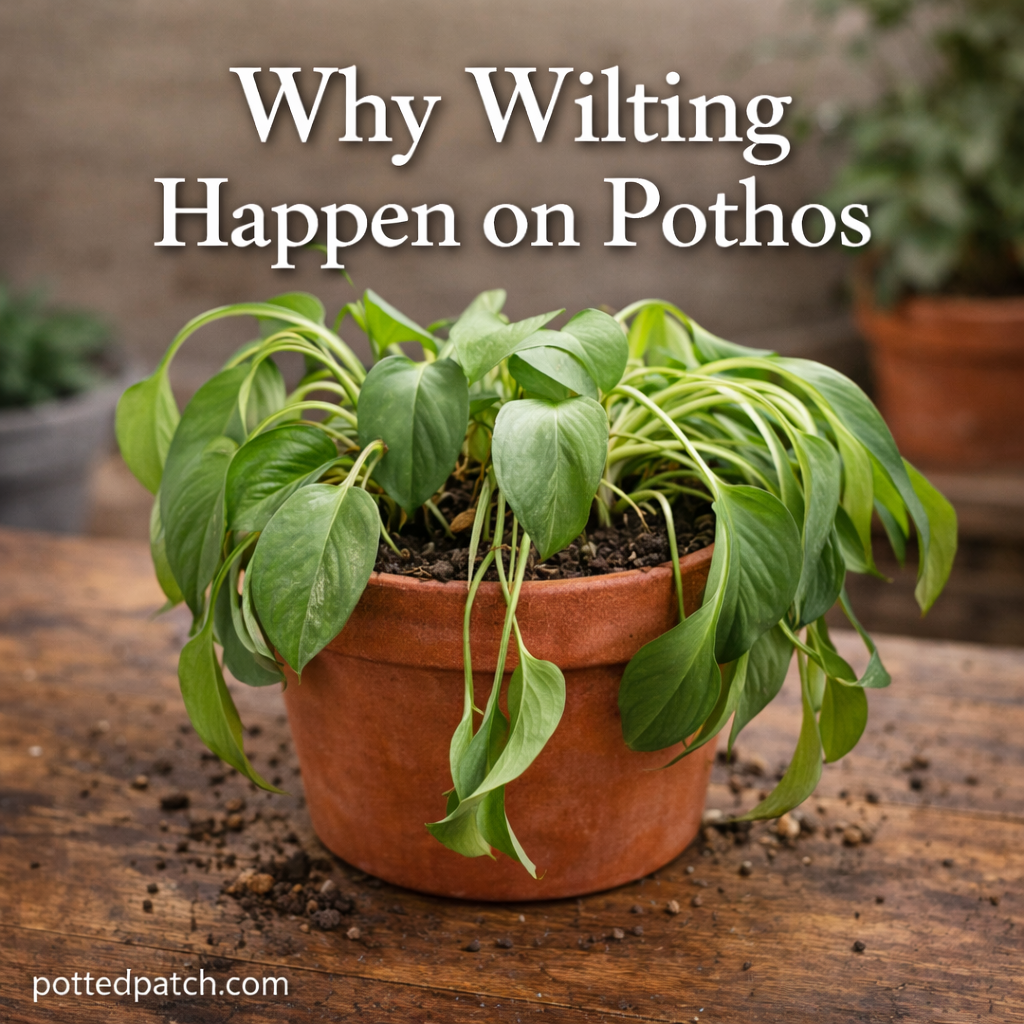
Pothos plants are known for being resilient and forgiving. But even this easy-care houseplant can wilt when something is off.
If your pothos suddenly looks droopy, limp, or lifeless, don’t panic. Wilting is usually a sign of stress — and in most cases, it’s completely fixable.
This guide explains why wilting happens on pothos and how to correct it quickly.
The Most Common Cause: Underwatering
The number one reason pothos wilt is underwatering.
When soil becomes too dry, the plant loses internal water pressure (turgor pressure), causing leaves and stems to droop.
Signs of Underwatering
- Dry, compacted soil pulling away from the pot
- Leaves feel thin or papery
- Entire plant looks limp
- Pot feels very light when lifted
How to Fix It
- Water thoroughly until water drains from the bottom.
- Let excess water drain completely.
- Place in bright, indirect light.
Most pothos perk up within a few hours after proper watering.
Overwatering Can Also Cause Wilting
It sounds backward, but too much water can cause wilting too.
When soil stays constantly wet, roots can’t access oxygen. This leads to root rot — and damaged roots cannot absorb water properly.
Signs of Overwatering
- Soil feels constantly soggy
- Yellowing leaves
- Musty smell from soil
- Mushy stems near the base
How to Fix It
- Check drainage holes
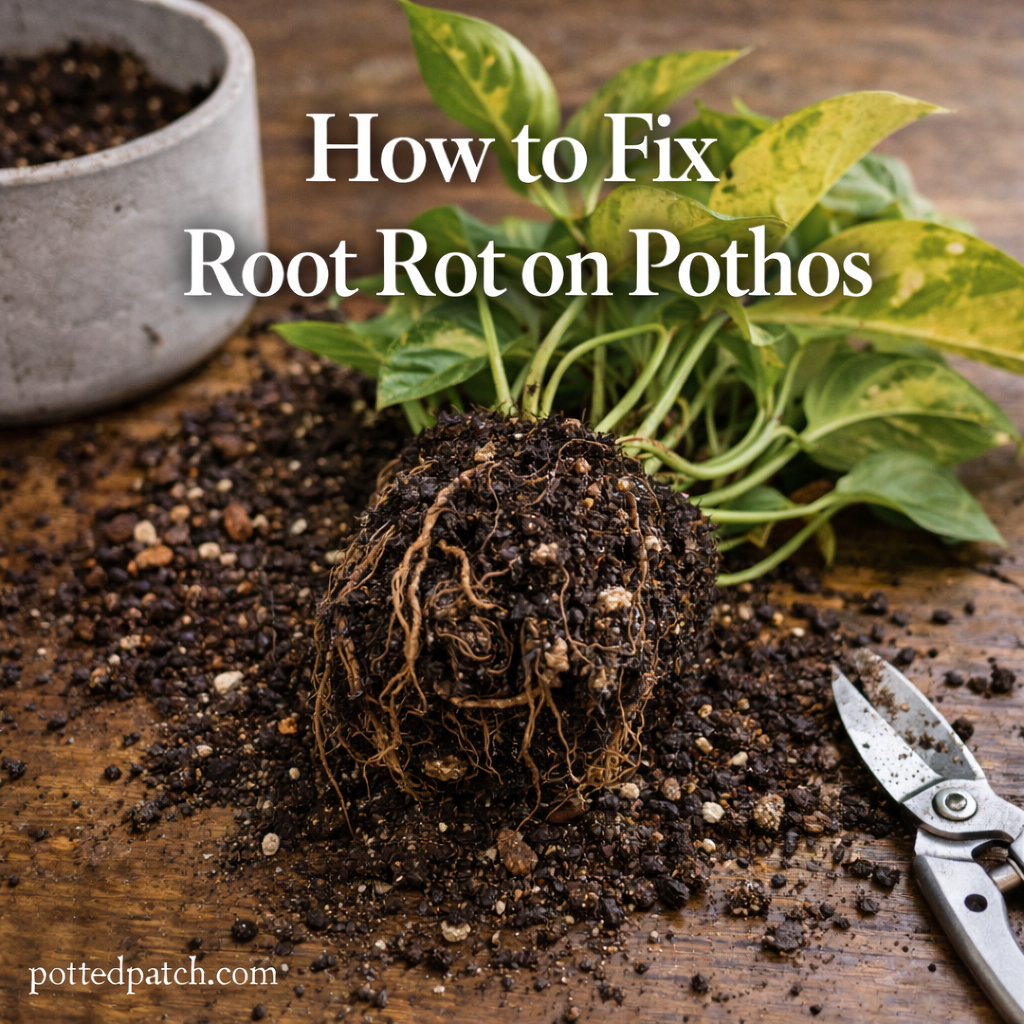
- Remove plant from pot and inspect roots
- Trim black or mushy roots
- Repot into fresh, well-draining soil
Allow the top 1–2 inches of soil to dry before watering again.
Temperature Stress
Pothos prefer consistent indoor temperatures.
Extreme temperature swings can cause wilting.
Causes
- Cold drafts from windows or doors
- Air conditioning vents blowing directly on plant
- Sudden exposure to heat
Ideal temperature range:
65–85°F (18–29°C)
Move the plant away from direct airflow or fluctuating temperatures.
Root-Bound Plants Can Wilt
When roots fill the entire pot, there’s little room left for soil or water retention.
Signs include:
- Roots growing out of drainage holes
- Water running straight through the pot
- Frequent wilting even after watering
If this happens, repot into a container 1–2 inches larger with fresh potting mix.
Low Humidity
Pothos tolerate average indoor humidity but may wilt slightly in extremely dry environments.
If your home is very dry:
- Group plants together
- Use a pebble tray
- Consider a small humidifier
Wilting from humidity alone is rare, but it can contribute when combined with other stressors.
Transplant Shock
If you recently repotted your pothos, mild wilting is normal.
Roots need time to adjust to new soil and space.
Avoid fertilizing immediately after repotting and maintain consistent watering.
Most plants recover within a week.
Pests and Disease
Less common, but still possible.
Check for:
- Spider mites
- Mealybugs
- Fungus gnats
Look under leaves and along stems for tiny insects or webbing.
Treat promptly with insecticidal soap or neem oil if needed.
How to Diagnose Wilting Quickly
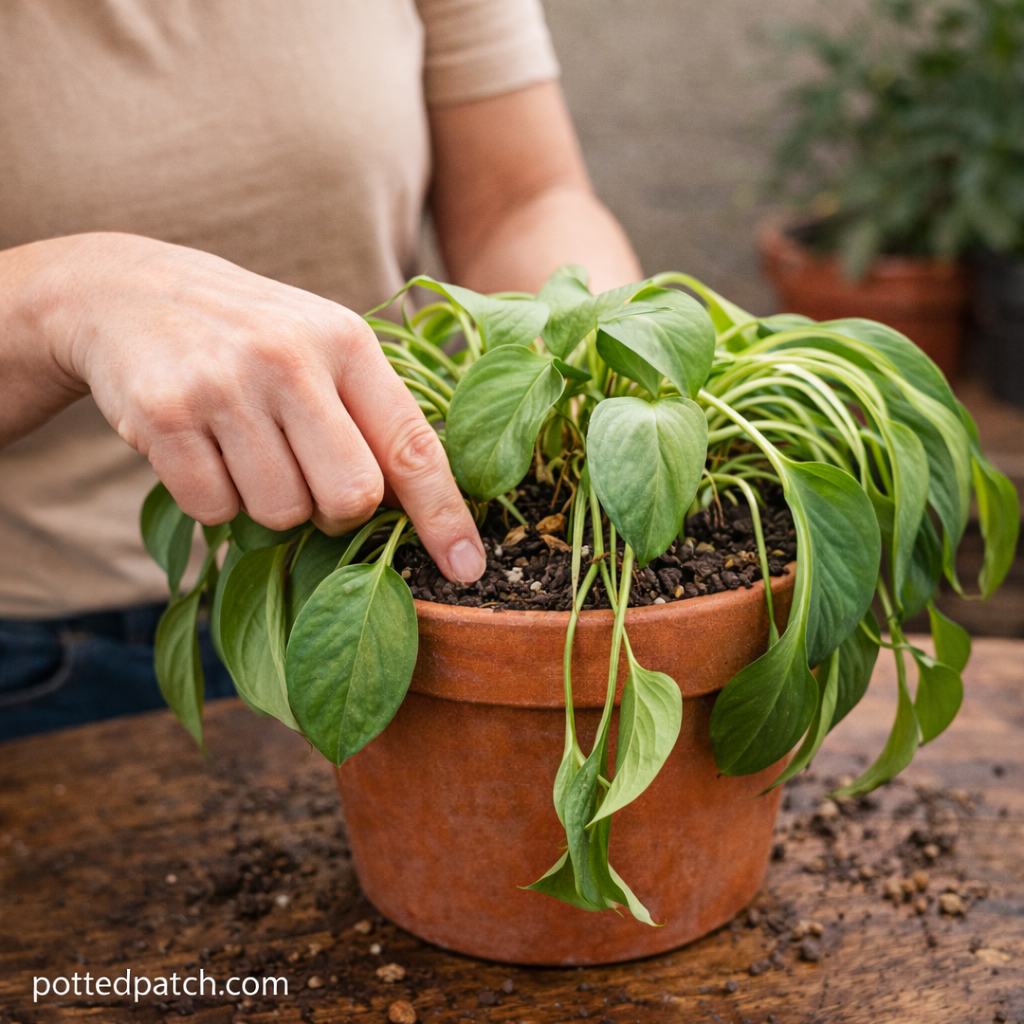
Use this simple checklist:
- Check soil moisture with your finger.
- Lift the pot — is it unusually light or heavy?
- Inspect leaves for yellowing or mushiness.
- Look for root crowding or poor drainage.
Wilting usually becomes obvious once you identify whether the plant is too dry or too wet.
How to Prevent Wilting in the Future
- Water only when the top 1–2 inches of soil are dry
- Use well-draining potting mix
- Ensure proper drainage holes
- Keep in bright, indirect light
- Avoid extreme temperature swings
Consistency is key with pothos care.
Final Thoughts
Wilting in pothos is almost always related to watering issues — either too much or too little. Thankfully, this plant is highly resilient and often rebounds quickly once conditions are corrected.
Pay attention to soil moisture, drainage, and temperature, and your pothos should return to its lush, trailing self in no time.