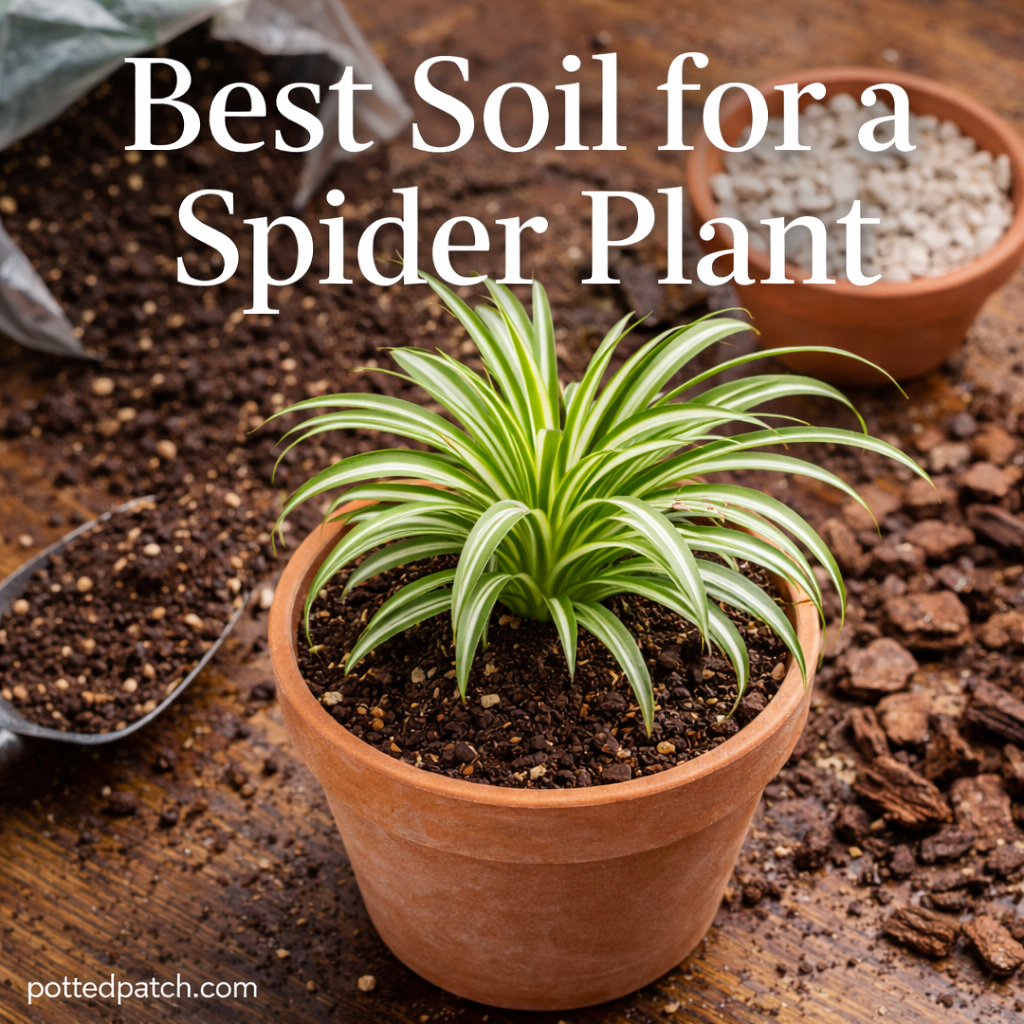
Spider plants are forgiving, fast-growing houseplants — but the right soil makes a noticeable difference in their health.
If your spider plant has yellowing leaves, slow growth, or drainage issues, your soil mix could be the reason.
Here’s how to choose (or create) the best soil for a spider plant.
What Kind of Soil Do Spider Plants Prefer?
Spider plants thrive in well-draining, airy soil that holds some moisture but doesn’t stay soggy.
Their roots need:
- Moisture retention
- Good airflow
- Quick drainage
- Loose texture
Heavy, compacted soil can suffocate roots and lead to rot.
Why Drainage Matters So Much
Spider plants store water in their thick, fleshy roots.
When soil stays too wet:
- Roots lose oxygen
- Rot can develop
- Leaves turn yellow
- Growth slows
The best soil prevents excess water from sitting around the roots.
The Ideal Spider Plant Soil Mix
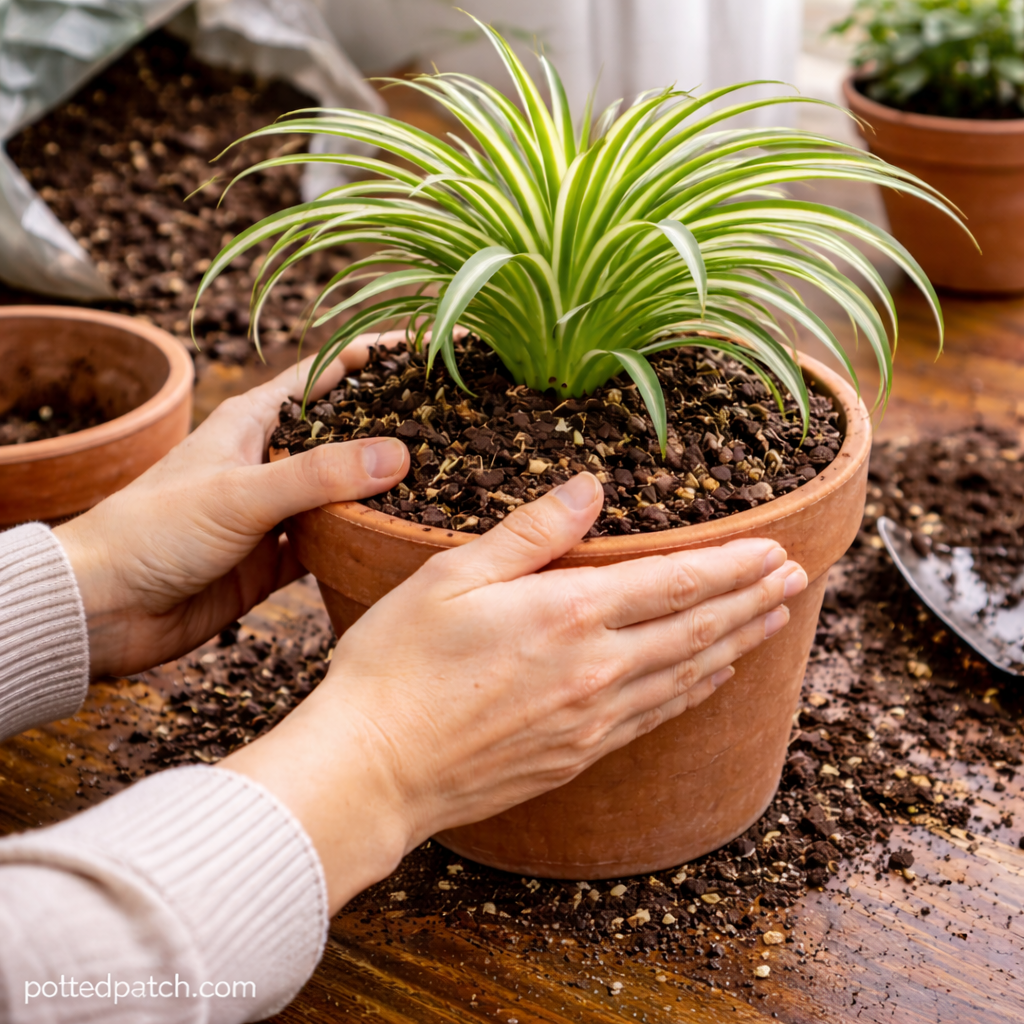
You can use standard indoor potting soil — but improving it creates better results.
Recommended DIY Mix
- 2 parts quality potting soil
- 1 part perlite
- 1 part orchid bark
This combination:
- Increases drainage
- Improves aeration
- Reduces compaction over time
It’s simple, effective, and beginner-friendly.
Can You Use Regular Potting Soil Alone?
Yes — but it’s not ideal long-term.
Regular potting soil:
- Holds more moisture
- Can compact over time
- May drain too slowly
If you use it alone, make sure your pot has drainage holes and avoid overwatering.
For best results, amend it with perlite or pumice.
Should You Use Cactus or Succulent Soil?
Cactus soil drains quickly but may dry out too fast for spider plants.
If using cactus mix:
- Blend it 50/50 with regular potting soil
- Monitor moisture carefully
Spider plants prefer balance — not extremely dry soil.
Signs Your Soil Needs Improvement
Watch for these red flags:
- Water pooling on the surface
- Soil staying wet for more than 7 days
- Musty smell
- Roots circling tightly
- Fungus gnats appearing
If you notice these issues, it’s time to refresh the soil.
How Often Should You Refresh Soil?
Spider plants benefit from fresh soil every 1–2 years.
Over time, soil:
- Breaks down
- Loses structure
- Compacts
- Drains less efficiently
Refreshing soil improves airflow and nutrient availability.
Spring is the best time to repot.
Choosing the Right Pot Matters Too
Even the best soil won’t help without proper drainage.
Always:
- Use pots with drainage holes
- Avoid permanently sealed decorative containers
- Empty saucers after watering
Soil and container work together to protect root health.
Extra Tip: Add Organic Matter Carefully
A small amount of compost can boost nutrients, but too much can retain excess moisture.
Keep compost additions light and balanced with drainage materials like perlite or bark.
Final Thoughts
The best soil for a spider plant is loose, well-draining, and airy.
A simple mix of potting soil, perlite, and orchid bark provides the right balance of moisture retention and airflow.
Healthy soil leads to stronger roots, brighter leaves, and steady growth — the foundation of great indoor plant care.