Spider plants grow fast — especially when they’re happy. But that rapid growth can quickly lead to root bound issues if the plant outgrows its container.
While spider plants tolerate being slightly snug, severely cramped roots can limit growth, reduce drainage, and cause stress symptoms.
Here’s how to prevent root bound problems before they affect your plant’s health.
What Does “Root Bound” Mean?
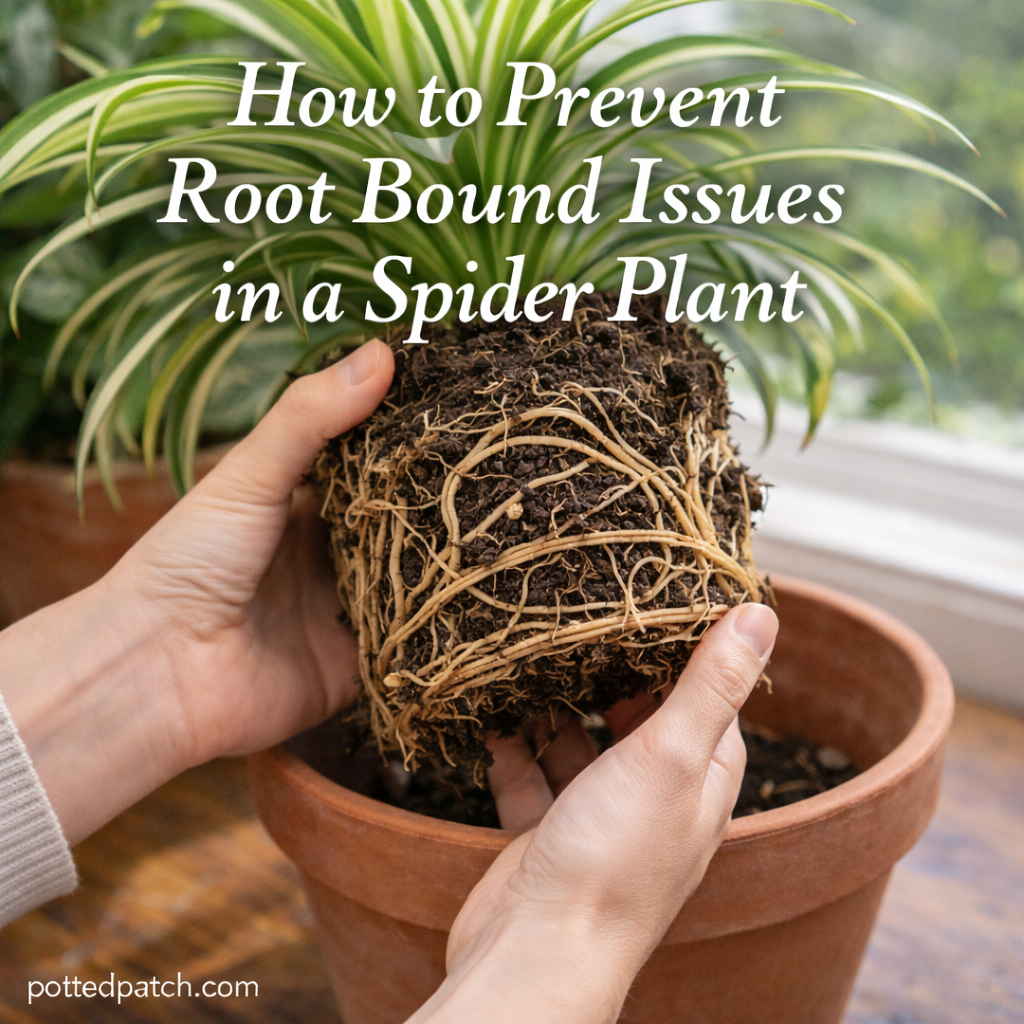
A plant is root bound when its roots:
- Circle tightly around the inside of the pot
- Fill nearly all available soil space
- Have little room left to expand
In this state, water drains too quickly or struggles to penetrate the root ball evenly.
Mild root binding isn’t harmful for spider plants — but extreme crowding eventually causes problems.
Signs Your Spider Plant Is Becoming Root Bound
Look for these early warning signs:
- Roots growing out of drainage holes
- Soil drying out very quickly
- Water running straight through without soaking in
- Slowed or stalled growth
- Leaves looking dull despite proper care
If you notice multiple signs, it’s time to check the roots.
How Often Should You Repot a Spider Plant?
Most spider plants need repotting every 1–2 years.
Faster-growing plants in bright light may need it sooner.
Rather than following a strict calendar, check the roots each spring.
To inspect:
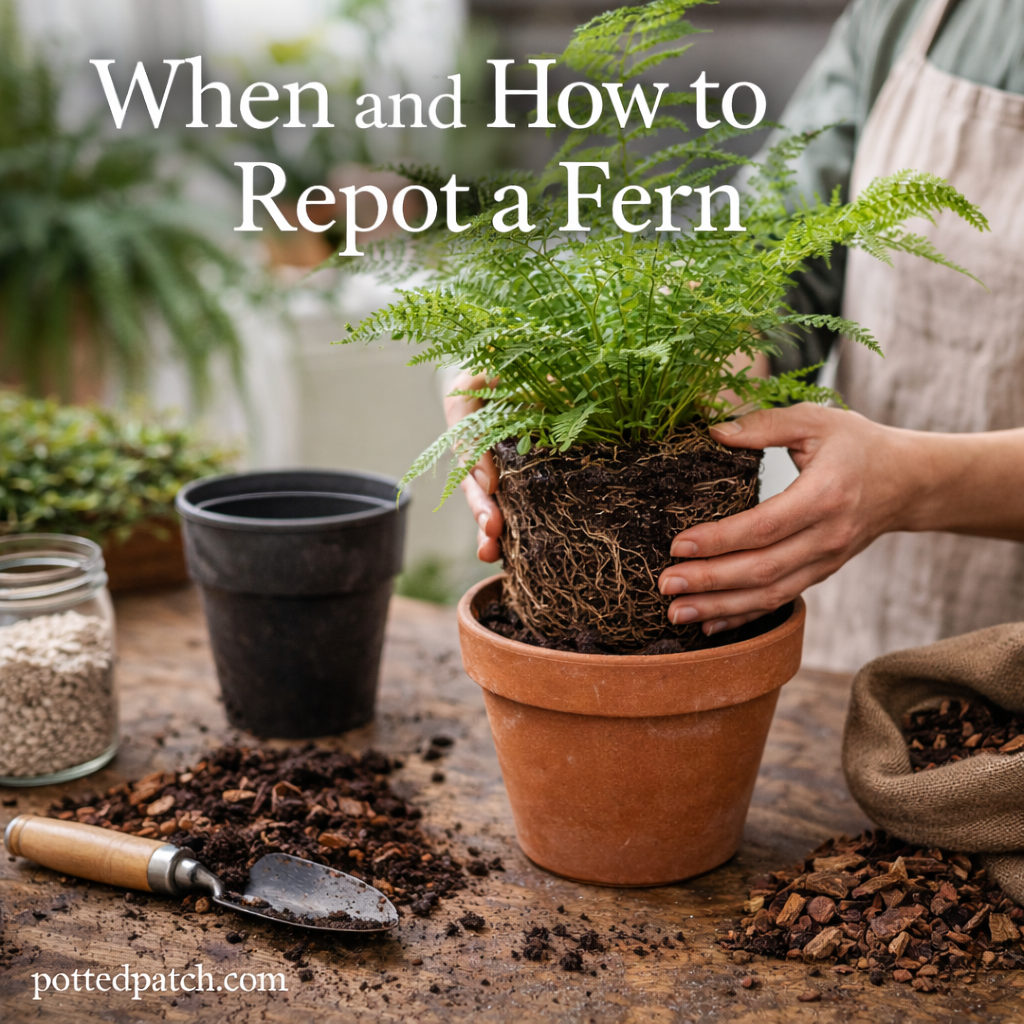
- Gently tip the plant sideways.
- Slide it partially out of the pot.
- Look for tightly packed, circling roots.
If roots are forming a dense spiral, it’s time.
Choose the Right Pot Size
One of the biggest mistakes is jumping to a pot that’s too large.
Best Practice
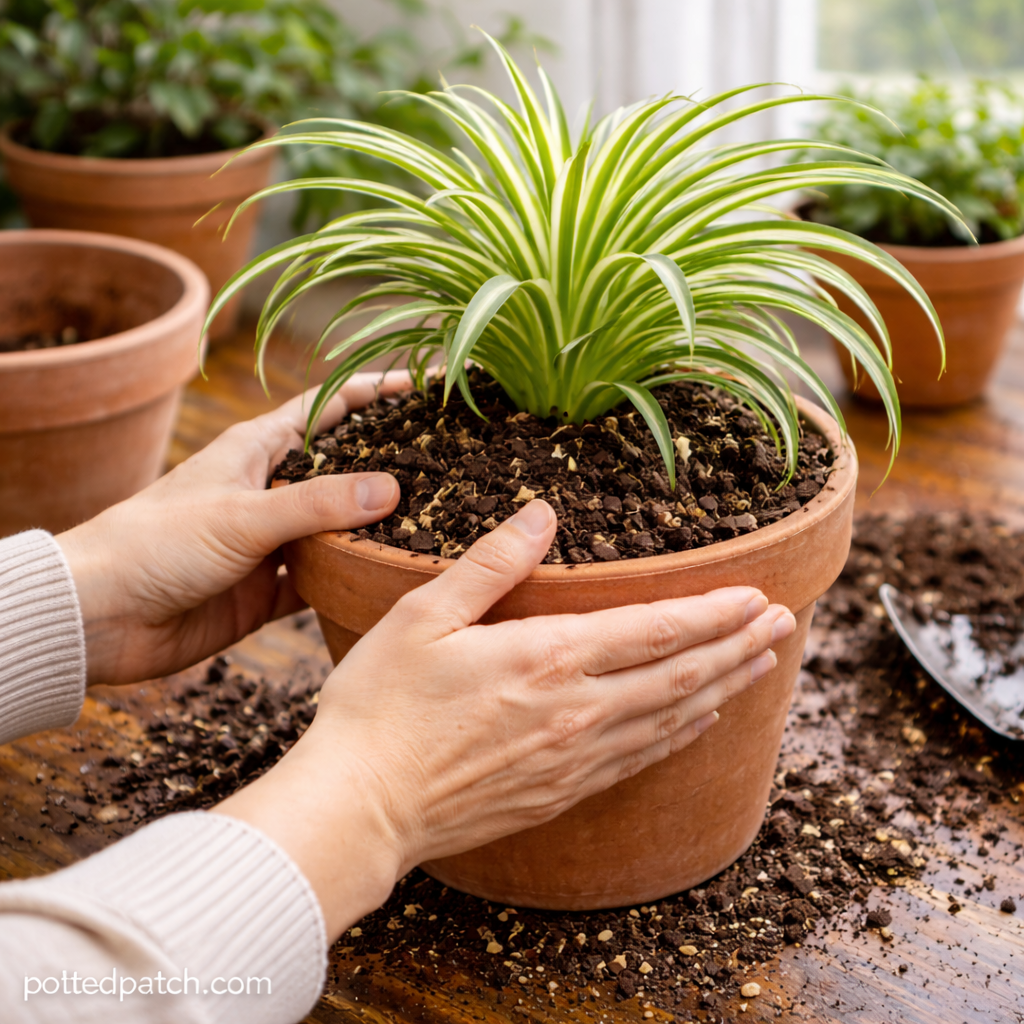
- Increase pot size by only 1–2 inches in diameter.
- Ensure the new pot has drainage holes.
A pot that’s too large holds excess moisture and increases the risk of root rot.
Gradual upgrades are safer and healthier.
Loosen Roots During Repotting
If your plant is tightly root bound:
- Gently tease apart circling roots.
- Loosen the bottom section with your fingers.
- Avoid aggressively ripping roots apart.
This encourages roots to grow outward into fresh soil rather than continuing to spiral.
Refresh the Soil
Old soil becomes compacted over time.
Compacted soil:
- Reduces airflow
- Slows drainage
- Restricts root expansion
Use a light, airy mix when repotting:
- 2 parts potting soil
- 1 part perlite
- 1 part orchid bark
This helps prevent future crowding and drainage issues.
Don’t Ignore Drainage
Even with proper pot size, drainage is essential.
Always:
- Use pots with drainage holes
- Empty saucers after watering
- Avoid decorative containers without airflow
Healthy roots need oxygen just as much as water.
Can Spider Plants Stay Slightly Root Bound?
Yes — and sometimes they prefer it.
Spider plants often produce more spiderettes when slightly snug in their pots.
However, extremely root bound plants:
- Struggle to absorb nutrients
- Dry out too fast
- Show reduced vigor
The goal is balance — snug, but not suffocating.
Preventative Maintenance Tips
Keep root issues under control with simple habits:
- Check roots annually
- Repot in spring when growth is active
- Avoid oversized containers
- Refresh soil every 1–2 years
- Monitor watering changes after repotting
After repotting, expect a short adjustment period as the plant settles.
Final Thoughts
Preventing root bound issues in a spider plant is mostly about timing and observation.
Check roots regularly, upgrade pot size gradually, and maintain healthy soil structure. With proper container care, your spider plant will continue producing vibrant foliage and baby plants for years.
Healthy roots are the foundation of long-term plant success.