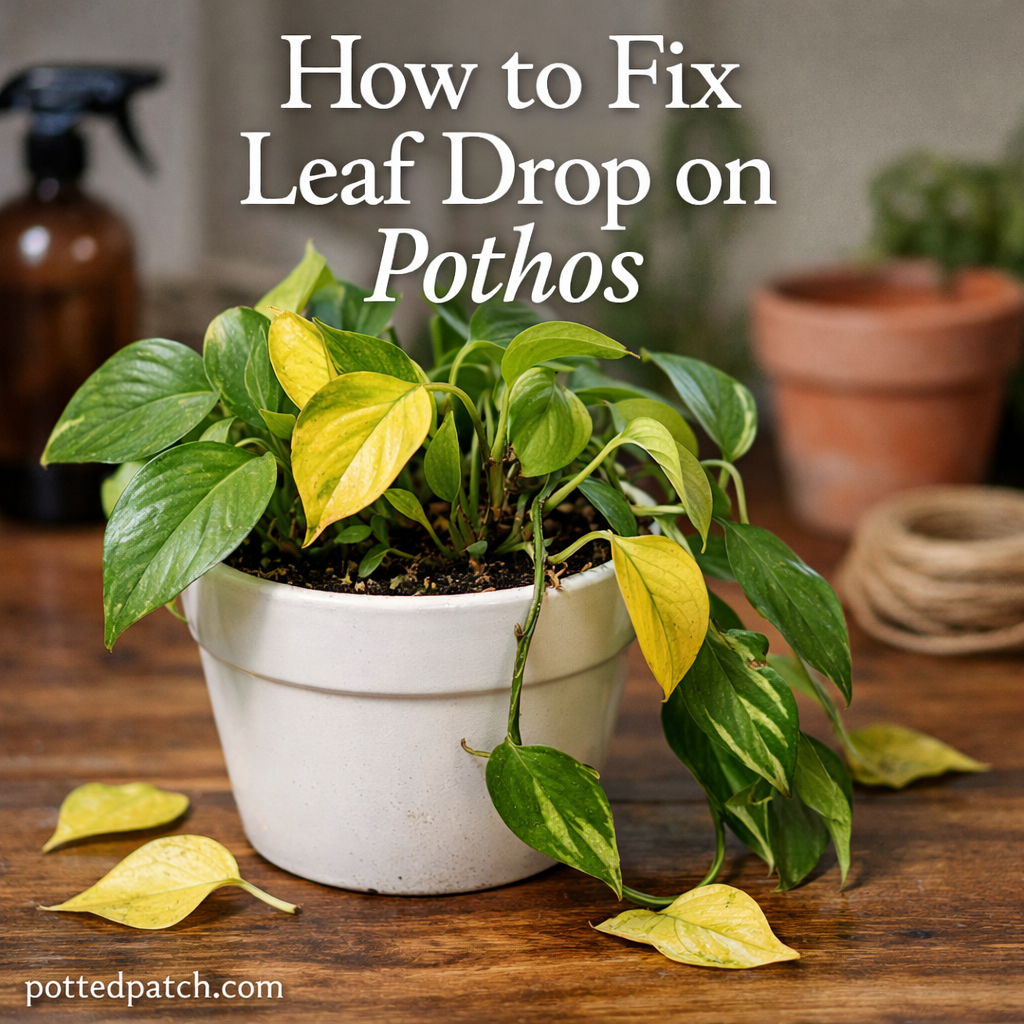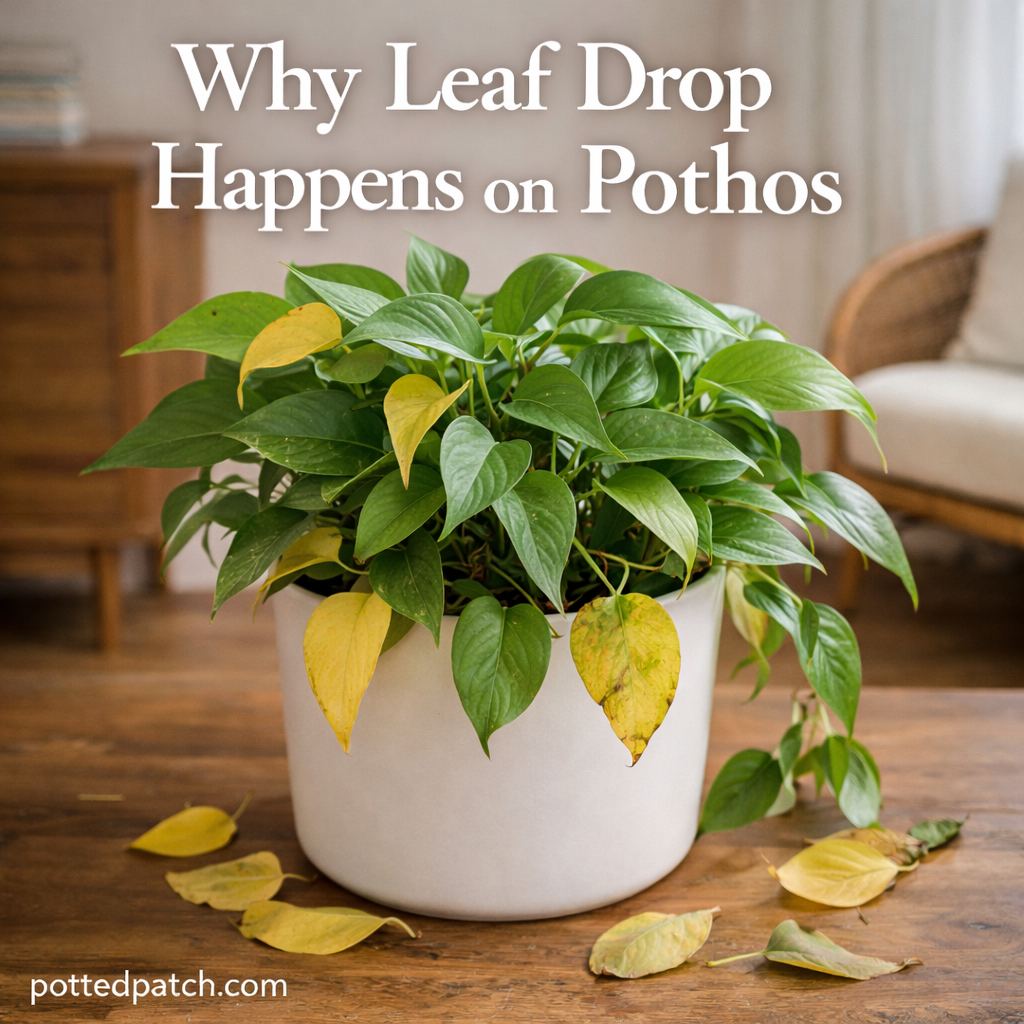
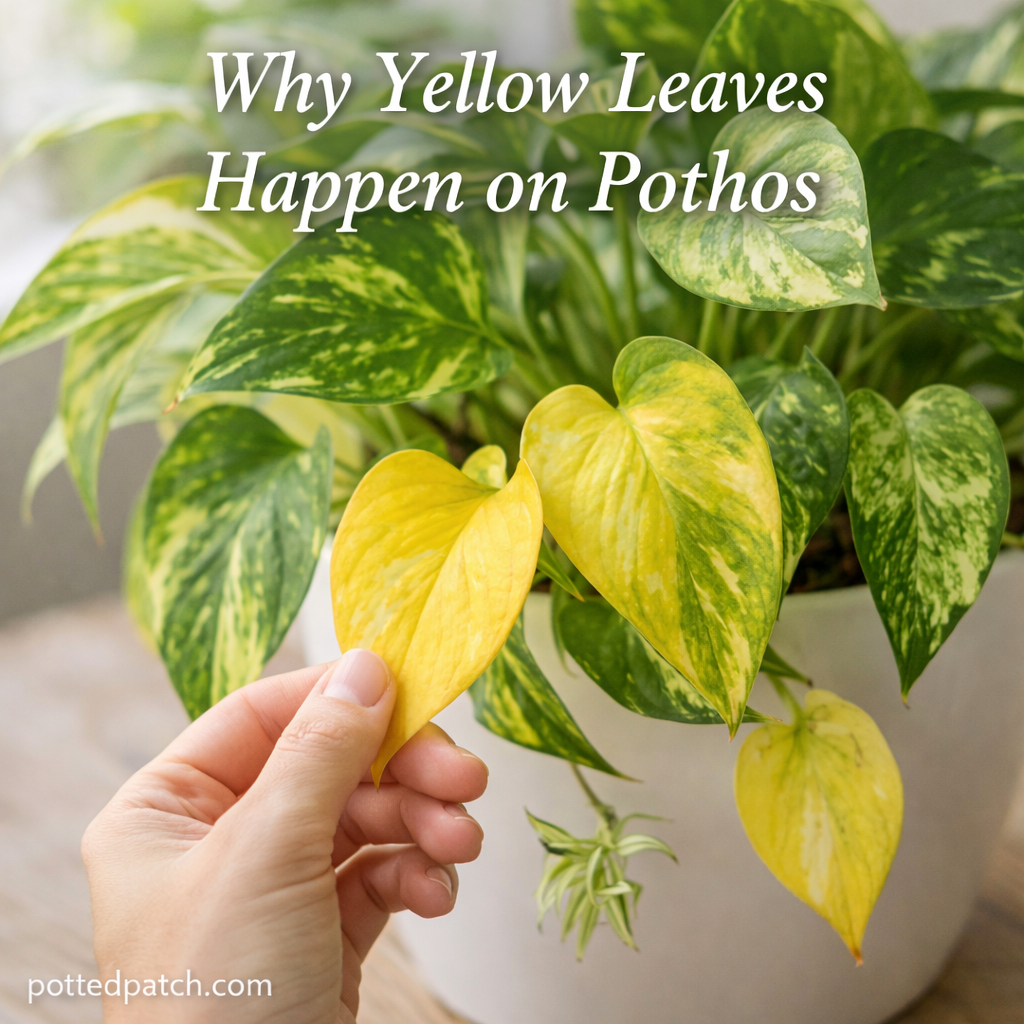
Pothos is one of the easiest houseplants to grow, but even this low-maintenance favorite can develop yellow leaves. If your once-lush vine is starting to fade, don’t panic — yellowing leaves are usually a sign that something simple needs adjusting.
In this guide, we’ll break down the most common reasons yellow leaves happen on pothos and exactly how to fix them.
The Most Common Cause: Overwatering
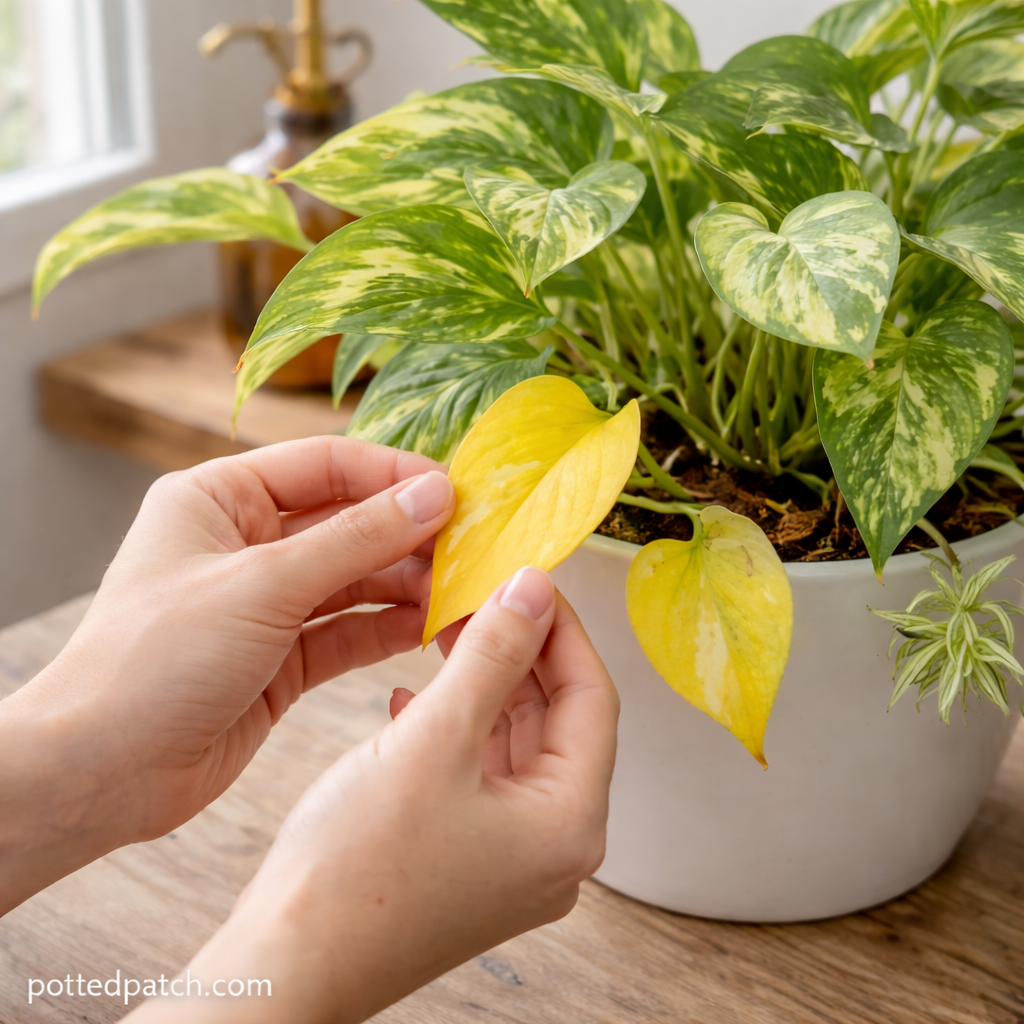
Overwatering is the number one reason pothos leaves turn yellow.
When soil stays too wet for too long, roots can’t breathe. This leads to stress and eventually root rot, which shows up as yellowing foliage.
Signs It’s Overwatering
- Multiple leaves turning yellow at once
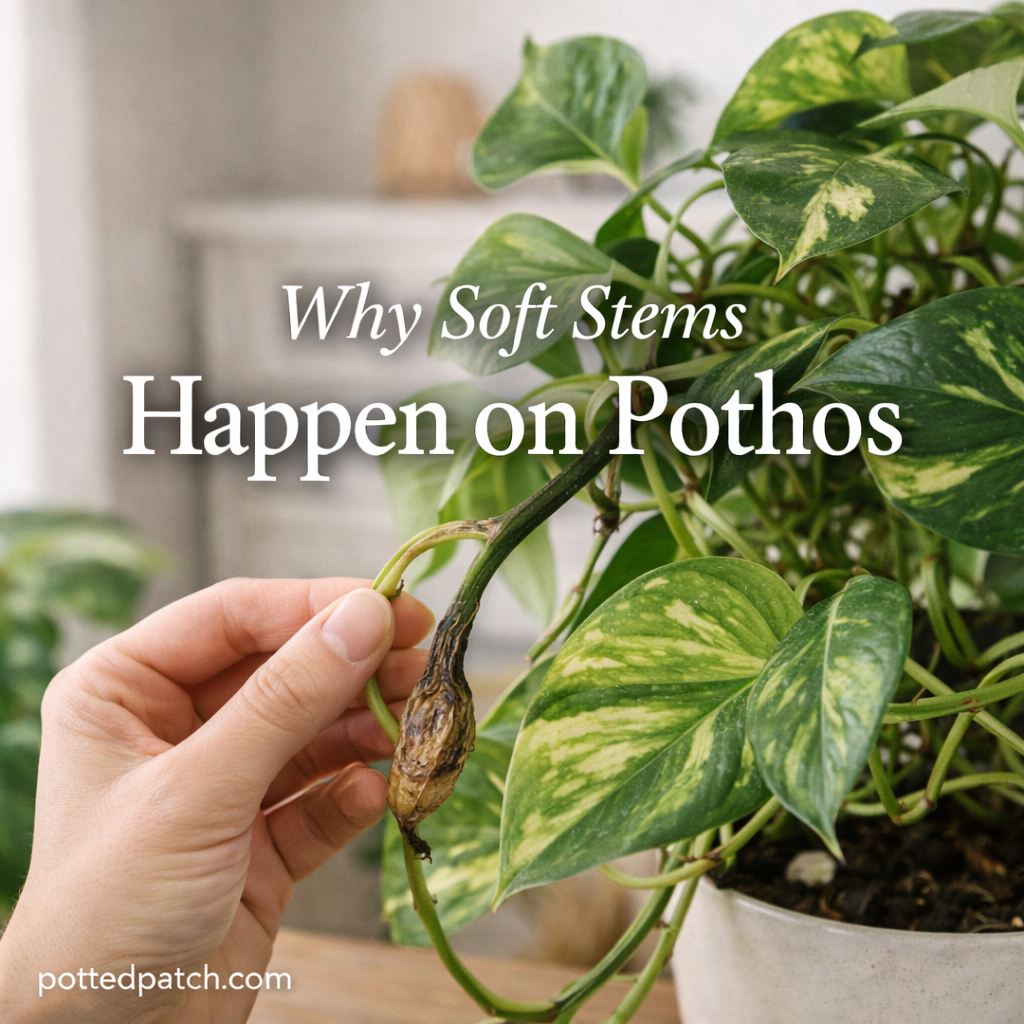
- Soft or mushy stems
- Soil that stays wet for several days
- Musty smell from the pot
How to Fix It
- Let the soil dry out completely before watering again.
- Check that the pot has drainage holes.
- Repot in fresh, well-draining soil if root rot is present.
A good rule of thumb: water only when the top 1–2 inches of soil feels dry.
Underwatering Can Also Cause Yellow Leaves
Although less common, underwatering can lead to yellowing too.
When a pothos becomes extremely dry, leaves may turn yellow before turning brown and crispy.
Signs It’s Underwatering
- Soil pulling away from the edges of the pot
- Dry, compacted soil
- Drooping vines
- Brittle leaf texture
How to Fix It
- Water thoroughly until excess drains out.
- Resume a consistent watering schedule.
- Consider slightly increasing humidity if your home is very dry.
Natural Leaf Aging
Sometimes yellow leaves are completely normal.
Older leaves at the base of the vine naturally age and fall off as the plant grows.
What Normal Aging Looks Like
- Only one or two lower leaves turning yellow
- The rest of the plant looks healthy
- New growth continues at the tips
In this case, simply trim off the yellow leaf and continue normal care.
Too Much Direct Sunlight
Pothos prefers bright, indirect light.
Strong direct sunlight can bleach leaves, causing them to turn pale yellow before developing brown patches.
Signs of Light Stress
- Faded color
- Yellow patches on sun-facing side
- Crispy edges
Solution
Move your plant a few feet away from direct sun or use a sheer curtain to filter light.
Poor Drainage or Compacted Soil
Even if you’re watering correctly, poor soil drainage can trap moisture around the roots.
Fix It By:
- Using a light, well-draining potting mix
- Adding perlite for better airflow
- Ensuring the pot has proper drainage holes
Healthy roots mean healthy green leaves.
Nutrient Deficiency
While pothos doesn’t require heavy feeding, a long-term lack of nutrients can lead to pale or yellow leaves.
Signs of Nutrient Issues
- Slow growth
- Overall pale color
- Smaller new leaves
How to Correct It
- Feed with a balanced liquid houseplant fertilizer
- Apply once a month during spring and summer
- Avoid overfertilizing
Sudden Environmental Changes
Pothos can react to:
- Moving to a new room
- Temperature drops
- Cold drafts
- Repotting shock
Temporary yellowing after changes is common. Give the plant time to adjust before making further changes.
Quick Troubleshooting Checklist
If your pothos has yellow leaves, check:
- Is the soil soggy or bone dry?
- Does the pot have drainage holes?
- Is the plant getting harsh direct sun?
- Has it been fertilized recently?
- Were there recent changes in location or temperature?
Answering these questions usually reveals the cause quickly.
Final Thoughts
Yellow leaves on pothos are usually a care adjustment issue, not a disaster. In most cases, correcting your watering habits or improving drainage will solve the problem.
Observe your plant closely, adjust one factor at a time, and it will likely bounce back with healthy green growth.
Pothos is resilient — with a few small tweaks, it will thrive again.