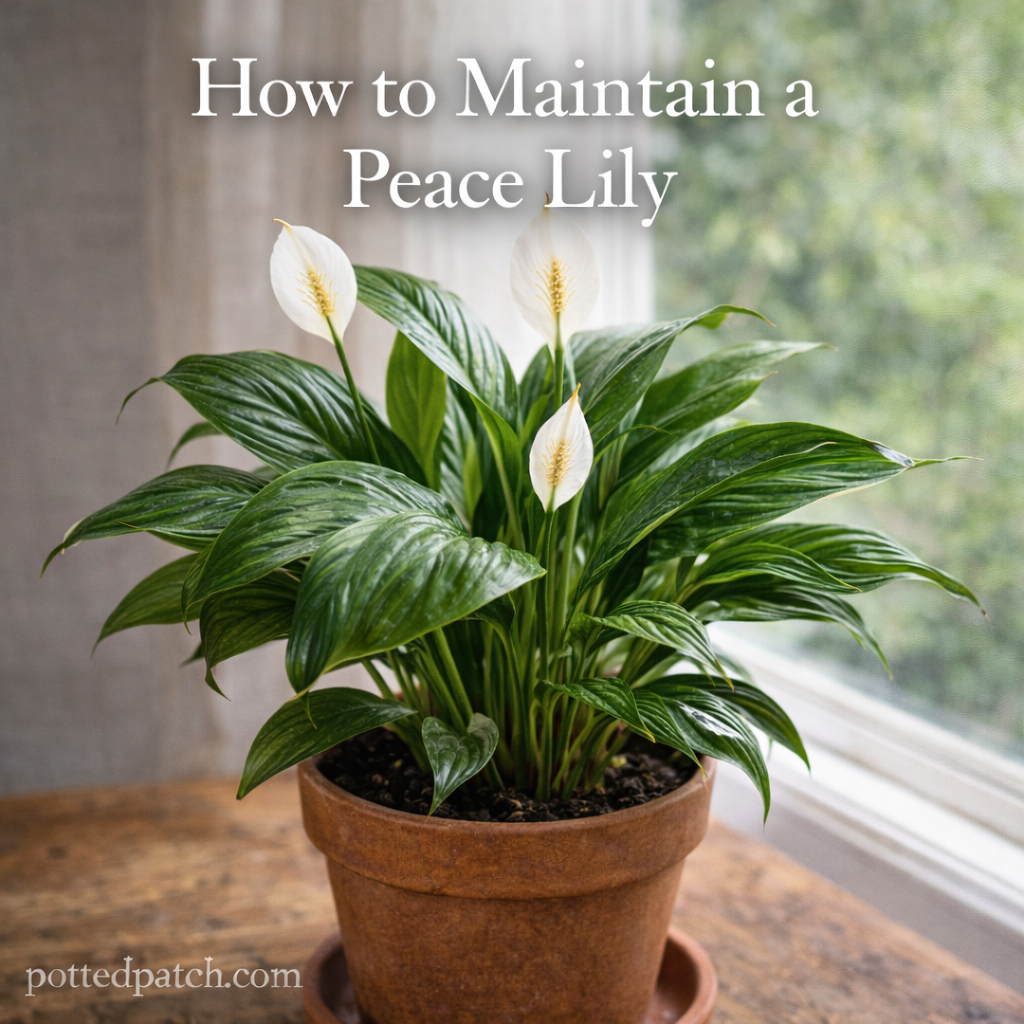
Peace lilies are one of the most popular indoor plants for good reason — they’re elegant, adaptable, and relatively easy to care for. But maintaining a peace lily long term requires consistent habits.
If you want lush green leaves and regular blooms, here’s exactly how to maintain a peace lily the right way.
Provide the Right Light
Light plays a major role in overall health.
Peace lilies prefer:
- Bright, indirect light
- East- or north-facing windows
- Filtered light near south-facing windows
Avoid direct afternoon sun, which can scorch leaves.
Too little light may result in fewer blooms and slower growth.
Water Properly (The Most Important Step)
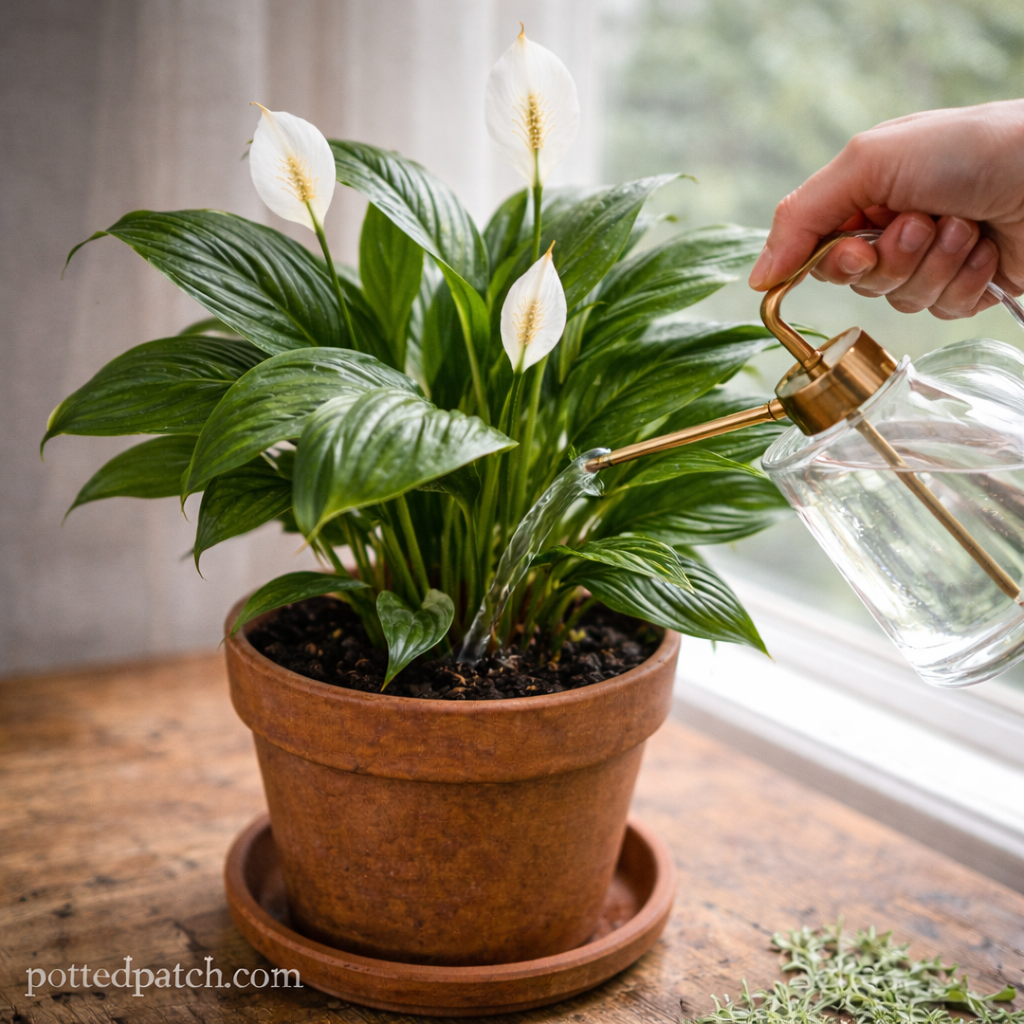
Peace lilies like evenly moist soil — not soggy and not bone dry.
Follow these watering guidelines:
- Water when the top 1–2 inches of soil are dry
- Use room-temperature water
- Empty the saucer after watering
If leaves droop dramatically, it often means the plant needs water. Fortunately, peace lilies recover quickly once watered.
Use Well-Draining Soil
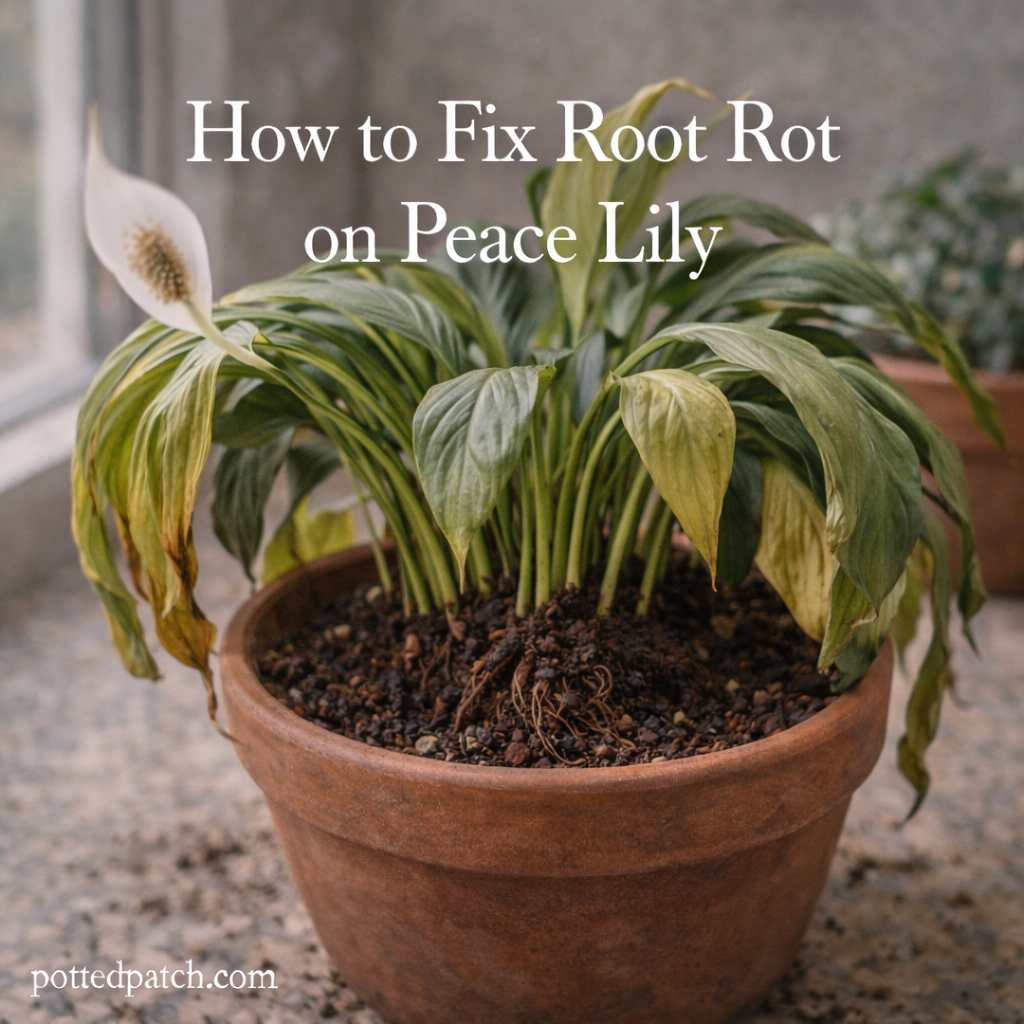
Good drainage prevents root rot.
Choose:
- High-quality indoor potting mix
- Soil amended with perlite if needed
- A pot with drainage holes
Avoid heavy, compact soil that traps moisture.
Maintain Moderate Humidity
Peace lilies thrive in humidity levels between 40–60%.
To increase humidity:
- Group plants together
- Use a pebble tray
- Run a humidifier during dry months
Low humidity often causes brown leaf tips.
Fertilize During Growing Season
Feed your peace lily in spring and summer.
Use:
- Balanced liquid houseplant fertilizer
- Diluted to half strength
- Every 4–6 weeks
Avoid fertilizing in fall and winter when growth slows.
Overfertilizing can cause salt buildup and leaf damage.
Rotate for Even Growth
Peace lilies grow toward light.
Rotate the pot ¼ turn every 1–2 weeks to:
- Prevent leaning
- Maintain symmetrical shape
- Encourage balanced leaf development
Consistent rotation improves overall appearance.
Prune and Clean Regularly
Routine care keeps the plant looking healthy.
- Remove yellow or aging leaves
- Cut spent flowers at the base
- Wipe dust off leaves monthly
Clean leaves absorb light better and support steady growth.
Repot When Necessary
Peace lilies prefer being slightly rootbound but eventually need fresh soil.
Repot when:
- Roots grow through drainage holes
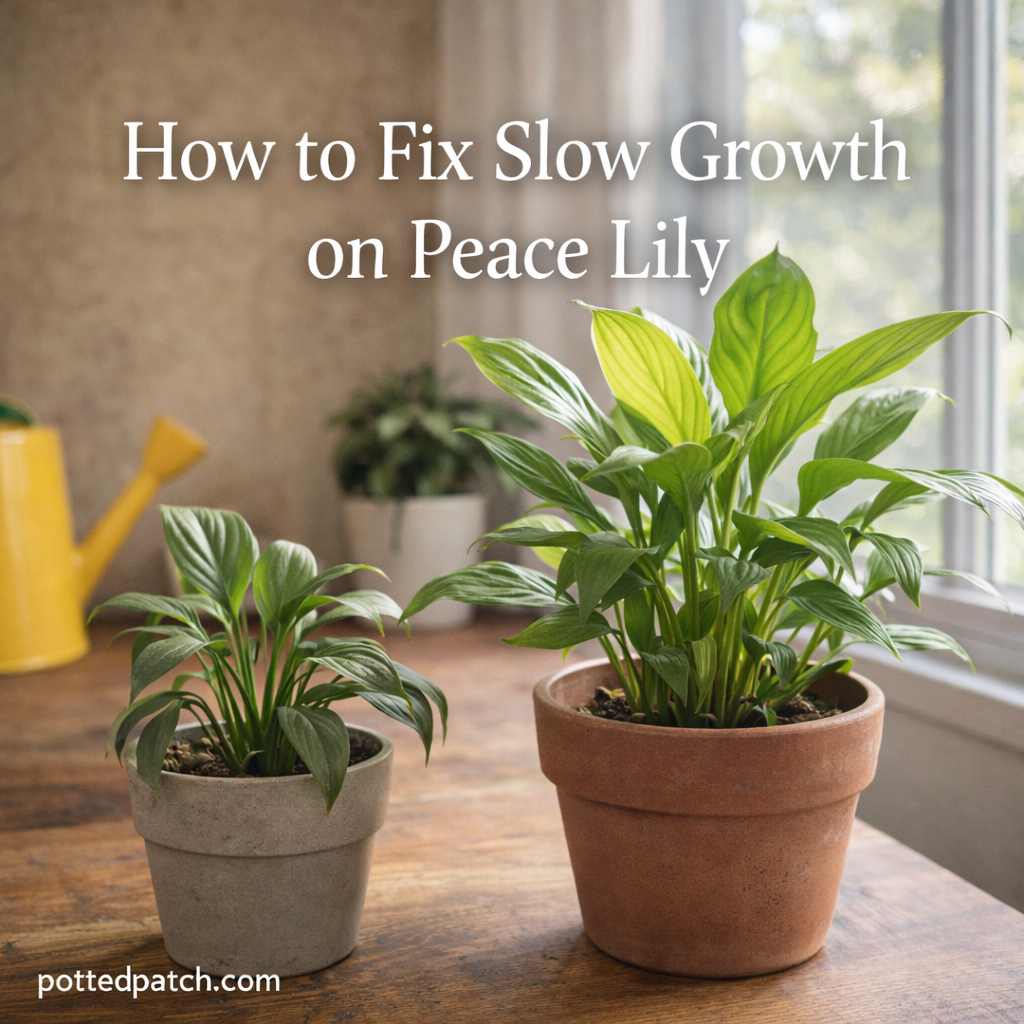
- Growth slows significantly
- Water drains too quickly
Choose a pot only 1–2 inches larger than the current one.
Watch for Common Issues
Maintaining a peace lily also means monitoring for problems.
Look for:
- Drooping leaves (underwatering)
- Yellow leaves (overwatering)
- Brown tips (low humidity or mineral buildup)
- Lack of blooms (insufficient light)
Early corrections prevent bigger problems.
Seasonal Adjustments
Spring & Summer
Increase watering slightly and fertilize regularly.
Fall & Winter
Reduce watering frequency and stop feeding.
Year-round
Maintain stable temperatures between 65–80°F.
Final Thoughts
Maintaining a peace lily comes down to consistency.
Provide bright indirect light, balanced watering, proper drainage, moderate humidity, and occasional feeding. With steady care, your peace lily will reward you with healthy foliage and elegant blooms.
A simple routine is all it takes to keep this classic houseplant thriving.