

Snake plants are known for their upright, sturdy leaves. So when you notice soft, mushy, or collapsing stems (technically the base of the leaves), it’s a clear warning sign that something is wrong.
Soft stems almost always indicate a moisture issue — most commonly overwatering or root rot. Acting quickly can save your plant before the damage spreads.
Here’s what causes soft stems on a snake plant and how to fix it.
1. Overwatering (Most Common Cause)
Snake plants store water in their thick leaves. They prefer dry soil between waterings.
When soil stays wet too long:
- Roots begin to suffocate
- Fungal bacteria develop
- Tissue at the base becomes soft and mushy
Signs Overwatering Is the Problem
- Leaf bases feel squishy
- Yellowing leaves
- Soil remains damp for 10+ days
- Sour or musty smell from the pot
Soft stems are often the first visible symptom of root distress.
2. Root Rot
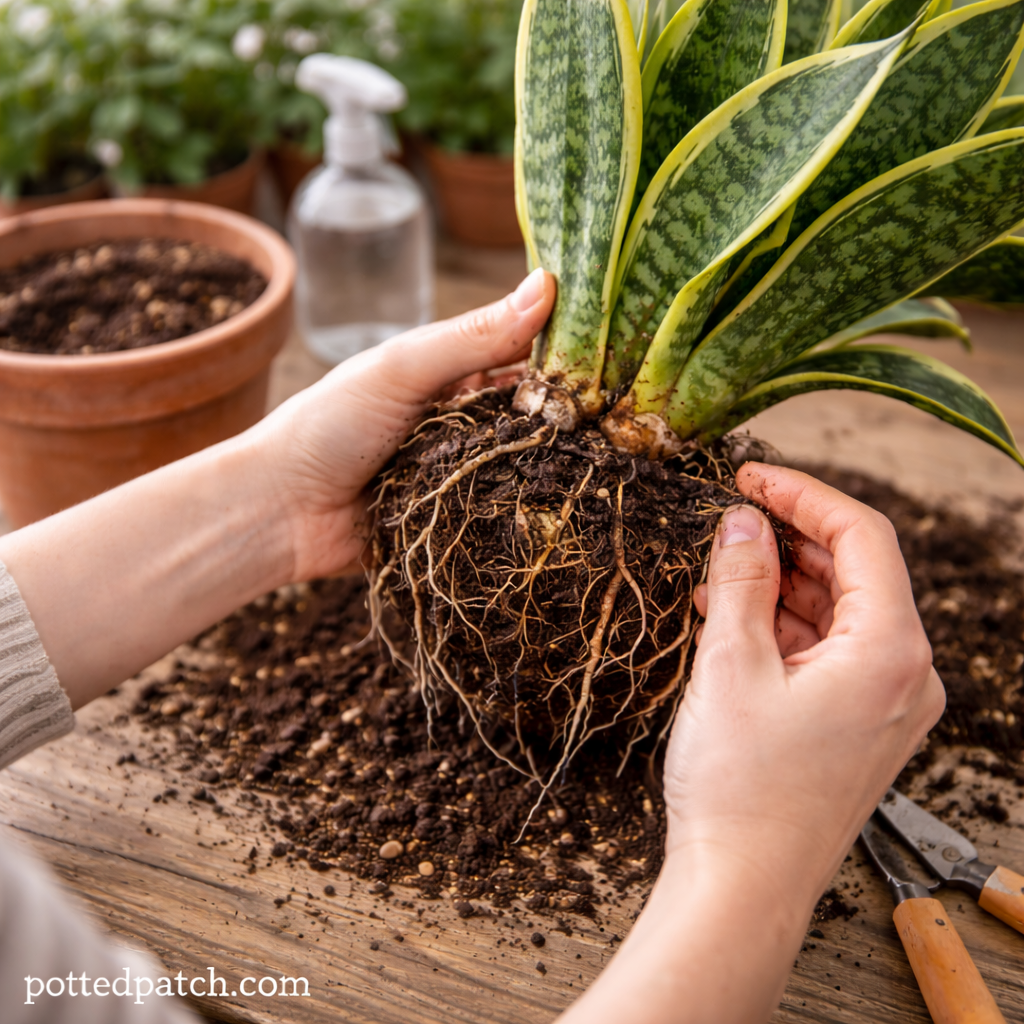
Root rot is a progression of chronic overwatering.
When roots decay, they cannot deliver nutrients or support structure to the plant. The base of the leaves softens and may detach easily from the soil.
How to Check for Root Rot
- Remove the plant from its pot.
- Inspect the roots.
- Healthy roots are firm and light-colored.
- Rotten roots appear black, brown, or slimy.
If caught early, trimming affected roots and repotting can save the plant.
3. Poor Drainage
Even if you water sparingly, poor drainage can trap moisture.
Common drainage issues include:
- Pots without drainage holes
- Dense, compacted soil
- Oversized containers
- Decorative outer pots that hold water
Snake plants need fast-draining soil — ideally a cactus or succulent mix with added perlite.
4. Cold Temperature Damage
Snake plants prefer temperatures between 65–85°F.
Exposure to cold drafts or temperatures below 50°F can damage plant cells, causing:
- Soft patches
- Drooping leaves
- Tissue collapse
Cold-damaged areas may appear watery before turning mushy.
Keep your plant away from:
- Exterior doors
- Drafty windows
- Air conditioning vents
5. Fungal or Bacterial Infection
In severe cases, soft stems may result from infection.
This typically happens when:
- Soil remains wet for extended periods
- Air circulation is poor
- Damaged tissue is left untreated
Infected stems often spread quickly and may develop a foul odor.
Immediate removal of affected leaves is necessary to prevent spread.
How to Fix Soft Stems on a Snake Plant
Step 1: Stop Watering Immediately
Allow the soil to dry completely before doing anything else.
Step 2: Remove the Plant and Inspect Roots
Gently remove the plant from its container and evaluate the root system.
Trim any:
- Black roots
- Mushy sections
- Damaged leaf bases
Use sterilized scissors.
Step 3: Repot in Fresh, Dry Soil
Choose:
- A pot with drainage holes
- Cactus or succulent mix
- A container only 1–2 inches larger than the root ball
Let the plant sit in dry soil for several days before watering again.
Step 4: Improve Your Watering Routine
Snake plants typically need watering:
- Every 2–3 weeks in spring/summer
- Every 3–5 weeks in fall/winter
Always check soil dryness first.
If the top 2–3 inches are dry, it’s safe to water.
Can a Soft Stem Recover?
Unfortunately, once a stem becomes fully mushy, it won’t firm up again.
However:
- Healthy leaves can still survive
- You can propagate firm sections
- Early intervention prevents spread
Remove severely affected leaves at the base.
When to Propagate Instead
If root rot is extensive, your best option may be propagation.
To propagate:
- Cut a firm, healthy leaf section.
- Let it callous for 24 hours.
- Place in water or well-draining soil.
- Wait for new roots to form.
Snake plants are resilient and often recover through propagation.
Preventing Soft Stems in the Future
Follow these preventative steps:
- Water only when soil is fully dry
- Use well-draining soil
- Ensure pots have drainage holes
- Keep temperatures stable
- Avoid letting water sit in saucers
Consistency and proper drainage are the keys to healthy, firm leaves.
Final Thoughts
Soft stems on a snake plant almost always point to excess moisture or root rot. The faster you intervene, the better the chances of recovery.
Inspect the roots, repot in fresh soil, adjust watering habits, and remove damaged tissue promptly.
With the right care, your snake plant can bounce back and return to strong, upright growth.