
Snake plants are known for being resilient and low-maintenance. So when leaves start falling over, collapsing, or detaching at the base, it’s a clear sign something isn’t right.
Leaf drop is usually caused by moisture imbalance, root stress, or environmental shock. The key is identifying the cause quickly and correcting it before more leaves decline.
Here’s how to fix leaf drop on a snake plant step by step.
Step 1: Check for Overwatering
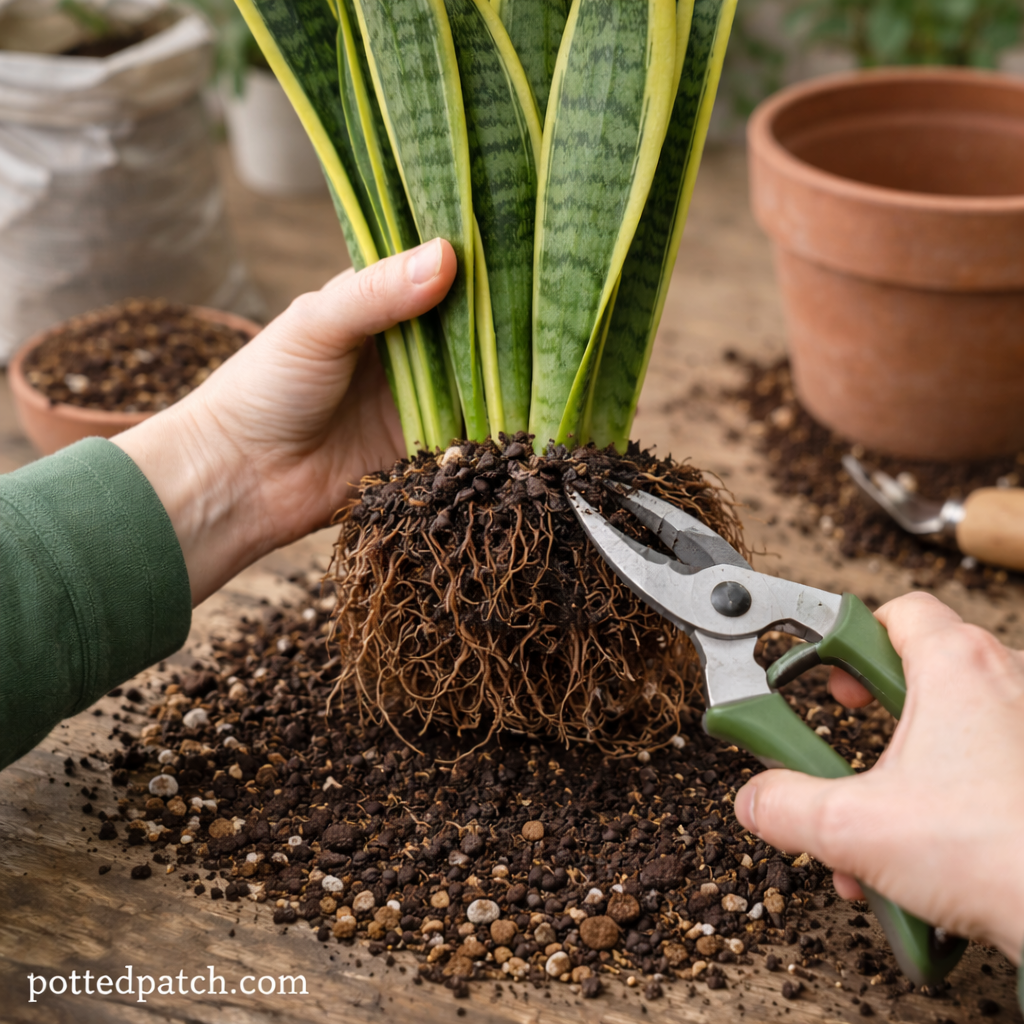
Overwatering is the most common cause of snake plant leaf drop.
When soil stays wet too long, roots begin to rot. Once the root system weakens, it can no longer support upright leaves.
Signs of Overwatering
- Mushy or soft leaf bases
- Yellowing leaves
- Soil that feels wet for more than 10–14 days
- A sour or musty smell from the pot
How to Fix It
- Remove the plant from its pot.
- Inspect the roots.
- Trim off any black, mushy roots.
- Allow healthy roots to dry for a few hours.
- Repot in fresh, well-draining soil.
After repotting, wait several days before watering again.
Step 2: Improve Drainage
Even if you aren’t watering too frequently, poor drainage can trap moisture around the roots.
Check for:
- Pots without drainage holes
- Compacted, dense soil
- Oversized containers holding excess water
Fix Drainage Problems By:
- Using a pot with drainage holes
- Switching to cactus or succulent mix
- Adding perlite or pumice for airflow
- Downsizing to a properly fitted pot
Proper drainage prevents future leaf collapse.
Step 3: Remove Damaged Leaves
Leaves that are fully mushy or detached won’t recover.
Use clean, sharp scissors to cut damaged leaves at the base.
Removing compromised growth:
- Prevents spread of rot
- Helps redirect energy to healthy leaves
- Improves airflow at the soil line
If part of a leaf is still firm, you may be able to propagate it.
Step 4: Adjust Watering Routine
Snake plants prefer drying out completely between waterings.
A simple schedule:
- Spring/Summer: every 2–3 weeks
- Fall/Winter: every 3–5 weeks
Always check soil dryness first rather than watering on a strict calendar.
Insert your finger 2–3 inches into the soil. If it feels dry, it’s safe to water.
Step 5: Evaluate Light Conditions
Snake plants tolerate low light, but very dark conditions can weaken growth.
Insufficient light may cause:
- Slower recovery
- Soft, weak leaves
- Leaning or instability
Place your plant in bright, indirect light for best results.
Avoid harsh direct sunlight, which can scorch leaves.
Step 6: Check for Temperature Stress
Cold drafts and sudden temperature changes can shock snake plants.
Keep them away from:
- Air conditioning vents
- Exterior doors
- Uninsulated winter windows
Ideal indoor temperature range: 65–85°F.
Step 7: Repot if Severely Root Bound
If roots are tightly packed and circling heavily inside the pot, water may not distribute evenly.
Repot into a container that is:
- 1–2 inches wider
- Equipped with drainage holes
- Filled with fresh, airy soil mix
Loosen roots gently during transplanting to encourage outward growth.
When to Propagate Instead
If root rot is extensive and most roots are compromised, propagation may be the best solution.
To propagate:
- Cut a healthy section of leaf above damaged tissue.
- Allow the cut end to callous for 24 hours.
- Place in water or well-draining soil.
- Wait for new roots to develop.
Snake plants are resilient and often recover well through propagation.
How Long Does Recovery Take?
Once corrected, recovery usually takes:
- 2–4 weeks for stabilization
- Several months for full regrowth
New upright leaves are the best sign your plant is healing.
Be patient and avoid overcorrecting with excessive watering or fertilizing.
Preventing Leaf Drop in the Future
Follow these maintenance basics:
- Water only when soil is fully dry
- Use well-draining soil
- Ensure proper drainage holes
- Keep temperatures stable
- Provide bright, indirect light
Consistency prevents stress.
Final Thoughts
Leaf drop on a snake plant is usually reversible if addressed early. Most issues trace back to overwatering, poor drainage, or environmental stress.
Inspect roots, adjust watering, and provide stable conditions. With proper care, your snake plant can recover and continue producing strong, upright leaves.