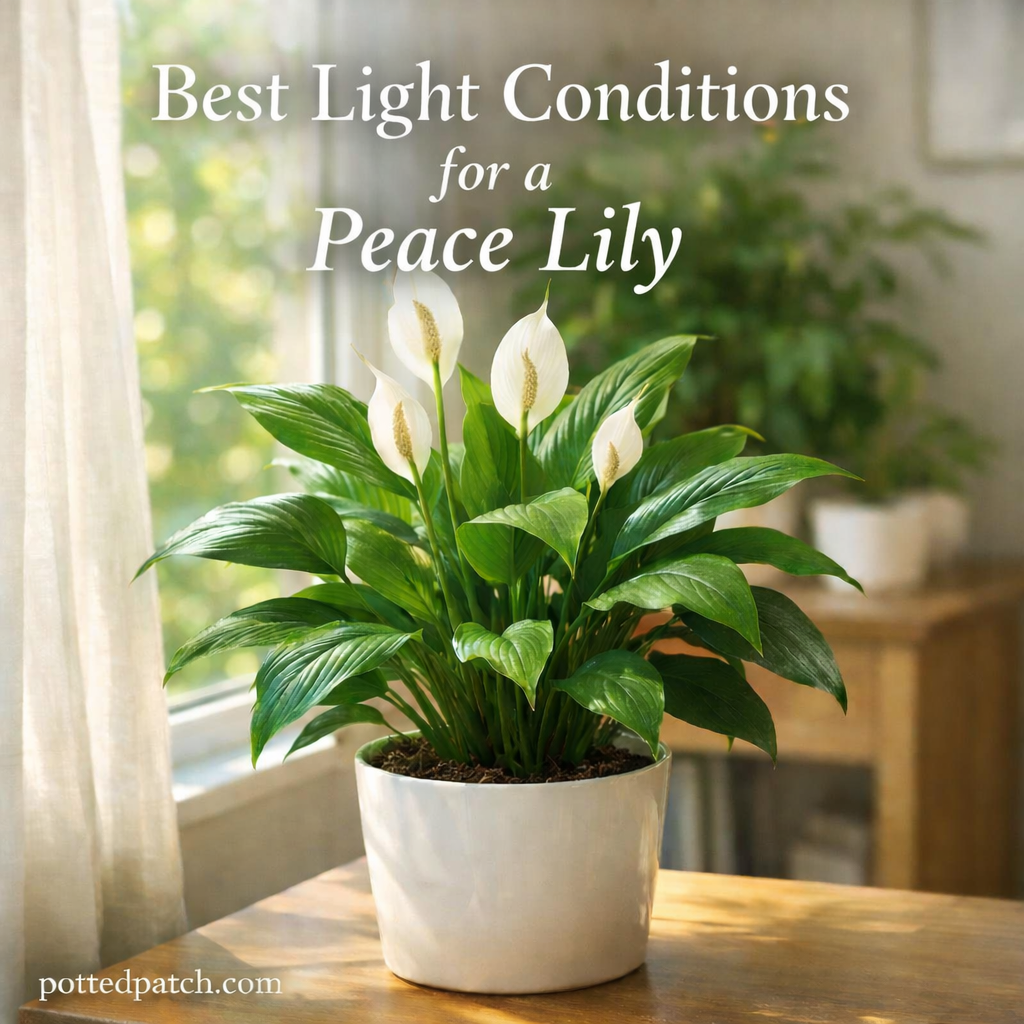
Peace lilies are one of the most popular indoor plants—and for good reason. They’re elegant, adaptable, and forgiving. But if you want lush green leaves and regular blooms, understanding the best light conditions for a peace lily is essential.
Too little light? No flowers.
Too much light? Burned leaves.
Let’s break down exactly what your peace lily needs to thrive indoors.
Why Light Matters for Peace Lilies
Peace lilies (Spathiphyllum) are native to tropical rainforests. In their natural habitat, they grow beneath tall trees where sunlight is filtered and indirect.
That means:
- They are not full-sun plants
- They prefer bright, indirect light
- They tolerate low light—but won’t thrive in it
Getting light right directly affects:
- Flower production
- Leaf color
- Growth rate
- Overall plant health
Ideal Light Conditions for a Peace Lily
Bright, Indirect Light (Best Option)
This is the sweet spot.
Bright indirect light means the plant is near a window but not in direct sunbeams.
Examples:
- 3–6 feet from a south-facing window
- Near an east-facing window
- In a well-lit room with sheer curtains
- Beside a bright window where sunlight doesn’t directly hit the leaves
Under these conditions, your peace lily will:
- Produce more blooms
- Grow fuller leaves
- Maintain deep green color
If you want consistent flowering, this is the lighting you should aim for.
Medium Light (Acceptable)
Peace lilies can tolerate medium light conditions, such as:
- A few feet away from a bright window
- A room with good ambient daylight
The plant will survive and look healthy, but:
- Blooming may be less frequent
- Growth will slow slightly
This setup works well if your home doesn’t get strong natural light.
Low Light (Survival Mode)
Peace lilies are often marketed as low-light plants. While they can survive in dim rooms, they won’t thrive.
Low light conditions include:
- Windowless rooms
- Dark corners
- Rooms far from natural light
In low light, you may notice:
- Little to no flowers
- Slower growth
- Smaller leaves
If your plant hasn’t bloomed in months, light is usually the reason.
Light Conditions to Avoid
Direct Sunlight
Direct sun is the biggest mistake people make.
Too much sun causes:
- Brown or crispy leaf edges
- Yellow patches
- Leaf scorch
South- or west-facing windows without curtains can be too intense, especially in summer.
If you see burned leaves, move the plant a few feet back or use sheer curtains.
How to Tell If Your Peace Lily Is Getting the Right Light
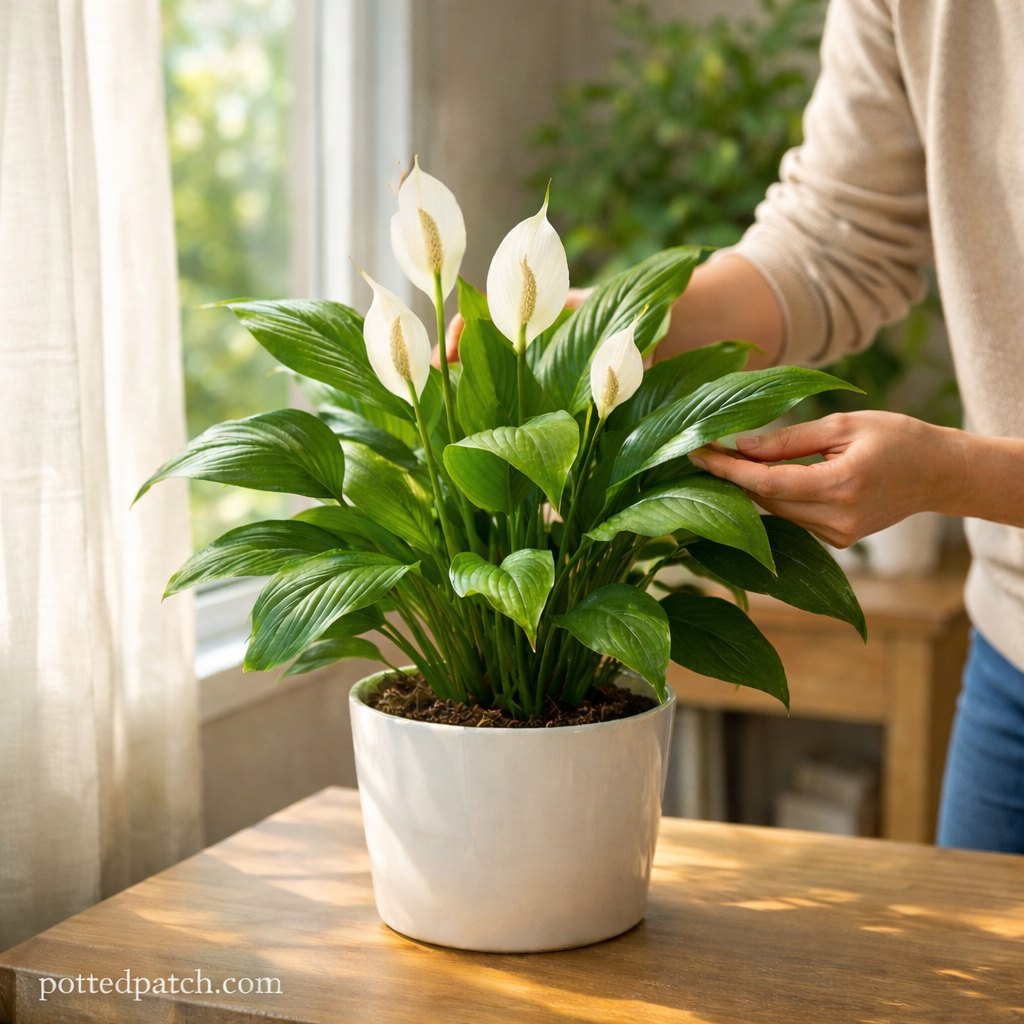
Your plant will tell you what it needs.
Signs It Needs More Light
- No flowers for long periods
- Dark green leaves but no growth
- Leaning toward a window
Signs It’s Getting Too Much Light
- Yellowing leaves
- Brown, crispy tips
- Faded or bleached patches
Adjust gradually—don’t move it from dark to bright light suddenly.
Best Window Placement for Peace Lilies
Here’s a simple guide:
- East-facing window → Ideal
- North-facing window → Good (if bright)
- South-facing window → Good with sheer curtain
- West-facing window → Use caution; filter light
If unsure, place the plant where you can comfortably read during the day without turning on lights. That’s usually bright indirect light.
Can Peace Lilies Grow Under Artificial Light?
Yes.
Peace lilies do well under:
- LED grow lights
- Fluorescent lights
- Bright office lighting
Keep grow lights:
- 12–18 inches above the plant
- On for 10–12 hours per day
Artificial lighting is especially helpful in winter when daylight hours are shorter.
Seasonal Light Adjustments
Light changes throughout the year.
Summer
- Sunlight is stronger
- Move plant slightly farther from windows if needed
Winter
- Days are shorter
- Move plant closer to a window
- Consider grow lights if blooming stops
Small adjustments make a big difference.
Quick Light Checklist for Peace Lilies
Use this checklist to keep your plant happy:
- Bright, indirect light preferred
- No harsh direct sun
- Rotate plant every 1–2 weeks
- Adjust placement seasonally
- Supplement with grow lights if needed
Final Thoughts
The best light conditions for a peace lily are bright and indirect—similar to what it would receive on a tropical forest floor.
While peace lilies tolerate low light, they truly shine in brighter conditions. If you want bigger leaves and beautiful white blooms, move your plant closer to filtered daylight.
Get the light right, and your peace lily will reward you with steady growth and graceful flowers.