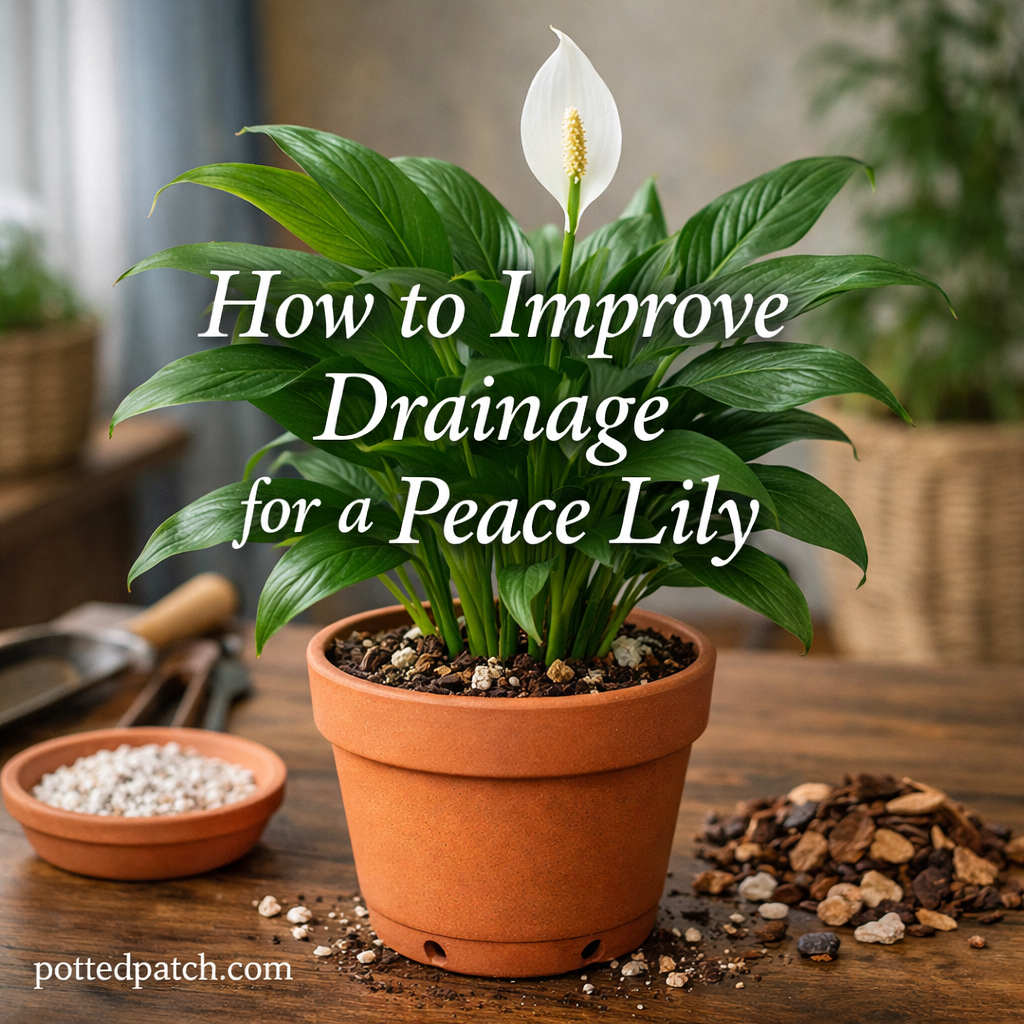
Peace lilies are known for their lush green leaves and elegant white blooms, but they are also sensitive to overwatering. If your plant is drooping, yellowing, or developing root issues, poor drainage is often the hidden culprit.
Improving drainage for a peace lily isn’t complicated — but it does require the right soil mix, container setup, and watering habits. In this guide, you’ll learn exactly how to fix drainage problems and keep your peace lily healthy long term.
Why Drainage Matters for Peace Lilies
Peace lilies naturally grow in tropical rainforest environments where soil is loose, airy, and rich in organic matter. While they enjoy consistent moisture, they do not tolerate soggy soil.
Poor drainage can lead to:
- Root rot
- Yellowing leaves
- Fungus gnats
- Wilting despite wet soil
- Foul-smelling potting mix
Healthy roots need oxygen. When water sits at the bottom of a pot, it suffocates the root system.
Signs Your Peace Lily Has Poor Drainage
Before making changes, confirm the problem. Look for:
- Water pooling on top of soil after watering
- Soil staying wet for more than 7–10 days
- Mushy or blackened roots
- A heavy, compacted soil texture
- No drainage holes in the pot
If you notice two or more of these issues, improving drainage should be your next step.
Step 1: Choose a Pot With Drainage Holes
This is non-negotiable.
Your container must have at least one drainage hole at the bottom. Without it, excess water has nowhere to escape.
Best Pot Types for Drainage
- Terracotta (breathable and moisture-wicking)
- Plastic nursery pots (lightweight and functional)
- Ceramic pots with proper drainage holes
Avoid decorative cachepots unless you keep the plant inside a removable nursery pot.
If you love a decorative container without holes:
- Keep the peace lily in a nursery pot.
- Place that pot inside the decorative container.
- Remove it when watering and allow full drainage before placing it back.
Step 2: Upgrade the Soil Mix
Standard potting soil alone often retains too much moisture for peace lilies.
To improve drainage, create a lighter, airier blend.
Recommended Peace Lily Soil Mix
Use:
- 2 parts high-quality potting soil
- 1 part perlite or pumice
- 1 part orchid bark or coco chips
This combination allows water to flow freely while still holding enough moisture for healthy growth.
Avoid heavy garden soil or mixes labeled “moisture control.”
Step 3: Skip the Gravel Layer Myth
You may have heard that adding rocks or gravel at the bottom improves drainage. In reality, it does the opposite.
Gravel creates a perched water table, which traps moisture higher in the pot and keeps roots sitting in damp soil longer.
Instead:
- Fill the entire pot with your well-draining soil mix
- Let gravity and proper holes do the work
Step 4: Repot Correctly
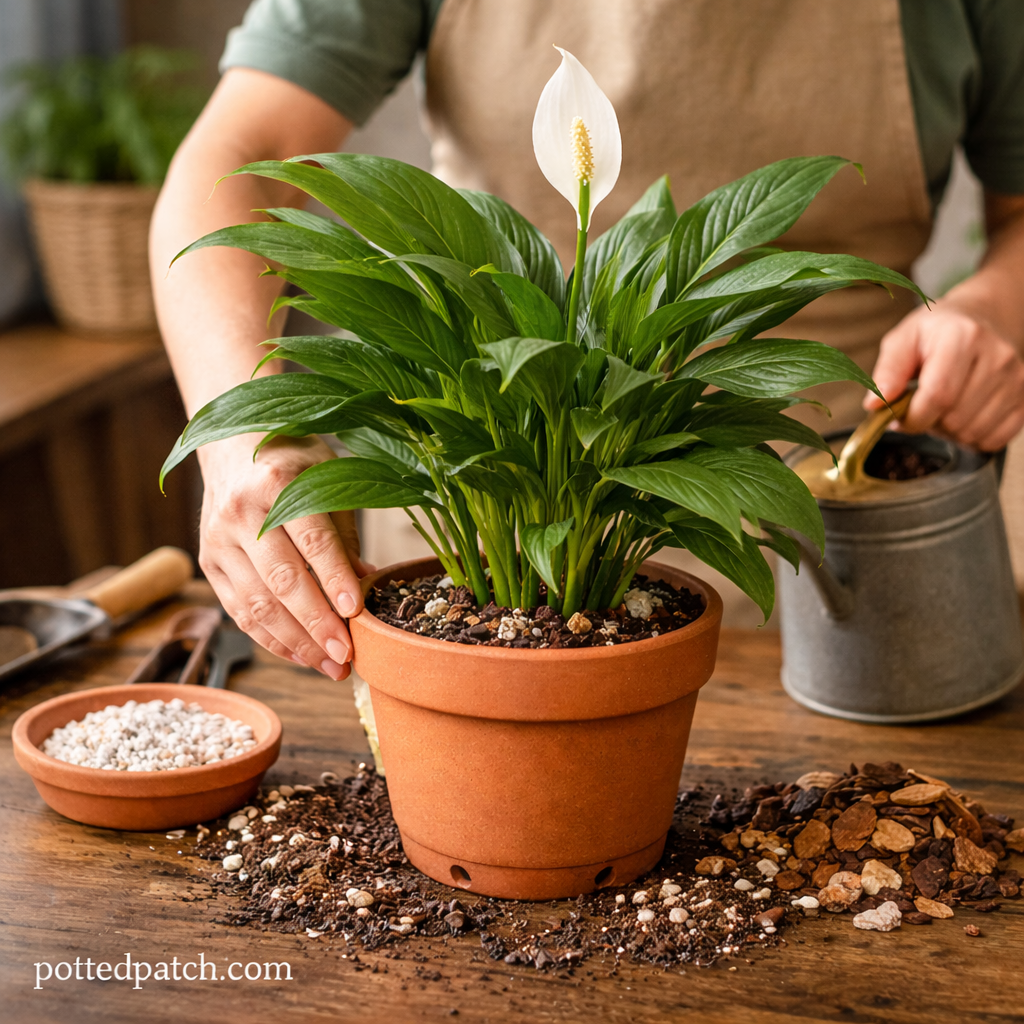
If your peace lily is currently in poorly draining soil, repotting is the fastest fix.
How to Repot for Better Drainage
- Gently remove the plant from its pot.
- Shake off old, compacted soil.
- Trim any black or mushy roots.
- Place the plant in fresh, well-draining mix.
- Water thoroughly and allow excess water to drain completely.
Choose a pot that is only 1–2 inches larger than the current root ball. Oversized pots hold excess moisture.
Step 5: Adjust Your Watering Routine
Even perfect drainage can’t compensate for chronic overwatering.
Peace lilies prefer slightly moist soil — not constantly wet soil.
Better Watering Habits
- Check the top 1–2 inches of soil before watering
- Water deeply, then let excess drain fully
- Never let the plant sit in standing water
- Empty saucers after 10–15 minutes
If the plant droops slightly, that’s often the perfect time to water.
Step 6: Improve Airflow and Light
Environmental conditions affect soil drying time.
To help soil dry at a healthy pace:
- Place the plant in bright, indirect light
- Avoid dark corners with stagnant air
- Ensure good room ventilation
- Keep away from cold drafts
More light and airflow = better moisture balance.
Common Drainage Mistakes to Avoid
- Using pots without holes
- Adding gravel at the bottom
- Overpotting into a large container
- Using dense, compacted soil
- Watering on a strict schedule without checking soil
Correcting even one of these mistakes can dramatically improve your peace lily’s health.
How Long Until You See Improvement?
If drainage was the main issue:
- Wilting may improve within days
- New leaf growth can appear within 2–4 weeks
- Root health stabilizes within a month
Severely rotted plants may take longer, but most peace lilies recover quickly once excess moisture is resolved.
Final Thoughts
Improving drainage for a peace lily is one of the most important steps you can take for long-term plant health. These plants enjoy moisture — but only when it moves freely through the soil.
With the right pot, soil mix, and watering routine, your peace lily can thrive for years with strong roots, vibrant leaves, and beautiful blooms.
Fix the drainage, and the rest becomes much easier.