

Snake plants (Sansevieria, now classified as Dracaena trifasciata) are known for being tough, adaptable, and low-maintenance. But many plant owners become concerned when their snake plant seems stuck in place — not getting taller, not producing pups, and not changing for months.
The truth is, slow growth is often normal. However, certain care issues can also cause growth to stall.
Let’s look at why slow growth happens on snake plants and how to fix it.
Is Slow Growth Normal for Snake Plants?
Yes — to a point.
Snake plants are naturally slow growers indoors. Compared to fast-growing tropical houseplants, they move at a steady, conservative pace.
Under normal indoor conditions, you can expect:
- 2–4 new leaves per growing season
- Occasional pups (baby plants) once or twice per year
- Most growth during spring and summer
During fall and winter, growth often slows dramatically or stops entirely.
If your plant looks healthy but just isn’t growing fast, it may simply be behaving naturally.
1. Not Enough Light
Light is the most common reason slow growth happens on snake plants.
Snake plants tolerate low light, but they do not actively grow in it. In dim conditions, they survive — not thrive.
Signs Light Is the Issue
- Small, narrow leaves
- No new shoots for months
- Dull or faded coloring
- Very slow vertical growth
How to Fix It
- Move the plant closer to a bright window.
- Provide bright, indirect light.
- Rotate the plant every few weeks for even exposure.
- Consider a grow light if natural light is limited.
Improved lighting often leads to noticeable growth within one growing season.
2. Rootbound Pot
Snake plants grow from underground rhizomes. When the roots and rhizomes fill the pot completely, growth slows.
Signs Your Plant Is Rootbound
- Roots pushing out of drainage holes
- Soil drying out extremely fast
- Cracked or bulging plastic pots
- No new pups forming
What to Do
- Repot every 2–3 years.
- Choose a pot 1–2 inches wider than the current one.
- Use a well-draining cactus or succulent mix.
A slightly snug pot is fine — but extreme crowding limits expansion.
3. Overwatering
Overwatering is one of the biggest reasons slow growth happens on snake plants.
When roots stay wet too long, oxygen flow is reduced, and growth slows dramatically.
Signs of Overwatering
- Yellowing leaves
- Soft or drooping foliage
- Mushy leaf bases
- Soil staying wet longer than a week
Correct Watering Routine
- Water only when soil is completely dry.
- In summer: every 2–4 weeks.
- In winter: every 4–6 weeks.
Snake plants prefer drought over soggy soil.
4. Poor Soil Drainage
Heavy, compacted soil suffocates roots.
If the potting mix holds too much moisture, the plant’s energy shifts toward survival rather than growth.
Solution
Repot using:
- Cactus or succulent soil
- Added perlite or pumice
- A pot with drainage holes
Healthy roots are essential for steady growth.
5. Cold Temperatures
Snake plants are tropical plants that prefer warmth.
Temperatures below 60°F (15°C) can significantly slow growth.
Ideal Temperature Range
- 65–85°F (18–29°C)
Avoid placing your plant near:
- Drafty windows
- Air conditioning vents
- Exterior doors
Cold stress causes the plant to pause growth.
6. Lack of Nutrients
Snake plants don’t require heavy feeding, but they still benefit from occasional fertilizer.
If your plant hasn’t been fertilized in years, growth may stall.
Fertilizing Tips
- Use a balanced liquid houseplant fertilizer.
- Dilute to half strength.
- Feed once per month during spring and summer.
- Stop fertilizing in fall and winter.
Less is more when feeding snake plants.
7. Winter Dormancy
Many owners worry when growth stops during winter.
But snake plants naturally enter a resting period when light levels decrease.
During winter:
- Growth pauses
- Water needs decrease
- Fertilizer should be withheld
Once spring light returns, growth usually resumes.
8. Age and Variety
Some varieties grow slower than others.
Additionally, older, mature plants often produce fewer new leaves compared to younger plants.
If your snake plant looks healthy but grows slowly, it may simply be its natural pace.
How to Encourage Faster Growth
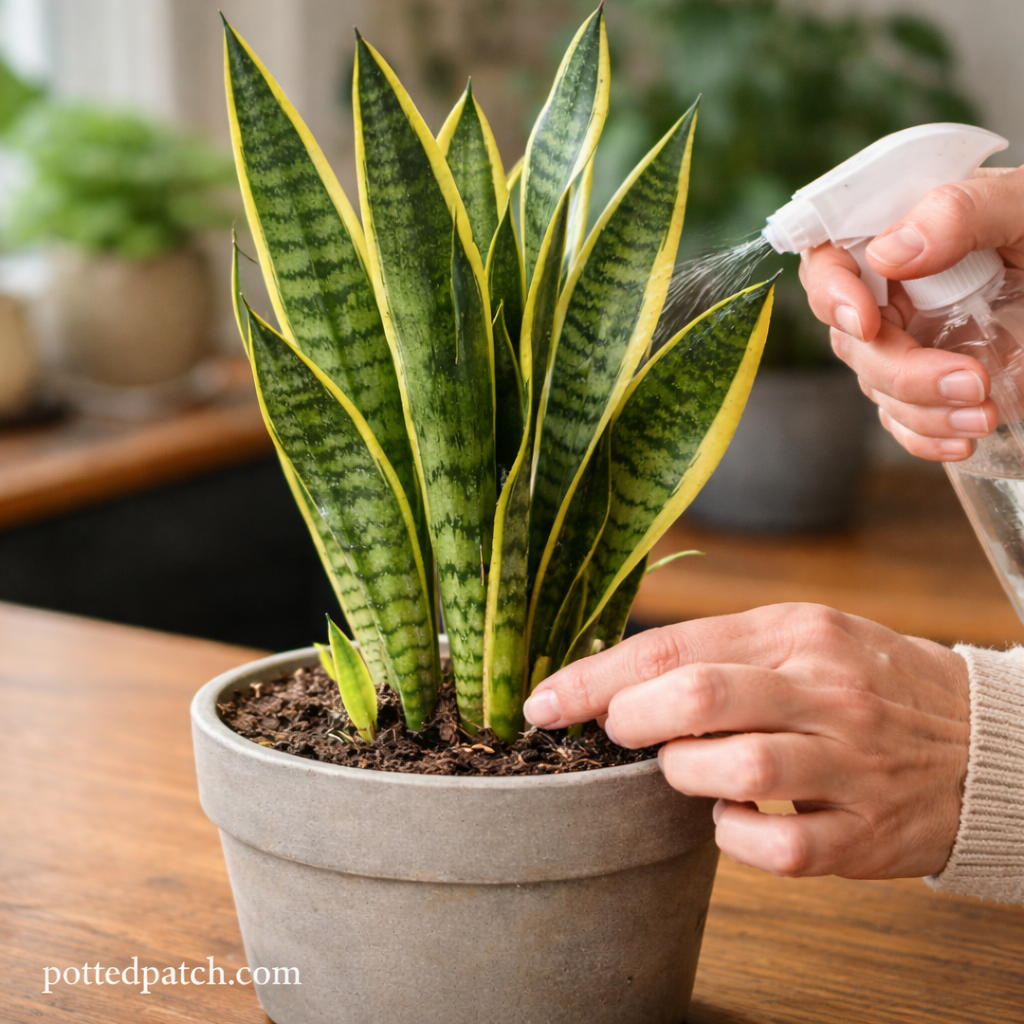
If you want to maximize growth, follow this checklist:
- Place in bright, indirect light.
- Use fast-draining soil.
- Water only when fully dry.
- Keep temperatures warm.
- Fertilize lightly in growing season.
- Repot if severely rootbound.
Small improvements often make a noticeable difference.
When Slow Growth Is Not a Problem
If your snake plant has:
- Firm, upright leaves
- No discoloration
- No mushy areas
- Healthy roots
Then slow growth is likely normal.
Snake plants are steady growers — not rapid climbers.
Patience is part of their charm.
Final Thoughts
Slow growth happens on snake plants for several common reasons — most often low light, overwatering, or seasonal dormancy.
Start by adjusting light and watering. In most cases, the plant responds positively within a few months.
A healthy snake plant may grow slowly — but it should always look strong, structured, and vibrant.