
Root rot is one of the most common problems snake plant owners face. The good news? If you catch it early, your plant can often recover.
Snake plants are drought-tolerant and store water in their roots and rhizomes. When the soil stays wet too long, those roots begin to suffocate and decay.
This guide walks you step-by-step through identifying, treating, and preventing root rot on your snake plant.
What Causes Root Rot in Snake Plants?
Root rot develops when roots sit in overly moist conditions for extended periods.
Common causes include:
- Overwatering
- Poor drainage soil
- Pots without drainage holes
- Low light slowing soil drying
- Cold temperatures combined with wet soil
Snake plants prefer drying out completely between waterings. Constant moisture is their biggest enemy.
Early Signs of Root Rot
Catching root rot early improves your chances of saving the plant.
Look for:
- Soft or mushy leaves
- Yellowing at the base
- Drooping even though soil is wet
- Foul smell from soil
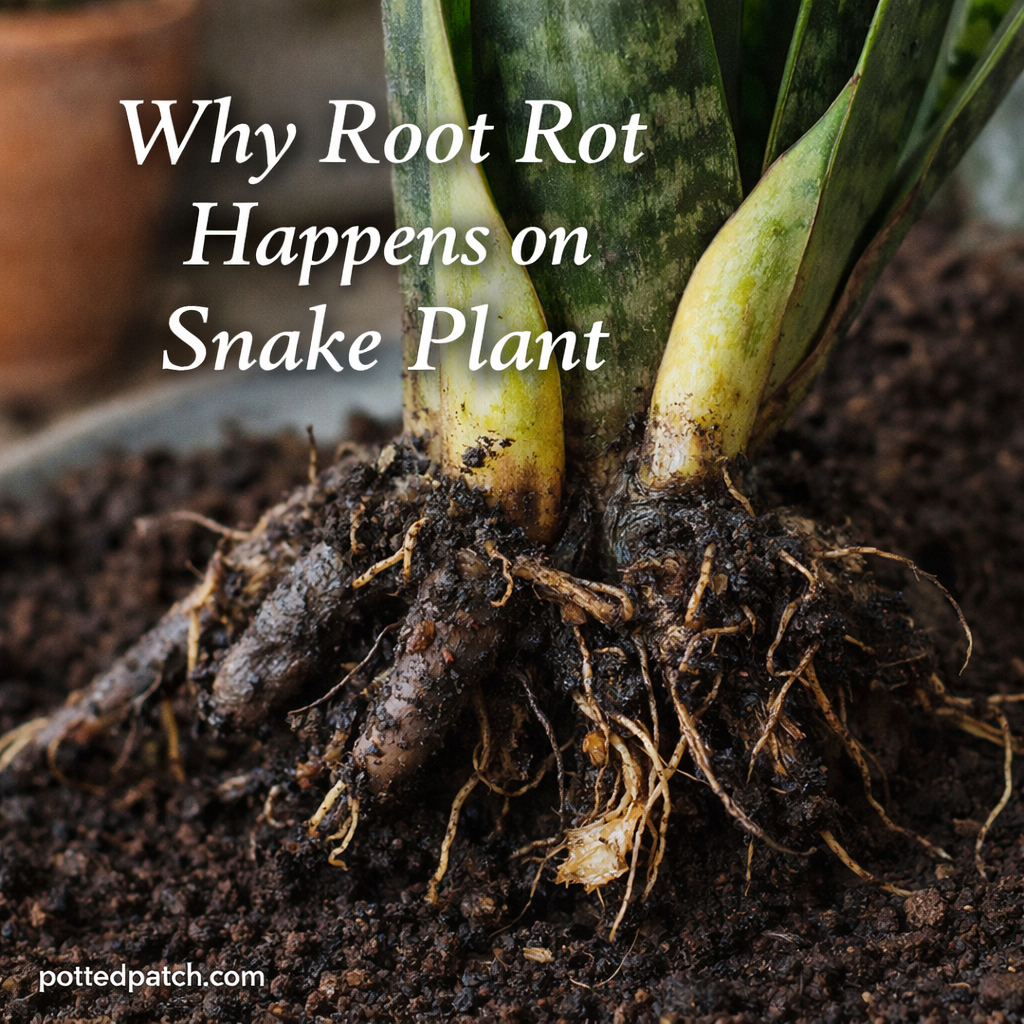
- Black or brown roots when removed from pot
Healthy roots are firm and white or light tan. Rotten roots are dark, soft, and may fall apart easily.
Step-by-Step: How to Fix Root Rot on Snake Plant
Step 1: Remove the Plant from the Pot
Gently slide the plant out of its container.
Shake off loose soil so you can clearly inspect the roots.
Work carefully to avoid breaking healthy roots.
Step 2: Trim Away Rotted Roots
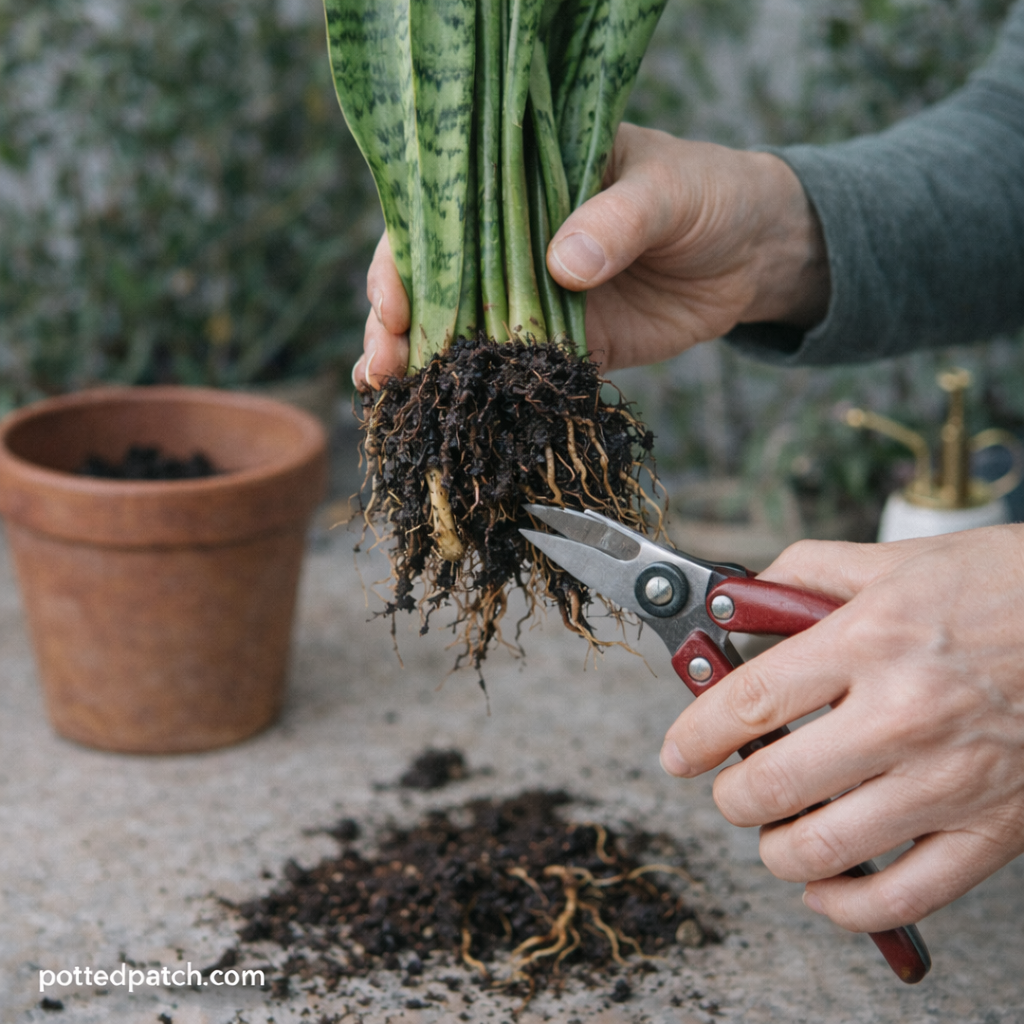
Using clean, sterilized scissors:
- Cut away all black, brown, or mushy roots.
- Remove any soft rhizome sections.
- Keep only firm, healthy tissue.
Sterilize tools between cuts if rot is severe.
Do not leave partially rotted sections attached.
Step 3: Let the Plant Dry
After trimming:
- Allow the roots to air dry for 12–24 hours.
- Place the plant in a warm, shaded area.
- Do not replant immediately.
Drying helps prevent remaining pathogens from spreading.
Step 4: Repot in Fresh, Well-Draining Soil
Prepare a new soil mix:
- Cactus or succulent mix
- Add 25–40% perlite or pumice
- Optional orchid bark for airflow
Choose a pot with drainage holes.
Avoid oversized containers. Select one only slightly larger than the root system.
Step 5: Wait Before Watering
After repotting:
- Wait at least 5–7 days before watering.
- Allow roots to settle and heal.
- When you water, soak thoroughly and let excess drain completely.
Never leave water sitting in a saucer.
What If the Base of the Leaves Is Rotting?
If rot has reached the base of a leaf:
- Remove the entire affected leaf.
- Cut it at the soil line with sterilized tools.
- Do not leave soft tissue behind.
If the rot is severe and spreading, propagation may be your best option.
Can You Save a Severely Rotted Snake Plant?
It depends on how much healthy tissue remains.
You may be able to save it if:
- At least some firm roots or rhizomes remain.
- The base of most leaves is still solid.
- The rot has not spread through the entire crown.
If the base is completely mushy, recovery is unlikely.
However, healthy leaf sections can sometimes be propagated in fresh soil.
How to Prevent Root Rot in the Future
Prevention is far easier than treatment.
Follow these guidelines:
- Water only when soil is completely dry.
- Use fast-draining soil.
- Always use pots with drainage holes.
- Reduce watering in winter.
- Provide bright, indirect light.
- Avoid cold, damp environments.
Snake plants thrive when slightly neglected.
Common Mistakes After Treating Root Rot
Avoid these post-treatment errors:
- Watering too soon after repotting.
- Reusing contaminated soil.
- Keeping the plant in low light.
- Moving it into a much larger pot.
- Fertilizing immediately after treatment.
Give the plant time to recover.
Signs Your Snake Plant Is Recovering
- Leaves remain firm.
- No further yellowing.
- Soil dries at a steady pace.
- New growth appears in spring or summer.
Recovery can take weeks. Be patient.
Final Thoughts
Root rot on a snake plant is usually caused by excess moisture and poor drainage.
If caught early, trimming damaged roots and repotting in fresh soil can save the plant.
The key to long-term success is simple:
Let the soil dry completely.
Use proper drainage.
Water less than you think you need to.
With the right adjustments, your snake plant can bounce back and thrive again.