
Snake plants (Sansevieria or Dracaena trifasciata) are known for their upright, sword-like leaves and nearly indestructible nature. So when those sturdy leaves start curling inward or bending, it can feel alarming.
The good news? Leaf curling on a snake plant is usually fixable — and often caused by simple care issues.
In this guide, we’ll break down why snake plant leaves curl and exactly how to correct the problem.
What Leaf Curling Means
Healthy snake plant leaves are firm, upright, and straight. When they begin to curl, fold inward, or wrinkle, it’s typically a sign of stress.
Leaf curling often indicates:
- Water imbalance
- Root issues
- Temperature stress
- Pest activity
- Poor lighting conditions
Identifying the cause early makes recovery much easier.
1. Underwatering (Most Common Cause)
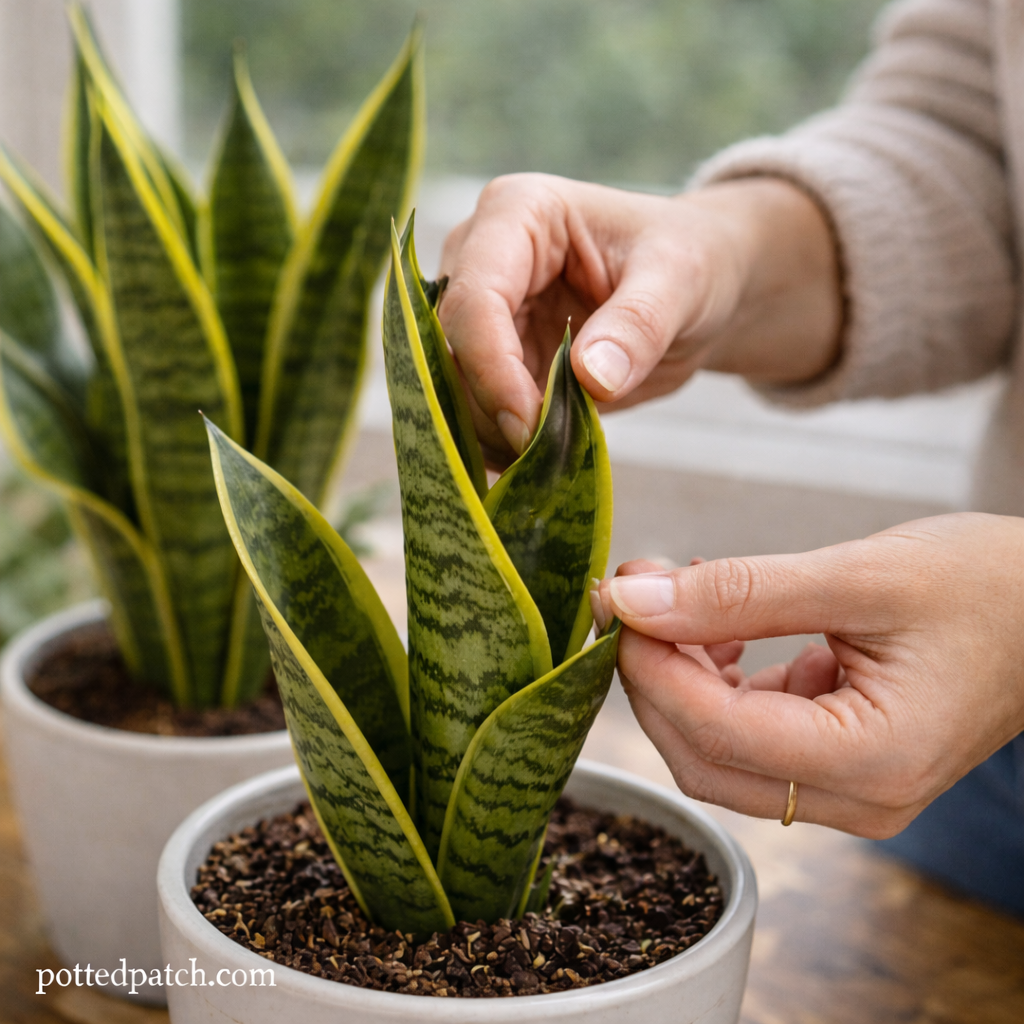
Although snake plants tolerate drought, prolonged dryness can cause leaves to curl as they lose internal moisture.
Signs of Underwatering
- Leaves curling inward
- Wrinkled or puckered texture
- Soil pulling away from pot edges
- Extremely dry soil throughout
How to Fix It
- Water thoroughly until water drains from the bottom.
- Allow excess water to fully drain.
- Resume a balanced watering schedule.
Water only when the soil is completely dry — usually every 2–4 weeks depending on your environment.
2. Overwatering and Root Rot
Surprisingly, too much water can also cause curling — especially if roots begin to rot.
When roots can’t absorb water properly, leaves may curl despite moist soil.
Signs of Overwatering
- Soft or mushy base
- Yellowing leaves
- Foul-smelling soil
- Soil staying wet for days
How to Fix It
- Remove the plant from its pot.
- Trim off any black, mushy roots.
- Repot in fresh, well-draining soil.
- Reduce watering frequency.
Always use a pot with drainage holes.
3. Temperature Stress
Snake plants prefer stable indoor temperatures between 65–85°F.
Cold drafts, air conditioning vents, or sudden temperature drops can cause leaves to curl or distort.
How to Fix It
- Move plant away from drafty windows or doors.
- Avoid placing near heating or AC vents.
- Keep in a stable indoor environment.
Temperature shock often resolves once conditions stabilize.
4. Low Light Conditions
Snake plants survive in low light — but extreme darkness can weaken growth and cause leaf distortion over time.
Signs of Light Stress
- Slow growth
- Leaning or bending leaves
- Faded color
How to Fix It
- Move plant to bright, indirect light.
- Avoid harsh direct sunlight that can scorch leaves.
Improved lighting often restores strength to new growth.
5. Pest Infestation
Though rare, pests like spider mites or thrips can cause curling.
What to Look For
- Tiny webbing
- Speckled leaves
- Sticky residue
- Visible tiny insects
How to Fix It
- Wipe leaves with a damp cloth.
- Use insecticidal soap if needed.
- Isolate the plant during treatment.
Early intervention prevents widespread damage.
6. Compacted or Poor Soil
Dense soil prevents proper drainage and airflow to roots.
When roots struggle, leaves may curl as a stress response.
Solution
Repot into a well-draining mix:
- Cactus/succulent soil
- Potting mix + perlite
- Chunky, airy blends
Good soil equals healthy roots.
Step-by-Step Recovery Plan
If you’re unsure of the exact cause, follow this process:
- Check soil moisture (top 2–3 inches).
- Inspect roots if symptoms persist.
- Evaluate lighting conditions.
- Check for pests.
- Adjust watering schedule accordingly.
Most snake plants recover within a few weeks once conditions improve.
Will Curled Leaves Straighten?
Sometimes.
- Mild curling from underwatering may partially reverse.
- Severely curled or damaged leaves may stay curled.
- Focus on healthy new growth as a sign of recovery.
Prune badly damaged leaves if needed.
Final Thoughts
Leaf curling on a snake plant is usually a care imbalance — not a death sentence.
In most cases, the issue comes down to watering habits, soil drainage, or environmental stress.
With a few simple adjustments, your snake plant can return to its upright, sculptural form and continue thriving indoors.