
The ZZ plant (Zamioculcas zamiifolia) has earned its reputation as one of the toughest houseplants around. It tolerates low light, survives missed waterings, and adapts to indoor environments with ease.
But “low-maintenance” doesn’t mean “no-maintenance.”
Even hardy plants like the ZZ can struggle if a few common mistakes creep into your care routine. If your plant looks yellow, droopy, or stagnant, one of these issues may be the reason.
Why ZZ Plants Are So Forgiving
ZZ plants store water in thick underground rhizomes and glossy stems. This natural storage system allows them to:
- Survive drought conditions
- Handle inconsistent watering
- Adapt to lower light levels
- Recover from mild neglect
However, their strengths can also lead to problems — especially when owners overcompensate.
1. Overwatering (The #1 Mistake)
This is by far the most common issue.
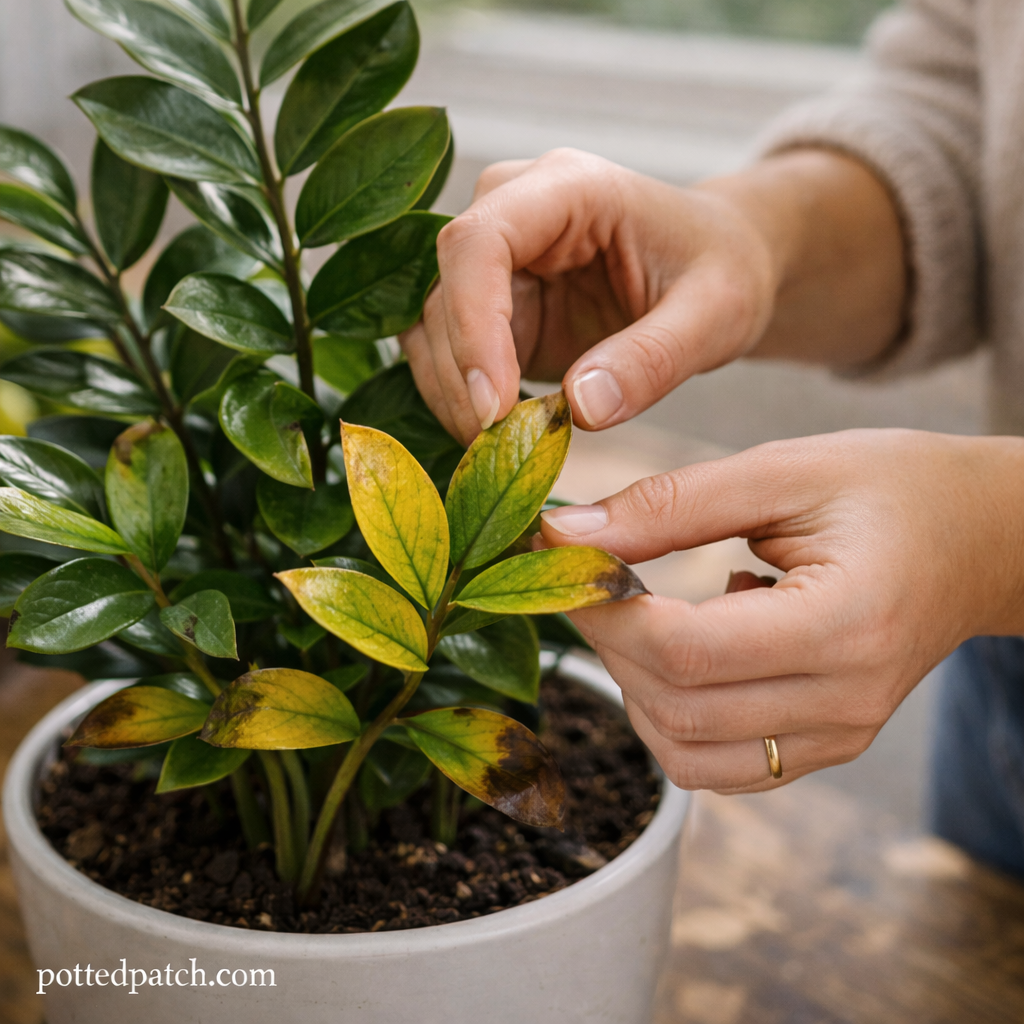
Because ZZ plants store water in their rhizomes, they do not need frequent watering. Too much moisture can quickly lead to root rot.
Signs of Overwatering
- Yellowing leaves
- Mushy stems
- Soft or rotting roots
- Soil that stays wet for long periods
How to Fix It
- Let the soil dry completely before watering again
- Use a pot with drainage holes
- Empty saucers after watering
In most homes, watering every 2–3 weeks is enough.
2. Using the Wrong Soil
ZZ plants need well-draining soil. Heavy, compacted potting mix holds moisture too long.
Better Soil Options
- Standard potting mix + perlite
- Cactus or succulent mix
- Chunky, airy blends
Good drainage prevents root problems and keeps rhizomes healthy.
3. Keeping It in Total Darkness
ZZ plants tolerate low light, but they don’t thrive in complete darkness.
Placing your plant in a windowless room may slow growth dramatically.
Ideal Light Conditions
- Bright indirect light (best growth)
- Moderate indirect light (good growth)
- Low light (survival mode)
If growth stalls completely, try moving it slightly closer to a window.
4. Watering on a Schedule Instead of Checking Soil
Many beginners water “every Sunday” or on a fixed routine. This can backfire.
Environmental conditions change with:
- Seasons
- Indoor heating
- Humidity levels
- Pot size
Instead of watering on a calendar, check the soil. If it’s dry 2 inches down, it’s time to water.
5. Repotting Too Often
ZZ plants grow slowly. Frequent repotting can stress the plant unnecessarily.
When to Repot
- Roots are pushing out of drainage holes
- Rhizomes are crowding the pot
- Growth has completely stalled
Otherwise, repotting every 2–3 years is typically sufficient.
6. Over-Fertilizing
Because ZZ plants grow slowly, they don’t require heavy feeding.
Too much fertilizer can cause:
- Salt buildup in soil
- Brown leaf tips
- Weak, leggy growth
Feed lightly once or twice during the growing season (spring and summer) at half strength.
7. Ignoring Early Warning Signs
ZZ plants communicate subtly.
Watch for:
- Yellow leaves (usually watering issue)
- Wrinkled stems (possible dehydration)
- Soft base (root rot concern)
Catching problems early makes recovery much easier.
Quick ZZ Plant Care Checklist
For simple, stress-free care:
- Water only when soil is fully dry
- Use well-draining soil
- Provide indirect light
- Fertilize lightly in growing season
- Avoid frequent repotting
That’s it.
Final Thoughts
ZZ plants are incredibly resilient, but most care problems come from trying to “do too much.”
When in doubt, less is more.
Let the soil dry. Give it gentle light. Avoid overfeeding. Your ZZ plant will reward you with glossy, healthy growth for years to come.