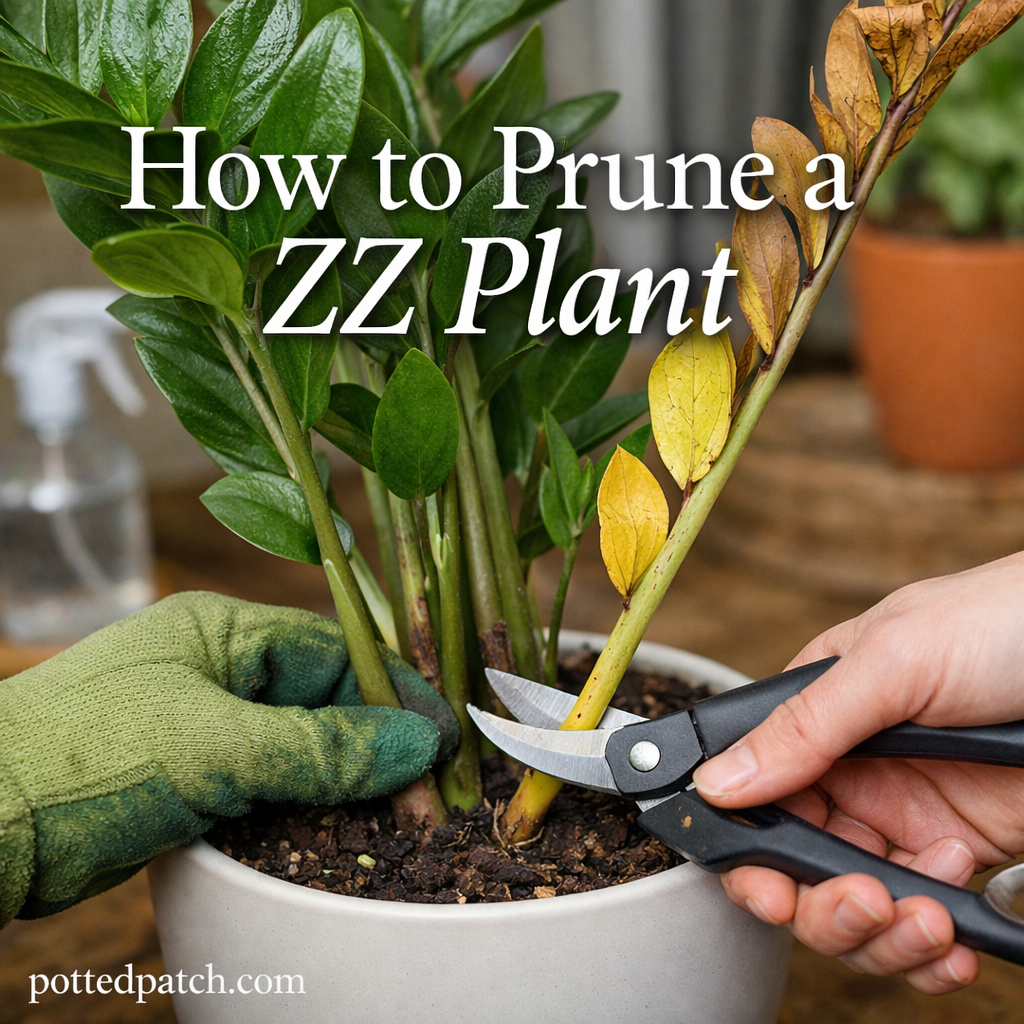
ZZ plants (Zamioculcas zamiifolia) are famous for being low-maintenance, slow-growing, and nearly indestructible. Because of that, many plant owners assume pruning isn’t necessary at all. The truth is, occasional pruning keeps a ZZ plant healthier, more attractive, and easier to manage—especially in containers.
The good news? Pruning a ZZ plant is simple, forgiving, and hard to mess up once you understand how the plant grows.
Do ZZ Plants Need Pruning?
ZZ plants don’t require frequent pruning, but they do benefit from it in specific situations.
Pruning helps when:
- Leaves turn yellow or brown
- Stems become leggy or overcrowded
- The plant grows unevenly
- You want to control size or shape
- You’re removing damaged or diseased growth
Because ZZ plants store energy in underground rhizomes, strategic pruning won’t harm the plant and can actually encourage stronger new growth over time.
Best Time to Prune a ZZ Plant
Timing matters, even for tough plants like ZZs.
Ideal Pruning Window
- Spring through early summer is best
- The plant is actively growing and recovers faster
When to Avoid Pruning
- Late fall and winter
- During active stress (recent repotting, pest issues, or severe dehydration)
Light cleanup pruning can still be done year-round if necessary, but major cuts are best saved for the growing season.
Tools You’ll Need
Before you start, gather a few simple tools:
- Sharp pruning shears or scissors
- Rubbing alcohol or disinfectant
- Clean cloth or paper towel
- Optional gloves (sap can irritate sensitive skin)
Always disinfect your cutting tool before and after pruning to prevent spreading bacteria or fungi.
Understanding ZZ Plant Growth
Knowing where to cut starts with understanding how the plant grows.
- Each stem grows directly from a rhizome underground
- Stems do not branch
- Cutting a stem will not cause it to regrow from that same spot
- New stems emerge separately from the soil
This means pruning is about removal, not shaping individual stems.
How to Prune a ZZ Plant Step by Step
1. Identify What Needs to Go
Look closely at your plant and decide which stems should be removed.
Focus on:
- Yellowing or fully yellow leaves
- Brown, mushy, or shriveled stems
- Stems leaning outward or disrupting symmetry
- Old growth crowding the center
Avoid removing healthy, upright green stems unless you’re intentionally reducing size.
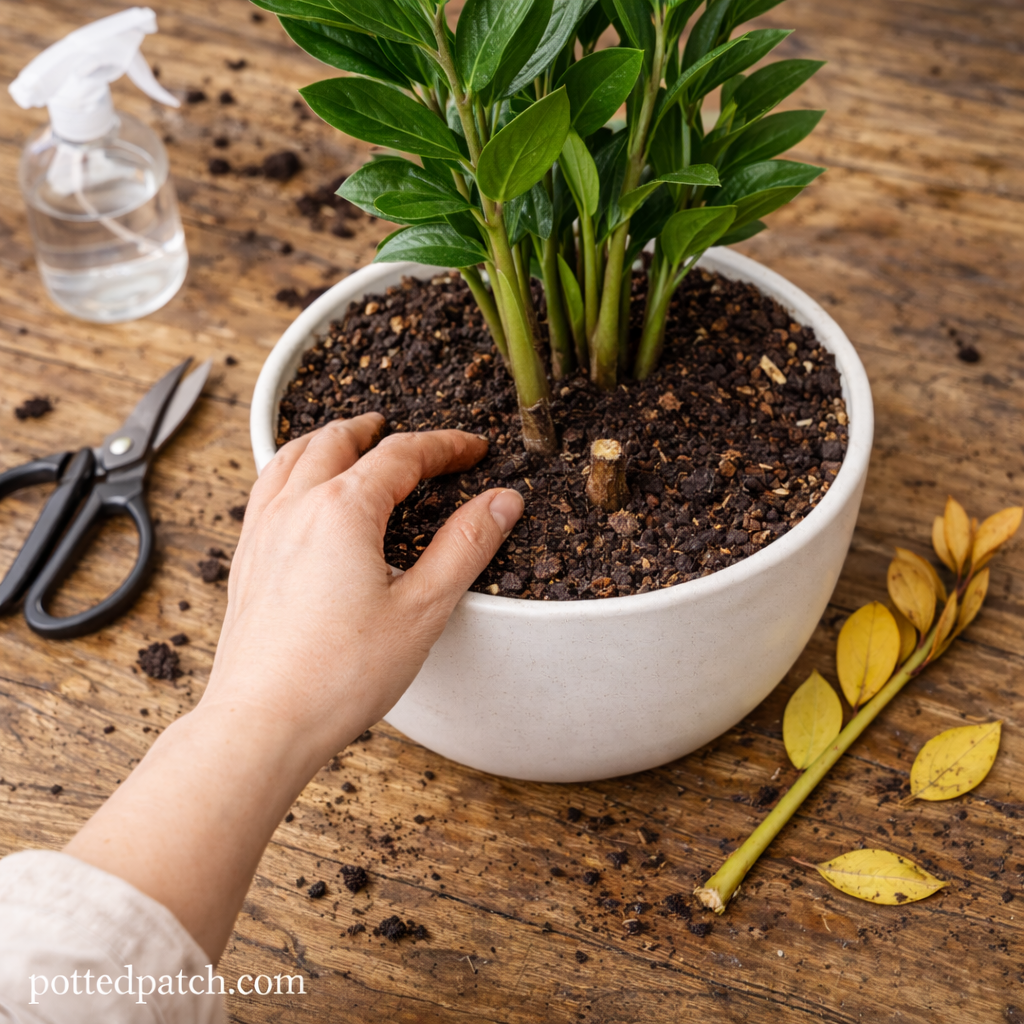
2. Follow the Stem to the Base
Always trace the stem down to the soil line.
ZZ plant stems should be cut:
- As close to the soil surface as possible
- Without digging into the soil or rhizome
Do not cut stems halfway up. Partial cuts leave stubs that won’t regrow and can look messy.
3. Make a Clean Cut
Using sanitized shears:
- Cut in one smooth motion
- Avoid crushing or tearing the stem
- Keep the cut clean and straight
If sap appears, wipe it away with a cloth.
4. Remove No More Than One-Third at a Time
Even though ZZ plants are hardy, over-pruning can stress them.
A safe rule:
- Never remove more than 25–30% of total growth in one session
If your plant needs heavy thinning, spread pruning over multiple weeks.
Pruning for Common ZZ Plant Problems
Pruning Yellow Leaves
Yellow leaves usually indicate:
- Overwatering
- Natural aging of older stems
If a stem is mostly yellow:
- Remove the entire stem at the base
If only the leaf tips are yellow:
- It’s better to remove the whole stem than trim individual leaflets
Pruning Leggy or Leaning Stems
ZZ plants can stretch toward light, causing uneven growth.
To correct this:
- Remove the tallest or most awkward stems at the base
- Rotate the pot regularly after pruning
- Move the plant to brighter indirect light
This encourages balanced new growth over time.
Pruning After Root or Rhizome Issues
If you’ve recently dealt with rot:
- Remove any soft, collapsing stems immediately
- Let the soil dry thoroughly after pruning
- Avoid watering for several days
Healthy rhizomes will eventually push up new growth.
Can You Propagate From Pruned ZZ Stems?
Yes—ZZ plants propagate well from cuttings.
You can propagate using:
- Leaf cuttings
- Whole stem cuttings
Basic Stem Propagation
- Let the cut stem dry for a few hours
- Place it in water or well-draining soil
- Be patient—rooting can take weeks or months
Propagation is slow, but pruning gives you free opportunities to grow new plants.
Aftercare Following Pruning
Pruning doesn’t require complicated aftercare, but a few adjustments help recovery.
After pruning:
- Skip watering for 3–5 days
- Keep the plant in bright, indirect light
- Avoid fertilizing for at least 4 weeks
ZZ plants prefer stability after pruning, not extra attention.
Common Pruning Mistakes to Avoid
- Cutting stems halfway instead of at the base
- Removing healthy stems unnecessarily
- Pruning during winter dormancy
- Using dull or dirty tools
- Watering immediately after heavy pruning
Most pruning problems come from doing too much, not too little.
How Often Should You Prune a ZZ Plant?
For most indoor ZZ plants:
- Light pruning once or twice per year is enough
- Dead or yellow stems can be removed anytime
If your plant stays compact and healthy, you may go years without needing to prune at all.
Final Thoughts
Pruning a ZZ plant is less about routine maintenance and more about intentional care. When done properly, it keeps the plant tidy, prevents overcrowding, and supports long-term health—without demanding much effort.
If you remember one rule, make it this: always cut at the base, and don’t rush the process. ZZ plants reward patience far more than frequent intervention.