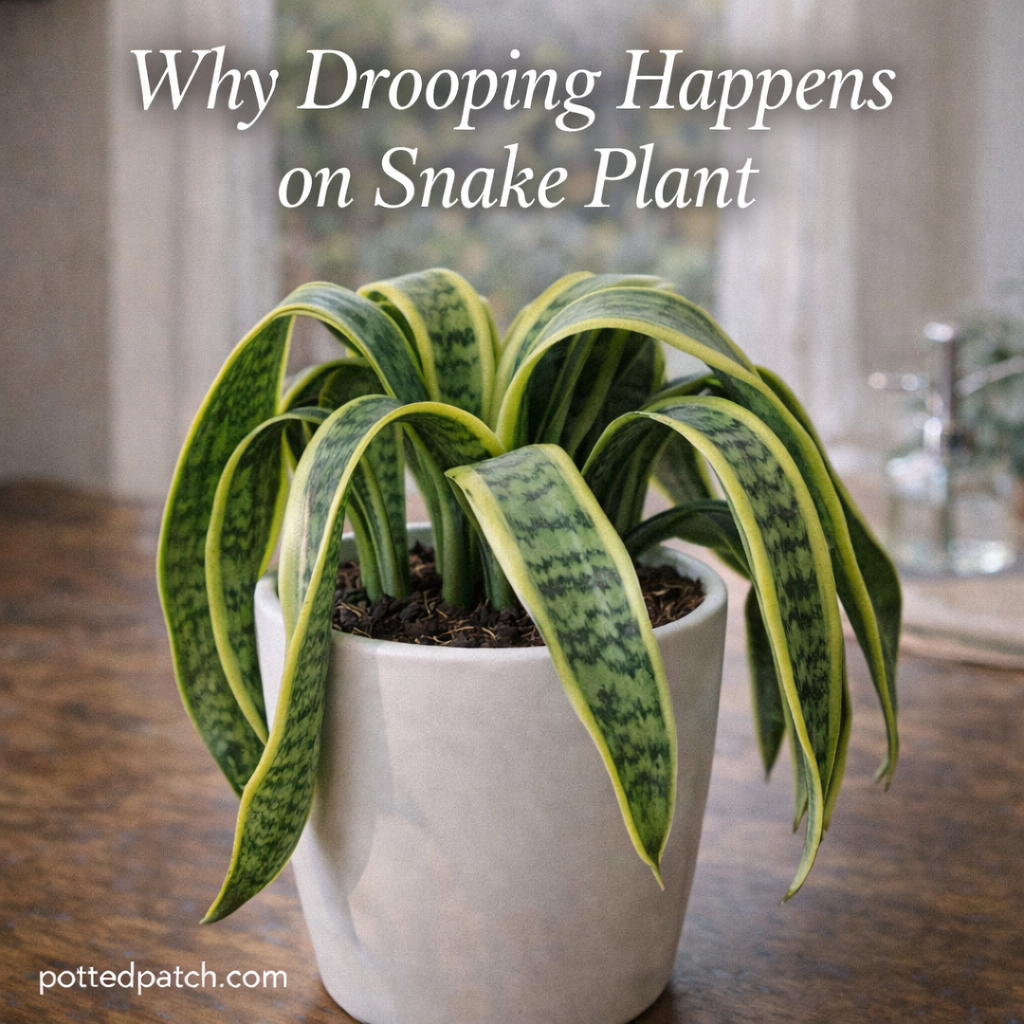
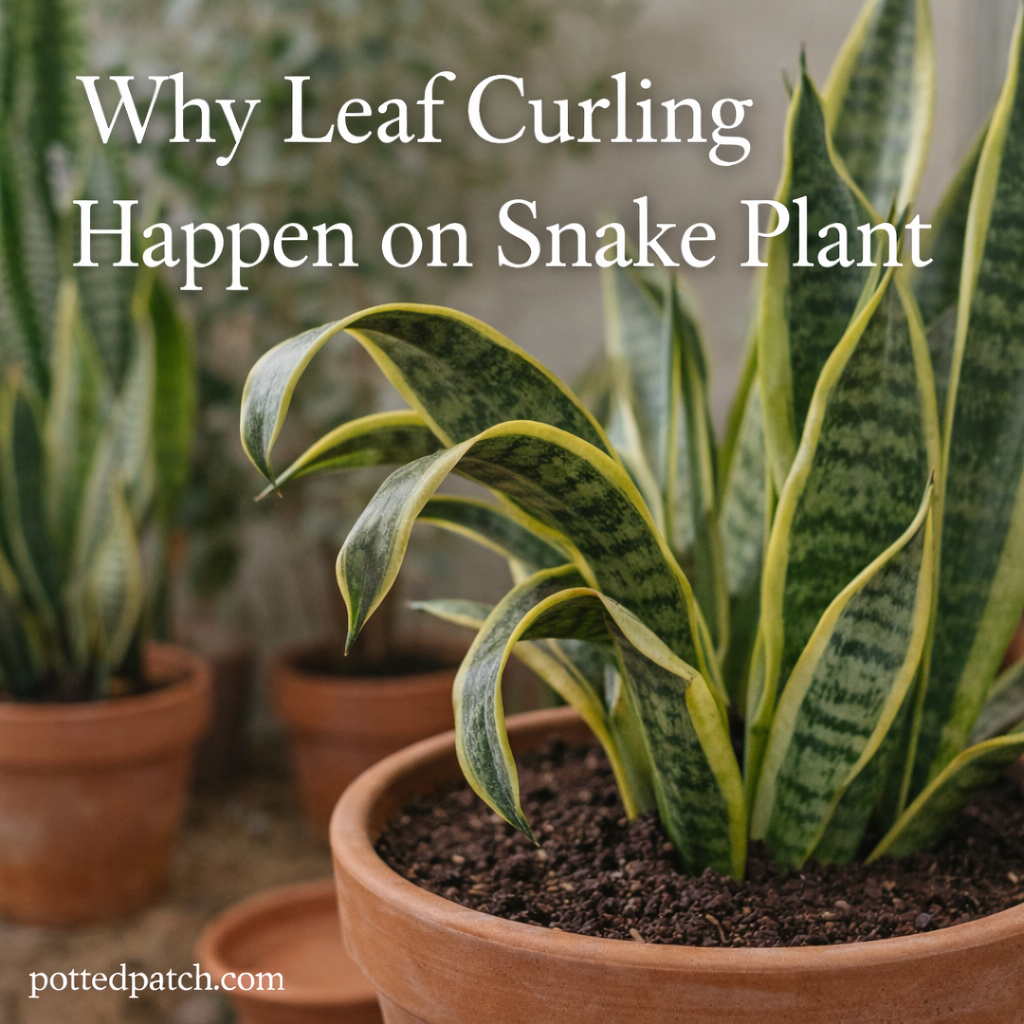
Snake plants are known for their strong, upright leaves, so when those leaves start curling inward, bending, or twisting, it’s a clear sign that something is off. Leaf curling is a stress response, and while it can look alarming, it’s usually easy to fix once you identify the cause.
This guide explains why leaf curling happens on snake plants, how to tell which issue you’re dealing with, and what to do to correct it before lasting damage occurs.
What Leaf Curling Looks Like on a Snake Plant
Leaf curling can show up in a few different ways:
- Leaves curling inward lengthwise
- Edges rolling or folding
- Tips bending or twisting
- Entire leaves curving instead of growing straight
The pattern and firmness of the leaf often point directly to the underlying problem.
Underwatering Is the Most Common Cause
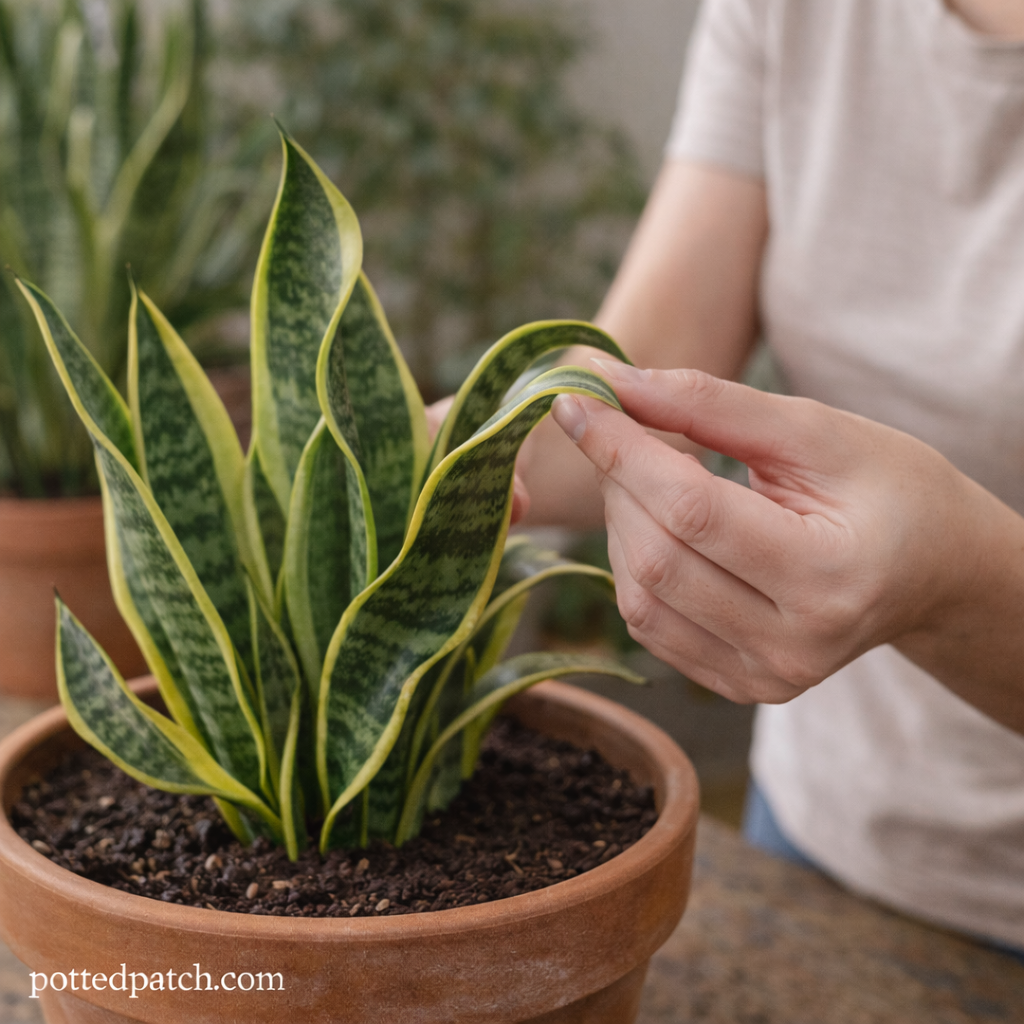
The most frequent reason snake plant leaves curl is lack of water.
Snake plants store water in their leaves, but extended dry periods cause the leaves to lose internal pressure. Curling helps the plant reduce surface area and conserve moisture.
Signs Curling Is Caused by Underwatering
- Leaves feel thin or wrinkled
- Soil is completely dry for long periods
- Curling appears gradually
- Leaves remain firm, not mushy
How to Fix It
- Water deeply until excess drains out
- Let soil dry completely before watering again
- Resume a consistent watering rhythm
Leaves may not fully uncurl, but new growth should appear normal.
Overwatering and Root Stress
While less common, overwatering can also cause curling—usually paired with other symptoms.
When roots stay wet too long, they can’t absorb water properly. Even though the soil is wet, the leaves behave as if they’re dehydrated.
Signs Overwatering Is the Issue
- Curling combined with drooping
- Soft or mushy leaf bases
- Soil staying wet for days
- Yellowing or translucent patches
What to Do
- Stop watering immediately
- Allow soil to dry out fully
- Check roots if curling worsens
- Repot into fast-draining soil if needed
Low Humidity and Dry Indoor Air
Snake plants tolerate dry air, but extreme dryness—especially in winter—can contribute to curling.
When Humidity Plays a Role
- Curling appears during winter months
- Plant is near heating vents
- Leaf edges feel dry or brittle
How to Improve Conditions
- Move plant away from heat sources
- Group plants together
- Avoid placing directly under vents
Humidifiers are usually unnecessary unless conditions are extreme.
Excessive Direct Sunlight
Snake plants prefer indirect light. Too much harsh sun can stress the leaves, causing them to curl as a protective response.
Light-Related Curling Signs
- Curling paired with faded or yellowing areas
- Crispy patches on leaf edges
- Curling appears on the sun-facing side
Fixing Light Stress
- Move plant to bright, indirect light
- Use sheer curtains to filter sun
- Rotate plant for even exposure
Temperature Stress
Sudden temperature changes can also trigger curling.
Snake plants dislike:
- Cold drafts
- Temperatures below 55°F
- Hot air blowing directly on leaves
What to Adjust
- Keep temperatures between 60–80°F
- Move away from doors, windows, and vents
- Avoid placing near appliances
Once temperature stabilizes, new growth should return to normal.
Root Binding and Soil Compaction
If a snake plant becomes root bound or soil is heavily compacted, water movement becomes uneven, leading to curling.
Signs This Is the Problem
- Curling despite correct watering
- Water runs straight through or pools on top
- Roots visible through drainage holes
Solution
- Repot into a slightly larger container
- Use well-draining soil
- Loosen compacted roots gently
Pests (Rare but Possible)
Pests are uncommon on snake plants, but infestations can cause leaf distortion.
Check for:
- Fine webbing (spider mites)
- Sticky residue
- Speckled or mottled leaf patterns
If pests are present, isolate the plant and treat promptly.
Will Curled Leaves Straighten Again?
In many cases:
- Mild curling may partially correct
- Severely curled leaves often stay curled
- New growth is the best indicator of recovery
Focus on improving conditions rather than forcing old leaves to change.
How to Prevent Leaf Curling in the Future
Prevention comes down to consistency.
- Water only when soil is fully dry
- Use fast-draining soil and pots with drainage
- Provide bright, indirect light
- Avoid temperature extremes
Snake plants thrive when left alone with steady care.
Final Thoughts
Leaf curling on a snake plant is usually a sign of water imbalance, light stress, or environmental changes—not a serious disease. By identifying whether the issue is underwatering, overwatering, light, or temperature-related, you can correct it quickly and prevent further stress.
Pay close attention to new growth. When conditions are right, snake plants bounce back quietly and reliably.