ZZ plants (Zamioculcas zamiifolia) are slow-growing, low-maintenance houseplants, which means they don’t need frequent repotting. In fact, repotting too often can do more harm than good. Knowing when to repot—and how to do it gently—is key to keeping your ZZ plant healthy and stress-free.
This guide covers the clear signs it’s time to repot, the best timing, and a step-by-step method that protects roots and encourages steady growth.
How Often ZZ Plants Need Repotting
ZZ plants prefer to be slightly snug in their pots. On average, most ZZ plants only need repotting every 2–3 years.
Younger plants may need repotting a bit sooner, while mature plants can stay happy in the same container for longer periods.
Repotting too frequently can lead to:
- Root stress
- Slower growth
- Increased risk of overwatering
Less is usually more with ZZ plants.
Signs It’s Time to Repot a ZZ Plant
Rather than relying on a strict schedule, look for these physical cues.
Clear Repotting Signs
- Roots growing out of drainage holes
- Rhizomes pushing up through the soil surface
- Soil drying out much faster than usual
- Pot becoming misshapen or cracking
- Plant feels top-heavy or unstable
If you notice one or more of these signs, your ZZ plant is likely running out of space.
Best Time of Year to Repot a ZZ Plant
Timing affects how quickly your plant recovers.
Ideal Repotting Window
- Spring to early summer
- When the plant is actively growing
When to Avoid Repotting
- Fall and winter
- During periods of stress (drooping, yellowing, root rot recovery)
Repotting during active growth helps the plant re-establish roots more easily.
Choosing the Right Pot Size
Pot size is one of the most important repotting decisions.
Pot Size Guidelines
- Choose a pot only 1–2 inches wider than the current one
- Avoid oversized containers
- Always use pots with drainage holes
Oversized pots hold excess moisture, which increases the risk of root rot.
Best Soil for Repotting a ZZ Plant
ZZ plants need fast-draining, airy soil.
Ideal Soil Characteristics
- Loose and well-draining
- Light moisture retention
- No heavy compaction
A simple mix works well:
- Indoor potting soil
- Perlite or pumice for drainage
- Optional orchid bark or coarse sand
Avoid garden soil or moisture-retaining mixes.
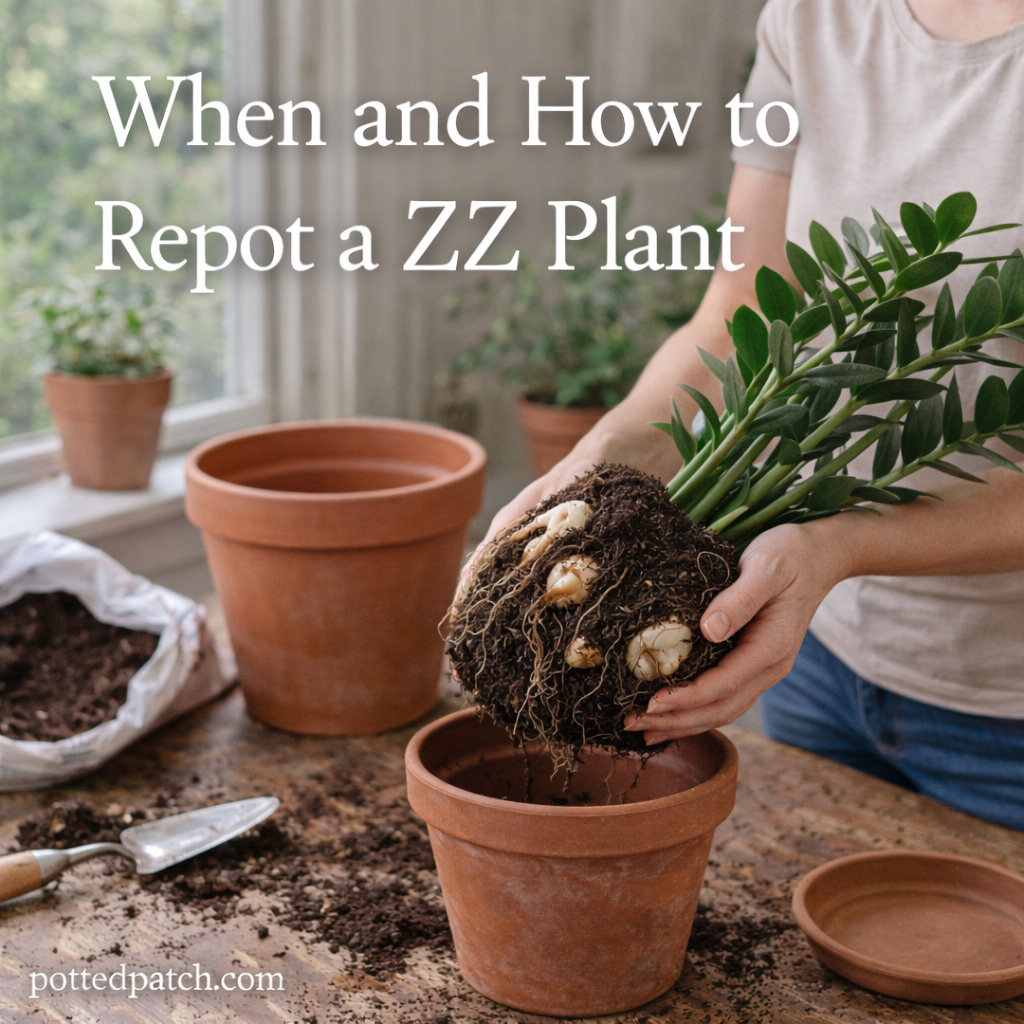
Step-by-Step: How to Repot a ZZ Plant
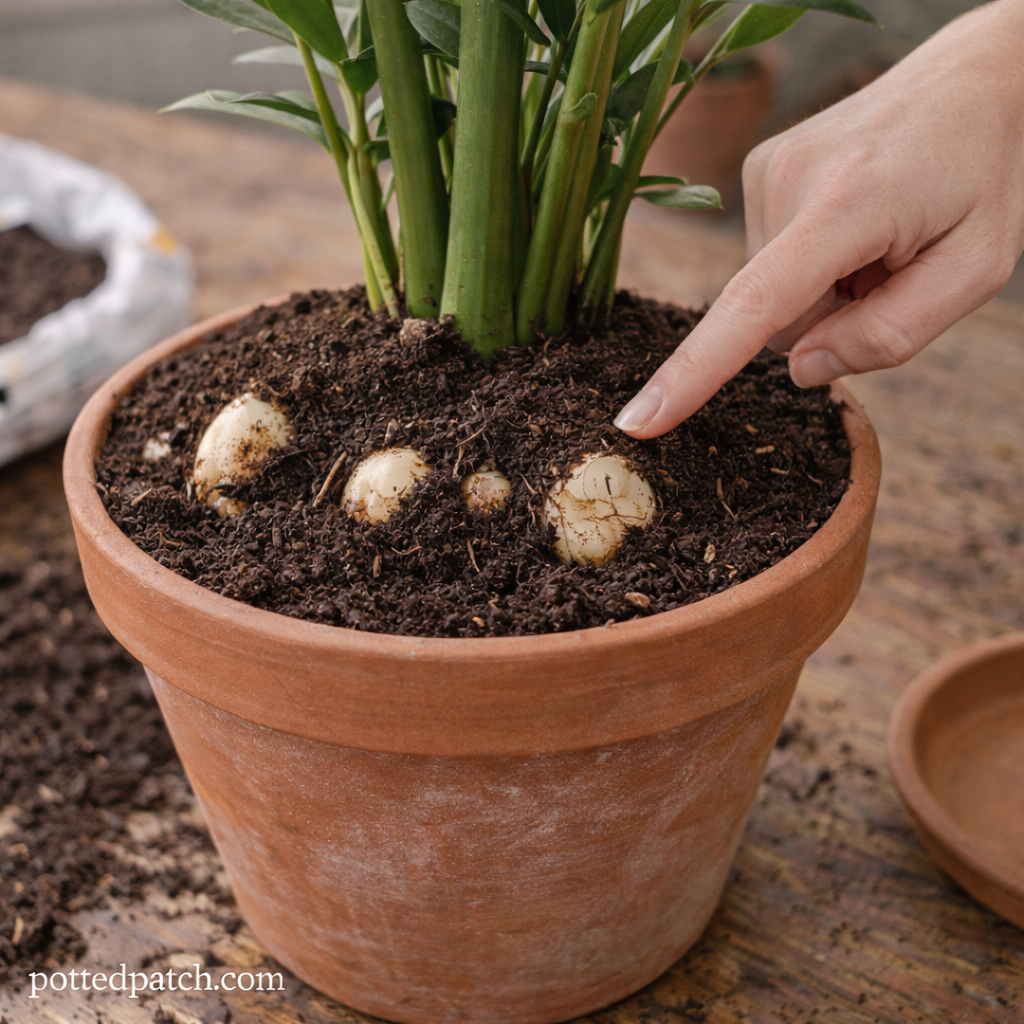
Repotting doesn’t need to be aggressive. Gentle handling is best.
Repotting Instructions
- Water the plant lightly 1–2 days before repotting
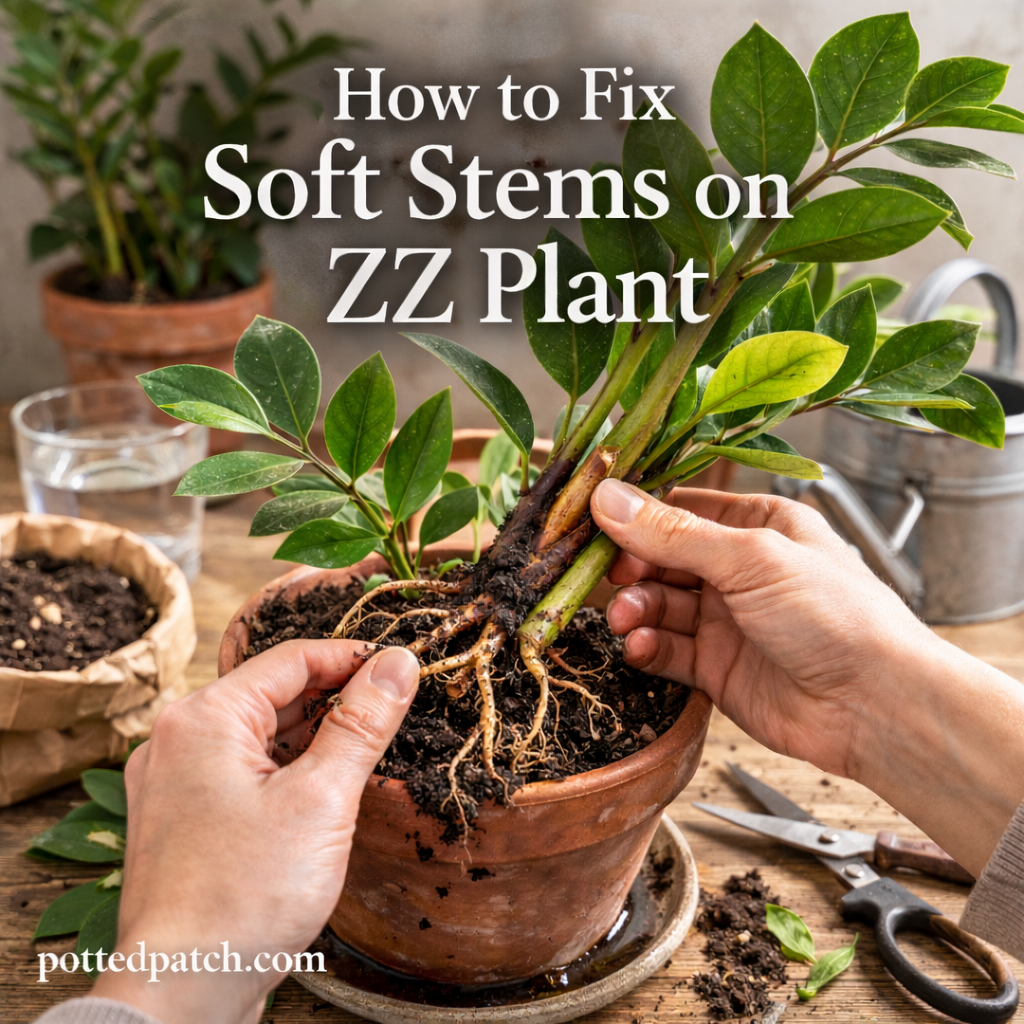
- Gently slide the plant out of its pot
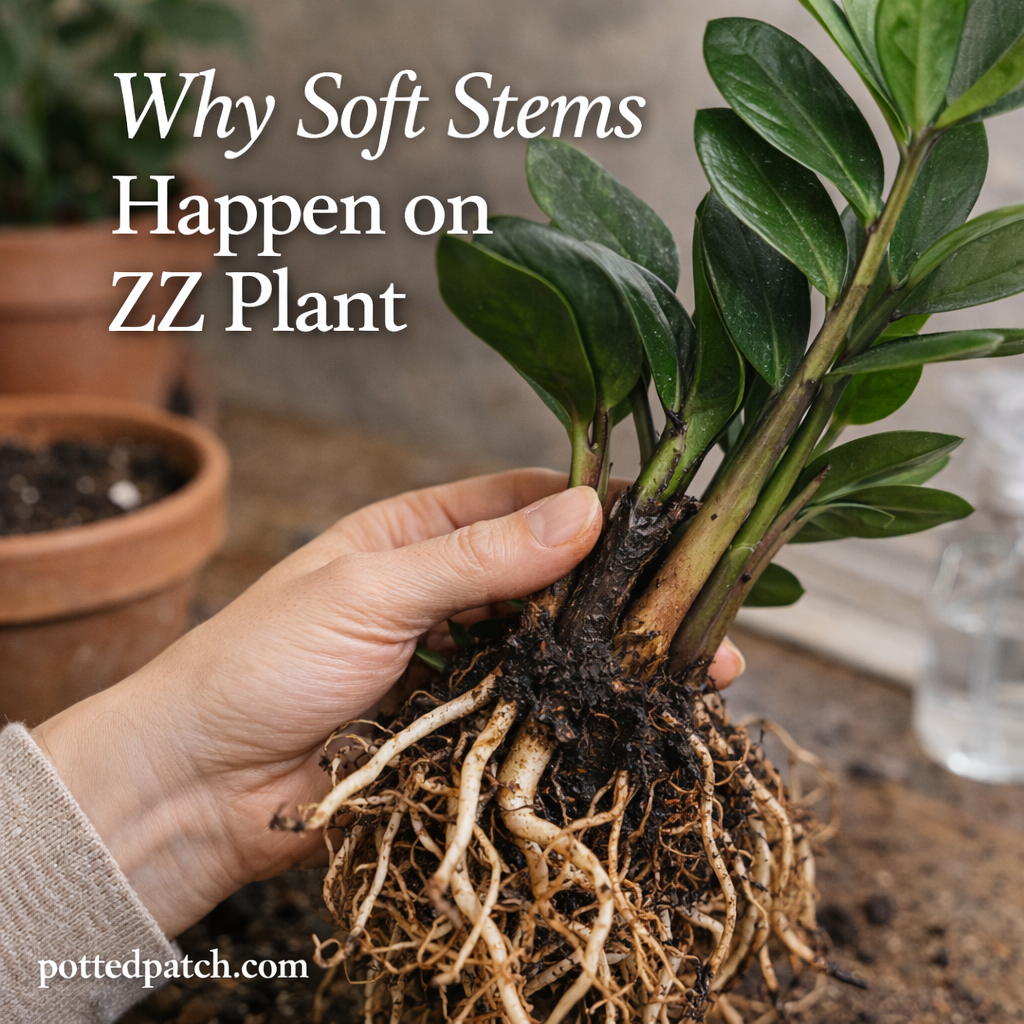
- Loosen circling roots with your fingers
- Inspect roots and rhizomes for rot or damage
- Trim only unhealthy roots if necessary
- Place the plant in the new pot with fresh soil
- Fill around the root ball without compacting
- Water lightly after repotting
Do not bury the rhizomes too deeply—they should sit just below the soil surface.
Should You Divide a ZZ Plant When Repotting?
Division is optional and should only be done if needed.
When Division Makes Sense
- Plant is severely crowded
- Multiple large rhizomes are tightly packed
- You want to propagate new plants
If dividing, separate rhizomes carefully and allow any cut areas to dry briefly before repotting.
Aftercare: What to Do After Repotting
Post-repot care helps prevent stress.
After Repotting Tips
- Place the plant back in its usual light
- Avoid fertilizing for 6–8 weeks
- Water sparingly until new growth appears
- Expect temporary slowed growth
ZZ plants often pause growth while adjusting—this is normal.
Common Repotting Mistakes to Avoid
Avoid these common issues to keep your plant healthy.
- Repotting too often
- Using pots without drainage
- Choosing a much larger container
- Compacting soil too tightly
- Fertilizing immediately after repotting
Gentle, minimal changes work best for ZZ plants.
When Repotting Isn’t Necessary
Sometimes a ZZ plant looks crowded but is still healthy.
Repotting may not be needed if:
- Leaves are firm and upright
- Growth is steady
- Soil drains well
- Roots aren’t escaping the pot
In these cases, waiting another year is often the best choice.
Final Thoughts
Knowing when and how to repot a ZZ plant helps you avoid unnecessary stress while supporting long-term health. By waiting for clear signs, choosing the right pot and soil, and handling roots gently, your ZZ plant can continue thriving for years with minimal intervention.
When in doubt, wait a little longer—ZZ plants reward patience. 🌿