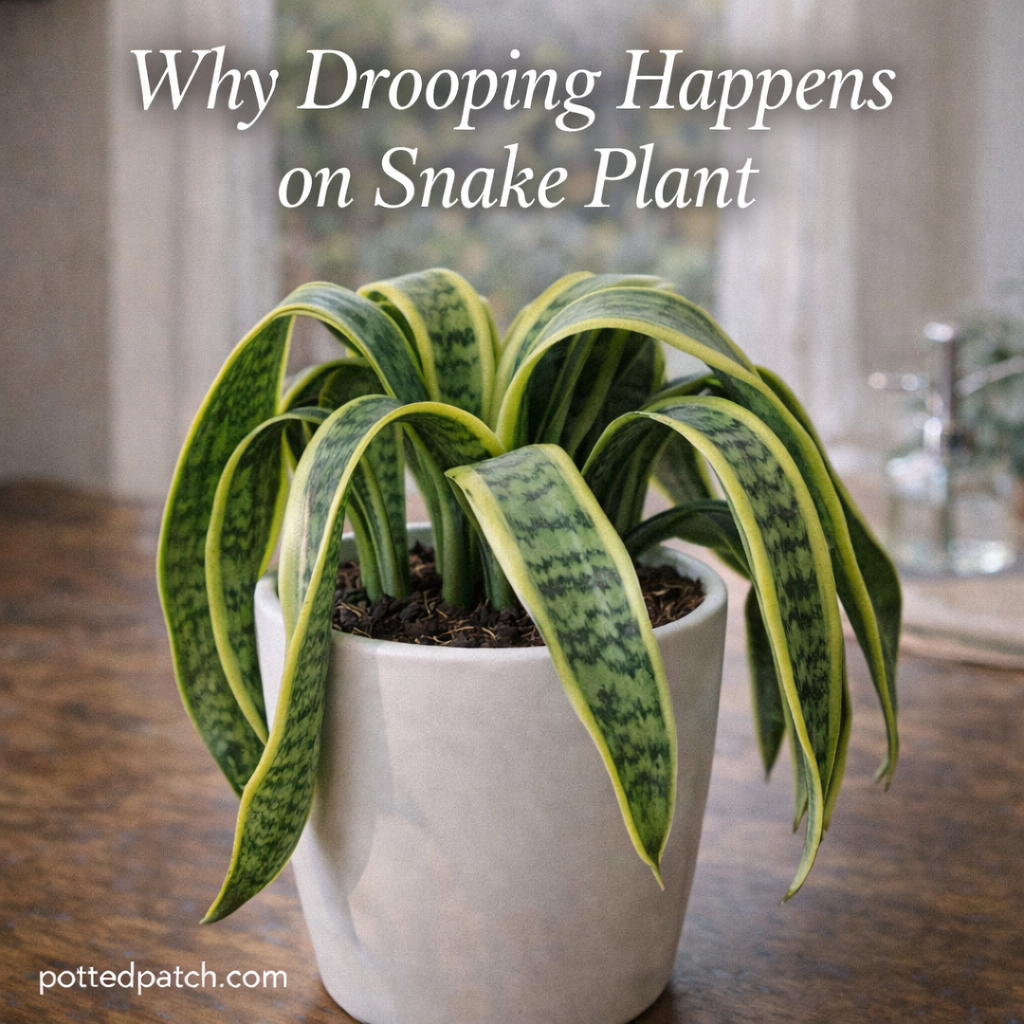
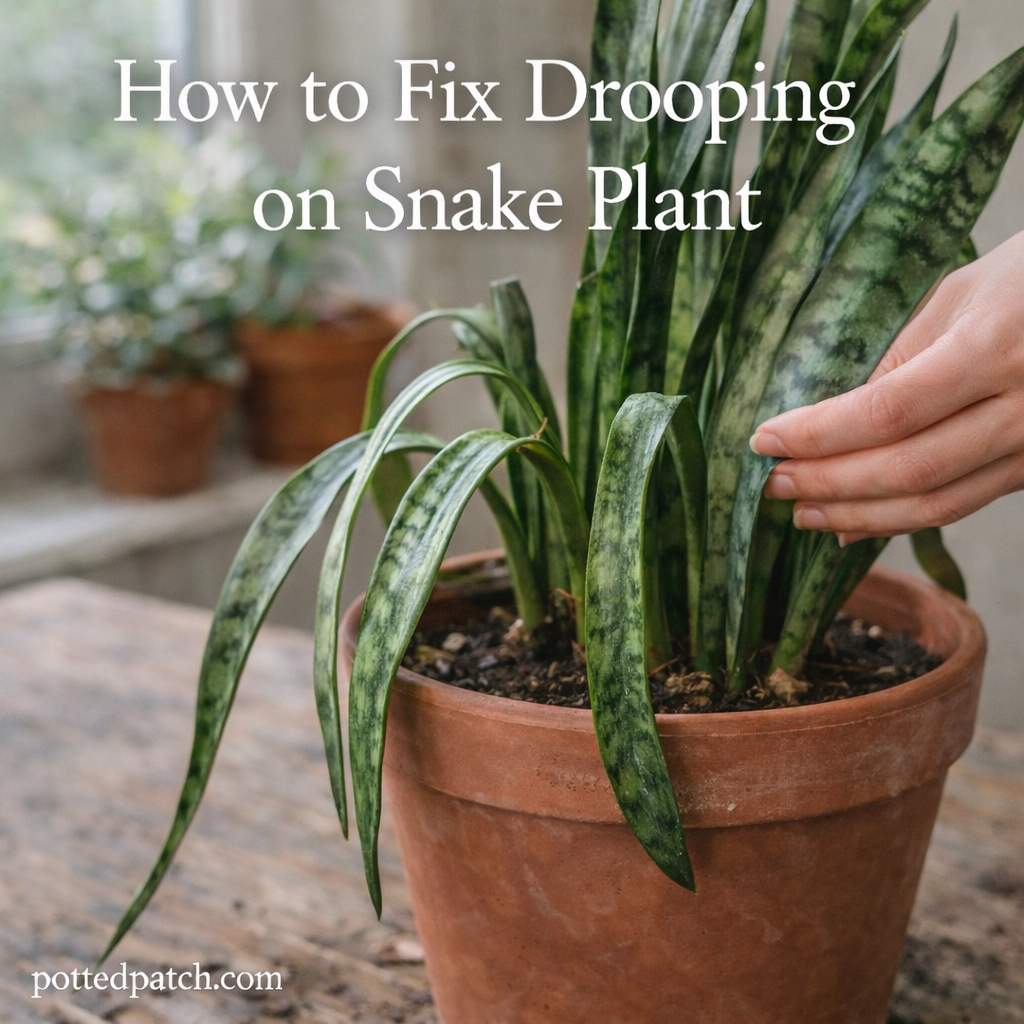
Snake plants are known for their stiff, upright leaves—so when those leaves start drooping, it’s a clear sign something isn’t right. While snake plants are tough, drooping usually means a care issue that needs attention sooner rather than later.
The good news is that drooping snake plants are almost always fixable. This guide walks through the most common causes, how to diagnose the problem, and the exact steps to help your plant recover.
Why Snake Plant Leaves Droop
Drooping happens when the leaves lose their internal structure or root support. This is usually linked to water, soil, light, or root health.
Common causes include:
- Overwatering
- Root rot
- Poor drainage or compacted soil
- Low light over long periods
- Cold stress or temperature swings
Identifying the correct cause is key to fixing the issue effectively.
Check for Overwatering First
Overwatering is the most common reason snake plants droop.
Signs of Overwatering
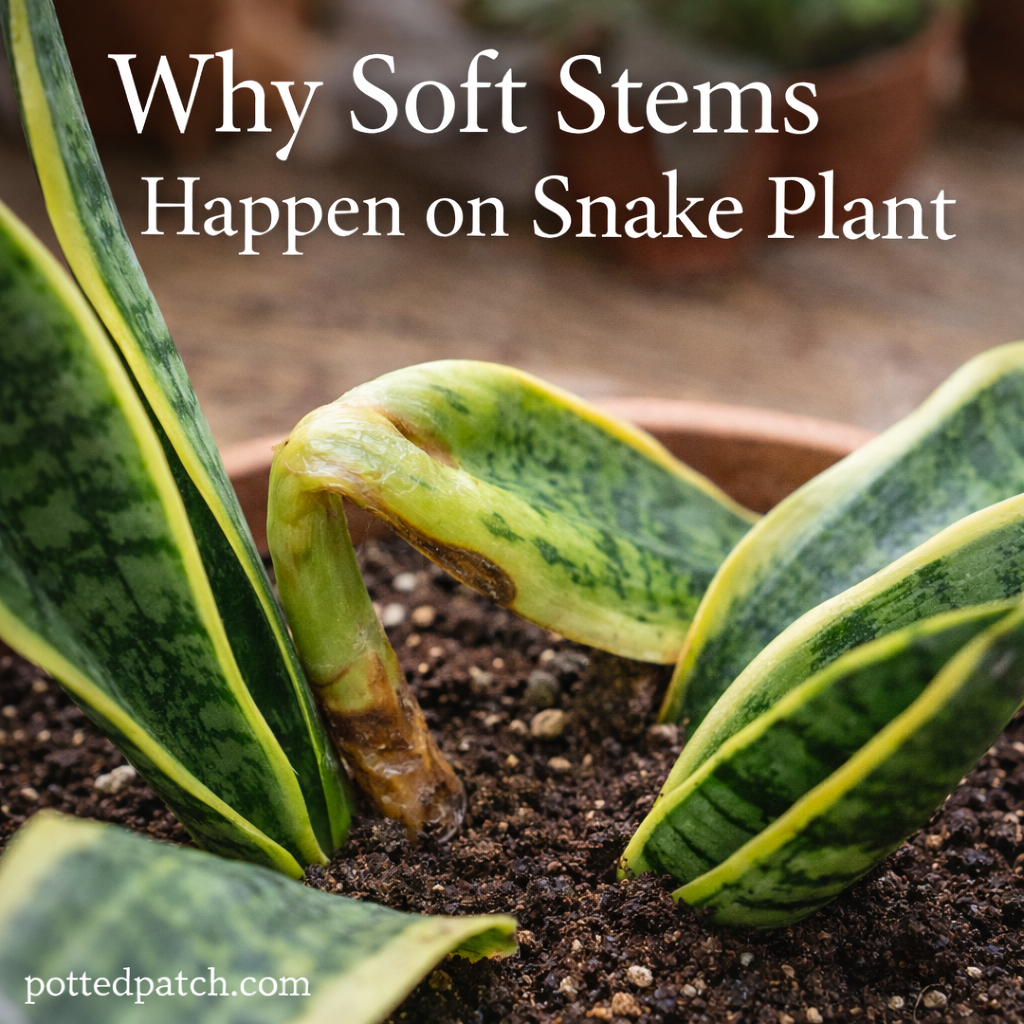
- Soft or mushy leaves near the base
- Leaves bending outward instead of standing tall
- Soil that stays wet for several days
- Foul smell coming from the pot
Snake plants store water in their leaves and roots, so excess moisture quickly causes problems.
How to Fix Overwatering
- Stop watering immediately
- Allow soil to dry out completely
- Remove the plant from its pot if drooping continues
- Inspect roots for rot
If roots are black, mushy, or smelly, trim the damaged sections before repotting.
Inspect the Roots and Soil
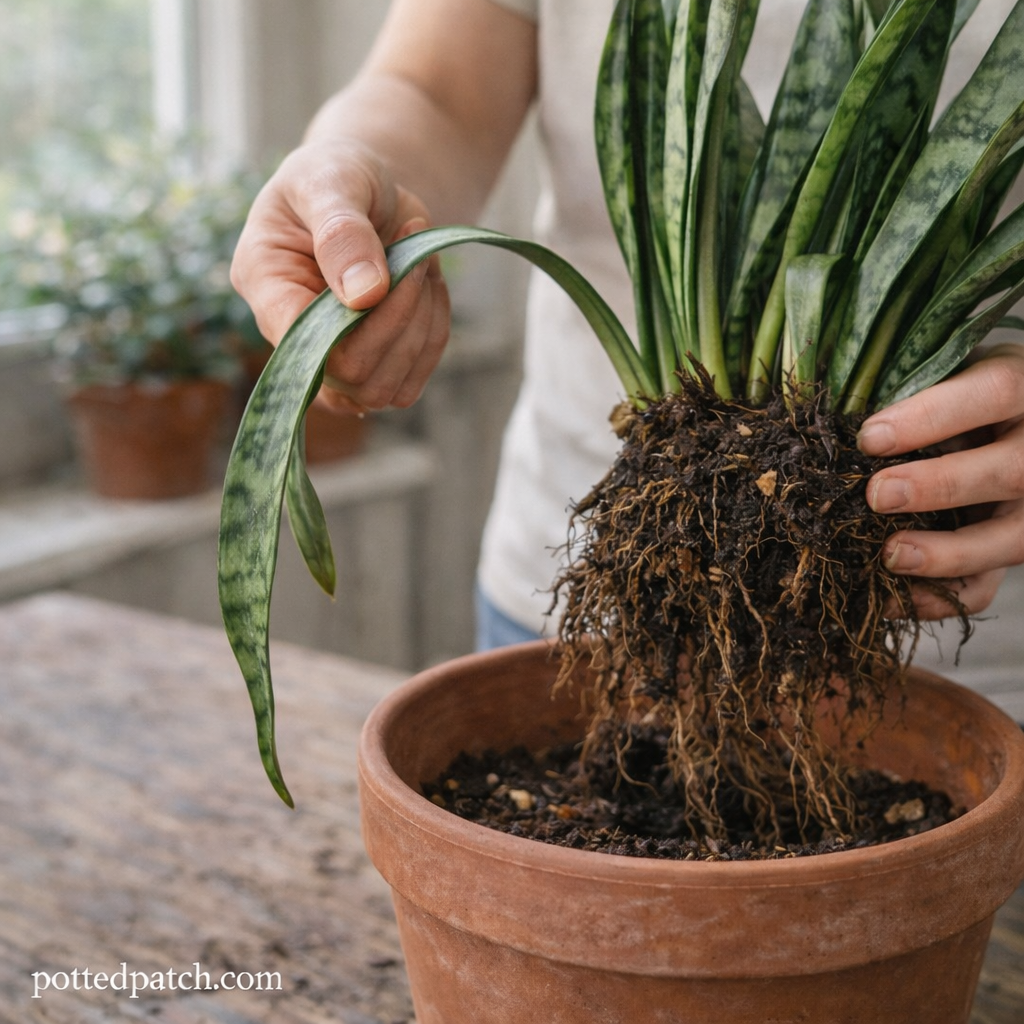
Healthy roots are essential for upright growth.
What Healthy Roots Look Like
- Firm and light-colored
- No foul odor
- Evenly spread through the soil
Fixing Soil-Related Issues
If soil is compacted or heavy:
- Repot using fast-draining soil
- Use a pot with drainage holes
- Remove old, waterlogged soil completely
A cactus or succulent-style mix works well for snake plants.
Make Sure the Plant Gets Enough Light
Snake plants tolerate low light, but long-term low light can weaken leaves.
Light-Related Drooping Signs
- Leaves leaning toward a light source
- Slower growth
- Pale or dull leaf color
Light Adjustment Tips
- Move the plant to bright, indirect light
- Avoid sudden full sun exposure
- Rotate the plant every few weeks
Improved light helps leaves regain strength over time.
Check for Cold Stress
Snake plants dislike cold temperatures and drafts.
Cold stress can cause:
- Sudden drooping
- Soft or collapsed leaves
- Leaf damage near windows
How to Fix Cold Stress
- Keep temperatures above 60°F
- Move plant away from cold windows and vents
- Avoid placing near exterior doors
Once warmth is restored, new growth usually appears stronger.
Address Severe Drooping or Fallen Leaves
In advanced cases, some leaves may not recover fully.
What to Do with Severely Drooped Leaves
- Trim leaves that are permanently bent or mushy
- Focus on saving healthy sections
- Allow the plant to redirect energy to new growth
Cutting damaged leaves does not harm the plant and often improves appearance.
Support the Plant While It Recovers
While healing, temporary support can help.
- Gently tie leaves upright with soft ties
- Use a stake if necessary
- Remove supports once new growth strengthens
This prevents further bending while roots recover.
Prevent Future Drooping
Once fixed, prevention keeps the problem from returning.
Snake Plant Care Tips
- Water only when soil is completely dry
- Use well-draining soil and pots with drainage
- Provide moderate to bright indirect light
- Keep away from cold drafts
Simple consistency goes a long way with snake plants.
When Drooping Is Normal
Occasionally, mild leaning can happen due to:
- New leaf growth pushing older leaves outward
- Natural aging of outer leaves
If leaves are firm and healthy, slight leaning isn’t a concern.
Final Thoughts
Drooping in a snake plant is usually a care signal—not a death sentence. By checking watering habits, improving soil drainage, adjusting light, and addressing temperature issues, most plants recover well.
With a few corrections and some patience, your snake plant can return to its signature upright form and continue thriving indoors. 🌱