Snake plants are known for their stiff, upright leaves, so when those leaves start bending, flopping, or collapsing, it’s a clear sign something isn’t right. Drooping doesn’t happen randomly—it’s almost always linked to watering, roots, light, or environmental stress.
This guide explains why drooping happens on snake plants, how to identify the exact cause, and what to do to fix it.
What Drooping Looks Like on a Snake Plant
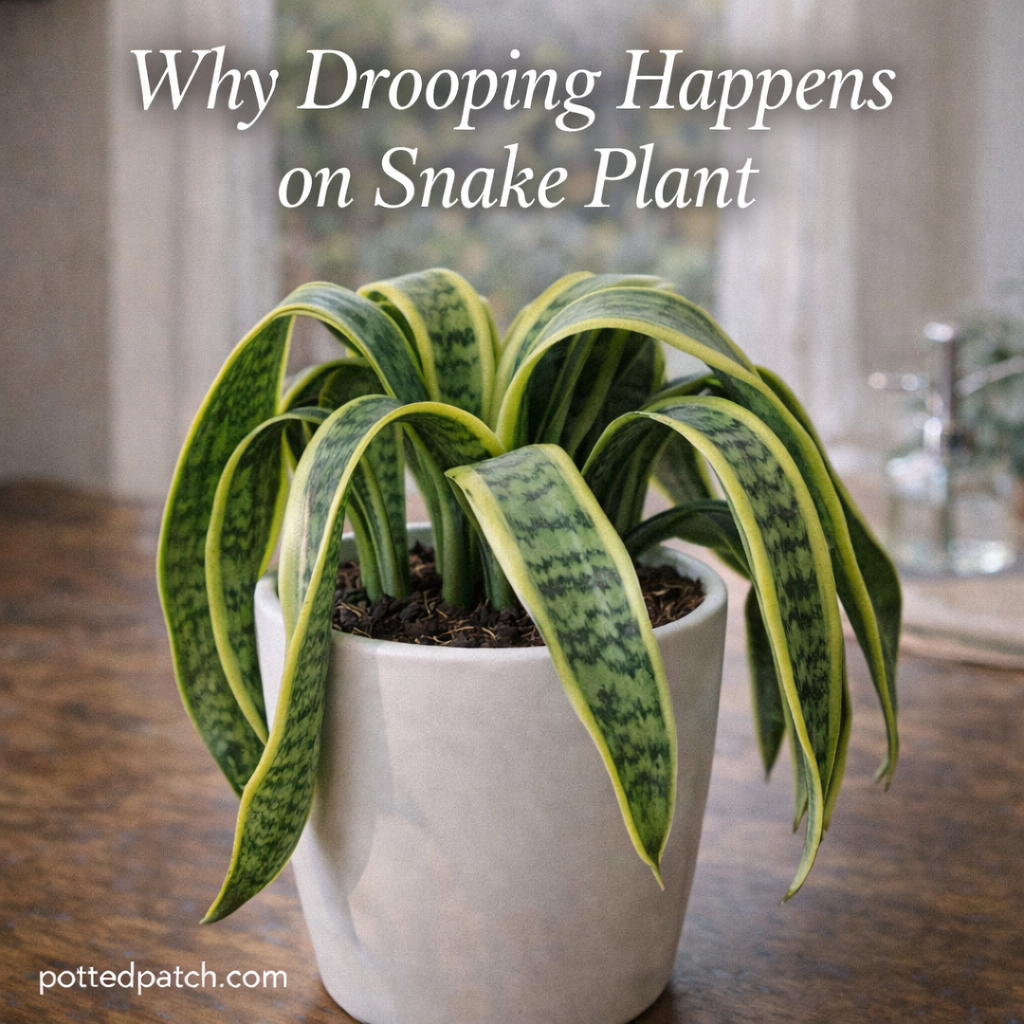
Drooping can appear in a few different ways:
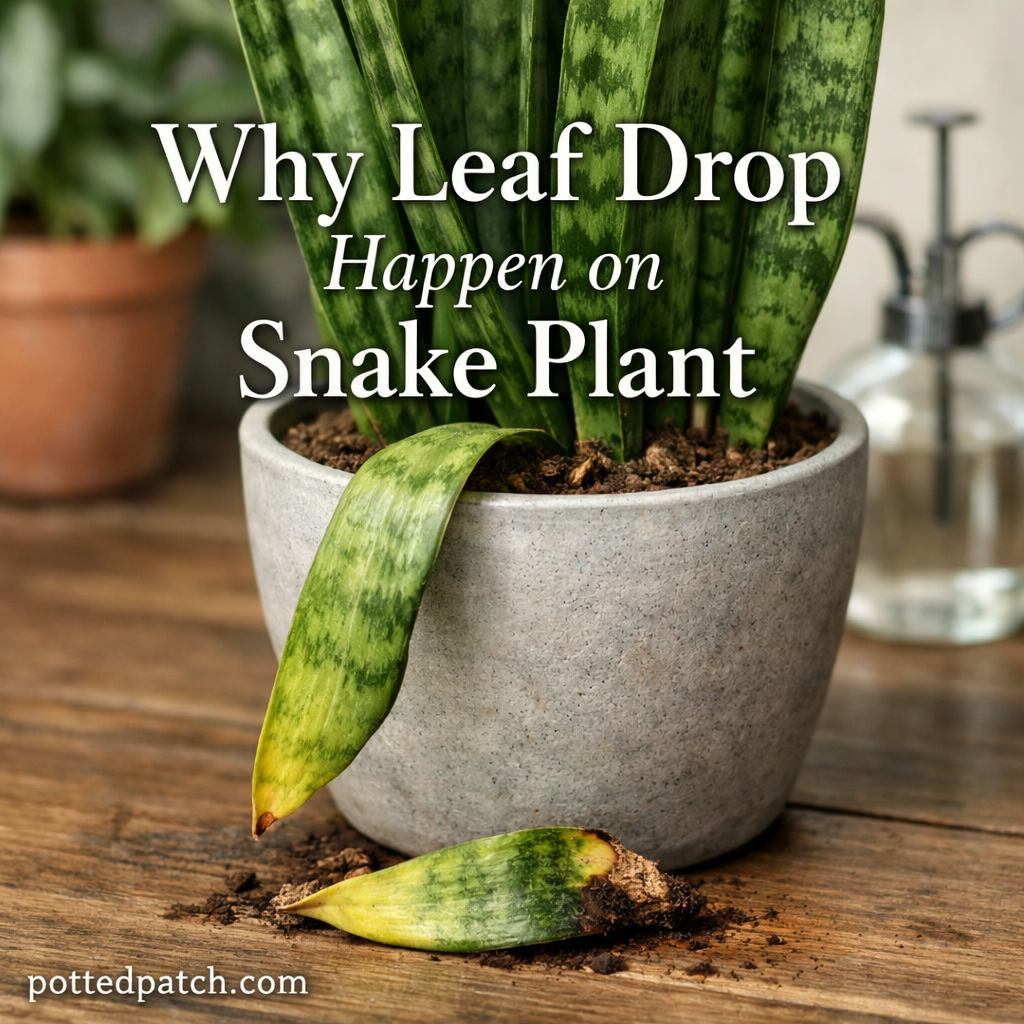
- Leaves bending outward instead of standing upright
- Leaves folding over at the base
- Entire sections leaning or falling to one side
- Soft, weak leaves that won’t hold their shape
The pattern of drooping often reveals the underlying issue.
Overwatering Is the Most Common Cause
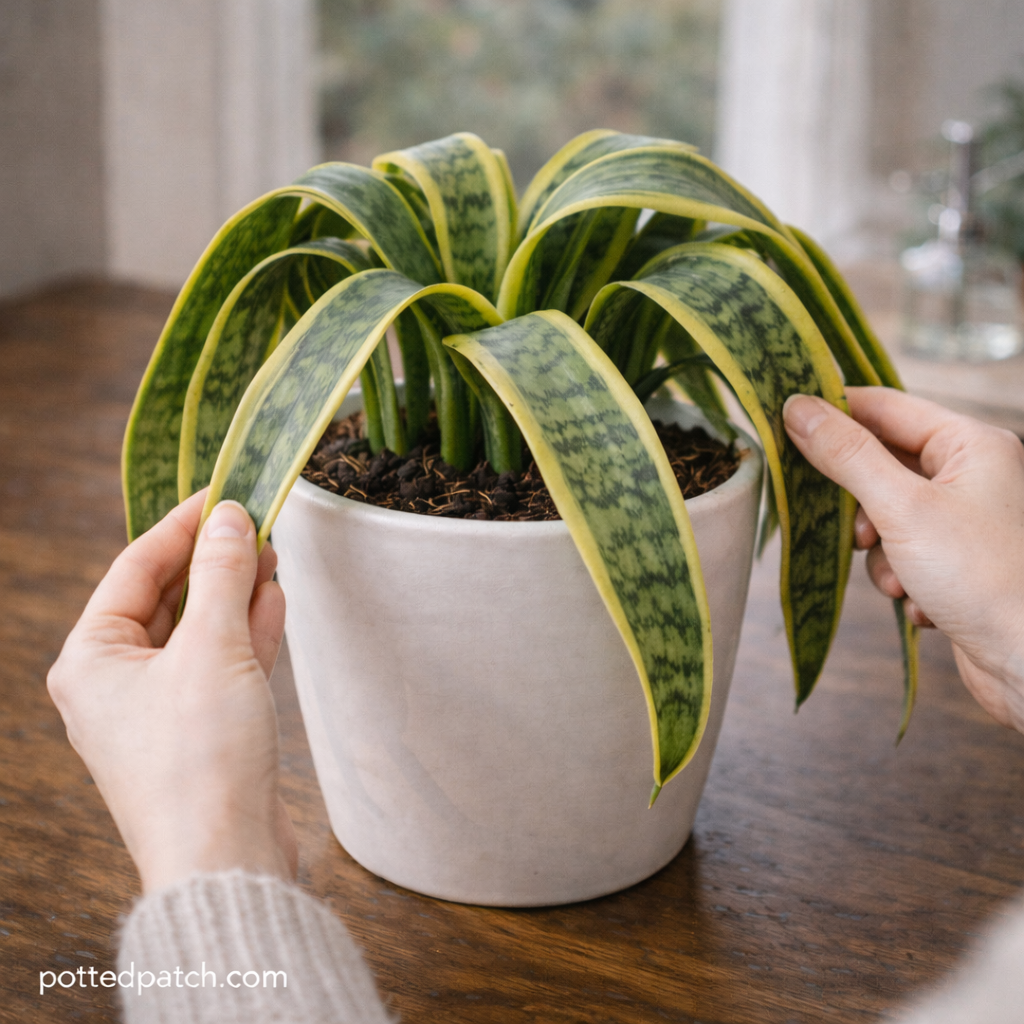
Overwatering is the number one reason snake plants droop.
Snake plants store water in their leaves and rhizomes. When soil stays wet too long, roots lose oxygen and begin to rot, preventing the plant from supporting itself.
Signs Overwatering Is Causing Drooping
- Soil feels wet days after watering
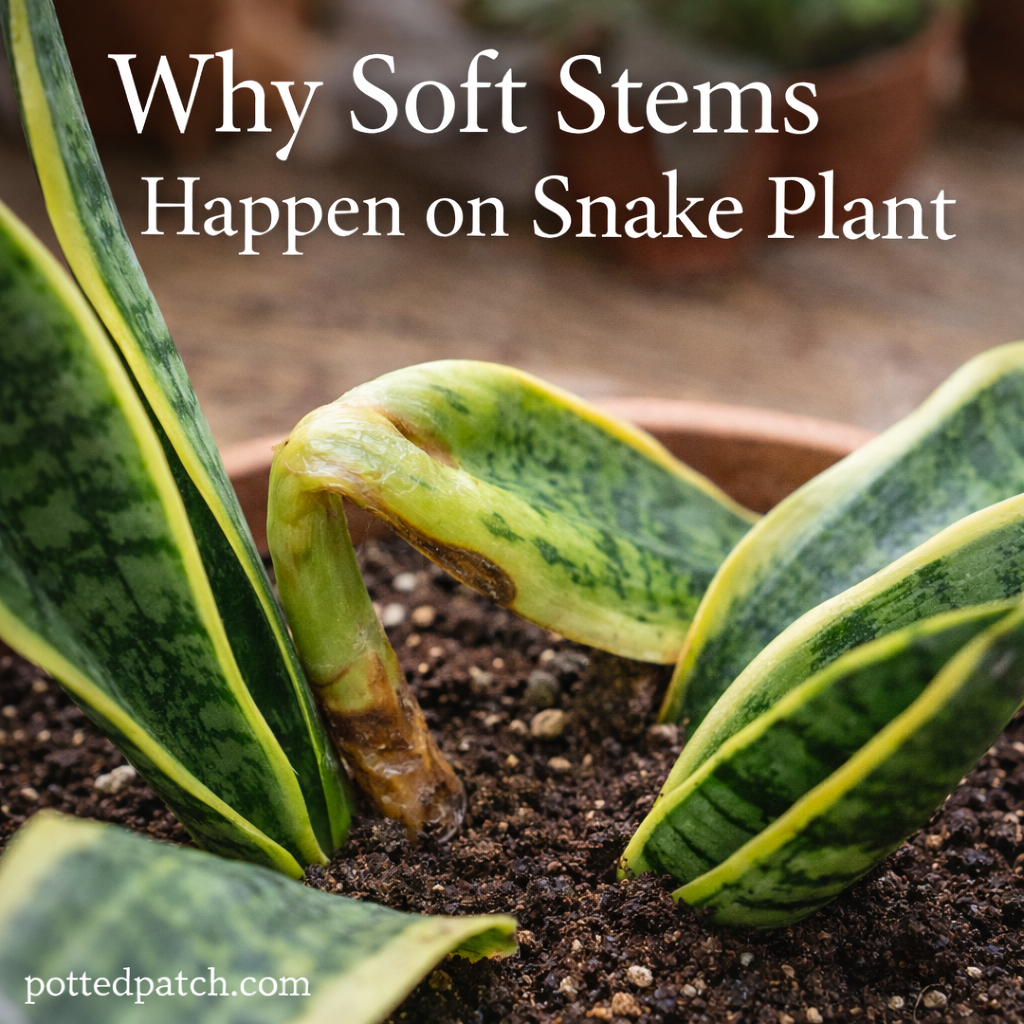
- Leaves feel soft or mushy near the base
- Yellowing near the bottom of the plant
- Drooping combined with a foul soil smell
How to Fix It
- Stop watering immediately
- Remove the plant from its pot
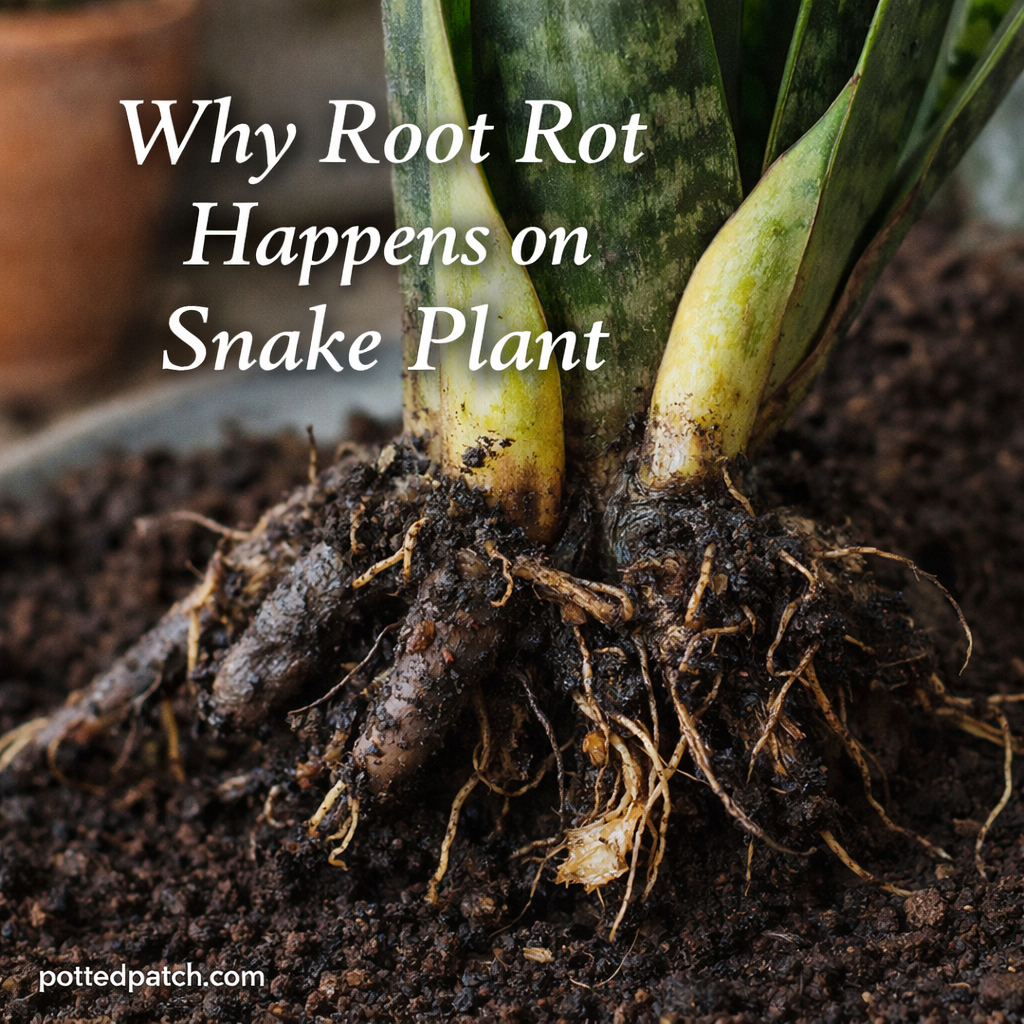
- Trim away black or mushy roots
- Repot in dry, well-draining soil
- Use a pot with drainage holes
- Wait 7–10 days before watering again
Early action can save the plant.
Root Rot and Structural Collapse
Drooping is often a symptom of advanced root rot.
When roots can’t absorb water properly, leaves lose internal pressure and collapse—even if the soil is wet.
Root Rot Warning Signs
- Severe drooping despite moist soil
- Leaves falling outward suddenly
- Strong odor from the pot
Root rot requires repotting and soil replacement to correct.
Underwatering Can Also Cause Drooping
Although less common, extreme underwatering can make leaves droop due to dehydration.
Signs of Underwatering
- Soil completely dry and pulling away from the pot
- Wrinkled or curling leaves
- Leaves bending inward rather than outward
Fix
- Water deeply until excess drains out
- Allow soil to rehydrate fully
- Resume watering only when soil is completely dry
Snake plants recover quickly once properly watered.
Poor Drainage Makes Drooping Worse
Even correct watering won’t help if water can’t escape.
Drainage problems include:
- Pots without drainage holes
- Heavy, compacted soil
- Standing water in saucers
Without proper drainage, roots suffocate and leaves lose strength.
Low Light Combined With Overwatering
Snake plants tolerate low light, but low light slows water usage.
When low light and frequent watering combine:
- Soil stays wet longer
- Root rot develops more easily
- Leaves gradually droop and weaken
Fix
- Reduce watering frequency
- Move the plant to brighter, indirect light
- Allow soil to dry completely between waterings
Temperature Stress and Drooping
Snake plants are sensitive to cold.
Temperature Issues That Cause Drooping
- Exposure below 55°F (13°C)
- Cold drafts near windows or doors
- Sudden temperature changes
Cold damage weakens leaf structure and can cause permanent drooping.
Can Drooping Leaves Stand Back Up?
It depends on the cause and severity.
- Mild dehydration: leaves often recover
- Early overwatering: partial recovery possible
- Severe rot or cold damage: leaves usually won’t straighten
Once the plant stabilizes, new growth will emerge upright even if old leaves don’t recover.
Should You Stake Drooping Snake Plant Leaves?
No. Staking hides the problem instead of fixing it.
Correcting watering, drainage, and environment is the only lasting solution. Stakes can be removed once new, healthy growth appears.
Preventing Drooping in the Future
To keep snake plant leaves upright:
- Water only when soil is fully dry
- Always use pots with drainage holes
- Choose fast-draining soil
- Provide bright, indirect light when possible
- Protect from cold drafts
- Reduce watering in winter
Consistency is more important than frequent care.
Final Thoughts
Drooping in snake plants is a stress signal, not a mystery. In most cases, it’s caused by overwatering, root damage, or poor drainage—issues that are entirely fixable when caught early.
If your snake plant starts drooping, resist the urge to water more. Instead, check the roots, soil moisture, and environment. With a few adjustments, your plant can return to strong, upright growth.