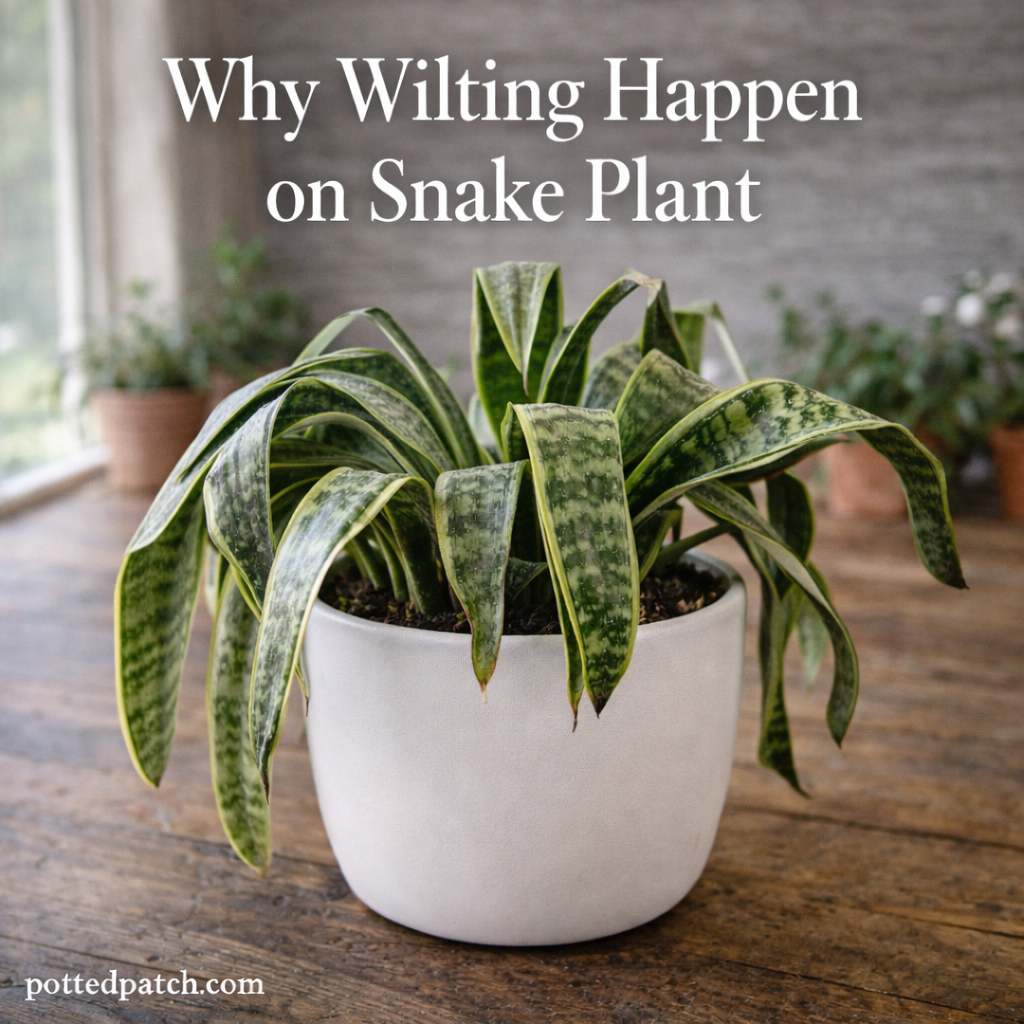

Snake plants (Sansevieria, also known as Dracaena trifasciata) are famous for their toughness, so when one starts wilting, it’s a clear sign something is off. Wilting leaves—bending, drooping, or collapsing instead of standing upright—are usually caused by environmental or care issues rather than disease.
The good news: most causes of snake plant wilting are easy to fix once you identify the problem.
Why Snake Plants Wilt
Wilting happens when the plant can’t maintain internal pressure in its leaves. This is usually tied to water-related stress, but light, temperature, and root health also play major roles.
Common causes include:
- Overwatering
- Root rot
- Poor drainage
- Severe underwatering
- Sudden temperature changes
- Low light combined with excess moisture
Step 1: Check the Soil Moisture
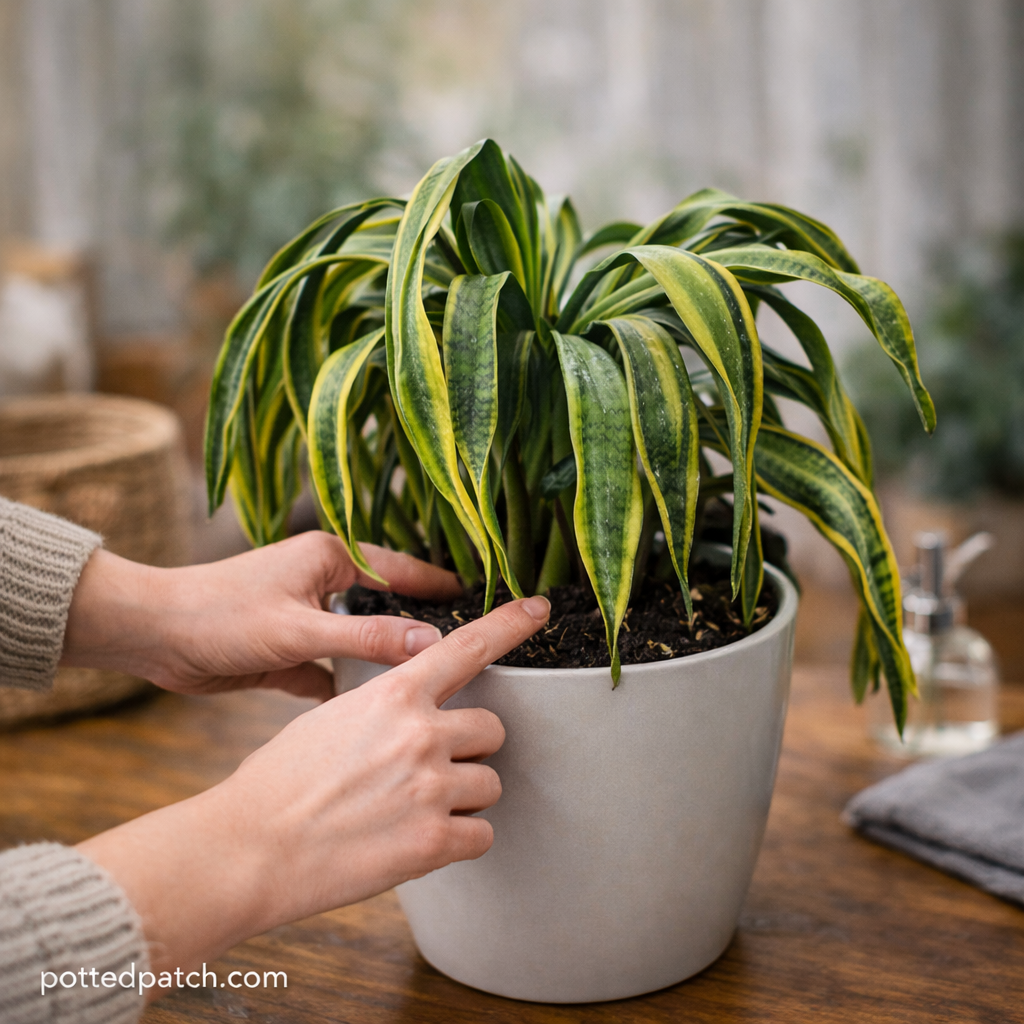
Before making changes, test the soil.
- Insert your finger 2–3 inches into the soil
- If it feels wet or soggy, overwatering is likely the cause
- If it feels bone dry all the way down, underwatering may be the issue
Snake plants prefer dry soil and store water in their thick leaves and rhizomes.
Overwatering: The Most Common Cause of Wilting
Signs of Overwatering
- Wilting with soft or mushy leaves
- Yellowing near the base
- Leaves collapsing outward
- Soil that stays wet for days
Overwatering suffocates the roots, preventing them from absorbing oxygen. Once roots begin to rot, leaves lose their ability to stay firm.
How to Fix Overwatering
- Stop watering immediately
- Remove the plant from its pot
- Inspect the roots
- Trim off black, mushy, or foul-smelling roots
- Repot in fresh, well-draining soil
- Use a pot with drainage holes
Allow the plant to dry completely before watering again.
Root Rot and How to Recover from It
Root rot is an advanced stage of overwatering and a major cause of wilting.
Signs of Root Rot
- Strong odor from the soil
- Dark, slimy roots
- Leaves falling over even when soil is wet
Recovery Steps
- Remove all rotted roots with sterilized scissors
- Let healthy roots air-dry for several hours
- Repot in dry cactus or succulent soil
- Do not water for at least 7–10 days after repotting
Early intervention greatly improves survival chances.
Underwatering: Less Common, But Still Possible
While snake plants tolerate drought well, extreme neglect can cause wilting.
Signs of Underwatering
- Wrinkled or curling leaves
- Dry, compacted soil pulling away from the pot edges
- Leaves bending inward rather than outward
How to Fix Underwatering
- Water deeply until excess drains out
- Let the soil rehydrate fully
- Resume a light watering schedule every 2–4 weeks
Avoid frequent shallow watering, which doesn’t reach the roots.
Poor Drainage Can Cause Wilting
Even proper watering won’t help if water can’t escape.
Drainage Problems Include
- Pots without drainage holes
- Decorative cachepots holding excess water
- Heavy, compacted soil
Fix
- Switch to a pot with drainage holes
- Use a fast-draining soil mix
- Empty saucers after watering
Snake plants must never sit in standing water.
Light Issues That Contribute to Wilting
Snake plants tolerate low light, but problems arise when low light combines with excess moisture.
Low Light + Overwatering
- Slower evaporation
- Increased root rot risk
- Gradual leaf collapse
Fix
- Move the plant to bright, indirect light
- Reduce watering frequency
- Allow soil to dry completely between waterings
Temperature Stress and Wilting
Snake plants are sensitive to cold.
Problem Conditions
- Temperatures below 55°F (13°C)
- Cold drafts near windows or doors
- Sudden temperature drops
Fix
- Keep the plant in a stable indoor environment
- Avoid placing near vents or drafty areas
- Maintain temperatures between 65–85°F (18–29°C)
Cold damage can cause leaves to wilt permanently if severe.
Should You Stake a Wilting Snake Plant?
No. Staking treats the symptom, not the cause.
If leaves are collapsing, correcting watering and root health is the only long-term solution. Once conditions improve, new growth will emerge upright.
Damaged leaves may not recover fully, but they can be trimmed once the plant stabilizes.
When to Prune Wilting Leaves
Prune only after fixing the underlying issue.
- Remove severely mushy or collapsing leaves at the base
- Use clean, sharp scissors
- Leave slightly bent but firm leaves intact
New growth will replace damaged leaves over time.
Preventing Future Wilting
To keep your snake plant upright and healthy:
- Water only when soil is fully dry
- Use pots with drainage holes
- Choose well-draining soil
- Provide bright, indirect light when possible
- Protect from cold drafts
- Reduce watering during winter
Snake plants thrive on consistency and restraint.
Final Thoughts
Wilting in snake plants is almost always a care-related issue, not a death sentence. By identifying whether water, roots, light, or temperature is the problem, you can reverse the damage and restore the plant’s natural upright form.
When in doubt, give your snake plant less water—not more—and let it recover at its own pace. 🌿