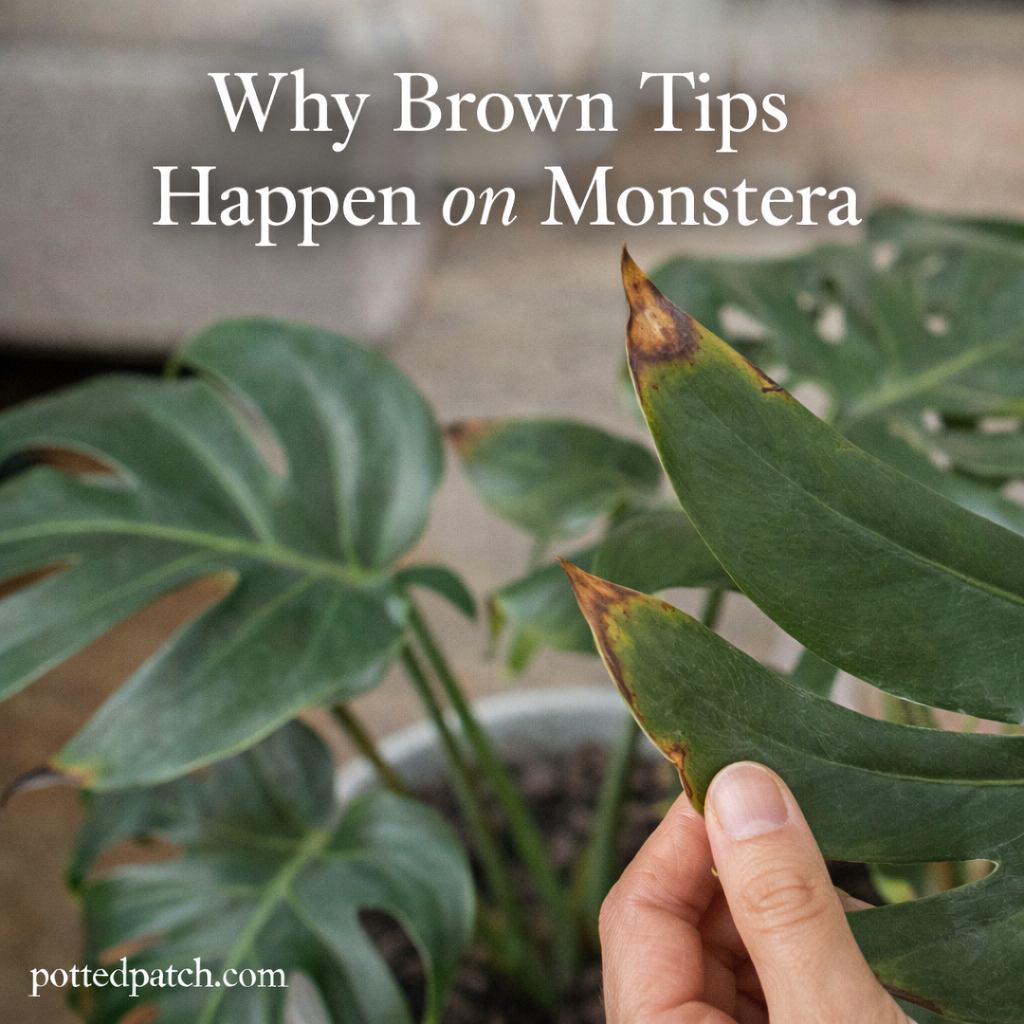
Brown tips on Monstera leaves are a common frustration—and they’re almost always a sign that something in the plant’s environment is slightly off. The good news is that brown tips are usually easy to diagnose and even easier to prevent once you know what to look for.
This guide explains why brown tips happen on Monstera, what each cause means, and how to fix the issue without overcorrecting.
What Brown Tips on Monstera Leaves Mean
Brown tips indicate stress, not disease. In most cases, the plant is still healthy overall but reacting to inconsistent conditions.
Brown tips usually start as:
- Dry, crispy edges
- Slight yellowing before browning
- Damage limited to leaf tips, not entire leaves
Understanding the pattern helps pinpoint the cause.
The Most Common Causes of Brown Tips on Monstera
Low Humidity
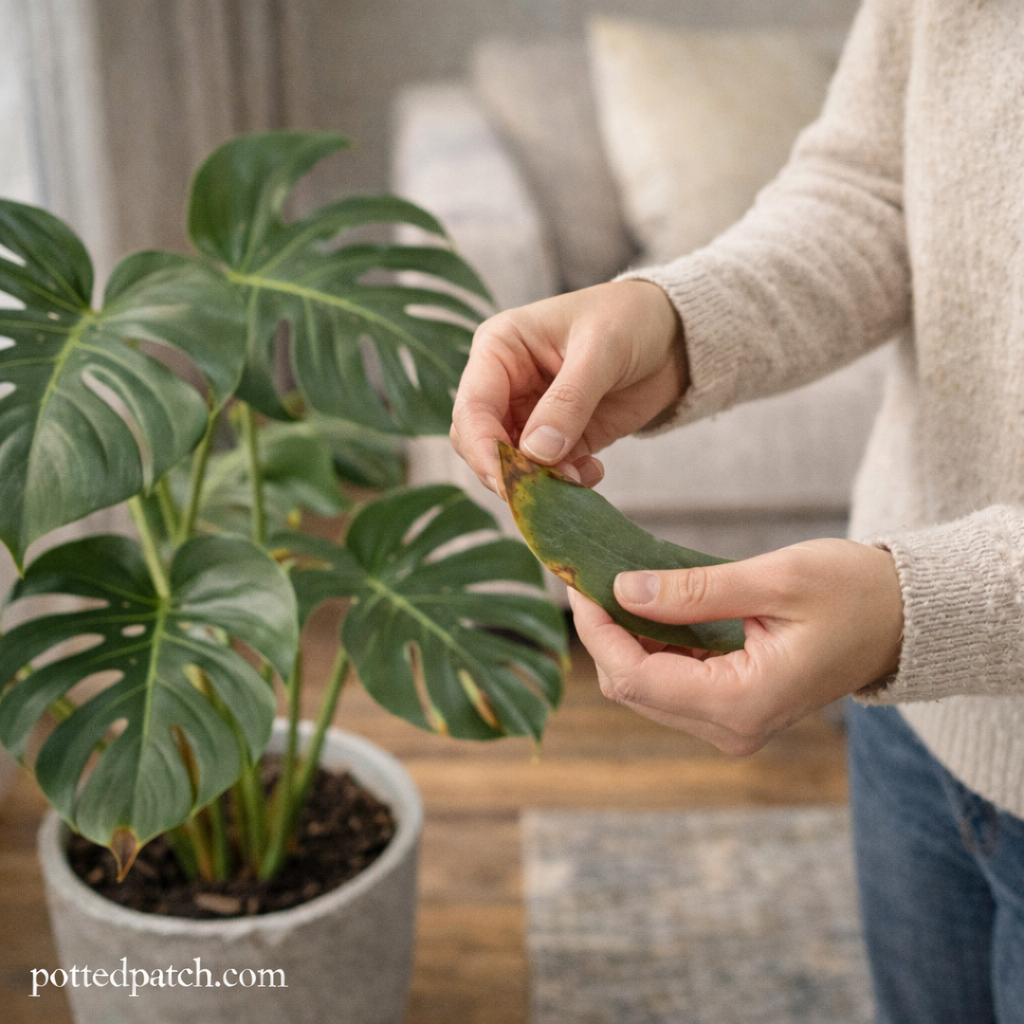
Monsteras are tropical plants that prefer moderate humidity. Dry indoor air—especially in winter—can cause leaf tips to dry out.
Signs it’s humidity-related:
- Brown tips with otherwise green leaves
- Crispy texture, not mushy
- More common during heating season
Fix:
- Group plants together
- Use a humidifier nearby
- Avoid placing the plant near vents or heaters
Inconsistent Watering
Both underwatering and irregular watering schedules can cause brown tips.
What this looks like:
- Soil fully drying out between waterings
- Leaves drooping before watering
- Brown tips appearing suddenly
Fix:
- Water when the top 2 inches of soil are dry
- Water thoroughly, then allow excess to drain
- Avoid letting the plant go bone-dry repeatedly
Salt Buildup From Fertilizer or Tap Water
Excess salts accumulate in soil over time and burn leaf tips.
Common causes:
- Over-fertilizing
- Hard tap water
- Never flushing the soil
Fix:
- Reduce fertilizer frequency
- Flush the soil every 1–2 months with distilled or filtered water
- Use fertilizer at half strength during the growing season
Too Much Direct Sunlight
Monsteras prefer bright, indirect light. Direct sun can scorch leaves, starting at the tips and edges.
Signs of light stress:
- Brown tips with yellow or pale patches
- Damage on leaves facing the window
- Occurs after moving the plant
Fix:
- Move the plant a few feet away from direct sun
- Filter light with sheer curtains
- Rotate the plant for even exposure
Root Stress or Poor Drainage
Roots sitting in wet soil for too long can’t absorb water properly, leading to leaf tip damage.
Watch for:
- Consistently wet soil
- Yellowing lower leaves
- Brown tips paired with drooping
Fix:
- Ensure the pot has drainage holes
- Use a well-draining soil mix
- Avoid letting the pot sit in standing water
How to Tell Which Cause Is Affecting Your Monstera
Use this quick breakdown:
- Crispy brown tips only → Low humidity or underwatering
- Brown tips + yellow edges → Fertilizer or salt buildup
- Brown tips + pale patches → Too much direct sun
- Brown tips + soggy soil → Root stress or drainage issues
There’s usually one primary cause—not all of them at once.
Should You Cut Off Brown Tips?
Yes—but carefully.
How to trim:
- Use clean, sharp scissors
- Follow the natural leaf shape
- Cut just above the brown area
Trimming is cosmetic. It won’t fix the cause, but it helps the plant look healthier while you address the issue.
What Not to Do When You See Brown Tips
Avoid these common mistakes:
- Overwatering to “fix” dryness
- Fertilizing more to boost growth
- Moving the plant repeatedly
- Misting excessively without improving humidity
Quick reactions often make the problem worse.
How Long Until New Growth Looks Normal?
Once the issue is corrected:
- New leaves should emerge healthy within 3–6 weeks
- Existing brown tips will not recover
- Overall growth should stabilize
Focus on new growth—it’s the best indicator of success.
Preventing Brown Tips in the Future
To keep Monstera leaves looking their best:
- Maintain consistent watering habits
- Provide bright, indirect light
- Flush soil occasionally
- Avoid extreme temperature changes
- Monitor seasonal humidity shifts
Consistency matters more than perfection.
Final Thoughts
Brown tips on Monstera leaves are a signal—not a failure. They’re your plant’s way of saying something needs a small adjustment. Once you identify whether the issue is humidity, watering, light, or buildup, the fix is usually simple and long-lasting.
Healthy Monsteras aren’t flawless—they’re well cared for. Address the cause, and your plant will reward you with strong, vibrant new growth. 🌿