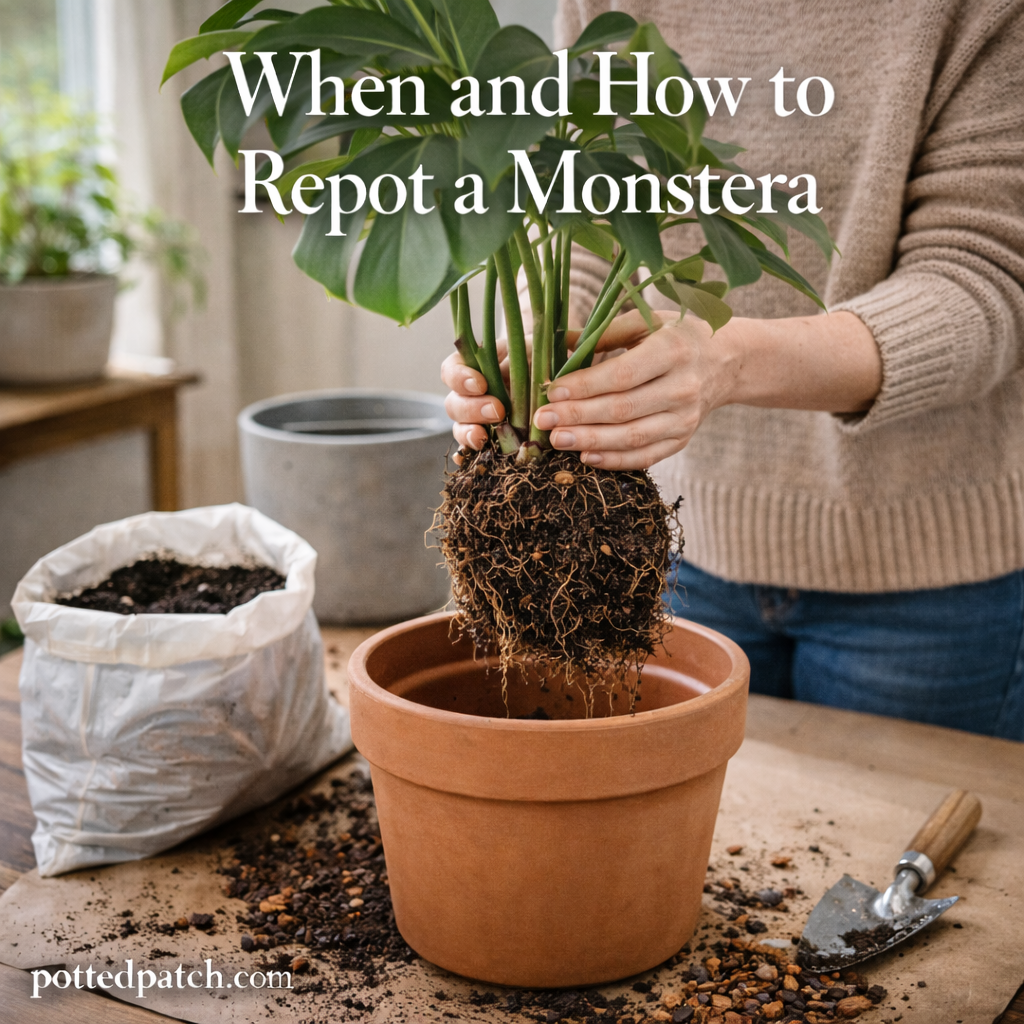
Monsteras are vigorous growers, and at some point, nearly every healthy plant will outgrow its pot. Repotting at the right time—and in the right way—helps prevent root problems, supports larger leaves, and keeps growth steady instead of stressed.
This guide explains exactly when to repot a Monstera, how to tell if it’s rootbound, and how to repot step by step without shocking the plant.
Why Repotting a Monstera Is Important
In containers, Monsteras eventually run out of space and nutrients. When roots become crowded, water and oxygen can’t move through the soil properly.
Repotting helps:
- Prevent root binding and compaction
- Refresh depleted soil nutrients
- Support larger leaves and stronger stems
- Improve drainage and root health
A Monstera that’s never repotted may survive—but it won’t thrive.
Signs Your Monstera Needs Repotting
Monsteras usually tell you when it’s time.
Common signs include:
- Roots growing out of drainage holes
- Water running straight through the pot
- Slower growth during spring or summer
- Leaves staying smaller than usual
- Soil drying out very quickly
If you see multiple signs, repotting should be your next step.
Best Time to Repot a Monstera
Spring (Ideal)
Spring is the safest and most effective time to repot.
Why spring works best:
- Active growth helps roots recover quickly
- New soil supports leaf and root expansion
- Less risk of transplant shock
Early to mid-spring is ideal.
Summer (Acceptable)
Repotting in summer is fine if the plant is healthy.
- Avoid extreme heat
- Water consistently after repotting
- Expect a short adjustment period
Fall and Winter (Avoid if Possible)
- Growth slows or stops
- Roots recover more slowly
- Higher risk of stress and leaf drop
Only repot in winter if the plant is severely rootbound or unhealthy.
How Often Monsteras Need Repotting
General guidelines:
- Young Monsteras: every 12 months
- Mature Monsteras: every 2–3 years
- Very large plants: when rootbound, not on a schedule
If growth looks healthy and roots aren’t crowded, there’s no need to rush.
Choosing the Right Pot Size
Pot size matters more than most people think.
Best Pot Upgrade Rule
- Choose a pot 1–2 inches wider than the current one
- Avoid jumping multiple sizes at once
Oversized pots hold excess moisture, increasing the risk of root rot.
Drainage Is Non-Negotiable
Always choose a pot with:
- One or more drainage holes
- A saucer or tray to catch excess water
Decorative pots without drainage should only be used as outer covers.
Best Soil for Repotting a Monstera
Monsteras need a chunky, well-draining mix.
An ideal soil blend includes:
- High-quality potting soil
- Perlite or pumice for airflow
- Orchid bark or coco chips for structure
The goal is moisture retention without soggy soil.
How to Repot a Monstera (Step-by-Step)
Step 1: Prepare the New Pot
- Add a base layer of fresh soil
- Ensure drainage holes are clear
Do not add rocks to the bottom—this doesn’t improve drainage.
Step 2: Remove the Monstera Gently
- Tip the pot sideways
- Support the base of the plant
- Slide the root ball out carefully
If stuck, squeeze the pot or tap the sides.
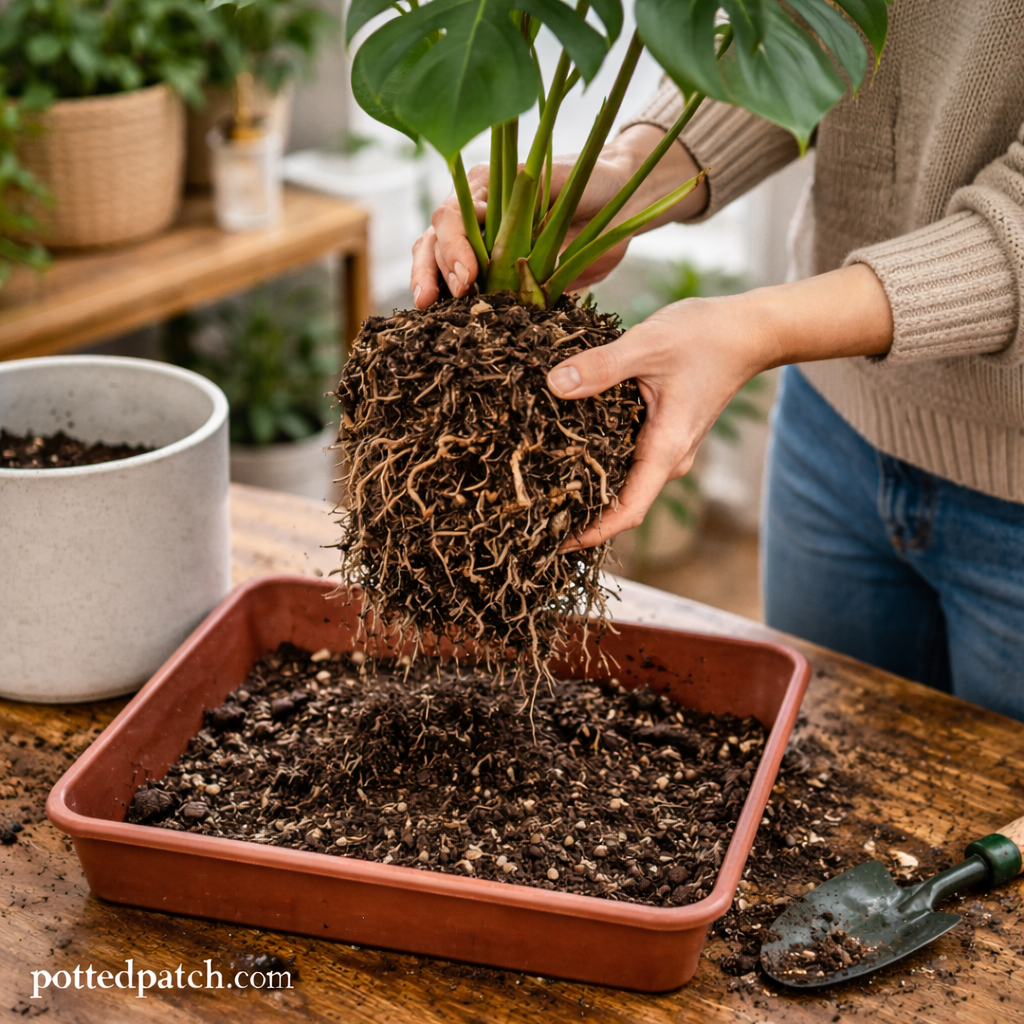
Step 3: Inspect and Loosen Roots
- Gently loosen circling roots
- Trim only dead or rotting roots
- Avoid aggressive root cutting
Healthy roots should be firm and light-colored.
Step 4: Position and Refill
- Center the plant at the same depth
- Fill around the root ball with fresh soil
- Lightly press soil to remove air pockets
Do not bury the stem deeper than before.
Step 5: Water Thoroughly
- Water until it drains freely
- Empty the saucer afterward
- Place the plant back in bright, indirect light
Aftercare: What to Expect After Repotting
It’s normal for Monsteras to pause growth briefly.
After repotting:
- Avoid fertilizing for 4–6 weeks
- Expect slower growth for 1–2 weeks
- Keep watering consistent, not excessive
Leaves may droop slightly but should recover quickly.
When Not to Repot a Monstera
Avoid repotting if:
- The plant is dormant in winter
- It’s recovering from pests or disease
- You recently repotted within the last year
Timing matters just as much as technique.
Common Repotting Mistakes to Avoid
- Choosing a pot that’s too large
- Using dense, water-retentive soil
- Repotting during winter dormancy
- Fertilizing immediately afterward
These mistakes often cause stress instead of growth.
Final Thoughts on Repotting Monsteras
Repotting a Monstera is one of the most impactful care tasks you can do—but only when it’s done at the right time and with the right setup. A properly repotted plant rewards you with stronger roots, healthier leaves, and steady long-term growth.
When in doubt, size up slowly and let the plant guide your timing.