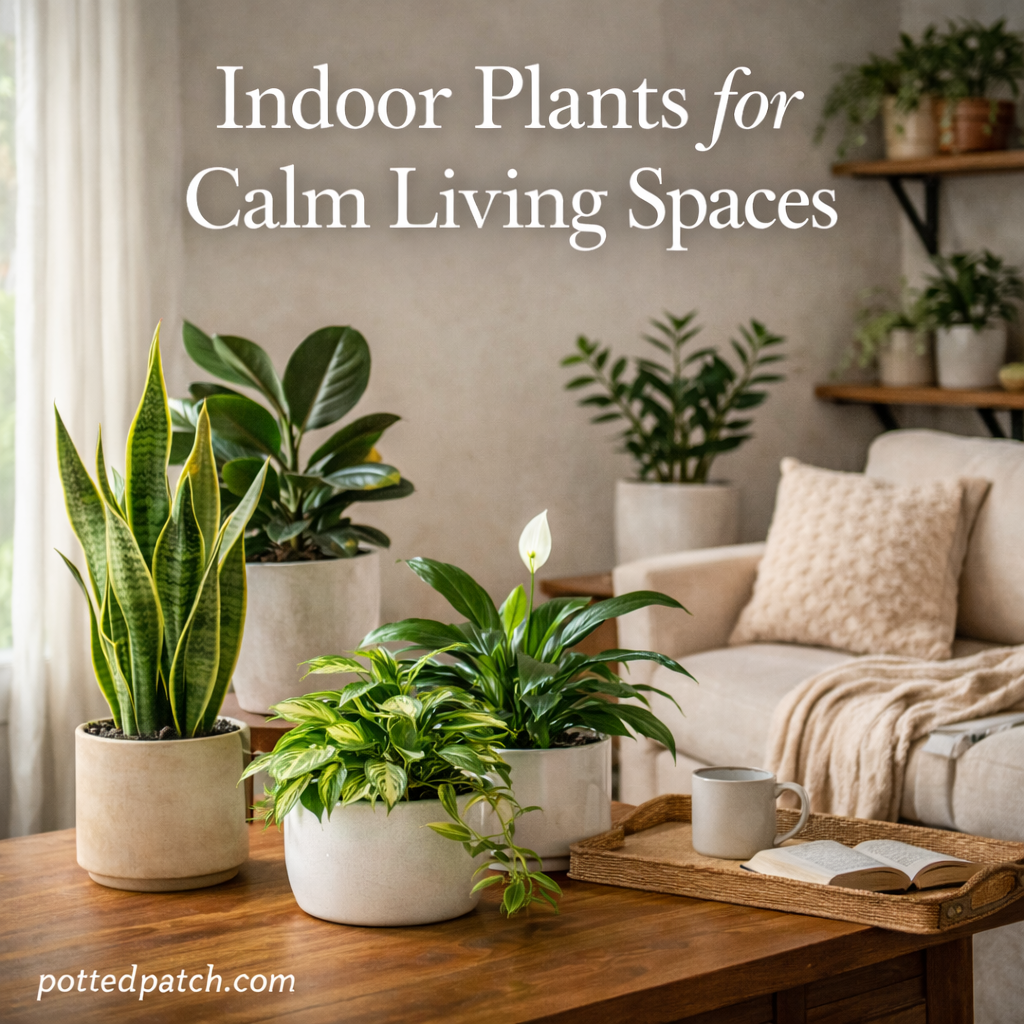
Creating a calm living space isn’t just about neutral colors and soft lighting. Indoor plants play a powerful role in shaping how a room feels, helping reduce visual noise, soften hard edges, and create a sense of ease. The right plants can make your home feel slower, quieter, and more intentional.
This guide explores the best indoor plants for calm living spaces and how to place them for maximum soothing effect.
Why Plants Promote a Calming Atmosphere
Plants naturally support relaxation in a few key ways:
- Soft organic shapes balance sharp lines and furniture
- Green tones reduce visual stress
- Living elements encourage slower, shows steady growth
- Caring for plants adds mindful routines to daily life
In calm-focused spaces, less is often more. Choosing the right plants matters more than filling every corner.
What Makes a Plant Good for Calm Living Spaces?
Not all houseplants contribute to a peaceful atmosphere. The most calming plants typically share these qualities:
- Simple, uncluttered leaf shapes
- Muted or deep green tones
- Slow, steady growth
- Minimal maintenance needs
Plants that grow wildly or require constant attention can unintentionally add stress.
Snake Plant
Snake plants are ideal for calm spaces thanks to their clean, architectural look.
Why It Works
- Upright leaves create visual order
- Thrives in low to medium light
- Requires infrequent watering
- Blends well with minimalist decor
Snake plants are especially effective in bedrooms, meditation corners, and quiet living rooms.
ZZ Plant
The ZZ plant is one of the most low-effort options for peaceful interiors.
Calming Qualities
- Glossy leaves reflect light softly
- Slow, predictable growth
- Tolerates low light and dry air
- Rarely drops leaves or creates mess
Its steady appearance makes it ideal for areas where visual consistency matters.
Peace Lily
Peace lilies add softness without overwhelming a space.
Why It Feels Soothing
- Graceful leaf shape
- Occasional white blooms add subtle contrast
- Prefers stable, indirect light
- Signals watering needs clearly
Peace lilies work well in living rooms, bedrooms, and reading areas.
Rubber Plant
Rubber plants bring calm through bold simplicity.
Benefits for Calm Interiors
- Large, smooth leaves reduce visual clutter
- Upright growth creates grounding presence
- Performs well in bright, indirect light
- Doesn’t require frequent watering
One rubber plant can anchor a room without the need for multiple smaller plants.
Chinese Evergreen
Chinese evergreens are ideal for calm spaces with limited light.
Why They’re Peaceful
- Balanced leaf patterns
- Tolerates low and artificial light
- Grows slowly and evenly
- Requires minimal attention
They’re perfect for offices, hallways, and bedrooms with softer lighting.
Pothos (Used Intentionally)
While pothos can grow quickly, it can still support calm spaces when styled correctly.
How to Keep It Calm
- Trim regularly to prevent chaos
- Let vines drape gently instead of spreading wildly
- Use simple, neutral planters
Placed thoughtfully, pothos adds softness without visual overload.
Best Rooms for Calm Plant Placement
Living Rooms
- Choose 1–3 larger plants instead of many small ones
- Place plants near natural light but out of direct sun
- Use floor plants to ground seating areas
Bedrooms
- Stick to low-maintenance plants
- Avoid overcrowding surfaces
- Keep plants a few feet from the bed for balance
Work-from-Home Spaces
- Position plants within your line of sight
- Choose upright plants to reduce visual distraction
- Avoid trailing plants near desks
Container Choices Matter
The pot helps determine whether a plant feels calming or chaotic.
For calm living spaces:
- Use neutral colors like white, beige, or soft gray
- Choose matte finishes over glossy
- Stick to simple shapes
- Avoid busy patterns or text
Matching containers across a room enhances visual cohesion.
How Many Plants Is Too Many?
A calm space doesn’t need to be full of plants.
A good rule:
- One statement plant per room
- One secondary plant for balance
- Leave negative space intentionally
Empty space is just as important as greenery.
Maintenance Tips for Long-Term Calm
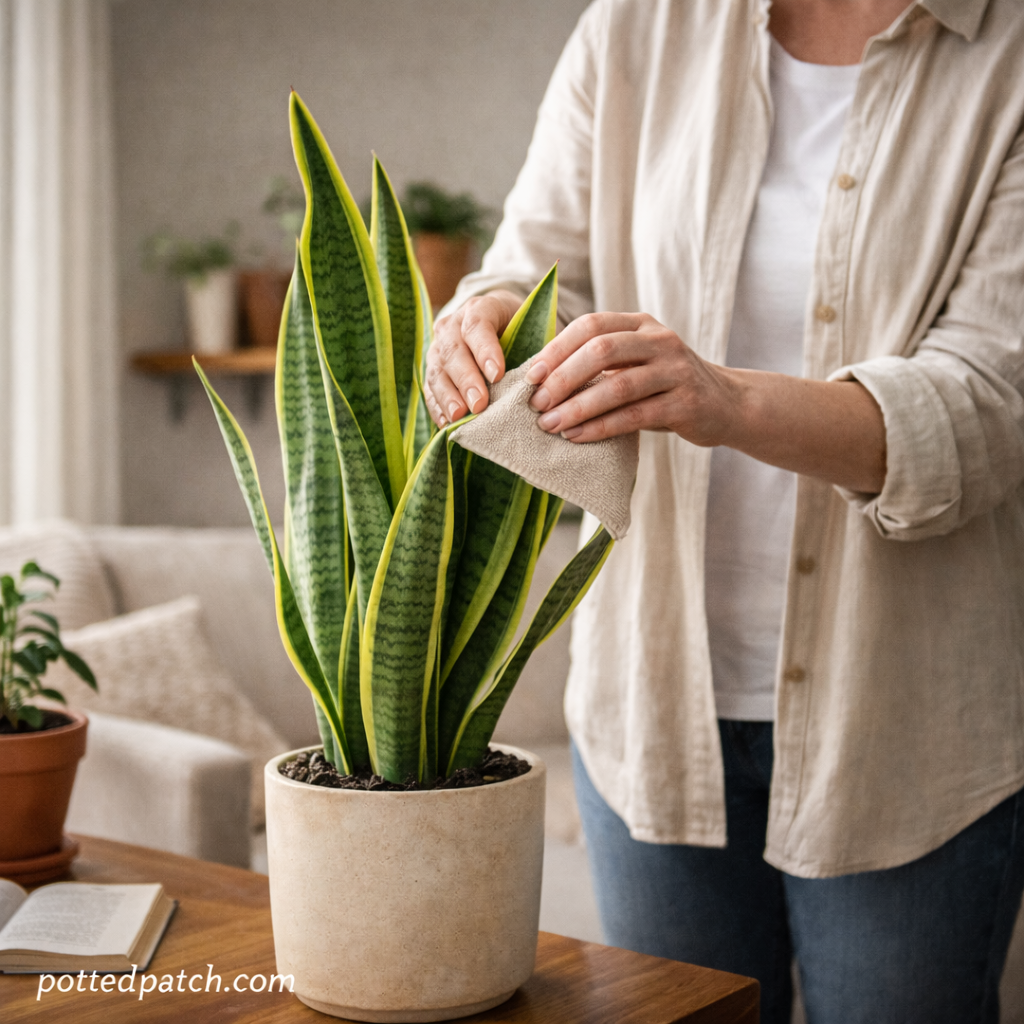
Stress-free plants stay calm-looking when they show signs of care.
Simple habits:
- Wipe leaves monthly
- Rotate plants occasionally for even growth
- Remove yellow leaves promptly
- Adjust watering with seasonal changes
Healthy plants look calmer by default.
Final Thoughts
Indoor plants can transform your home into a calmer, more grounded living space when chosen and placed intentionally. Focus on plants with simple forms, steady growth, and low demands. Let each plant have room to breathe, and resist the urge to overfill.
Calm living spaces are built slowly, and the right plants help set the tone.