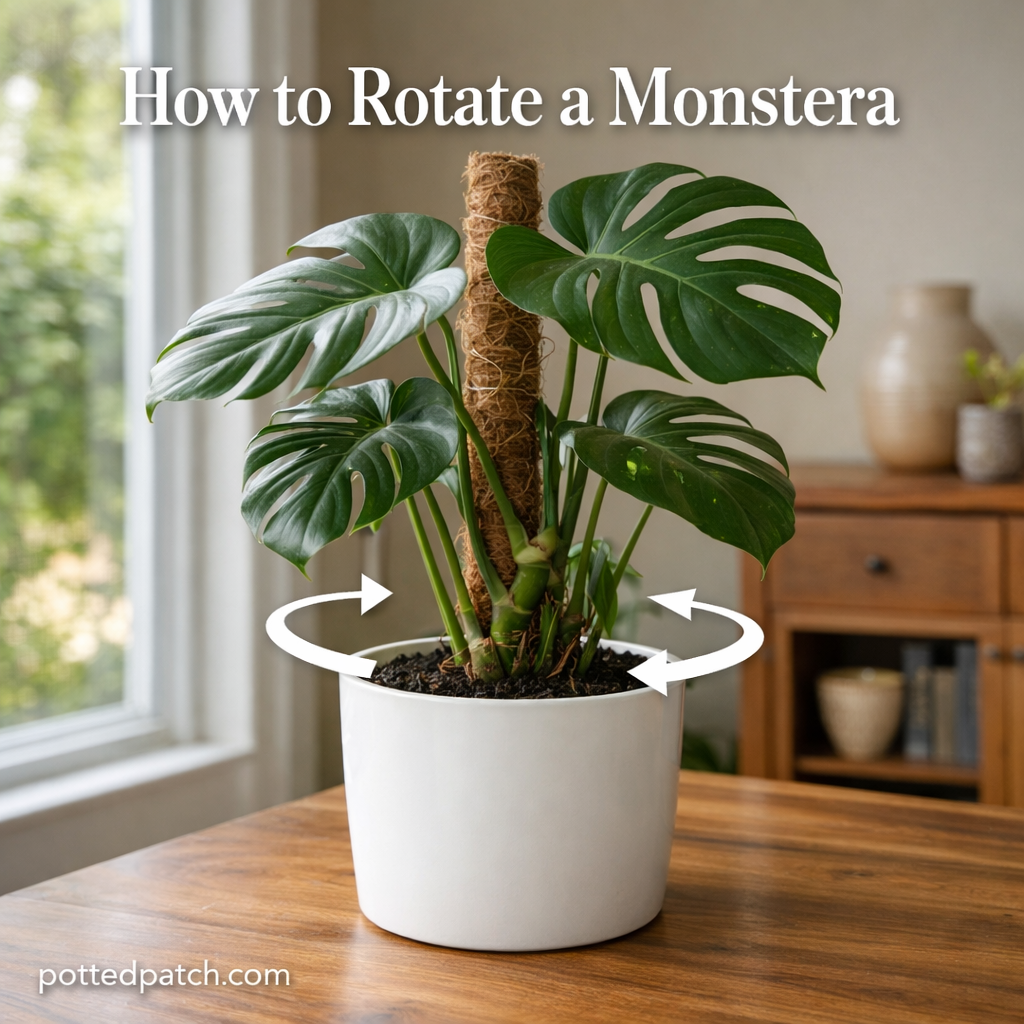
Monsteras are famous for their bold, split leaves—but if yours is leaning, lopsided, or growing heavily in one direction, it’s probably asking for a simple fix: rotation. Rotating a Monstera is one of the easiest ways to encourage even growth, better leaf spacing, and a healthier-looking plant overall.
Done correctly, rotation keeps your Monstera balanced without stressing it. Done incorrectly—or too often—it can slow growth or confuse the plant. Here’s exactly how to rotate a Monstera the right way.
Why Rotating a Monstera Matters
Monsteras naturally grow toward light. This is called phototropism, and it’s completely normal. However, indoor light usually comes from one direction, such as a window or grow light, which causes uneven growth over time.
Rotating your Monstera helps:
- Prevent leaning or tipping
- Encourage symmetrical leaf growth
- Reduce stem twisting
- Promote stronger, more upright growth
- Improve overall visual balance
If your Monstera looks like it’s reaching or stretching, rotation is often the missing piece.
How Often Should You Rotate a Monstera?
Most Monsteras benefit from gentle, consistent rotation rather than frequent adjustments.
General guidelines:
- Rotate every 1–2 weeks during spring and summer
- Rotate every 3–4 weeks in fall and winter
- Skip rotation if growth has slowed significantly
If your Monstera is actively producing new leaves, it’s in a growth phase and will respond best to regular, small rotations.
How Much Should You Rotate Each Time?
Small changes work best. Rotating too much at once can cause stress and disrupt leaf orientation.
Recommended rotation amount:
- 90 degrees (a quarter turn) at a time
- Avoid full 180-degree flips
- Never spin the pot repeatedly in one session
Think of rotation as gradual guidance, not a reset.
Best Time to Rotate a Monstera
Timing matters more than most people realize.
The best moments to rotate are:
- During routine watering days
- In the morning or early afternoon
- When the plant is dry enough to handle safely
Avoid rotating immediately after repotting, pruning, or fertilizing, as the plant is already adjusting to change.
Step-by-Step: How to Rotate a Monstera Properly
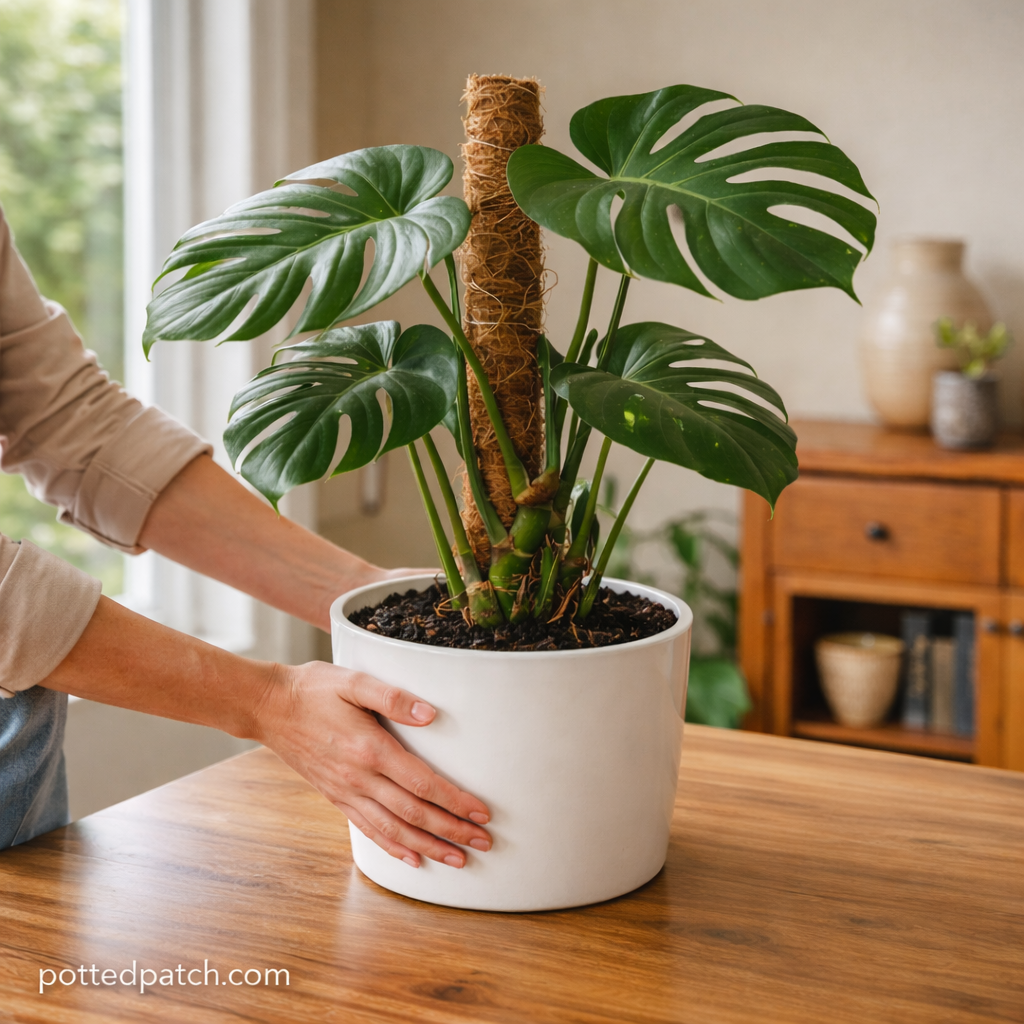
Follow this simple process to keep your plant stress-free.
- Check the light source
Identify where your Monstera is leaning toward. This tells you which side needs less direct exposure. - Inspect the leaves and stems
Make sure no leaves are pinned against walls, furniture, or supports before turning. - Rotate the pot slightly
Turn the pot about 90 degrees so a different side faces the light. - Reposition supports if needed
If your Monstera uses a moss pole or stake, ensure it still aligns with the main stem. - Leave it alone
Resist the urge to adjust again for at least one to two weeks.
Your Monstera will slowly reorient its leaves toward the new light angle.
Should You Rotate a Monstera With a Moss Pole?
Yes—but carefully.
Monsteras with moss poles or supports need rotation to be slower and more deliberate.
Tips for supported Monsteras:
- Rotate in smaller increments if the plant is large
- Ensure aerial roots can still attach to the pole
- Avoid twisting the main stem against the support
- Check ties or plant velcro after rotating
If the plant has clearly chosen a growth direction around the pole, minimal rotation is better than forcing symmetry.
Signs Your Monstera Needs Rotation
Sometimes the plant tells you before you even think about it.
Common signs include:
- Leaves all facing one direction
- The pot feels unbalanced or top-heavy
- Stems leaning toward the window
- New leaves emerging at an angle
- One side growing faster than the other
If you notice two or more of these signs, it’s time to rotate.
When You Should Not Rotate a Monstera
Rotation isn’t always helpful in every situation.
Avoid rotating if:
- The plant was recently repotted
- The Monstera is stressed or wilting
- Roots are damaged or recovering
- The plant is dormant in winter
- A new leaf is actively unfurling
Let the plant stabilize first before introducing movement.
Does Rotating a Monstera Affect Leaf Fenestrations?
Indirectly, yes.
Fenestrations (leaf splits and holes) are influenced by light quality and consistency. Rotating your Monstera helps distribute light evenly, which can support more balanced leaf development.
However:
- Rotation alone won’t create fenestrations
- Bright, indirect light is still the main factor
- Over-rotation can reduce light exposure temporarily
Consistency beats perfection when it comes to leaf structure.
Common Mistakes to Avoid
Even simple care can go wrong if overdone.
Avoid these common rotation mistakes:
- Rotating every few days
- Spinning the plant repeatedly
- Turning the pot randomly without tracking direction
- Rotating during periods of stress
- Forgetting to adjust supports afterward
A slow, steady approach always works best.
Seasonal Rotation Tips
Monsteras behave differently throughout the year.
Spring and Summer:
- Rotate more regularly
- Growth responds quickly to light changes
- Monitor new leaf direction
Fall and Winter:
- Rotate less often
- Growth slows naturally
- Focus on stability rather than symmetry
If your light source changes seasonally, adjust rotation frequency rather than rotation angle.
Final Thoughts
Rotating a Monstera is a small habit with big visual and structural benefits. When done gently and consistently, it helps your plant grow evenly, stay upright, and look its best without adding stress.
If your Monstera seems lopsided or constantly reaching, rotation is often the simplest fix—no pruning, repotting, or special products required.