Pruning a Monstera may feel intimidating at first, but when done correctly, it’s one of the best ways to keep the plant healthy, balanced, and visually appealing. Pruning helps control size, remove damaged growth, and encourage fuller, stronger leaves.
This guide explains when and how to prune a Monstera, which parts to cut, and what to avoid so your plant stays stress-free and thriving.
Why Pruning a Monstera Is Important
Monsteras are natural climbers and fast growers. Without pruning, they can become leggy, uneven, or overcrowded.
Pruning helps:
- Remove damaged or yellowing leaves
- Encourage balanced, controlled growth
- Improve airflow around stems and soil
- Shape the plant for its space
Pruning isn’t about forcing growth—it’s about guiding it.
When to Prune a Monstera
Timing matters more than the number of cuts.
Best Time: Spring and Early Summer
This is when Monsteras are actively growing.
Why this timing works:
- Faster healing after cuts
- New growth appears quickly
- Lower risk of stress
When to Avoid Pruning
Avoid pruning when:
- The plant is dormant (late fall or winter)
- It’s recovering from pests or disease
- You recently repotted it
Emergency pruning (dead or rotting material) is always acceptable.
Tools You’ll Need
Use clean, sharp tools to prevent damage or infection.
Recommended tools:
- Sharp pruning shears or scissors
- Rubbing alcohol for sterilizing blades
- Gloves (optional, sap can irritate skin)
Always sterilize tools before and after pruning.
Understanding Monstera Growth Points
Knowing where to cut is crucial.
Key parts to recognize:
- Node: Where leaves and aerial roots emerge
- Internode: Stem space between nodes
- Aerial roots: Above-soil roots used for climbing
New growth always comes from nodes, not bare stems.
How to Prune a Monstera (Step-by-Step)
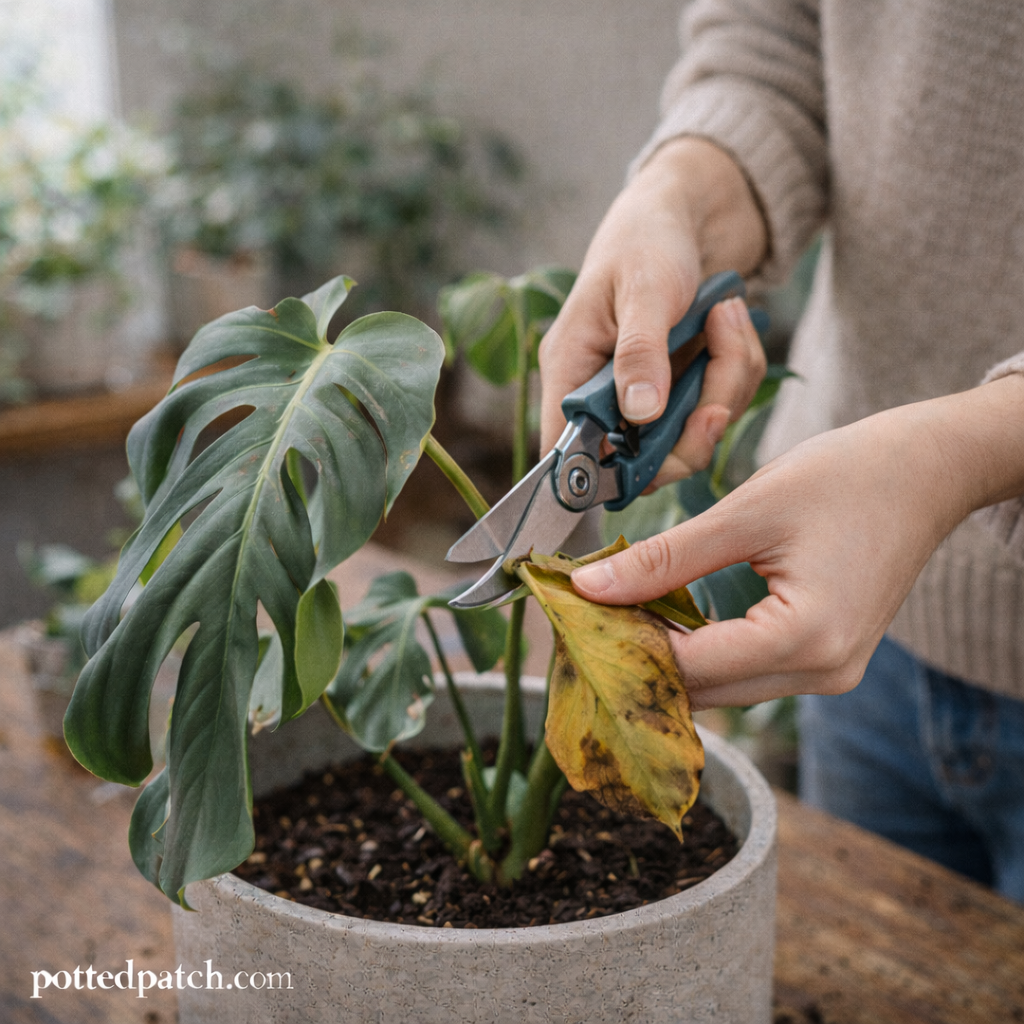
Step 1: Decide What Needs Pruning
Look for:
- Yellow or browning leaves
- Damaged or torn foliage
- Overgrown or unbalanced stems
- Excess aerial roots (optional)
Never remove more than 20–25% of the plant at once.
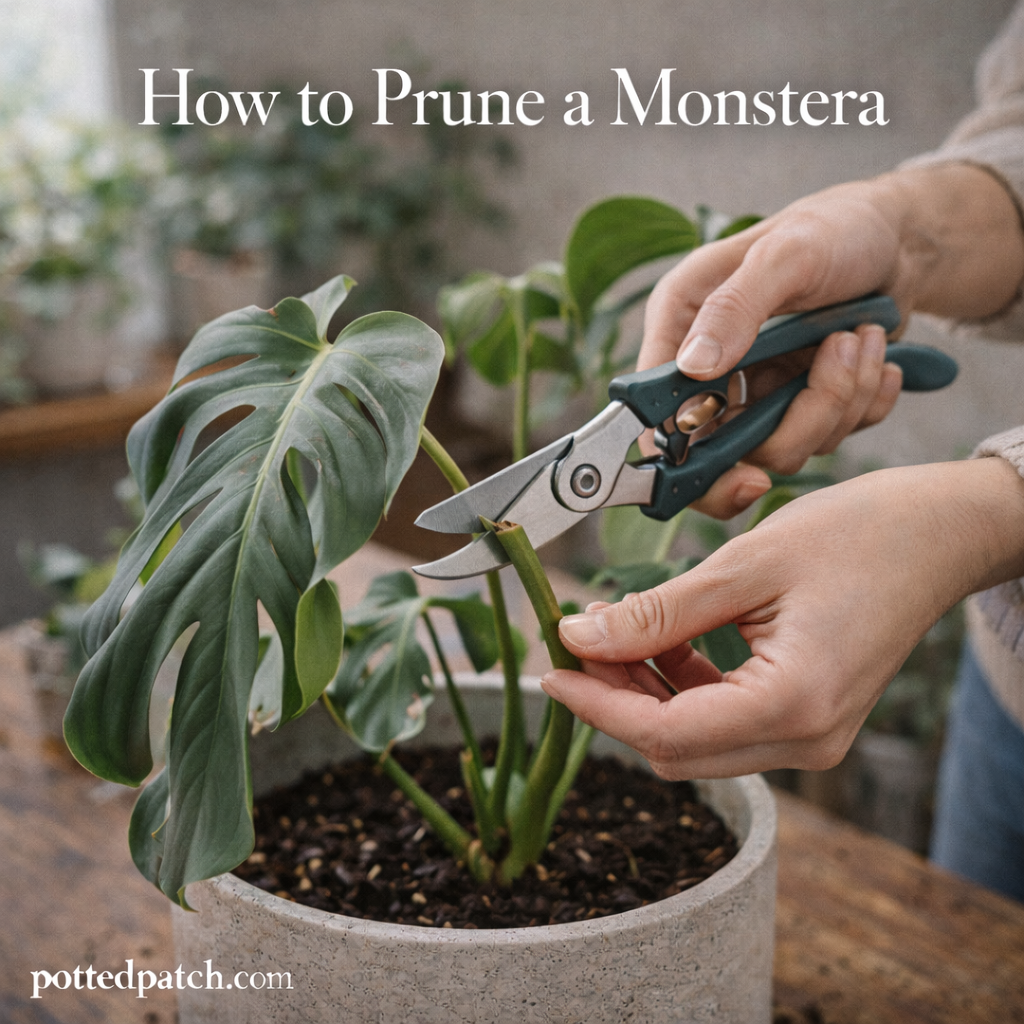
Step 2: Make Clean Cuts at the Right Spot
- Cut just above a node
- Use one clean, confident cut
- Avoid crushing the stem
If removing a leaf, cut where the petiole meets the main stem.
Step 3: Remove Aerial Roots (Optional)
Aerial roots can be trimmed if they’re unruly.
- Cut close to the stem
- Avoid cutting too many at once
- Leaving them is perfectly fine
They do not harm the plant if left intact.
Step 4: Clean Up and Observe
- Remove fallen debris from soil
- Wipe sap from stems if needed
- Monitor the plant over the next week
Monsteras usually bounce back quickly.
Pruning for Shape vs. Health
Pruning for Health
Focus on:
- Yellowing or dying leaves
- Diseased or damaged stems
This can be done anytime necessary.
Pruning for Shape
Focus on:
- Long, leggy stems
- Uneven growth direction
- Size control
Best done during active growth.
Can You Propagate Cuttings From Pruning?
Yes—Monstera cuttings root easily if they include a node.
Basic propagation steps:
- Ensure cutting has at least one node
- Place in water or moist soil
- Provide bright, indirect light
Pruning and propagation often go hand in hand.
Aftercare Tips After Pruning
- Avoid fertilizing for 2–3 weeks
- Keep watering consistent
- Maintain bright, indirect light
Some temporary drooping is normal and usually resolves quickly.
Common Pruning Mistakes to Avoid
- Cutting below nodes with no growth points
- Removing too much at once
- Using dull or dirty tools
- Pruning during winter dormancy
Less is always more with Monsteras.
Final Thoughts on Pruning Monsteras
Pruning a Monstera doesn’t need to be aggressive to be effective. Thoughtful, well-timed cuts keep the plant healthy, manageable, and visually balanced. When in doubt, step back, make fewer cuts, and let the plant guide your decisions.
A properly pruned Monstera rewards you with stronger growth and better structure over time.