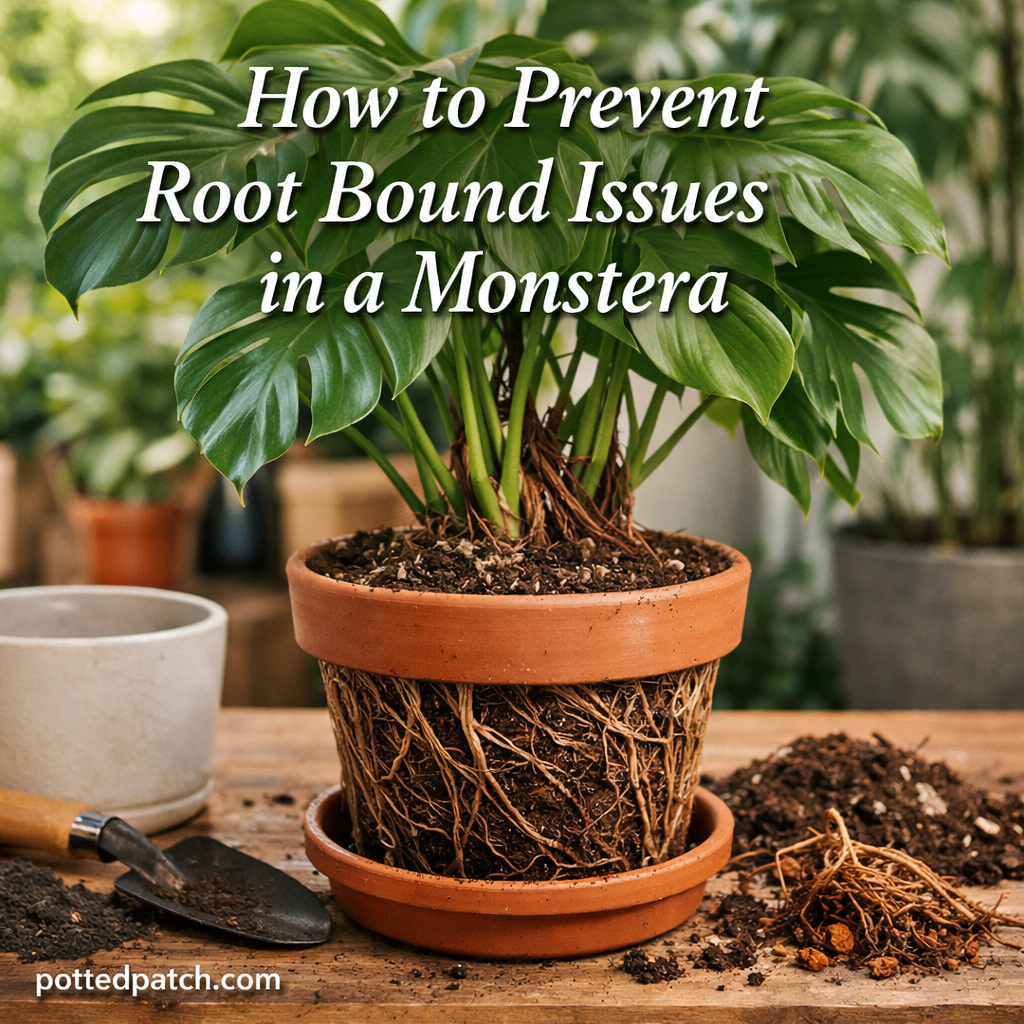
Monstera plants are famous for fast growth and dramatic leaves—but that same vigor can quickly lead to root bound problems if the container isn’t managed well. When roots outgrow their pot, water, nutrients, and stability all suffer. The good news is that root binding is easy to prevent with the right habits and timing.
This guide walks through what root bound means for a Monstera, how to spot early warning signs, and exactly what to do to keep roots healthy long term.
What “Root Bound” Means for Monstera Plants
A Monstera becomes root bound when its roots fill nearly all available pot space. Instead of spreading freely through soil, roots begin circling the pot, compacting tightly against one another.
This causes several problems at once:
- Reduced water absorption
- Poor nutrient uptake
- Increased stress during dry spells
- Slower or stalled leaf growth
- Higher risk of root rot despite frequent watering
Monsteras tolerate snug pots better than some houseplants, but once roots dominate the container, growth and health decline.
Early Signs Your Monstera Is Becoming Root Bound
Catching the issue early makes prevention simple. Watch for these signals.
Visual Clues Above the Soil
- Growth slows or stops during active growing seasons
- New leaves emerge smaller or without fenestrations
- Leaves yellow even with proper care
- Plant becomes top-heavy and tips easily
Root-Related Clues
- Roots growing out of drainage holes
- Soil dries out unusually fast after watering
- Water runs straight through without soaking in
If you notice two or more of these at the same time, your Monstera is likely running out of space.
Choose the Right Pot Size From the Start
The easiest way to prevent root binding is choosing a correctly sized container.
Ideal Pot Sizing Rules
- Increase pot size by 1–2 inches in diameter at a time
- Avoid oversized pots that stay wet too long
- Ensure the pot is deep enough for downward root growth
Jumping several pot sizes at once can create soggy soil conditions that damage roots before they expand.
Always Use Pots With Drainage Holes
Drainage holes are non-negotiable for Monsteras.
Without them:
- Excess water pools at the bottom
- Roots sit in moisture too long
- Rot develops quickly in compacted root zones
If you love decorative pots without holes, keep the plant in a nursery pot and place it inside the decorative container. This allows proper drainage while maintaining style.
Repot on a Consistent Schedule
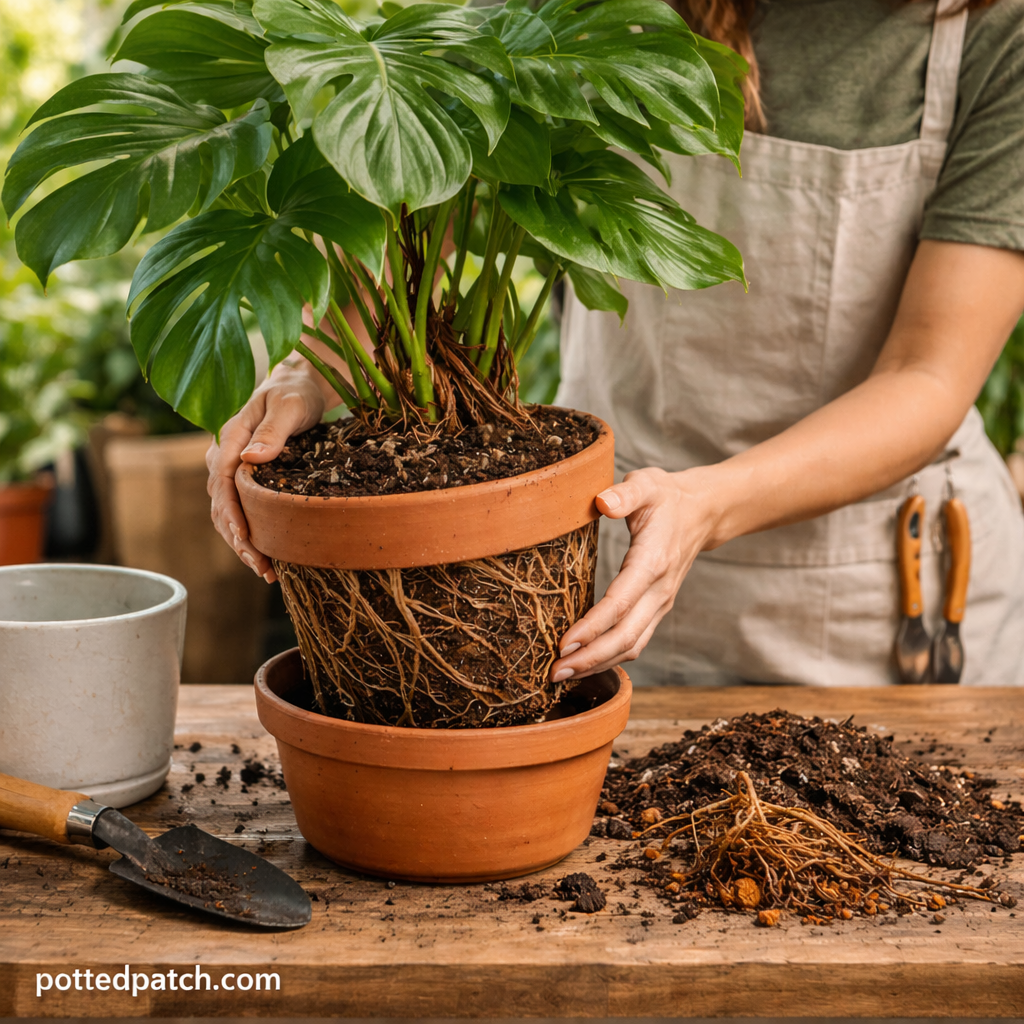
Monsteras don’t need constant repotting, but they do need regular upgrades.
General Repotting Timeline
- Young Monsteras: every 12–18 months
- Mature Monsteras: every 2–3 years
- Very large plants: root pruning may replace repotting
The best time to repot is early spring when growth naturally accelerates.
Refresh Soil Even If You Don’t Repot
Even if the plant still fits its pot, old soil breaks down over time.
Degraded soil:
- Compacts easily
- Loses airflow
- Drains poorly
Soil Refresh Options
- Remove the top 2–3 inches of soil and replace with fresh mix
- Gently loosen the outer root layer before refilling
- Improve aeration with bark or perlite
This alone can extend the time between repottings.
Use a Well-Aerated Soil Mix
Soil choice plays a huge role in root health.
Ideal Monstera Soil Characteristics
- Light and airy
- Fast draining but moisture retentive
- Resistant to compaction
A good blend includes:
- Potting soil base
- Orchid bark or pine bark fines
- Perlite or pumice
Loose soil allows roots to grow outward instead of circling tightly.
Rotate and Inspect Roots Periodically
You don’t need to unpot your Monstera often, but gentle inspections help.
Every few months:
- Lift the nursery pot slightly
- Check for roots escaping the bottom
- Rotate the pot to encourage even growth
If roots are already spiraling heavily, it’s time to repot or prune.
Root Pruning for Large or Mature Monsteras
For very large Monsteras where repotting isn’t practical, root pruning is an effective solution.
How Root Pruning Helps
- Reduces overcrowding
- Encourages fresh feeder roots
- Maintains manageable plant size
Basic Root Pruning Steps
- Remove the plant from its pot
- Trim 10–20% of the outer root mass
- Remove circling or dead roots
- Repot into the same container with fresh soil
Always prune during active growth periods and water lightly afterward.
Avoid Overwatering Root-Bound Plants
Root bound Monsteras are especially sensitive to watering mistakes.
When roots are packed:
- Soil dries unevenly
- Moisture lingers around the core
- Rot risk increases
Safer Watering Practices
- Water thoroughly, then allow partial drying
- Check moisture at multiple depths
- Never water on a strict schedule
As roots gain space again, watering becomes more forgiving.
Support Healthy Root Expansion With Proper Care
Good care habits slow down how fast a Monstera becomes root bound.
Helpful Practices
- Provide bright, indirect light
- Fertilize lightly during the growing season
- Use a moss pole to encourage upward growth
- Avoid excessive pruning that forces root stress
Balanced growth above and below the soil keeps the plant stable longer.
Common Mistakes That Lead to Root Binding
Avoid these common issues that speed up root crowding.
- Leaving plants in nursery pots too long
- Using heavy, compacted soil mixes
- Ignoring drainage issues
- Upsizing pots too aggressively
- Waiting until severe symptoms appear
Small preventative steps make a big difference.
Final Thoughts
Root bound issues in Monsteras don’t happen overnight—they develop slowly and predictably. With thoughtful pot sizing, proper soil, consistent inspections, and timely repotting or root pruning, you can keep your Monstera thriving for years.
Healthy roots mean stronger stems, larger leaves, and more dramatic growth—everything Monstera plants are loved for.